
The Chevy Cruze 1.8 is a popular compact sedan known for its balance of efficiency and performance. Many owners enjoy the car for its reliability and easy maintenance. However, one area where many people feel uncertain is the oil capacity of the Chevy Cruze 1.8 engine. Knowing the correct oil capacity, type, and related maintenance details is critical to keeping your engine healthy and running smoothly. Mistakes in oil choice or fill amount can lead to engine problems, reduced performance, or even costly repairs.
This guide is written to clear up all confusion. If you’re new to car maintenance, don’t worry. The article uses simple language, short sentences, and clear explanations to help you understand everything you need to know about the Chevy Cruze 1.8 oil capacity. We’ll look at eight essential topics related to oil capacity, maintenance tips, and common mistakes. You’ll also find practical tables, examples, and answers to common questions at the end. By the time you finish reading, you’ll have the confidence to check, change, and maintain your Chevy Cruze 1.8’s oil like a pro.
1. Chevy Cruze 1.8 Engine Overview
The Chevy Cruze 1.8 comes with a 1.8-liter inline 4-cylinder engine. This engine is common in models from 2011 to 2016, especially in the base LS trim. It offers a good mix of fuel economy and daily driving power. When you open the hood, you’ll see a compact engine bay, which makes oil changes easier than with some other cars.
This engine uses a double overhead camshaft (DOHC) design and features variable valve timing. It was designed to be low maintenance, but one thing you must always get right is the oil. The right amount and type of oil help reduce friction, cool the engine, and prevent wear on the moving parts.
One thing many drivers miss is that the Chevy Cruze was also available with a 1.4-liter turbo engine. The oil capacity and requirements for the 1.8-liter engine are different. So always check that you’re following instructions for the 1.8-liter version, not the 1.4 turbo. Even experienced mechanics sometimes mix these up, leading to overfilling or using the wrong oil.
2. Exact Oil Capacity For Chevy Cruze 1.8
Knowing the exact oil capacity is critical. Putting in too little oil can lead to engine damage, while too much can cause leaks or increased pressure. For the Chevy Cruze 1.8 engine, the oil capacity with filter change is:
- 4.8 quarts (4.5 liters)
This includes the oil needed to fill the oil filter as well. If you only drain the pan and do not change the filter, the capacity may be a little less, but it’s always recommended to change the filter with the oil.
Here’s a simple breakdown:
| Chevy Cruze 1.8 Model Year | Oil Capacity (with filter) | Oil Capacity (without filter) |
|---|---|---|
| 2011-2016 | 4.8 quarts (4.5L) | About 4.5 quarts (4.3L) |
It’s always a good idea to pour in a little less than the total capacity at first, then check the dipstick. This is because small differences in how much old oil drains out can affect the final amount needed. Add oil slowly and check as you go to avoid overfilling.
3. Best Oil Type And Viscosity For Chevy Cruze 1.8
Using the correct oil type and viscosity is just as important as getting the right amount. For the Chevy Cruze 1.8, Chevrolet recommends:
- SAE 5W-30 full synthetic oil
You can also use semi-synthetic oil, but full synthetic offers better protection, especially in extreme temperatures. The 5W-30 rating means the oil flows well at both low and high temperatures, protecting your engine in winter and summer.
Some drivers make the mistake of using 10W-30 or 5W-20 oil because it’s cheaper or more common. However, using the wrong viscosity can reduce fuel economy or even cause engine wear over time.
Here’s how different oil types compare:
| Oil Type | Viscosity | Recommended for Cruze 1.8? | Main Benefits |
|---|---|---|---|
| Full Synthetic | 5W-30 | Yes | Best protection, longer life, works in all climates |
| Semi-Synthetic | 5W-30 | Okay | Good protection, lower cost |
| Conventional | 5W-30 | Not recommended | Cheaper, but less protection and shorter life |
| Full Synthetic | 10W-30 | No | Too thick at start-up, not ideal for Cruze 1.8 |
Another insight many beginners miss: always look for oil that meets the Dexos1 Gen 2 standard. This standard is set by General Motors and ensures the oil is safe for your Cruze. Using non-Dexos oil can void your warranty and may lead to engine problems.
4. How To Check And Top Up Oil In Chevy Cruze 1.8
Checking your oil level is simple, but doing it the right way ensures your engine stays healthy. Here’s a step-by-step guide:
- Park on Level Ground: Make sure your car is on a flat surface. This helps you get an accurate reading.
- Turn Off Engine and Wait: Let the engine cool for at least 5 minutes after turning it off. This allows the oil to settle in the oil pan.
- Pull the Dipstick: Locate the yellow dipstick handle, usually near the front of the engine.
- Wipe and Reinsert: Pull out the dipstick, wipe it clean with a cloth, then reinsert it fully.
- Check the Level: Pull out the dipstick again. Look for the oil level between the “MIN” and “MAX” marks.
- Add Oil if Needed: If the level is near “MIN” or below, add oil slowly. Use a funnel to avoid spills.
- Recheck: Wait a minute, then check the level again. Repeat until it’s at the right spot.
One non-obvious tip: even if your oil light isn’t on, it’s a good idea to check your oil every month or before long trips. Oil can burn off slowly, even if you don’t see leaks. Early detection can save you from engine damage.
A common mistake is overfilling. Too much oil can cause foaming, which reduces lubrication and may harm your engine. If you accidentally overfill, drain some oil or visit a mechanic.
5. How To Change Oil And Oil Filter In Chevy Cruze 1.8
Changing the oil and filter yourself saves money and keeps your Cruze in top shape. Here’s how to do it safely:
Tools and Supplies Needed:
- 5 quarts of 5W-30 full synthetic oil
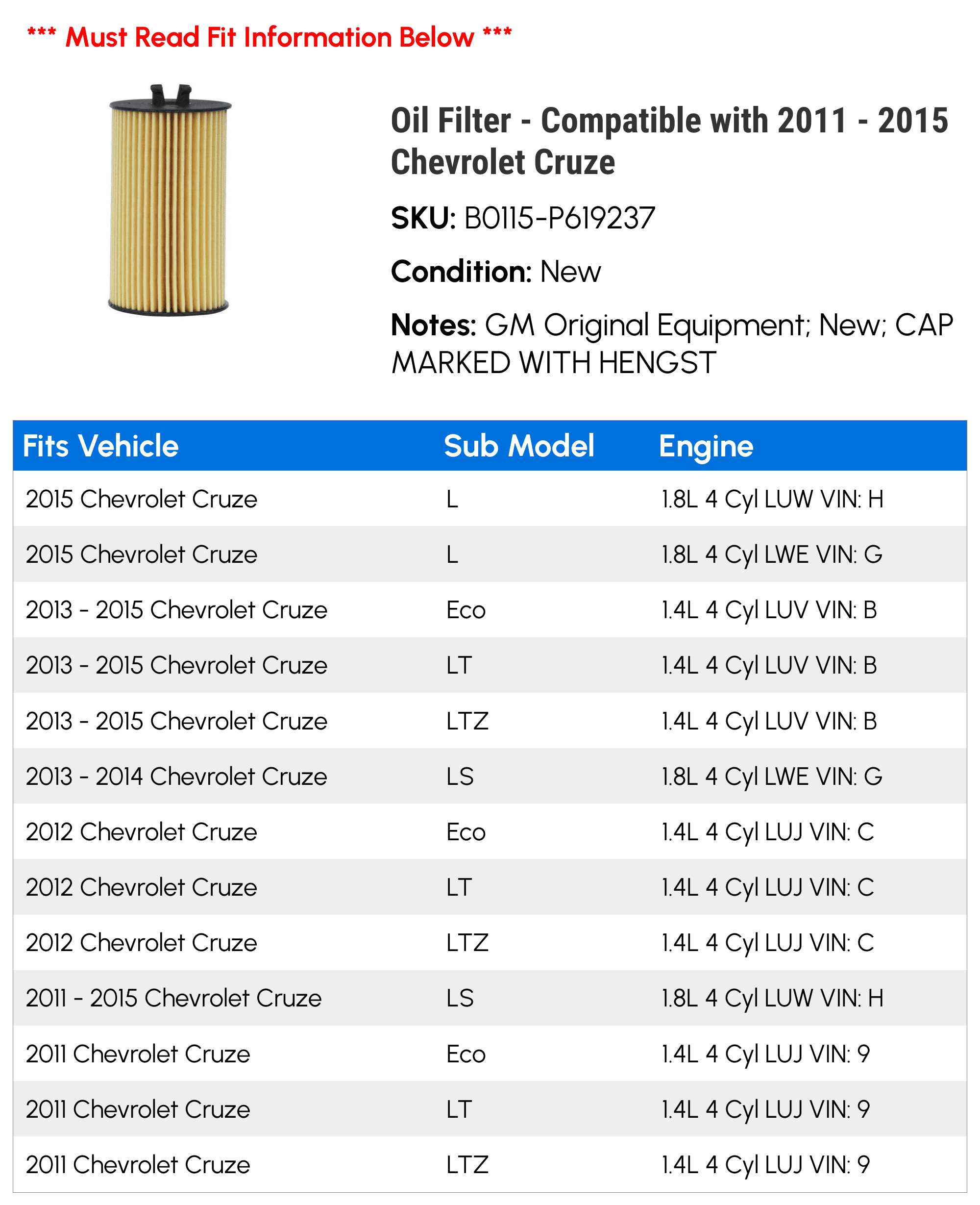
- New oil filter (make sure it’s compatible)
- Oil filter wrench
- 15mm wrench or socket
- Oil drain pan
- Funnel
- Gloves and rags
Steps:
- Warm Up Engine: Run the car for 5 minutes. Warm oil drains faster.
- Lift the Car: Use ramps or a jack and jack stands. Never work under a car supported only by a jack.
- Drain the Oil: Place the drain pan under the oil pan. Remove the drain plug (15mm). Let oil drain completely (about 10-15 minutes).
- Remove Oil Filter: Use the oil filter wrench to loosen the old filter. Some oil will spill, so keep the pan underneath.
- Install New Filter: Apply a thin layer of oil to the new filter’s gasket. Screw it in by hand until snug, then tighten 1/4 turn more.
- Replace Drain Plug: Tighten the drain plug securely, but don’t overtighten.
- Add New Oil: Pour in about 4.5 quarts of oil. Use the funnel to avoid spills.
- Check Level: Start the engine, let it run for a minute, then turn it off and check for leaks. Wait 5 minutes, then check the dipstick and add more oil if needed until you reach 4.8 quarts.
- Dispose of Old Oil: Take used oil and filter to a recycling center.
A helpful tip for beginners: put down cardboard or an old sheet to catch any spills. Oil stains are hard to clean from driveways.
Many people forget to reset the oil change light. For the Cruze, turn the key to “on” (engine off), then press the gas pedal three times within five seconds. The light should flash, then turn off.
6. Oil Change Intervals And Maintenance Schedule
Sticking to the right oil change interval keeps your engine protected and efficient. For the Chevy Cruze 1.8, Chevrolet recommends:
- Every 7,500 miles (12,000 km) or once a year, whichever comes first, using full synthetic oil.
If you drive in harsh conditions (lots of short trips, dusty roads, or extreme temperatures), it’s wise to change the oil every 5,000 miles (8,000 km) instead. Oil breaks down faster under stress, and dirty oil can’t protect your engine well.
Here’s a quick schedule for reference:
| Driving Condition | Recommended Oil Change Interval |
|---|---|
| Normal (highway, mild climate) | 7,500 miles / 12 months |
| Severe (city, short trips, hot or cold) | 5,000 miles / 6 months |
A common mistake is waiting for the oil light to come on before changing the oil. The oil light signals low oil pressure, not just old oil. If you see the oil light, stop driving immediately and check your oil.
Following the interval in your owner’s manual is the best way to prevent engine trouble.
Another non-obvious insight: even if you don’t drive much, oil can degrade over time. Moisture and contaminants build up, so change the oil at least once a year, even if you drive fewer miles.

7. Common Oil-related Problems In Chevy Cruze 1.8
Every car has its quirks, and the Chevy Cruze 1.8 is no different. Here are the most common oil-related issues owners report:
- Oil Leaks: Over time, gaskets and seals can wear out, leading to leaks around the valve cover or oil pan. Small leaks often show up as oil spots under your car. Catching leaks early prevents bigger problems.
- Burning Oil: Some Cruze 1.8 engines slowly burn oil, especially as they age. If your oil level drops between changes and you don’t see a leak, your engine might be burning oil. Monitor closely and top up as needed.
- Oil Light On: This usually means low oil pressure, not just low oil level. If the light comes on, check your oil right away. If the oil level is fine, there may be a deeper issue with the oil pump or pressure sensor.
- Dirty or Sludgy Oil: Skipping oil changes or using poor-quality oil can cause sludge buildup. Sludge restricts oil flow, which can damage your engine. Regular oil changes with high-quality oil prevent this.
- Faulty Oil Filter: Using the wrong filter or installing it incorrectly can let dirty oil circulate in the engine. Always double-check filter compatibility and installation.
- Oil Filler Cap Not Tightened: If the oil cap isn’t tight, oil can splash out and create a mess in the engine bay. Always double-check the cap after an oil change.
- Incorrect Oil Type: Using the wrong viscosity or a non-Dexos oil can cause engine noises, poor performance, or even damage over time. Stick to 5W-30 full synthetic, Dexos-approved oil.
- PCV Valve Issues: The Positive Crankcase Ventilation (PCV) valve can clog or fail, leading to increased oil consumption or leaks. Replacing the PCV valve is inexpensive and can prevent oil-related problems.
Many beginners overlook the PCV valve or use cheap oil filters to save money. These shortcuts can lead to expensive repairs down the road.
8. Tips For Extending Engine Life With Proper Oil Maintenance
A well-maintained engine can last for hundreds of thousands of miles. Here are expert tips to get the most life from your Chevy Cruze 1.8:
- Use High-Quality Oil: Always buy oil that meets the Dexos1 Gen 2 standard. Cheaper oils may not protect your engine as well.
- Change Oil Regularly: Don’t stretch intervals too far. Old oil can’t protect your engine from wear.
- Check Oil Monthly: Make it a habit to check your oil level every month. Early detection of low oil saves engines.
- Don’t Ignore the Oil Light: If your oil pressure light comes on, stop and check your oil right away.
- Warm Up Gently: In cold weather, drive gently for the first few minutes. Cold oil is thicker and moves slower.
- Replace the Oil Filter Each Change: A clean filter keeps dirt out of your engine.
- Fix Leaks Quickly: Small leaks can become big, expensive problems if ignored.
- Avoid Overfilling: Add oil in small amounts and check the dipstick. Overfilling can damage seals and cause leaks.
- Use OEM or High-Quality Filters: Cheap filters may not fit well or clean oil properly.
- Keep Maintenance Records: Write down oil changes and repairs. This helps with resale and reminds you when service is due.
A surprising tip: after an oil change, check your oil again after a few days and a few drives. Sometimes oil settles or leaks develop after a change. Double-checking can prevent issues.
If you’re unsure about anything, ask a trusted mechanic or refer to the owner’s manual. Keeping up with oil maintenance is the single most important thing you can do for your Cruze.
Frequently Asked Questions
How Much Oil Does A Chevy Cruze 1.8 Take With A Filter Change?
The Chevy Cruze 1.8 takes 4.8 quarts (4.5 liters) of oil when you include the oil filter in the change. This is the amount recommended by Chevrolet for a full oil and filter replacement.
What Kind Of Oil Should I Use For My Chevy Cruze 1.8?
You should use SAE 5W-30 full synthetic oil, preferably one that meets the Dexos1 Gen 2 standard. This type of oil offers the best protection and performance for your engine.
How Often Should I Change The Oil In My Chevy Cruze 1.8?
Change your oil every 7,500 miles (12,000 km) or at least once a year, whichever comes first. If you drive in harsh conditions, change it every 5,000 miles (8,000 km) instead.
Can I Use 10w-30 Or 5w-20 Oil In My Chevy Cruze 1.8?
No, you should not use 10W-30 or 5W-20 oil. The Cruze 1.8 engine is designed for 5W-30 oil. Using the wrong viscosity can harm your engine and reduce efficiency.
What Should I Do If My Chevy Cruze Is Burning Oil?
If you notice your oil level dropping between changes and there are no visible leaks, your engine may be burning oil. Check your oil level more often and top up as needed. If the problem gets worse, have a mechanic check for worn piston rings or valve seals.
For more details on engine oil standards and recommendations, you can visit the official Chevrolet Oil Change Guide.
Taking care of your Chevy Cruze 1. 8’s oil needs isn’t complicated, but it does require some attention to detail. By following the guidance above, you’ll help your engine last longer, run better, and avoid costly problems. Regular checks, the right oil, and sticking to the recommended schedule will keep your Cruze running strong for years to come.