
The Toyota FJ Cruiser is more than just a vehicle—it’s a statement. Recognized for its bold design and rugged performance, the FJ Cruiser has built a loyal following among off-road adventurers and daily drivers alike. But while many owners appreciate its power and unique style, few realize how much the oil capacity of an FJ Cruiser influences its reliability and longevity. Understanding the correct oil capacity is essential for anyone looking to maximize their vehicle’s performance and avoid costly mistakes. If you want your FJ Cruiser to stay in top condition, learning about its oil needs is a key step. This guide covers everything you need to know, from factory specifications to practical maintenance tips, so you can confidently care for your FJ Cruiser—whether you’re a seasoned gearhead or a new owner.
What Is Oil Capacity And Why Does It Matter?
Oil capacity simply means the total amount of engine oil your vehicle needs for proper lubrication and cooling. For the FJ Cruiser, this is not just a number in the manual—it’s a crucial part of the car’s health. Using too little oil can cause increased friction and heat, which damages engine parts over time.
Too much oil, on the other hand, may cause pressure build-up, leaks, or even damage seals and gaskets.
The oil capacity affects:
- Engine lubrication: Ensures moving parts don’t grind against each other.
- Cooling: Helps dissipate heat away from vital engine components.
- Engine cleanliness: Traps dirt and particles, preventing buildup inside the engine.
Many new owners overlook the difference between “oil change amount” and “total oil capacity.” The oil change amount is how much oil you add during a regular change, while the total capacity includes oil trapped in the filter and engine passages. Knowing this difference prevents overfilling or running with too little oil.
Fj Cruiser Oil Capacity By Model Year
Toyota produced the FJ Cruiser from 2006 to 2014 (with some international markets seeing production up to 2022). Over the years, the engine design and oil requirements stayed similar, but there are a few small variations.
Below is a detailed breakdown of the FJ Cruiser oil capacity by model year and engine type.
| Model Year | Engine | Oil Capacity (with filter) | Oil Capacity (without filter) | Recommended Oil Grade |
|---|---|---|---|---|
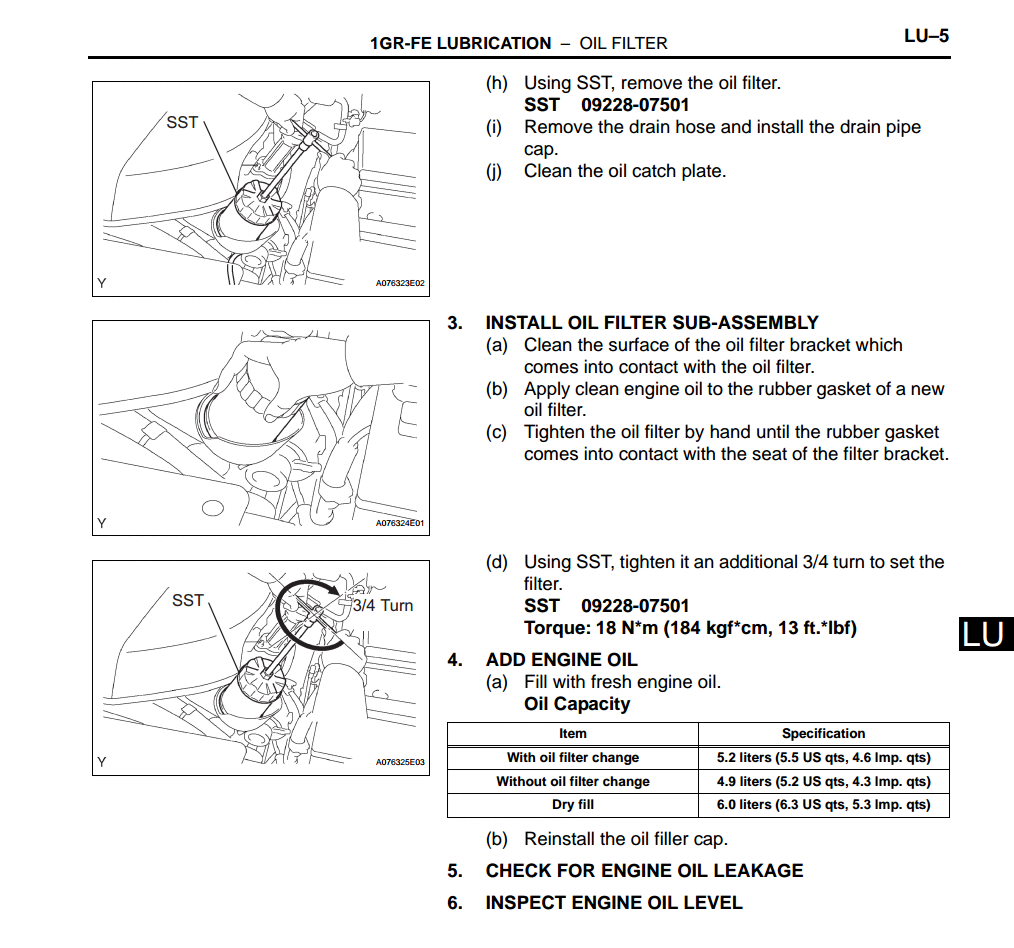
| 2006-2009 | 4.0L V6 (1GR-FE) | 5.5 quarts (5.2 liters) | 5.2 quarts (4.9 liters) | SAE 5W-30 |
| 2010-2014 | 4.0L V6 (1GR-FE, Dual VVT-i) | 6.4 quarts (6.1 liters) | 6.1 quarts (5.8 liters) | SAE 0W-20 or 5W-30 |
| 2015-2022 (International) | 4.0L V6 (1GR-FE, Dual VVT-i) | 6.4 quarts (6.1 liters) | 6.1 quarts (5.8 liters) | SAE 0W-20 or 5W-30 |
Key Takeaways
- 2006–2009 models: Slightly lower oil capacity.
- 2010 onward: Increased capacity due to engine updates (Dual VVT-i system).
- Always check your owner’s manual for your specific year and region.
Many owners miss the fact that oil capacity can differ between U. S. , Middle East, and other international FJ Cruisers, even within the same year.
How To Check And Change Oil In An Fj Cruiser
Changing the oil in your FJ Cruiser is one of the simplest ways to extend its life. Even if you don’t do it yourself, understanding the process helps you spot mistakes at the shop.
Step-by-step Oil Change Guide
- Gather Supplies
- Correct engine oil (see table above)
- New oil filter
- Oil drain pan
- Socket wrench (usually 14mm for drain plug)
- Funnel
- Gloves and rags
- Warm Up the Engine
- Run the engine for 3–5 minutes. Warm oil drains more easily and removes more contaminants.
- Lift and Secure the Vehicle
- Use ramps or jack stands. Never rely on a jack alone.
- Remove the Oil Drain Plug
- Place the oil pan under the drain plug. Loosen the plug and let oil flow out. Be careful—oil may be hot.
- Replace Oil Filter
- Unscrew the old filter. Some oil will spill, so have rags ready. Lubricate the gasket on the new filter with a drop of fresh oil, then install by hand.
- Install Drain Plug
- Replace the plug and tighten it snugly—do not over-tighten.
- Add New Oil
- Pour in the recommended amount for your year/model. Use a funnel to avoid spills.
- Check Oil Level
- After waiting a few minutes, check the dipstick. The level should be between the “min” and “max” marks.
- Start Engine and Check for Leaks
- Let the engine run for a minute, then check under the car for leaks.
- Top Off If Needed
- Re-check the dipstick and add oil as needed.
Practical Tips
- Always use a new oil filter with every oil change.
- Dispose of old oil responsibly—most auto parts stores will take it for free.
- Do not overfill. More oil is not better and can damage the engine.
Many first-time FJ Cruiser owners forget to check the oil level after the engine has run for a few minutes post-change. This can lead to running with less oil than needed.
Best Oil Types For The Fj Cruiser
Choosing the right engine oil is just as important as knowing the capacity. The FJ Cruiser’s V6 engine is designed for specific oil grades that provide the best balance of protection and efficiency.
Recommended Oil Grades
- 2006–2009: SAE 5W-30 (conventional or synthetic)
- 2010–2022: SAE 0W-20 (full synthetic preferred), but SAE 5W-30 can be used if 0W-20 is unavailable
Synthetic Vs. Conventional Oil
- Synthetic oil offers better protection at extreme temperatures, resists breakdown, and supports longer change intervals.
- Conventional oil is cheaper but requires more frequent changes and offers less protection.
Most FJ Cruiser experts recommend synthetic oil, especially if you drive in hot climates, tow heavy loads, or do off-roading.
Oil Brand Recommendations
While Toyota Genuine Motor Oil is always a safe choice, top brands like Mobil 1, Castrol, and Valvoline are also suitable. Always look for API certification on the label.

How Often Should You Change Oil In An Fj Cruiser?
Oil change intervals depend on your driving style, oil type, and climate. Toyota recommends:
- Every 5,000 miles (8,000 km) or 6 months for regular driving
- Every 3,000 miles (5,000 km) for severe conditions: Frequent short trips, towing, dusty roads, or extreme temperatures
Using synthetic oil? Some experts suggest you can safely go up to 7,500 miles (12,000 km) between changes, but only if you monitor the oil level and quality.
Many new owners overlook the effect of short trips and idling on oil life. Even if you don’t drive much, oil degrades with time, so stick to the calendar interval.
Common Oil Capacity Mistakes Fj Cruiser Owners Make
Understanding the right oil capacity is only half the battle. Avoiding common mistakes can save you from engine problems down the road.
Overfilling
Adding more oil than recommended can cause:
- Increased crankcase pressure
- Foaming of oil (reduces lubrication)
- Oil leaks from seals and gaskets
- Damage to sensors or catalytic converter
If you overfill, drain the excess immediately.
Underfilling
Too little oil leads to:
- Inadequate lubrication
- Overheating
- Faster engine wear
- Lower oil pressure
Always check the dipstick after an oil change.
Not Changing The Oil Filter
The oil filter holds some oil. If not changed, dirty oil stays in the system, contaminating the fresh oil.
Using The Wrong Oil Grade
Using oil that’s too thick (like 10W-40) or too thin (like 0W-16) can lead to poor lubrication, especially at startup.
Ignoring Owner’s Manual
Not all FJ Cruisers use the same oil capacity or grade. Always check your manual for your vehicle’s specs.
Fj Cruiser Oil Filter: What You Need To Know
The oil filter is often overlooked, but it is vital to engine health. It traps particles, preventing sludge and wear.
Choosing The Right Oil Filter
- Use Toyota OEM filters or high-quality aftermarket brands like K&N, Bosch, or WIX.
- Confirm the part number matches your year/model.
- Never reuse an old filter.
How The Oil Filter Affects Capacity
The oil filter holds a small amount of oil (usually 0. 2–0. 3 quarts). When changing oil and filter together, always use the “with filter” capacity.
Oil Change Cost And Diy Vs. Professional Service
Changing oil in your FJ Cruiser is a task many owners tackle themselves, but it’s also common to use a professional service. Here’s what you need to know about costs and pros/cons.
| Service Type | Typical Cost (USD) | What’s Included | Time Required |
|---|---|---|---|
| DIY Oil Change | $35–$60 | Oil, filter, disposal | 30–60 min |
| Independent Shop | $60–$90 | Oil, filter, inspection | 30–45 min |
| Dealership | $80–$120 | OEM oil/filter, inspection, warranty record | 30–60 min |
Diy Pros And Cons
- Pros: Cheaper, you control what goes in your engine, learn more about your vehicle.
- Cons: Can be messy, requires tools, you must dispose of oil properly, no professional inspection.
Professional Service Pros And Cons
- Pros: Fast, convenient, includes inspection, record for warranty.
- Cons: More expensive, risk of incorrect oil if not a Toyota specialist, less personal involvement.
Many owners miss that some quick-lube shops may use oil that doesn’t meet Toyota’s specs. Always confirm the oil grade and filter type before agreeing to service.
Signs Your Fj Cruiser Needs An Oil Change
Waiting for the oil light to come on is a mistake. Your FJ Cruiser will often show subtle signs it needs fresh oil.
Warning Signs
- Engine noise increases (knocking or ticking)
- Oil looks dark or gritty on the dipstick
- Oil level drops faster than normal
- Check Engine or Oil Pressure light appears
- Poor performance or lower fuel economy
- Exhaust smoke becomes darker
If you notice any of these, check your oil level and quality immediately.
How Driving Habits Affect Oil Capacity And Life
Not everyone uses their FJ Cruiser the same way. How you drive influences how often you need to check and change your oil.
Heavy Use
- Towing, off-roading, or carrying heavy loads puts more stress on the engine. Change oil more often.
Short Trips
- Frequent cold starts and short drives don’t let oil reach full temperature. This leads to moisture and sludge buildup, shortening oil life.
Hot Or Dusty Environments
- High temperatures and dust mean the oil breaks down faster and gets dirty more quickly. Check oil more often and change sooner.
Long Highway Drives
- Steady speeds are easier on the engine, so oil lasts longer. Stick to the upper end of the oil change interval.
Many beginners don’t realize that idling for long periods (such as in traffic) is harder on oil than highway driving.
How To Read The Fj Cruiser Oil Dipstick Correctly
Checking oil level seems simple, but there are a few tricks to getting it right.
- Park on a level surface.
- Wait at least 5–10 minutes after shutting off the engine (so oil drains to the pan).
- Pull out the dipstick, wipe it clean, reinsert it fully, then pull it out again.
- Check the level—it should be between the two marks. If near the lower mark, add oil.
Many people check the oil too soon after turning off the engine, leading to a false “low” reading.
Upgrading Oil Capacity For Off-road Or Extreme Use
Some FJ Cruiser owners consider larger oil pans or oil coolers for heavy off-road or towing use. These upgrades can increase oil capacity, helping the engine stay cool and lubricated under stress.
Pros Of Upgrading
- More oil means better cooling and longer oil life
- Can help prevent overheating in extreme conditions
Cons Of Upgrading
- Higher cost and complexity
- Must use the correct dipstick and know new capacity
- Overfilling risk if you use factory specs
Unless you regularly push your FJ Cruiser to the limit, the stock oil system is enough for most owners.
Environmental Impact Of Oil Changes
Changing oil regularly keeps your FJ Cruiser running well, but improper disposal of used oil can harm the environment.
Proper Disposal Tips
- Never pour oil down a drain or onto the ground.
- Store used oil in a sealed container.
- Take it to a recycling center or auto parts store.
Used oil can be cleaned and reused as industrial lubricant or fuel, reducing waste. Learn more about responsible oil recycling at the U.S. EPA website.
Fj Cruiser Oil Capacity Compared To Other Toyota Suvs
To give you a sense of scale, here’s how the FJ Cruiser’s oil capacity compares to other popular Toyota SUVs.
| Model | Engine | Oil Capacity (with filter) |
|---|---|---|
| FJ Cruiser (2010+) | 4.0L V6 (1GR-FE) | 6.4 quarts (6.1 liters) |
| 4Runner (2010+) | 4.0L V6 (1GR-FE) | 6.6 quarts (6.2 liters) |
| Land Cruiser (2010+) | 5.7L V8 | 8.5 quarts (8.0 liters) |
| Highlander (2010+) | 3.5L V6 | 6.4 quarts (6.1 liters) |
| RAV4 (2010+) | 2.5L I4 | 4.6 quarts (4.4 liters) |
You’ll notice the FJ Cruiser’s oil capacity is in line with other mid-size SUVs with V6 engines, but less than the larger V8-powered Land Cruiser.
Two Insights Most Fj Cruiser Owners Miss
- Oil Capacity Changes With Engine Updates: Many assume all FJ Cruisers use the same oil volume. In reality, the introduction of Dual VVT-i in 2010 increased the oil capacity. Always check your specific model year.
- Climate and Driving Conditions Matter: The standard oil change interval may not apply if you live in harsh climates or tow frequently. Adjust your oil change timing and always check oil color and level more often under tough conditions.
Frequently Asked Questions
What Is The Oil Capacity Of A 2012 Fj Cruiser?
The 2012 FJ Cruiser uses a 4.0L V6 (1GR-FE, Dual VVT-i) engine. Its oil capacity is 6.4 quarts (6.1 liters) with a new oil filter, or 6.1 quarts (5.8 liters) without filter.
Can I Use 5w-30 Oil Instead Of 0w-20 In My Fj Cruiser?
Yes, you can use SAE 5W-30 if 0W-20 is not available, especially in warmer climates. However, 0W-20 (synthetic) is recommended for best fuel efficiency and cold start protection, especially in 2010 and newer models.
What Happens If I Overfill The Oil In My Fj Cruiser?
Overfilling can cause increased pressure, oil leaks, and damage to seals or engine sensors. It may also lead to oil foaming, which reduces lubrication. Always drain excess oil if you accidentally overfill.
How Do I Know If My Oil Filter Needs Changing?
Change the oil filter with every oil change. Signs of a clogged filter include noisy engine operation, decreased oil pressure, and dirty oil. Using a new filter ensures clean oil circulates through your engine.
Is It Okay To Go Over 5,000 Miles Between Oil Changes?
If you use full synthetic oil and drive mainly on highways, you can sometimes extend intervals up to 7,500 miles. However, for severe driving (towing, off-roading, dusty roads), stick to 5,000 miles or less.
Taking care of your FJ Cruiser’s oil needs is not just about following numbers—it’s about understanding your vehicle and adapting maintenance to your own driving habits. With the right oil, the correct capacity, and regular checks, your FJ Cruiser will reward you with years of smooth, reliable service—on and off the road.