
When you own a Ford Ranger, understanding the oil capacity is more than just a technical detail—it’s a key part of keeping your truck running well for years. The right amount of oil protects the engine from wear, helps it stay cool, and keeps everything working smoothly. But oil capacity isn’t the same for every Ranger. It changes based on the year, engine type, and even the market where the vehicle was sold. Many drivers are surprised by how much these details matter when it’s time for an oil change. If you use too much or too little oil, you can cause real damage to your engine.
This article will guide you through everything you need to know about Ford Ranger oil capacity. From model differences to practical oil change tips, you’ll get clear answers. We’ll also look at why oil capacity matters, how to check it, and what happens if you get it wrong. Whether you drive an older model or the latest version, you’ll find helpful details here. This is not just a list of numbers—by the end, you’ll know how oil capacity affects your Ranger, and you’ll avoid common mistakes that cost beginners time and money.
Why Oil Capacity Matters For Your Ford Ranger
The oil capacity is the exact amount of engine oil your Ranger needs for safe operation. This amount is not random. It is carefully chosen by Ford engineers to keep the engine parts moving smoothly and to prevent overheating. If you use the correct oil capacity:
- The engine stays properly lubricated.
- Oil can pick up and carry away dirt and metal particles.
- The engine temperature stays in the safe range.
On the other hand, using too little oil means parts rub together, causing wear and overheating. Using too much can increase pressure inside the engine, leading to leaks or damage to seals. Both mistakes can shorten the life of your engine and cost you a lot in repairs.
Factors That Affect Ford Ranger Oil Capacity
Not all Ford Rangers use the same amount of oil. Several factors make a difference:
- Engine Type: Four-cylinder, V6, and diesel engines all have different oil needs.
- Model Year: Changes in engine design or emissions systems can change oil capacity.
- Oil Filter Replacement: Changing the oil filter at every oil change (recommended) can slightly increase the amount of oil needed.
- Market Differences: Rangers made for North America may have different engines and capacities than those made for Australia, Europe, or Asia.
- Aftermarket Modifications: Larger oil pans or performance upgrades can change oil needs.
Understanding these factors is important before you buy oil or start a DIY oil change. Always check your owner’s manual, but this guide will give you a strong overview for every major Ford Ranger generation.

Credit: www.youtube.com
Ford Ranger Oil Capacity By Model Year And Engine
The Ford Ranger has been built since the early 1980s, with several generations and engine types. Oil capacities can range from about 4 quarts (3. 8 liters) to over 7 quarts (6. 6 liters), depending on the engine. Here’s a detailed look at the most common Ford Ranger models and their oil capacities.
First Generation (1983–1992)
Early Ford Rangers were simple, with mostly four-cylinder and V6 engines. Here’s how their oil capacities break down:
| Year | Engine | Oil Capacity (with filter) |
|---|---|---|
| 1983–1988 | 2.0L I4 | 4.0 quarts (3.8 liters) |
| 1983–1988 | 2.3L I4 | 4.0 quarts (3.8 liters) |
| 1986–1992 | 2.9L V6 | 5.0 quarts (4.7 liters) |
| 1989–1992 | 2.3L I4 | 4.0 quarts (3.8 liters) |
| 1989–1992 | 4.0L V6 | 5.0 quarts (4.7 liters) |
Most owners of these early models find that the 2.3L I4 engine is the most common, and it’s important to note that the oil filter should always be changed with the oil.
Second Generation (1993–1997)
This generation kept similar engines but introduced more V6 options. Oil capacities remained mostly unchanged, but the 3. 0L V6 became popular.
| Year | Engine | Oil Capacity (with filter) |
|---|---|---|
| 1993–1997 | 2.3L I4 | 4.0 quarts (3.8 liters) |
| 1993–1997 | 3.0L V6 | 4.0 quarts (3.8 liters) |
| 1993–1997 | 4.0L V6 | 5.0 quarts (4.7 liters) |
The 3.0L V6 is an engine where many owners make a mistake: it uses the same oil capacity as the four-cylinder, not the larger V6.
Third Generation (1998–2012, North America)
Here, Ford updated engines and made the Ranger more modern. The 2. 5L engine replaced the 2. 3L, and the 4. 0L V6 continued to be the highest-capacity option.
| Year | Engine | Oil Capacity (with filter) |
|---|---|---|
| 1998–2001 | 2.5L I4 | 4.0 quarts (3.8 liters) |
| 2001–2011 | 2.3L I4 DOHC | 4.0 quarts (3.8 liters) |
| 1998–2011 | 3.0L V6 | 4.0 quarts (3.8 liters) |
| 1998–2011 | 4.0L V6 | 5.0 quarts (4.7 liters) |
A key detail for owners: after 2001, the 2.3L engine was upgraded to a DOHC (dual overhead cam) design, but the oil capacity stayed the same.
International Ford Ranger (1998–2011)
Outside North America, Rangers were built on a different platform with different engines, including diesels.
| Year | Engine | Oil Capacity (with filter) |
|---|---|---|
| 1999–2006 | 2.5L WL Diesel | 7.0 quarts (6.6 liters) |
| 2002–2011 | 2.5L WLT Turbo Diesel | 7.0 quarts (6.6 liters) |
| 2002–2011 | 2.6L Petrol | 5.0 quarts (4.7 liters) |
Diesel engines, especially the 2.5L WL and WLT, have a much higher oil capacity. This is because diesel engines run hotter and need more oil for cooling.
T6 Ford Ranger (2012–2022, Global Model)
This generation is the most complex, with many engine choices worldwide. North American Rangers returned in 2019 with turbocharged engines.
North America (2019–2022)
- 2.3L EcoBoost I4: 6.2 quarts (5.9 liters) with filter
Australia, Europe, South Africa, Asia (2012–2022)
- 2.2L Duratorq Diesel: 7.0 quarts (6.6 liters) with filter
- 3.2L Duratorq Diesel: 8.5 quarts (8.0 liters) with filter
- 2.0L Bi-Turbo Diesel: 7.4 quarts (7.0 liters) with filter
- 2.5L Petrol: 5.3 quarts (5.0 liters) with filter
The 3.2L Duratorq is the largest-capacity Ranger engine. Many new owners are surprised by how much oil it takes—almost double the older V6 engines.
Next-generation Ranger (2023–present)
The newest Rangers have updated engines and capacities:
- 2.0L Turbo Diesel: 7.4 quarts (7.0 liters) with filter
- 2.3L EcoBoost Petrol: 6.2 quarts (5.9 liters) with filter
- 3.0L V6 Turbo Diesel: 8.5 quarts (8.0 liters) with filter
As modern engines become more complex, oil capacities have increased. These higher amounts help with cooling and emissions.
Understanding The Numbers: Why Oil Capacity Changes
Engineers set oil capacity based on several technical needs:
- Engine Size: Bigger engines have more moving parts and need more oil.
- Turbocharging: Turbochargers get extremely hot, so extra oil helps cool them.
- Diesel vs. Petrol: Diesel engines need more oil for cooling and cleaning.
- Emissions Equipment: Newer engines have extra parts that can affect oil flow and capacity.
- Oil Filter Size: Larger or higher-capacity filters also increase oil needs.
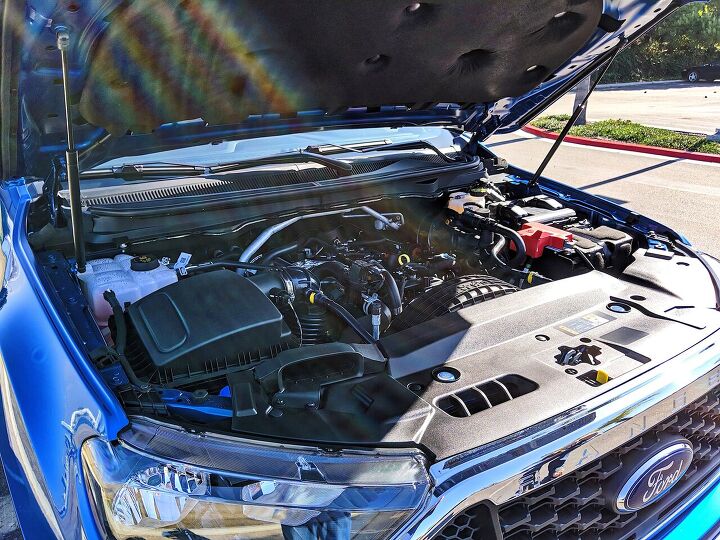
A non-obvious detail: some Rangers, especially diesels, have large oil sumps not just for cooling, but also to allow longer oil change intervals. This is important for commercial users who want to reduce downtime.
Credit: www.thetruthaboutcars.com
How To Check Your Ford Ranger’s Oil Capacity
It’s always smart to double-check your exact oil capacity before an oil change. Here’s how:
- Look in Your Owner’s Manual: The manual lists the correct oil capacity, usually in both quarts and liters.
- Check the Engine Label: Some Rangers have a label under the hood with oil specs.
- Use a Trusted Online Source: Official Ford websites or high-authority car sites are helpful.
- Ask Your Dealer or Mechanic: If you’re unsure, professionals will know the answer.
When in doubt, always add oil slowly and check the dipstick as you go. Too much oil can be as harmful as too little.
Ford Ranger Oil Change: Step-by-step Guide
Changing oil in your Ranger isn’t difficult, but attention to detail matters. Here’s a practical step-by-step process:
- Warm Up the Engine: Let it run for 5–10 minutes. Warm oil drains faster.
- Turn Off and Secure the Vehicle: Park on level ground. Use the parking brake.
- Gather Tools and Materials:
- Correct amount and type of oil
- New oil filter
- Oil catch pan
- Wrenches
- Funnel
- Gloves
- Drain Old Oil:
- Remove the oil drain plug with a wrench.
- Let the oil drain completely into the pan.
- Replace Oil Filter:
- Use an oil filter wrench to remove the old filter.
- Lubricate the new filter’s rubber gasket with a little fresh oil.
- Install the new filter by hand—do not overtighten.
- Replace Drain Plug: Tighten it securely, but don’t strip the threads.
- Add New Oil:
- Use a funnel to pour in about 90% of the recommended amount.
- Wait a minute, then check the dipstick.
- Add more oil slowly until you reach the “full” mark.
- Run the Engine: Let it idle for 2–3 minutes. This circulates oil through the filter.
- Check for Leaks: Look under the vehicle and around the oil filter.
- Check Oil Level Again: Shut off the engine, wait 2 minutes, then check the dipstick again. Top up if needed.
A common beginner mistake: forgetting to replace the drain plug or not tightening the oil filter enough. Always double-check before starting the engine.
Choosing The Right Oil For Your Ford Ranger
Oil capacity is only part of the story. The type of oil you use also matters:
- Viscosity: Most Rangers use 5W-20, 5W-30, or 10W-30 for petrol engines; 5W-30 or 10W-40 for diesels. Check your manual.
- Synthetic vs. Conventional: Modern Rangers (especially turbocharged and diesels) need full synthetic oil for best protection.
- Quality: Use oil that meets Ford’s specification (like WSS-M2C930-A or WSS-M2C913-D).
- Climate: In very hot or cold areas, you might need a different viscosity.
For example, a 2019 Ranger 2. 3L EcoBoost requires 5W-30 full synthetic, while an older 2. 3L I4 can use 5W-20 conventional or synthetic.
Ford Ranger Oil Capacity Comparison: Key Models
Here is a quick comparison of oil capacities for popular Ranger engines from different years:
| Model Year | Engine | Oil Capacity (with filter) |
|---|---|---|
| 1996 | 2.3L I4 | 4.0 quarts (3.8 liters) |
| 2005 | 4.0L V6 | 5.0 quarts (4.7 liters) |
| 2015 (Global) | 3.2L Diesel | 8.5 quarts (8.0 liters) |
| 2020 | 2.3L EcoBoost | 6.2 quarts (5.9 liters) |
| 2023 | 3.0L V6 Diesel | 8.5 quarts (8.0 liters) |
This table shows how oil needs have grown as engines become more advanced.
What Happens If You Use The Wrong Oil Capacity?
Many drivers think a little more or less oil is harmless. This is not true. Here’s what can go wrong:
- Too Little Oil: Parts are not fully covered, leading to friction, overheating, and fast engine wear. Oil pressure drops, which can trigger warning lights or engine shutdown.
- Too Much Oil: Oil can foam, which reduces lubrication. High pressure can damage seals and gaskets, causing leaks. In turbocharged engines, too much oil can even reach the turbo, causing smoke or damage.
- Wrong Oil Type: Even if the capacity is correct, using the wrong viscosity or not using synthetic when required can void your warranty and shorten engine life.
A detail most beginners miss: Some Rangers have oil level sensors that will trigger a dashboard warning if the oil is too low or high, but not all models have this feature. Relying only on warning lights is risky—always check the dipstick.
How Often Should You Change The Oil?
Oil change intervals depend on your engine type, oil type, and driving conditions:
- Older Rangers (before 2012): Every 3,000–5,000 miles (4,800–8,000 km) with conventional oil.
- Modern Rangers (2012+): Every 7,500–10,000 miles (12,000–16,000 km) with full synthetic oil.
- Diesel Engines: Usually every 10,000 miles (16,000 km), but check your manual.
- Severe Driving (towing, off-road, dusty roads): Change oil more often, as short as every 5,000 miles (8,000 km).
A surprising fact: Even if you drive very little, oil should be changed at least once a year. Oil breaks down over time, not just with miles.
Practical Tips To Avoid Oil Capacity Mistakes
- Measure Carefully: Always use a graduated container when pouring oil.
- Let Oil Settle: After adding oil, wait a few minutes before checking the dipstick. Oil needs time to reach the pan.
- Check for Leaks: After every oil change, look under your truck for drips.
- Replace the Oil Filter: Skipping the filter can lead to dirty oil and incorrect oil level readings.
- Keep a Log: Record each oil change with date, mileage, and amount used. This helps spot problems early.
A tip many people miss: If you are unsure about a small amount over or under the recommended capacity (less than 0.1 quart), it’s better to be slightly under than over. Too much oil can cause more problems than a tiny bit less.
Common Myths About Ford Ranger Oil Capacity
Myth 1: All Ford Rangers use the same amount of oil.
Fact: Oil capacity changes a lot by year, engine, and market.
Myth 2: Oil capacity doesn’t matter as long as you change it often.
Fact: Incorrect oil levels can damage your engine, even if changed frequently.
Myth 3: You don’t need to change the oil filter every time.
Fact: Old filters can hold dirty oil and reduce capacity accuracy.
Myth 4: Synthetic oil increases oil capacity.
Fact: Synthetic and conventional oil have the same capacity requirements. Only engine design affects capacity.
Myth 5: Dashboard warnings always alert you to oil problems.
Fact: Not all Rangers have oil level sensors. Always check manually.

Credit: www.super-nano.co
Upgrading Your Ford Ranger’s Oil System
Some owners add larger oil pans or high-performance oil filters. These upgrades can increase oil capacity by 0.5–1 quart (0.5–1 liter). If you make modifications:
- Always use the new, correct capacity.
- Mark the new capacity in your maintenance records.
- Consider using high-quality synthetic oil for maximum engine protection.
An important insight: Upgrades can help with towing or performance, but only if you keep careful records and use the correct oil.
Environmental Impact And Oil Disposal
Used oil is hazardous. Never pour it down the drain or in the trash. Here’s what to do:
- Collect old oil in a sealable container.
- Take it to an auto parts store, recycling center, or mechanic—most accept used oil for free.
- Used oil filters should also be recycled.
Proper disposal protects the environment and avoids legal trouble. For more information, check the EPA’s guidelines on oil recycling.
Frequently Asked Questions
What Is The Oil Capacity Of A 2020 Ford Ranger Ecoboost?
The 2020 Ford Ranger with the 2.3L EcoBoost engine uses 6.2 quarts (5.9 liters) of oil with a new filter. Always use 5W-30 full synthetic oil for this engine.
How Do I Know If I’ve Overfilled My Ranger’s Oil?
Signs of overfilling include oil above the “max” line on the dipstick, white or blue smoke from the exhaust, oil leaks, or a burning smell. Drain excess oil immediately to prevent engine damage.
Can I Use 5w-30 Oil In An Older Ranger That Recommends 5w-20?
It’s best to use the oil viscosity recommended by Ford. Using 5W-30 instead of 5W-20 in an older engine may be safe in hot climates, but always check your owner’s manual or ask a mechanic first.
Do I Need To Change The Oil Filter Every Time?
Yes, change the oil filter with every oil change. A new filter ensures clean oil flows through your engine and helps you measure the correct oil capacity.
How Often Should I Check My Oil Level?
Check your Ranger’s oil at least once a month and before long trips. More frequent checks are wise if you drive in tough conditions, tow, or notice oil leaks.
When you understand your Ford Ranger’s oil capacity, you protect your investment and help your truck last longer. Paying attention to these details isn’t just for experts—it’s the best way to avoid engine trouble, save money, and drive with confidence.