
The Jeep Wrangler is one of the most iconic off-road vehicles in the world. If you own one or plan to, knowing the right oil capacity for your Jeep is essential. Oil is the lifeblood of your Wrangler’s engine, and using the correct amount keeps your engine healthy, prevents damage, and maintains performance. But oil capacity varies depending on the model year, engine type, and even how you use your Jeep. Many owners get confused because there are different engines, and oil recommendations have changed over the years.
This guide will help you understand everything about Jeep Wrangler oil capacity, from factory specs to real-world advice. You’ll also learn about what affects oil use, how to check and change your oil, and how to avoid common mistakes. Whether you’re a new Jeep owner or a seasoned off-roader, you’ll find practical tips and data to keep your Wrangler running strong.
Why Oil Capacity Matters For Your Jeep Wrangler
Engine oil isn’t just for lubrication. It cools engine parts, helps clean away dirt, and protects against wear. If you use too little oil, engine parts can overheat or wear out faster. Too much oil can cause foaming, leaks, or even engine damage.
For the Jeep Wrangler, oil capacity is especially important because these vehicles are often used in tough conditions—hot weather, dust, and off-road driving.
Many beginners overlook the effect of oil capacity on engine life. For example, if you do a lot of off-roading or towing, your engine will run hotter and need fresh, clean oil more often. Also, the wrong oil level can cause the oil pump to lose pressure during steep climbs or descents—a risk unique to off-road vehicles.
Jeep Wrangler Oil Capacity By Generation And Engine
There’s no single answer to the question, “What is the oil capacity of a Jeep Wrangler? ” Over the years, Jeep has used many engines in the Wrangler lineup. Below, you’ll find a detailed breakdown by generation and engine type.
Yj (1987–1995)
The YJ was the first Wrangler, known for its square headlights.
- 2.5L I4 Engine: 4.0 quarts (3.8 liters) with filter change
- 4.2L I6 Engine: 6.0 quarts (5.7 liters) with filter change (1987–1990)
- 4.0L I6 Engine: 6.0 quarts (5.7 liters) with filter change (1991–1995)
Tj (1997–2006)
The TJ brought coil spring suspension and a smoother ride.
- 2.5L I4 Engine: 4.0 quarts (3.8 liters) with filter change
- 4.0L I6 Engine: 6.0 quarts (5.7 liters) with filter change
- 2.4L I4 Engine: 4.5 quarts (4.3 liters) with filter change (2003–2006)
Jk (2007–2018)
The JK saw major changes, including four-door Unlimited models.
- 3.8L V6 Engine: 6.0 quarts (5.7 liters) with filter change (2007–2011)
- 3.6L V6 Pentastar Engine: 6.0 quarts (5.7 liters) with filter change (2012–2018)
Jl (2018–present)
The newest generation, with advanced tech and more engine options.
- 2.0L Turbo I4 Engine: 5.0 quarts (4.7 liters) with filter change
- 3.6L V6 Pentastar Engine: 5.0 quarts (4.7 liters) with filter change (JL spec is lower than JK)
- 3.0L EcoDiesel V6 Engine: 9.0 quarts (8.5 liters) with filter change
- 6.4L V8 Engine (Rubicon 392): 7.0 quarts (6.6 liters) with filter change
- 4xe Plug-in Hybrid (2.0L Turbo + Electric): 5.0 quarts (4.7 liters) with filter change
Below is a comparison of oil capacities for the most common Wrangler engines:
| Generation | Engine | Oil Capacity (US quarts) | Liters |
|---|---|---|---|
| YJ | 2.5L I4 | 4.0 | 3.8 |
| YJ/TJ | 4.0L I6 | 6.0 | 5.7 |
| TJ | 2.4L I4 | 4.5 | 4.3 |
| JK | 3.8L V6 | 6.0 | 5.7 |
| JK/JL | 3.6L V6 | 6.0 (JK) / 5.0 (JL) | 5.7 (JK) / 4.7 (JL) |
| JL | 2.0L I4 Turbo | 5.0 | 4.7 |
| JL | 3.0L EcoDiesel | 9.0 | 8.5 |
| JL | 6.4L V8 | 7.0 | 6.6 |
Insight: The 3.6L Pentastar V6 has two different capacities depending on the generation. This often confuses owners who upgrade from JK to JL models.
How To Check Your Jeep Wrangler’s Oil Level
Checking your oil is simple but important. Always check oil when the engine is warm, but turned off for a few minutes. This allows oil to drain back into the oil pan, giving an accurate reading. Here’s how:
- Park on a level surface and turn off the engine.
- Wait at least 5 minutes after shutting off.
- Pull out the dipstick, wipe it clean, reinsert, and pull out again.
- Check that the oil level is between the “MIN” and “MAX” marks.
If it’s low, add oil slowly and recheck. Overfilling can be harmful.
Tip: For turbo or diesel engines, always follow the manufacturer’s advice on when and how to check oil. Some engines require a longer wait for oil to settle.
How Often Should You Change Your Oil?
Oil change intervals depend on your engine, oil type, and how you use your Jeep.
- Conventional oil: Change every 3,000–5,000 miles (4,800–8,000 km)
- Synthetic oil: Change every 5,000–7,500 miles (8,000–12,000 km)
- Severe use (off-roading, towing, dusty or hot conditions): Change more often, sometimes as soon as 3,000 miles.
The owner’s manual always has the final word. Newer Wranglers with oil life monitors may let you go longer between changes, but it’s safest to check oil quality regularly.
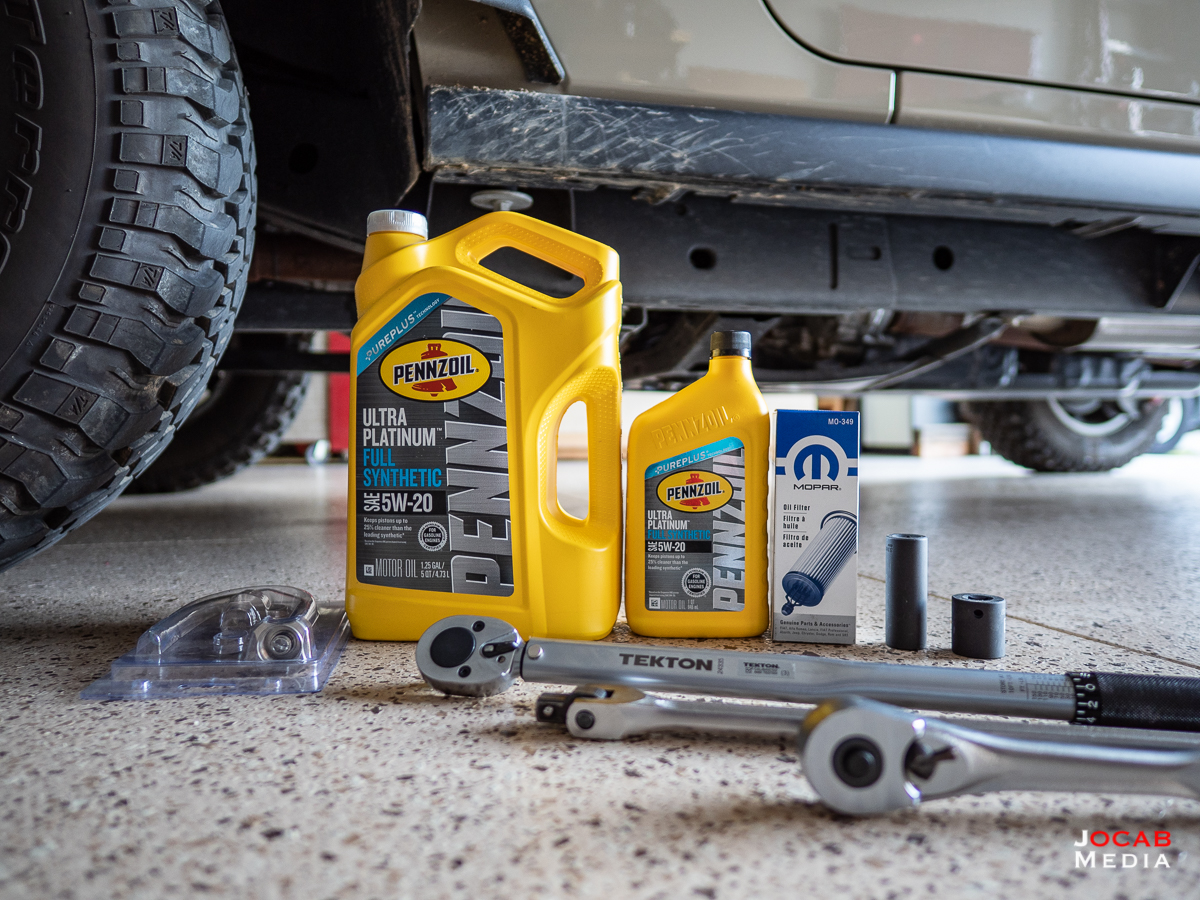
Choosing The Right Oil For Your Wrangler
Oil capacity is important, but so is oil type and viscosity (thickness). These factors affect engine protection, especially in extreme conditions.
Common Oil Types And Viscosities
- 2.5L I4, 4.0L I6, 3.8L V6: 10W-30 or 5W-30 (depending on climate)
- 3.6L V6 Pentastar: 5W-20 (recommended for best performance)
- 2.0L Turbo I4: 0W-20 (for cold starts and fuel efficiency)
- 3.0L EcoDiesel V6: 5W-40 synthetic (diesel-specific)
- 6.4L V8: 0W-40 synthetic (high performance)
Insight: Always use oil that meets Chrysler’s MS-6395 standard (or newer), especially for Pentastar engines. Using generic oil can void your warranty.
Conventional Vs Synthetic Oil
- Conventional oil is cheaper but breaks down faster in extreme conditions.
- Synthetic oil lasts longer, protects better in high heat, and is recommended for modern engines and harsh environments.
For off-roading or hot climates, synthetic is worth the extra cost.
How Oil Capacity Affects Engine Performance
More oil means better cooling and protection, but only up to the manufacturer’s limit. Overfilling can cause the crankshaft to whip air into the oil, leading to foaming and loss of lubrication. Underfilling risks overheating, especially on steep off-road trails.
Example: If your 4.0L I6 is a quart low during a long climb, oil may slosh away from the pickup, causing a sudden drop in oil pressure. This can damage the engine within minutes.
Non-obvious tip: Always double-check oil level after changing it, especially if you use a larger oil filter. Some aftermarket filters hold more oil, slightly increasing capacity.
Step-by-step Guide: How To Change Your Jeep Wrangler’s Oil
Changing your own oil saves money and helps you spot other problems early. Here’s a practical guide:
What You Need
- Correct oil (type and amount for your engine)
- New oil filter
- Oil catch pan (at least 10 quarts for diesel)
- Wrench or socket for drain plug
- Funnel
- Gloves and rags
Steps
- Warm up the engine for 3–5 minutes to thin the oil.
- Park on a level surface, turn off the engine, and let it cool a bit.
- Place the oil catch pan under the drain plug (bottom of the oil pan).
- Remove the drain plug and let oil drain completely (10–15 minutes).
- Remove the old oil filter (use a filter wrench if needed).
- Lubricate the rubber gasket on the new filter with a bit of fresh oil.
- Install the new filter by hand—do not overtighten.
- Replace and tighten the drain plug.
- Add fresh oil using a funnel. Add about 90% of total capacity first.
- Start the engine and let it run for 30 seconds. Check for leaks.
- Shut off the engine, wait 5 minutes, and recheck oil level. Add oil as needed to reach “MAX” line.
Dispose of old oil properly at a recycling center.
Pro tip: Always check the oil filter area for leaks after your first drive. Many leaks start here and are easy to miss.
Common Oil-related Mistakes Jeep Wrangler Owners Make
Even experienced owners make errors with oil changes. Here are some things to watch out for:
- Using the wrong oil viscosity: Thicker or thinner oil than recommended can harm your engine, especially at start-up or in extreme weather.
- Overfilling or underfilling: Either can cause big problems. Always measure and check.
- Not changing the oil filter: The filter traps dirt and metal particles. Skipping it reduces oil life and engine protection.
- Ignoring oil leaks: Small leaks often become big repairs. Always check under your Jeep after an oil change.
- Assuming all Wranglers use the same oil capacity: Each engine is different. Double-check every time.
- Forgetting to reset the oil life monitor: On newer Wranglers, you must reset the system after an oil change, or you’ll get false alarms.
How Off-roading And Towing Affect Oil Use
Jeep Wranglers are built for adventure, but hard driving stresses the engine oil.
Off-roading
Rough terrain causes oil to slosh in the pan, risking oil starvation if you’re low. Mud and water crossings can contaminate oil seals, leading to leaks.
Towing
Towing adds heat and load to the engine, breaking down oil faster. If you tow often, change oil more frequently and use synthetic for better protection.
City Vs Highway
Short trips in the city cause more condensation and fuel dilution in the oil. Highway driving is easier on oil, so you can often go longer between changes.
Hidden risk: Deep water crossings can allow water into the crankcase. If oil looks milky, change it immediately.
Jeep Wrangler Oil Capacity Compared To Other Suvs
Some owners wonder how Wrangler oil capacity compares to other popular off-road SUVs.
| Vehicle | Engine | Oil Capacity (quarts) |
|---|---|---|
| Jeep Wrangler JL | 3.6L V6 | 5.0 |
| Toyota 4Runner | 4.0L V6 | 6.6 |
| Ford Bronco | 2.7L V6 | 6.0 |
| Land Rover Defender | 2.0L I4 | 5.5 |
| Jeep Wrangler JL | 2.0L Turbo I4 | 5.0 |
As you can see, the Wrangler’s oil capacity is similar to rivals, except for the diesel which has a much higher capacity. This extra oil is needed to handle the higher heat and stress of turbo diesel engines.
Signs Of Oil Problems In Your Wrangler
It’s important to spot oil issues early. Watch for these warning signs:
- Low oil pressure light: Stop and check immediately.
- Blue or white smoke from exhaust: Could mean oil is burning—see a mechanic.
- Milky oil on dipstick: Water contamination—change oil now.
- Knocking or ticking noise: May be from low oil or poor lubrication.
- Oil spots under your Jeep: Track down and fix leaks before they get worse.
Many beginners overlook small leaks or assume oil color is not important. Fresh oil is amber; dark or gritty oil means it’s time to change.
How To Choose The Right Oil Filter
A good filter is as important as good oil. Not all filters are the same.
What To Look For
- Correct size and fit for your engine
- High-quality materials (look for brand names like Mopar, Wix, or Bosch)
- Anti-drainback valve: Prevents dry starts, especially on V6 and V8 engines
Avoid cheap, no-name filters—they can collapse or clog, starving your engine of oil.
Tip: Some high-performance filters have a larger capacity and can slightly increase the total oil needed. Always check oil level after the first fill.

What To Do If You Overfill Or Underfill Your Oil
If you add too much oil:
- Do not start the engine.
- Remove excess oil with a suction pump or loosen the drain plug to let oil out slowly.
- Recheck the level until it’s correct.
If you add too little:
- Top up until you reach the proper mark, then check again after a short drive.
Never drive with oil above or below the recommended range. Both can cause expensive engine problems.
Tips For Maintaining Oil Health In Your Wrangler
Keeping oil in good shape is more than just changing it on time.
- Check oil level every 1,000 miles, especially before long trips or off-roading.
- Look for changes in color, smell, or consistency.
- Use high-quality oil and filters, especially for severe use.
- Store extra oil in your Jeep if you travel far from service stations.
Non-obvious insight: If you do water crossings, check your oil after every trip for signs of contamination. Water in the oil can destroy bearings quickly.
When To Seek Professional Help
Most Wrangler owners can handle basic oil changes. But see a professional if:
- You notice a sudden drop in oil pressure.
- There are repeated leaks or oil consumption between changes.
- You hear loud engine noises or see smoke.
- The oil looks milky, gritty, or smells like fuel.
Regular service by a Jeep-certified mechanic ensures warranty protection, especially for newer models.
Jeep Wrangler Oil Capacity: Real-world Owner Advice
Many Jeep owners find small differences between the manual and real-world capacity. For example, after draining the oil overnight or when changing both oil and filter, you may need a bit more than the manual says. Always add oil slowly and check the dipstick, not just the number of quarts.
Some owners also suggest using a larger-capacity oil pan if you do a lot of off-roading or towing—this can help cooling, but always check for fit and clearance issues.
Practical tip: When in doubt, start with the lower end of the oil capacity, run the engine, and add more as needed.
Frequently Asked Questions
What Is The Oil Capacity For A 3.6l Jeep Wrangler?
For the 3.6L Pentastar V6, oil capacity depends on the generation:
- JK (2012–2018): 6.0 quarts (5.7 liters) with filter
- JL (2018–present): 5.0 quarts (4.7 liters) with filter
Always check your owner’s manual to confirm.
Can I Use Synthetic Oil In My Jeep Wrangler?
Yes, synthetic oil is safe and often recommended, especially for newer engines and tough driving conditions. It protects better at high and low temperatures and lasts longer than conventional oil.
What Happens If I Overfill The Oil In My Wrangler?
Overfilling can cause foaming, leaks, high oil pressure, or damage to engine seals. If you overfill, drain the excess before driving.
How Do I Reset The Oil Change Light On My Wrangler?
For most 2012+ Wranglers:
- Turn key to “on” without starting engine.
- Press gas pedal slowly 3 times within 10 seconds.
- Turn key off, then start engine to check if light is off.
Refer to your manual for exact steps.
Where Can I Find Official Oil Specs For My Jeep Wrangler?
The best source is always the owner’s manual or the official Jeep website. You can also check the Jeep Maintenance page for up-to-date info.
Your Jeep Wrangler is built for adventure, but good oil maintenance is key to a long and reliable life. By knowing your oil capacity, using the right oil, and following practical tips, you’ll keep your engine running strong for years to come.
Whether you do your own oil changes or go to a shop, a little knowledge can save you from big problems down the road. Stay curious, take care of your Jeep, and enjoy the ride.