
The Kia K5 has quickly become a popular choice for drivers who want a stylish, reliable, and affordable sedan. But owning a car is not just about enjoying the drive—it also means taking care of your vehicle, so it keeps running smoothly for years. One of the most basic, but important, tasks is making sure your engine has the right amount of oil. If you want to avoid engine damage, poor performance, or costly repairs, you need to know the exact oil capacity for your Kia K5.
This article covers everything you need to know about the Kia K5 oil capacity. Whether you’re preparing for your first oil change, comparing different engine options, or just want to understand how your car works, you will find clear answers here. We’ll look at the oil capacities for each engine type, explain why correct oil levels matter, discuss which oil is best, and guide you through a proper oil change. You’ll also find useful tables comparing specifications, practical maintenance tips, and answers to the most common questions.
Let’s dive into the details that every Kia K5 owner should know.
Why Oil Capacity Matters For Your Kia K5
Many car owners underestimate the importance of using the right amount of oil. The engine oil capacity is not just a technical number—it’s a critical factor in your car’s health.
If you use too little oil, your engine may not get enough lubrication, which increases friction and causes overheating. Over time, this can lead to serious engine damage, even total failure. On the other hand, too much oil can cause foaming, leaks, and pressure issues. This may damage seals and gaskets and can even trigger warning lights or engine problems.
Correct oil capacity ensures:
- Smooth engine operation
- Maximum fuel efficiency
- Longer engine life
- Proper cooling and cleaning of engine parts
Kia engineers test each model to find the best oil amount for optimal performance. So, following the Kia K5 oil capacity for your specific engine isn’t just a suggestion—it’s a necessity.
The 5 Kia K5 Oil Capacities You Must Know
The Kia K5 comes with several engine options, and each has its own oil capacity. To avoid confusion, we’ll cover all five main configurations you’ll find in the Kia K5 lineup from recent years. Always check your owner’s manual or VIN to confirm your exact engine, especially if you have a used model.
1. Kia K5 1.6l Turbocharged I4 (smartstream G1.6 T-gdi)
The 1.6-liter turbocharged engine is the most common option in the Kia K5, especially in the LX, LXS, GT-Line, and EX trims in North America.
- Oil Capacity: 4.8 quarts (4.5 liters) with filter
- Recommended Oil: SAE 0W-30 or 5W-30, Full Synthetic
- Oil Change Interval: 7,500 miles (12,000 km) or 12 months
This engine uses a turbocharger, which means oil plays a critical role in both lubrication and cooling. Using the right amount and type of oil is even more important than with a non-turbo engine. If you run low, the turbocharger can overheat and fail quickly.
When changing the oil, always replace the oil filter to avoid mixing fresh oil with old contaminants.
Quick Tip:
After refilling, start the engine and let it run for 1–2 minutes. Shut off and wait a few minutes, then check the dipstick. Add oil in small amounts if needed to reach the full mark.
2. Kia K5 2.5l Naturally Aspirated I4 (smartstream G2.5 Gdi)
The 2.5-liter non-turbo engine is found in some K5 trims, especially in base and mid-level variants in certain global markets.
- Oil Capacity: 5.1 quarts (4.8 liters) with filter
- Recommended Oil: SAE 0W-20 or 5W-20, Full Synthetic
- Oil Change Interval: 7,500 miles (12,000 km) or 12 months
This engine is simpler than the turbo version, but proper oil levels are still essential for quiet operation and efficiency.
Non-obvious Insight:
With this engine, using lower viscosity oil (like 0W-20) helps cold starts and improves fuel economy. Always check the oil level if you’re driving in hot climates or towing, as oil can burn off faster under stress.
3. Kia K5 2.5l Turbocharged I4 (smartstream G2.5 T-gdi)
The 2.5-liter turbocharged engine is the most powerful K5 engine, available in the sporty GT trim.
- Oil Capacity: 5.3 quarts (5.0 liters) with filter
- Recommended Oil: SAE 0W-30 or 5W-30, Full Synthetic (API SP/GF-6)
- Oil Change Interval: 5,000 miles (8,000 km) or 6 months (recommended due to high performance)
Turbo engines run hotter and at higher pressure. The oil not only lubricates but also cools the turbocharger, which spins at over 100,000 RPM. Using a premium full synthetic oil and never exceeding the oil change interval is critical for engine life.
Practical Example:
Many owners of the K5 GT notice oil consumption is a bit higher, especially when driving hard. Checking the oil level every 1,000–2,000 miles is a smart habit.
4. Kia K5 Hybrid (1.6l Turbo Gdi + Electric Motor)
The Kia K5 Hybrid combines a 1.6-liter turbo engine with an electric motor. Its oil needs are slightly different due to frequent engine starts and stops.
- Oil Capacity: 4.8 quarts (4.5 liters) with filter
- Recommended Oil: SAE 0W-20, Full Synthetic
- Oil Change Interval: 7,500 miles (12,000 km) or 12 months
The hybrid engine may run less often, but each start is a “cold start,” which is harder on oil. High-quality synthetic oil helps reduce wear during these cycles.
Key Insight:
Hybrid engines can sometimes dilute oil with fuel due to short trips and frequent restarts. If you drive mostly in the city, consider changing oil more often than the maximum interval.
5. Kia K5 Lpg (liquefied Petroleum Gas) 2.0l Engine
In some markets (like Korea), the K5 is available with a 2.0-liter LPG engine. While rare in North America, it’s common in Asia and Europe.
- Oil Capacity: 4.2 quarts (4.0 liters) with filter
- Recommended Oil: SAE 5W-20, Full Synthetic or LPG-specific oil
- Oil Change Interval: 6,000 miles (10,000 km) or 12 months
LPG engines run cleaner but hotter. Oil designed for LPG use has extra additives to protect against valve wear.
Special Note:
If you have a K5 LPG, always use oil approved for LPG engines. Regular oil can break down faster due to higher exhaust temperatures.
Kia K5 Oil Capacity Comparison Table
Here’s a quick reference to compare the oil capacities and requirements of all five main Kia K5 engines:
| Engine | Oil Capacity (with filter) | Recommended Oil | Change Interval |
|---|---|---|---|
| 1.6L Turbo I4 | 4.8 quarts (4.5L) | 0W-30 / 5W-30 | 7,500 mi / 12 mo |
| 2.5L NA I4 | 5.1 quarts (4.8L) | 0W-20 / 5W-20 | 7,500 mi / 12 mo |
| 2.5L Turbo I4 | 5.3 quarts (5.0L) | 0W-30 / 5W-30 | 5,000 mi / 6 mo |
| 1.6L Hybrid Turbo | 4.8 quarts (4.5L) | 0W-20 | 7,500 mi / 12 mo |
| 2.0L LPG | 4.2 quarts (4.0L) | 5W-20 / LPG Oil | 6,000 mi / 12 mo |
How To Check And Top Off Your Kia K5 Oil
Checking your oil is a simple but essential habit. It takes just a few minutes and can help you catch problems before they become serious.
Step-by-step Oil Checking Guide
- Park on Level Ground: Make sure your K5 is on a flat surface and the engine is off.
- Wait for Cool Down: Let the engine cool for 5–10 minutes after driving, or check before starting the car.
- Open the Hood: Pull the hood release and prop up the hood safely.
- Locate the Dipstick: Find the yellow or orange dipstick handle near the engine.
- Remove and Wipe: Pull the dipstick out, wipe it clean with a rag, then reinsert fully.
- Check the Level: Remove again and look at the oil film between the “L” (Low) and “F” (Full) marks.
- Add If Needed: If the oil is below the full mark, add a small amount of the recommended oil. Wait a minute, then recheck.
Common Mistake To Avoid:
Never overfill. Add oil in small amounts and check often. Too much oil can cause foaming or leaks.
Oil Change Procedure For The Kia K5
Changing your own oil is a good way to save money and understand your car better. Here’s a step-by-step guide for all Kia K5 models.
What You’ll Need
- Correct amount of engine oil (see above for your engine)
- New oil filter
- Oil filter wrench
- Socket wrench set
- Oil drain pan
- Funnel
- Gloves and rags
Step-by-step Instructions
- Warm Up the Engine: Run for a few minutes to thin the oil (but not too hot).
- Lift the Vehicle: Use ramps or a jack and stands for safety.
- Remove Undercover (if present): Some trims have a plastic shield under the engine.
- Loosen the Drain Plug: Place the pan, unscrew the drain bolt, and let oil drain fully.
- Replace the Oil Filter: Use the wrench to remove the filter. Oil the gasket on the new filter, then install by hand.
- Reinstall the Drain Plug: Tighten securely but do not over-torque.
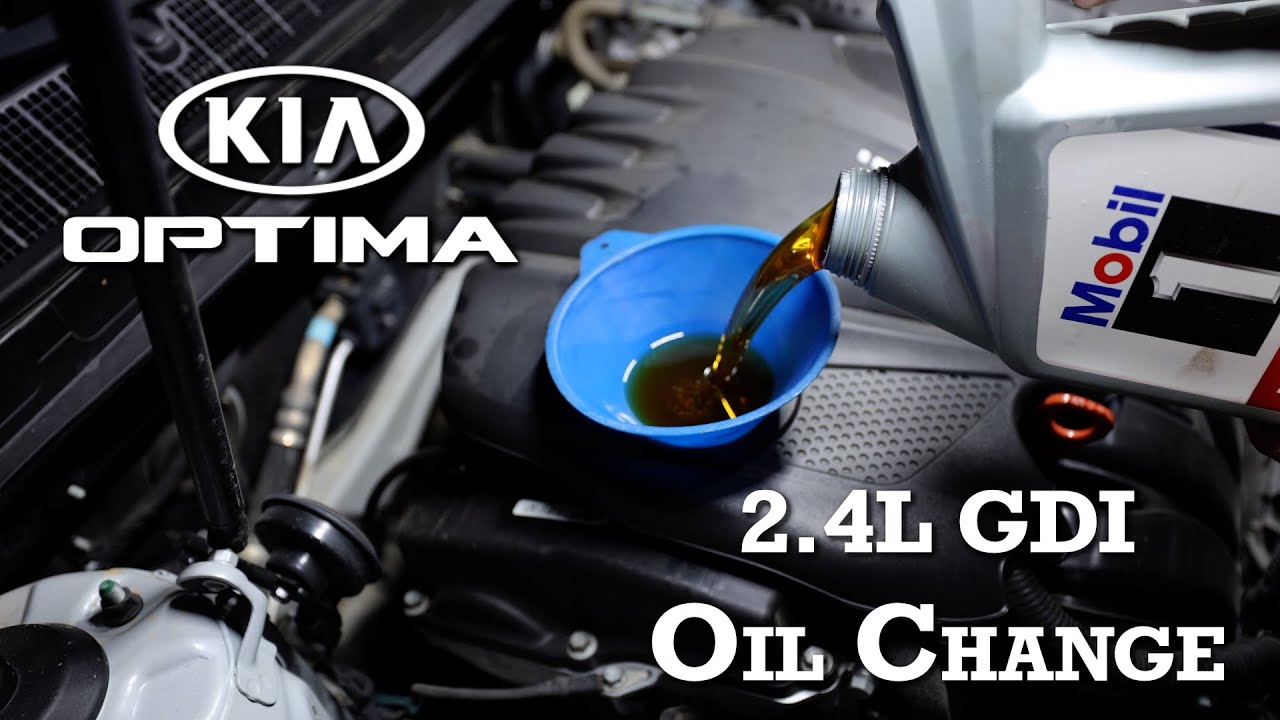
- Add New Oil: Use a funnel to pour in the correct amount.
- Check Level: Start engine, run a minute, wait, and check dipstick. Top off if needed.
- Dispose of Old Oil Responsibly: Take used oil and filter to a recycling center.
Special Tips
- Always reset your oil change reminder (follow your K5’s manual).
- Check for leaks after the first drive.
- Record your oil change date and mileage.
The Best Oil For Your Kia K5
Not all engine oils are created equal. The wrong oil can reduce fuel economy and even void your warranty. Here’s how to choose the best oil for your K5.
What To Look For
- Viscosity: Always use the grade listed in your manual (e.g., 0W-30, 5W-20).
- API Certification: Look for the API SP or ILSAC GF-6 mark.
- Full Synthetic: Modern Kia K5 engines work best with full synthetic oil, which protects better at high temperatures and during cold starts.
- Brand Quality: Stick with known brands like Mobil 1, Castrol, Shell Helix, or Total Quartz.
Example Table: Popular Oils For Kia K5
| Oil Brand | Viscosity | API/ILSAC Rating | Synthetic Type |
|---|---|---|---|
| Mobil 1 Advanced Fuel Economy | 0W-20, 0W-30 | SP, GF-6 | Full Synthetic |
| Castrol Edge | 5W-20, 5W-30 | SP, GF-6 | Full Synthetic |
| Shell Helix Ultra | 0W-20, 5W-30 | SP, GF-6 | Full Synthetic |
| Total Quartz 9000 | 5W-30 | SP, GF-6 | Full Synthetic |
Non-obvious Insight:
Some oils are labeled “for turbo engines. ” These have extra detergents and protection, which is important for the 1. 6L and 2. 5L turbo K5 engines.
Signs You’re Using The Wrong Oil Capacity
How do you know if your K5 has too much or too little oil? Here are warning signs:
- Low Oil: Oil warning light, ticking sounds, high engine temperature, or poor performance.
- High Oil: White smoke from exhaust, oil leaks, or a strong oil smell.
If you see any of these, stop driving and check the oil level right away. Running the engine with incorrect oil levels can cause major damage.
Common Oil Change Mistakes In The Kia K5
Even experienced DIYers sometimes make mistakes. Here are errors to avoid:
- Forgetting to replace the oil filter: Always use a new filter during oil changes.
- Not tightening the drain plug enough: Can cause leaks. Use a torque wrench if possible.
- Overfilling: Too much oil can be just as harmful as too little.
- Using the wrong oil grade: Low-quality or incorrect viscosity oil can damage your engine.
- Ignoring oil change intervals: Delaying oil changes leads to sludge and engine wear.

How Often Should You Check Oil In A Kia K5?
Kia recommends checking your oil at least once a month and before long trips. If you drive in harsh conditions—like very hot or cold weather, lots of short trips, or towing—check more often. Turbo K5 engines can burn oil more quickly, so be extra careful.
Kia K5 Oil Filter Types And Compatibility
Not all oil filters are the same. Using the wrong filter can lead to leaks or poor oil flow.
Oem Vs. Aftermarket Oil Filters
- OEM Filters: Original Kia filters are designed for perfect fit and filtration. If you want the safest option, use a Kia or Hyundai oil filter.
- Aftermarket Filters: Quality brands like Bosch, Mann, and Fram also make compatible filters. Make sure the filter matches your engine and model year.
Oil Filter Part Numbers
Here are some common oil filter part numbers for the K5:
| Engine | OEM Filter Part # | Compatible Aftermarket Brands |
|---|---|---|
| 1.6L Turbo | 26300-35503 | Bosch 3330, Mann HU 6007z |
| 2.5L NA/Turbo | 26300-35504 | Fram CH11665, Wix 51334 |
| 1.6L Hybrid | 26300-35503 | Bosch 3330, Mann HU 6007z |
| 2.0L LPG | 26300-35505 | Mann HU 711/51x, Wix 51334 |
Always check compatibility before buying a filter for your K5.
Kia K5 Oil Capacity And Warranty: What You Need To Know
Using the correct oil and filter is not just about performance—it’s also about protecting your factory warranty. If you use the wrong oil, overfill or underfill, or miss scheduled oil changes, Kia can deny engine warranty claims. Keep all service records and receipts, especially if you do your own oil changes.
If you’re unsure about oil capacity for your specific K5 model, always check your owner’s manual or call your local Kia dealer.
Impact Of Driving Conditions On Oil Capacity And Change Intervals
Driving habits and conditions affect how often you need to check or change your oil.
Severe Service Conditions
- Frequent short trips (under 5 miles)
- Extreme temperatures (hot or cold)
- Stop-and-go traffic
- Towing or carrying heavy loads
- Dusty or sandy roads
If you drive under these conditions, change your oil more often than the maximum interval. Severe use can break down oil faster, especially in turbo engines.
Real-world Example
A K5 owner living in a hot city with lots of traffic may need to change oil every 5,000 miles—even if Kia says 7,500 miles is okay for normal driving.
Kia K5 Oil Pan Capacity Vs. Total System Capacity
Some people confuse oil pan capacity with total system capacity. The pan holds most of the oil, but the filter and engine passages also keep some oil.
- Oil pan capacity is usually a bit less than the total amount you need after a change.
- Total system capacity (with filter) is the correct number to use when refilling after draining the old oil and changing the filter.
Always use the with filter capacity listed for your engine.
Environmental Tips: Handling Used Oil
Used engine oil is toxic to the environment. Never pour it down the drain or onto the ground. Most auto parts stores and service centers will recycle oil for free. Keep your community clean and safe by always recycling oil and filters.
For more on proper disposal, see the EPA’s guide on used oil recycling.
Frequently Asked Questions
What Happens If I Put Too Much Oil In My Kia K5?
Too much oil can cause foaming, leaks, and increased pressure. This can damage engine seals and the catalytic converter. If you overfill, drain the excess oil as soon as possible.
Can I Use Conventional Oil Instead Of Synthetic In My Kia K5?
Kia strongly recommends full synthetic oil for all K5 engines, especially turbo models. Conventional oil doesn’t protect as well at high temperatures and may shorten engine life.
How Do I Know Which Engine Is In My Kia K5?
Check your owner’s manual, the sticker under the hood, or your VIN. You can also ask your Kia dealer to look up your engine type.
Is It Okay To Use A Different Oil Filter Brand Than Kia Recommends?
Yes, as long as the filter is designed for your K5’s engine and meets Kia’s specifications. Always check compatibility before using aftermarket filters.
What Oil Capacity Should I Use If I Don’t Change The Filter?
If you don’t replace the filter, subtract about 0. 3–0. 4 quarts (0. 3–0. 4 liters) from the full capacity. However, always change the filter with the oil for best results.
Caring for your Kia K5 means paying attention to details like oil capacity. Using the right amount and type of oil protects your engine, boosts performance, and helps your car last longer. Whether you have the 1.6L turbo, 2.5L, hybrid, or LPG version, following the correct oil guidelines is one of the smartest investments you can make. With the information in this guide, you’re ready to keep your K5 running strong—mile after mile.