
The Mazda 3 is known for its sporty style, efficient engines, and enjoyable driving experience. But to keep any Mazda 3 running smoothly, regular oil changes are essential. One common question among owners and DIY mechanics is: What is the correct Mazda 3 oil capacity? Getting this detail right is more important than many realize—too little oil can cause engine wear, and too much can cause leaks or even damage. But oil capacity is not the same for every Mazda 3. The answer depends on three main factors: the engine type, the model year, and whether you’re changing the oil filter.
This article covers everything you need to know about Mazda 3 oil capacity. You’ll learn about the oil capacity for each engine type, step-by-step instructions for checking and changing your oil, and why using the correct amount matters. If you want to keep your Mazda 3 in top shape and avoid expensive repairs, understanding your car’s oil requirements is a must.
Understanding Oil Capacity
Every car engine needs a specific amount of oil to lubricate its moving parts and keep temperatures under control. The oil capacity is the total amount of oil the engine holds when you perform a full oil and filter change. This number is not random—Mazda engineers design each engine with a precise oil volume to maximize performance and engine life.
If you overfill the engine, the oil can foam, pressure can rise, and seals may leak. If you underfill, the oil may not reach all parts of the engine, causing friction and faster wear. That’s why knowing the exact oil capacity for your Mazda 3 is essential.
Why Oil Capacity Differs By Model And Engine
Mazda 3 models have used different engines over the years. Each engine size and design needs a different amount of oil. For example, a 2. 0L engine does not need as much oil as a 2. 5L turbocharged engine. Additionally, Mazda sometimes changes the oil capacity with new generations or after engine updates.
Even small design changes can affect how much oil is needed.
Another detail is whether you are changing the oil filter along with the oil. If you change the filter, you’ll need a bit more oil because the filter itself holds some oil.
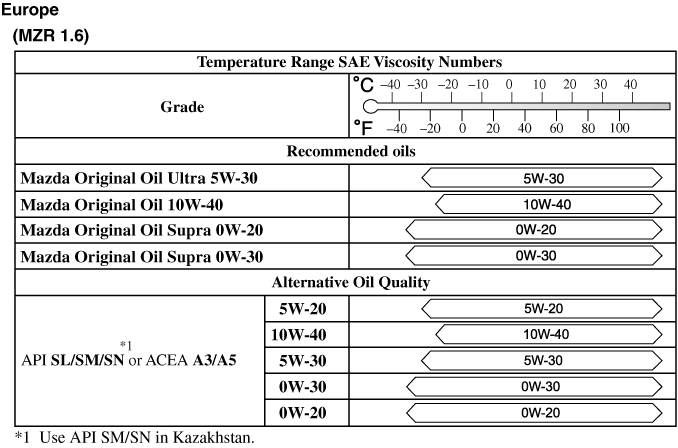
Credit: owners-manual.mazda.com
Main Mazda 3 Engine Types
There are three main Mazda 3 engine types seen worldwide:
- 2.0L Skyactiv-G (Gasoline)
- 2.5L Skyactiv-G (Gasoline, including Turbo)
- 1.5L Skyactiv-D (Diesel)
Each engine has its own oil capacity. Let’s look at each one in detail.
Mazda 3 2.0l Skyactiv-g Oil Capacity
The 2.0L Skyactiv-G is one of the most popular Mazda 3 engines, especially in North America, Europe, and Asia. It’s known for its good balance of power and efficiency.
Oil Capacity Specifications
For most model years (2014 and newer), the Mazda 3 2.0L oil capacity is:
- With oil filter change: 4.5 liters (4.8 US quarts)
- Without oil filter change: 4.2 liters (4.4 US quarts)
It’s important to check your owner’s manual for your specific year, but these numbers cover almost all 2. 0L Mazda 3 models since the Skyactiv generation began.
Quick Comparison: Filter Change Vs. No Filter Change
| Scenario | Oil Capacity (Liters) | Oil Capacity (US Quarts) |
|---|---|---|
| With Filter Change | 4.5 | 4.8 |
| Without Filter Change | 4.2 | 4.4 |
Real-world Example
Let’s say you own a 2018 Mazda 3 2. 0L. You perform a full oil and filter change in your garage. You should pour in about 4. 5 liters of new oil. After refilling, always check the dipstick and top up if necessary.
Sometimes, small amounts stay in the engine, so the dipstick is your final check.
Non-obvious Insight
Many DIY mechanics forget to pre-fill the new oil filter before installing it. While it’s not strictly required, adding a bit of oil to the filter helps prevent a dry start when you first start the engine. This step is especially helpful in cold climates.
Mazda 3 2.5l Skyactiv-g Oil Capacity
The 2.5L Skyactiv-G engine is found in higher trim Mazda 3 models and is known for its stronger acceleration and, in newer models, for offering a turbocharged option. The oil capacity for this engine is slightly higher than the 2.0L.
Oil Capacity Specifications
For most Mazda 3 models with the 2.5L engine (2014-present):
- With oil filter change: 4.7 liters (5.0 US quarts)
- Without oil filter change: 4.4 liters (4.6 US quarts)
Turbocharged versions (2020 and newer) use the same oil capacity as the non-turbo 2. 5L.
Quick Comparison: 2.5l Vs. 2.0l Oil Capacity
| Engine | With Filter Change (Liters) | With Filter Change (US Quarts) |
|---|---|---|
| 2.0L Skyactiv-G | 4.5 | 4.8 |
| 2.5L Skyactiv-G | 4.7 | 5.0 |
Real-world Example
If you have a 2022 Mazda 3 2. 5L Turbo, you should use 4. 7 liters of oil when changing both the oil and the filter. After adding the oil, run the engine for a minute, turn it off, wait a few minutes, then check the dipstick.
This allows oil to settle and gives you an accurate reading.
Non-obvious Insight
Owners who drive in very hot or very cold climates should check their oil more often. Extreme temperatures can cause oil to break down faster or evaporate slowly over time. Also, turbocharged engines work harder and may use oil a bit faster—don’t wait for the low oil warning light.
Mazda 3 1.5l Skyactiv-d Diesel Oil Capacity
The 1.5L Skyactiv-D engine is less common, but it’s popular in some markets like Europe and Asia. This diesel engine is focused on low emissions and high fuel efficiency.
Oil Capacity Specifications
For the Mazda 3 1.5L Skyactiv-D:
- With oil filter change: 4.1 liters (4.3 US quarts)
- Without oil filter change: 3.8 liters (4.0 US quarts)
These numbers are based on the official Mazda specifications.
Key Differences In Diesel Oil Changes
Diesel engines like the Skyactiv-D often need special low-ash oils (usually called “Low SAPS” or “C1”). Using the wrong oil can damage the diesel particulate filter (DPF).
Diesel Vs. Gasoline Oil Capacity
| Engine | With Filter Change (Liters) | Oil Type Needed |
|---|---|---|
| 1.5L Skyactiv-D | 4.1 | Low SAPS Diesel |
| 2.0L Skyactiv-G | 4.5 | 0W-20 Gasoline |
| 2.5L Skyactiv-G | 4.7 | 0W-20 Gasoline |
Real-world Example
If you own a 2017 Mazda 3 1. 5L diesel, always use 4. 1 liters of the correct diesel oil for a full oil and filter change. Using regular gasoline engine oil can cause long-term problems with the DPF system.
Non-obvious Insight
Mazda’s diesel engines can actually *increase* their oil level if the DPF system is not working correctly. This happens when diesel fuel enters the oil during DPF regeneration. If your oil level rises instead of falling, see a mechanic immediately—driving with diluted oil can cause engine failure.
Model Year Changes And Special Cases
The numbers above cover most Mazda 3 models from 2014 to present, which use the Skyactiv engines. However, older Mazda 3 generations (2004-2013) used different engines, such as the 2.0L MZR and 2.3L MZR. Their oil capacities are different:
- 2004-2013 2.0L MZR: 3.9 liters (4.1 US quarts)
- 2004-2013 2.3L MZR: 4.3 liters (4.5 US quarts)
- 2007-2013 2.3L DISI Turbo (Mazdaspeed 3): 5.0 liters (5.3 US quarts)
Always check your car’s manual or look up the engine code to confirm. Using the wrong oil amount is a common mistake when working on older Mazda 3 models.
How To Check Your Mazda 3 Oil Level
Even if you use the correct oil capacity, always check the oil level after filling. Here’s the right way:
- Park on a level surface and turn off the engine.
- Wait at least 5 minutes (or until the engine is cool).
- Pull out the dipstick, wipe it clean, and reinsert.
- Pull out again and check the oil level. It should be between the “L” (Low) and “F” (Full) marks.
- Add oil if needed, but do not overfill.
Pro Tip
Check your oil at least once a month, or before long trips. Small leaks or burning can lower oil levels without warning lights.
Step-by-step Guide: Changing Oil In Your Mazda 3
If you want to change your Mazda 3’s oil yourself, follow these steps for the best results:
What You Need
- Correct amount of oil (see above)
- Oil filter (specific to your engine)
- Oil drain pan
- Socket wrench and filter wrench
- Funnel
- Gloves and rags
Step-by-step Instructions
- Warm up the engine for 2-3 minutes to thin the oil.
- Turn off the engine and raise the car using a jack and stands.
- Place a drain pan under the oil pan.
- Remove the oil drain bolt and let the oil flow out.
- Replace the drain bolt with a new washer if needed.
- Remove the old oil filter (use an oil filter wrench if tight).
- Lubricate the gasket on the new filter with a little oil.
- (Optional but smart) Pre-fill the new filter with a small amount of oil.
- Install the new filter by hand—do not overtighten.
- Add new oil using a funnel. Pour in slightly less than the full capacity.
- Start the engine and let it run for 1-2 minutes. Check for leaks.
- Turn off, wait 5 minutes, then check the dipstick and top up if needed.
Common Mistakes
- Adding too much oil. Always check with the dipstick after refilling.
- Not replacing the oil filter. Old filters can clog and cause low oil pressure.
- Using the wrong oil type or viscosity. For Skyactiv engines, 0W-20 synthetic is required.
Oil Types And Viscosity: What To Use
For most modern Mazda 3 gasoline engines (2.0L and 2.5L), Mazda recommends 0W-20 full synthetic oil. This oil flows easily in cold weather and protects well at high temperatures. For the Skyactiv-D diesel, use a low-SAPS (C1 or C2) oil that meets ACEA specifications.
Why Oil Quality Matters
Cheap or wrong oil can cause sludge, poor lubrication, or even engine damage. Always check the oil container for Mazda approval or the correct specification.
Synthetic Vs. Conventional Oil
Mazda 3 engines are designed for synthetic oils. Conventional oil is not recommended and can shorten engine life. Synthetic oil also allows for longer intervals between oil changes—up to 7,500 miles (12,000 km) for most drivers.

Credit: www.youtube.com
How Oil Capacity Affects Engine Health
Too much or too little oil can both cause serious problems.
- Too much oil: May cause leaks, oil foaming, or crankshaft drag. This increases pressure and can damage engine seals.
- Too little oil: Not enough lubrication, higher temperatures, and faster wear. This can lead to engine seizure in extreme cases.
That’s why Mazda engineers set specific oil capacities for each engine. Stick to these numbers for best results.
What If You Overfill Or Underfill?
If you pour in too much oil, use a suction pump or drain some out from the oil pan. If you underfill, add more oil immediately. Do not drive with the wrong oil level.
Oil Change Intervals: When To Change Your Oil
The right oil capacity is only half the story—changing oil at the right time is just as important.
Mazda’s Recommended Intervals
- Normal driving: Every 7,500 miles (12,000 km) or 12 months
- Severe driving (short trips, extreme temperatures, dusty roads): Every 5,000 miles (8,000 km) or 6 months
Always use the correct oil capacity at each change.
Why Short Intervals May Be Better
If you mostly drive short trips, your engine never fully warms up and contaminants can build up faster. In these cases, change oil more often—even if the maintenance light hasn’t come on.
Common Mistakes Mazda 3 Owners Make
- Using the wrong oil capacity (especially when not changing the filter).
- Ignoring oil type—using cheap or wrong viscosity oil.
- Not checking the dipstick after filling.
- Forgetting to reset the oil change light (newer Mazda 3 models).
- Not replacing the drain plug washer, which can cause leaks.
Non-obvious Insight
Some owners use “top-off” oil between changes but never do a full change. This can leave sludge and contaminants in the engine, even if the oil level looks good. Full changes with the right oil and filter are always best.
Quick Reference: Mazda 3 Oil Capacity By Year And Engine
Here’s a summary you can use when buying oil or talking to a mechanic:
| Year Range | Engine | With Filter (Liters) | With Filter (US Quarts) | Oil Type |
|---|---|---|---|---|
| 2014-present | 2.0L Skyactiv-G | 4.5 | 4.8 | 0W-20 |
| 2014-present | 2.5L Skyactiv-G (incl. Turbo) | 4.7 | 5.0 | 0W-20 |
| 2014-present | 1.5L Skyactiv-D | 4.1 | 4.3 | Low SAPS (C1/C2) |
| 2004-2013 | 2.0L MZR | 3.9 | 4.1 | 5W-20 |
| 2004-2013 | 2.3L MZR | 4.3 | 4.5 | 5W-20 |
| 2007-2013 | 2.3L DISI Turbo | 5.0 | 5.3 | 5W-30 |
Practical Tips For Mazda 3 Oil Changes
- Always buy a little more oil than needed. You may need to top up after running the engine.
- Use a funnel to avoid spills—Mazda engines have small oil filler holes.
- Dispose of old oil at a recycling center. Never pour it down the drain.
- Keep a maintenance log. Record oil type, amount, and date of each change.
- If unsure, ask a certified Mazda technician or check the owner’s manual.
Where To Find More Information
For the most accurate oil capacities and specifications for your exact Mazda 3, check your owner’s manual or visit the official Mazda USA Owners website. This ensures you’re using the latest and most accurate data.
Frequently Asked Questions
What Happens If I Use Too Much Oil In My Mazda 3?
Adding too much oil can cause high pressure inside the engine, leading to leaks, foamy oil, or even damage to seals and internal parts. If you realize you have overfilled, drain the excess oil until the level is correct.
Can I Use 5w-30 Oil Instead Of 0w-20 In My Mazda 3?
Mazda recommends 0W-20 for most modern Mazda 3 gasoline engines. Using 5W-30 can reduce fuel efficiency and may not protect the engine as well in cold weather. Only use the oil type listed in your owner’s manual.
How Do I Know If My Mazda 3 Has The 2.0l Or 2.5l Engine?
Check your registration papers, owner’s manual, or look for a label on the engine cover. The 2. 5L engine is usually found in higher trim models and may have “2. 5” marked on the cover.
Should I Always Change The Oil Filter With The Oil?
Yes, changing the oil filter is best practice. Old filters can become clogged and limit oil flow, even if the oil itself is new. Always use a high-quality filter designed for your specific Mazda 3 engine.
Can I Go Longer Than The Recommended Oil Change Interval If I Use Synthetic Oil?
While synthetic oil lasts longer, it’s safest to follow Mazda’s interval guidelines. Driving conditions, climate, and engine condition all affect oil life. Regular oil changes keep your Mazda 3 running smoothly for years.
Caring for your Mazda 3 starts with something as simple as knowing the right oil capacity for your engine. Whether you drive a 2.0L, 2.5L, or 1.5L diesel, using the correct oil amount and type is key to reliability and performance. Pay attention to your owner’s manual, check the dipstick after every oil change, and don’t skip filter replacements. These small habits help your Mazda 3 stay efficient, fun to drive, and trouble-free for many miles ahead.