
If you own a Mini Cooper or are thinking about buying one, knowing the right oil capacity is more important than you might think. The oil in your Mini Cooper is the lifeblood of the engine—it lubricates, cools, and keeps everything running smoothly. Too little oil, and your engine could overheat or wear out quickly. Too much oil, and you risk damaging seals and sensors. But it’s not just about pouring in the right amount. Different Mini Cooper models, years, and engines all have their own oil capacity needs. This guide will walk you through everything you need to know about Mini Cooper oil capacity: from specific numbers for each model, to tips for changing oil, to common mistakes owners make. Whether you’re a new Mini owner or a long-time enthusiast, you’ll find practical answers here—explained in simple, clear English.
Why Oil Capacity Matters For Mini Coopers
The engine in a Mini Cooper, like any car, needs oil to run properly. But Minis are known for their compact, high-performance engines. These engines often work harder than those in bigger cars, so correct oil capacity is critical. If you underfill, the engine may not get enough lubrication. This can cause friction, overheating, and early engine wear. Overfilling, on the other hand, can create pressure that harms seals and gaskets, or even damages the catalytic converter.
What many new owners don’t realize is that modern Mini Coopers have tight tolerances in their engines. This means even being off by a few hundred milliliters (ml) can make a difference. Plus, with turbocharged engines, oil not only lubricates, but also helps cool the turbo itself. That’s why following the manufacturer’s oil capacity is not just a suggestion—it’s a must for your Mini’s health.
Mini Cooper Oil Capacity By Model And Year
Mini Coopers have evolved over the years. Each model and engine type has its own specific oil capacity. Here’s a detailed look at the most common Mini Cooper generations and their oil requirements.
First Generation (r50, R53, R52) – 2002-2006
- Mini Cooper (R50, non-S, 1.6L): 4.5 liters (4.8 US quarts)
- Mini Cooper S (R53, supercharged, 1.6L): 4.8 liters (5.1 US quarts)
- Mini Cooper Convertible (R52): Matches hardtop models based on engine
These early Minis used a relatively small amount of oil. The S models (with supercharger) need a bit more because the engine works harder and runs hotter.
Second Generation (r56, R55, R57, R58, R59) – 2007-2013
- Mini Cooper (R56, non-S, 1.6L): 4.2 liters (4.4 US quarts)
- Mini Cooper S (R56, turbocharged, 1.6L): 4.2 liters (4.4 US quarts)
- Mini Cooper Clubman (R55): Same as matching hatchback engine
- Mini Cooper Convertible (R57): Follows hatchback engine type
- Mini Coupe (R58) / Roadster (R59): 4.2 liters (4.4 US quarts) for both non-S and S
Notice that the second generation actually uses a bit less oil than the first. The switch from supercharger to turbocharger changed the engine design, affecting oil needs.
Third Generation (f56, F55, F57, F54, F60) – 2014-present
- Mini Cooper (F56, 1.5L 3-cylinder): 4.0 liters (4.2 US quarts)
- Mini Cooper S (F56, 2.0L 4-cylinder): 5.0 liters (5.3 US quarts)
- Mini Cooper Clubman (F54, 1.5L/2.0L): 4.0L (1.5L engine) / 5.0L (2.0L engine)
- Mini Countryman (F60, 1.5L/2.0L): 4.0L (1.5L) / 5.0L (2.0L)
- Mini Convertible (F57): Matches hatchback engine type
The newest engines have become more efficient and compact, but the S and higher-performance versions can require more oil than you might expect.
Special Models And Exceptions
- John Cooper Works (JCW): Always check your manual. Most JCW engines require 5.0 liters (5.3 US quarts), but some earlier versions may differ slightly.
- Diesel Minis (not sold in North America): Usually between 3.6 and 4.2 liters, but check regional specs.
Quick Reference Table: Oil Capacities By Model And Year
Here’s a table to help you find your Mini’s engine oil capacity at a glance.
| Model | Year | Engine | Oil Capacity (Liters) | Oil Capacity (US Quarts) |
|---|---|---|---|---|
| Cooper (R50) | 2002-2006 | 1.6L | 4.5 | 4.8 |
| Cooper S (R53) | 2002-2006 | 1.6L Supercharged | 4.8 | 5.1 |
| Cooper (R56) | 2007-2013 | 1.6L | 4.2 | 4.4 |
| Cooper S (R56) | 2007-2013 | 1.6L Turbo | 4.2 | 4.4 |
| Cooper (F56) | 2014-Present | 1.5L 3-cyl | 4.0 | 4.2 |
| Cooper S (F56/F54/F60) | 2014-Present | 2.0L 4-cyl | 5.0 | 5.3 |
| JCW | 2014-Present | 2.0L 4-cyl | 5.0 | 5.3 |
If you’re unsure which model you have, check your owner’s manual or the engine code under the hood.

How To Check Your Mini Cooper’s Oil Level
Knowing your car’s oil capacity is only useful if you also know how to check the oil level correctly. Modern Mini Coopers often use an electronic oil level sensor, while older models have a traditional dipstick.
Checking Oil With A Dipstick
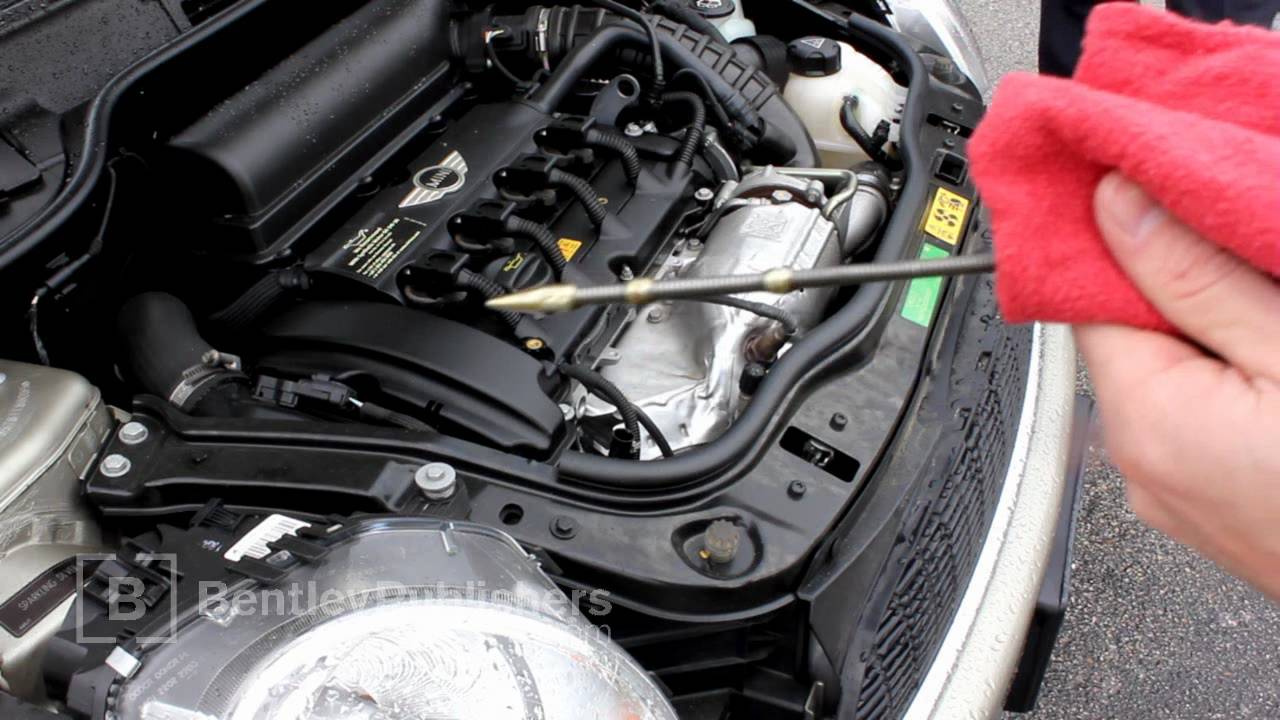
- Park the car on a level surface and turn off the engine. Wait at least 5 minutes so the oil can settle.
- Open the hood and find the dipstick (usually a yellow or orange ring).
- Pull the dipstick out and wipe it clean with a paper towel.
- Insert it all the way back in, then pull it out again.
- Check where the oil is on the stick. There are usually two marks: MIN (minimum) and MAX (maximum).
- The oil should be between these two marks. If below MIN, add oil. If above MAX, remove some oil.
Using The Electronic Oil Level Sensor
On newer Mini Coopers (F56 and newer), there may be no dipstick. You check oil through the car’s onboard computer.
- Turn on the ignition (engine off).
- Use the onboard menu to select Vehicle Status.
- Choose Engine Oil Level. The car will measure and display the oil status.
- If it says “OK,” you’re fine. If it says “Add 1 Liter” or “Maximum,” follow the instructions.
A non-obvious tip: Electronic sensors can sometimes give false readings if the car is on a slope or if the engine hasn’t cooled down enough. Always check on a flat surface after waiting a few minutes.
How To Change Oil In A Mini Cooper (step-by-step)
Changing your own oil is possible for most Mini Cooper owners, and it can save you money. Here’s how to do it safely.
What You Need
- The right amount of engine oil (see capacity above)
- New oil filter
- Oil drain pan
- Socket wrench (usually 13mm for Mini Coopers)
- Funnel
- Gloves and rags
- Jack and jack stands (or ramps)
- New drain plug washer (recommended)
Step-by-step Instructions
- Warm up the engine for a few minutes. Warm oil drains faster and carries away more dirt.
- Park on a level surface, turn off the engine, and let it cool for 5-10 minutes.
- Jack up the front of the car and secure it with jack stands.
- Place the oil drain pan under the oil pan drain plug.
- Remove the drain plug and let the old oil drain out (be careful, it may be hot).
- Remove the old oil filter (sometimes located on top of the engine, sometimes underneath).
- Install the new oil filter. Lightly oil the rubber gasket before fitting.
- Replace the drain plug, using a new washer if possible. Tighten to the correct torque (usually 25 Nm, check your manual).
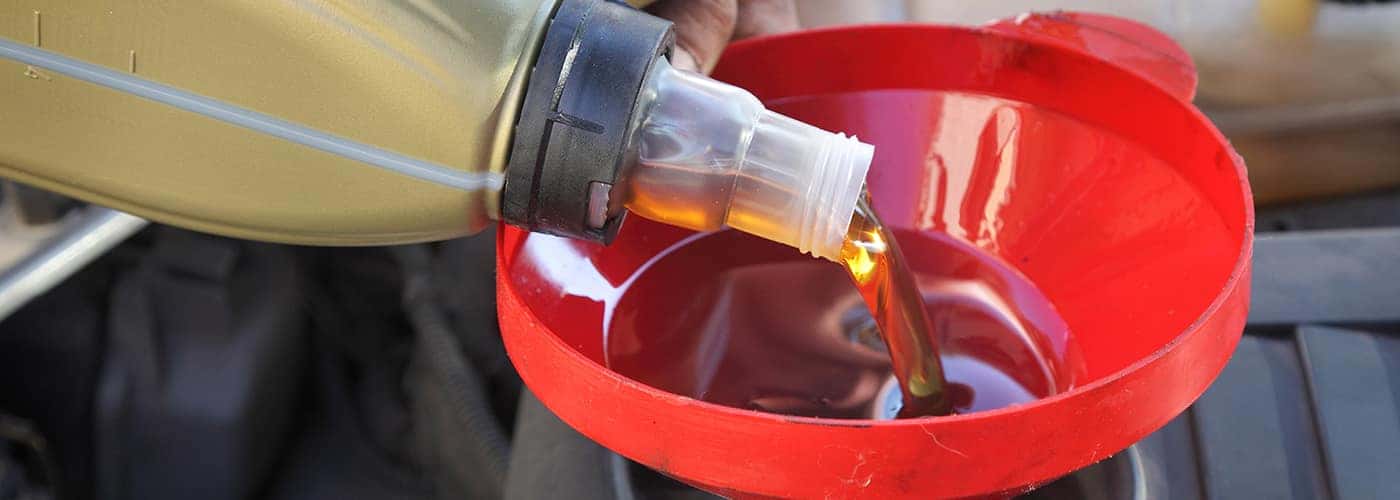
- Add new oil using a funnel, pouring slowly.
- Start the engine and let it run for 1-2 minutes. Check for leaks under the car.
- Wait a few minutes, then check the oil level. Top up if needed.
A mistake many beginners make: forgetting to change the oil filter or using the wrong type. Always use a filter that matches your Mini’s engine.
Types Of Oil For Mini Cooper Engines
Using the correct type of oil is as important as the quantity. Mini Coopers, especially newer models, are designed for synthetic oil. Here’s what you need to know:
- Viscosity: Most Minis use 5W-30 or 0W-30 synthetic oil. The “W” stands for “winter”—lower numbers mean better flow in cold weather.
- Specification: Look for oil that meets BMW LL-01 or BMW LL-04 standards. Mini and BMW share many engine components.
- Brand: Many owners prefer brands like Castrol, Mobil 1, or Liqui Moly, but the specification is more important than the brand.
If you use oil that doesn’t meet these standards, you may get engine warning lights, reduced performance, or even void your warranty. Always check the manual for your specific model.
How Often Should You Change The Oil?
The official Mini Cooper service interval is usually every 10,000 miles (16,000 km) or once a year, whichever comes first. However, many mechanics recommend changing oil more often, especially if you:
- Drive mostly in city traffic (stop-and-go)
- Take many short trips (under 10 miles/16 km)
- Drive in very hot or cold climates
- Have a turbocharged or high-performance model
In these cases, changing oil every 5,000–7,500 miles (8,000–12,000 km) is a safer bet. Old oil can become thick, dirty, and lose its ability to lubricate.
A non-obvious insight: The Mini’s oil change “service light” is based on an algorithm, not just mileage. If you drive hard, the light may come on sooner.
Signs Your Mini Cooper Needs An Oil Change Or More Oil
You should never wait for the engine to sound rough before checking oil. Here are some warning signs:
- Oil warning light on the dashboard
- Engine sounds louder or knocks
- Oil level is below the MIN mark
- Oil looks very dark or gritty on the dipstick
- Burning oil smell from engine bay
- Reduced engine performance
If you see any of these, check the oil level immediately. Running low on oil even once can shorten your Mini’s engine life.
Overfilling And Underfilling: What Happens?
Most drivers know that low oil is bad. But too much oil can be just as dangerous.
Overfilling
When you overfill the oil, it can foam up, which means air gets mixed in with the oil. This reduces the oil’s ability to lubricate. Also, excess oil can push past engine seals, causing leaks, or damage the catalytic converter. Fixing these can be expensive.
Underfilling
If there isn’t enough oil, some parts of the engine won’t get proper lubrication. This causes extra friction, heat, and can lead to major engine damage—sometimes in just minutes.
If you ever overfill, use a simple siphon pump to remove the extra oil. If you underfill, top up as soon as possible.
Oil Capacity Differences: Manual Vs. Automatic
Most Mini Coopers use the same engine oil capacity whether they have a manual or automatic transmission. However, transmission fluid is a different system, with its own requirements. Don’t confuse transmission fluid with engine oil—they are separate.
Oil Filter Capacity: Does It Matter?
Every oil change should include a new filter. Oil filters themselves do not change the total oil capacity much—maybe a few milliliters. But using the wrong size filter can cause leaks or poor oil flow. Always match your filter to your engine model and year.
Mini Cooper Oil Capacity Vs. Other Small Cars
How does the Mini Cooper’s oil capacity compare with other cars in its class? Here’s a quick comparison.
| Car Model | Engine Size | Oil Capacity (Liters) |
|---|---|---|
| Mini Cooper S (F56) | 2.0L Turbo | 5.0 |
| Volkswagen Golf GTI | 2.0L Turbo | 5.7 |
| Honda Civic | 2.0L | 4.4 |
| Ford Fiesta ST | 1.6L Turbo | 4.2 |
| Fiat 500 Abarth | 1.4L Turbo | 3.8 |
As you can see, the Mini Cooper’s oil capacity is in the middle compared to similar cars. Some need more, some less. This is why it’s always best to check your exact model.
Common Mistakes Mini Cooper Owners Make With Oil
Even experienced drivers can make errors with oil maintenance. Here are some of the most common:
- Using the wrong oil type. Always use fully synthetic oil with the right viscosity and BMW/Mini spec.
- Overfilling or underfilling. Even a small amount matters—always check the level after filling.
- Forgetting the oil filter. Old filters can clog, reducing oil flow and risking engine damage.
- Ignoring warning lights. Mini’s sensors are sensitive—never ignore an oil-related warning.
- Not waiting after engine off. Checking oil too soon after shutting off the engine can give a false low reading.
A tip many don’t know: If you change oil yourself, always reset the oil service indicator. Otherwise, your car will keep reminding you for a service you’ve already done.
Mini Cooper Oil Consumption: What’s Normal?
Some Mini Cooper engines use a little oil between changes—especially turbocharged models. It’s common to need to top up 0. 5 to 1. 0 liters every 3,000–5,000 miles. If you’re adding more than that, or see blue smoke from the exhaust, have your engine checked.
This oil usage is not necessarily a sign of a problem. Mini’s engines are designed for performance, and a small amount of oil use is considered normal. Always keep a small bottle of oil in your trunk for top-ups.
How To Avoid Oil Leaks And Oil Burning In Mini Coopers
Older Mini Coopers, especially first- and second-generation models, can develop oil leaks at certain points:
- Valve cover gasket
- Oil filter housing
- Oil pan gasket
If you see oil under your car or smell burning oil, get these checked. Many leaks are easy to fix if caught early, but can lead to expensive repairs if ignored.
Burning oil (blue smoke from the exhaust) can mean worn piston rings or valve seals. If you notice this, it’s best to see a professional.
Choosing The Right Oil For Your Mini: What Matters Most
There are many oil brands and types, but for your Mini Cooper, focus on these three:
- Viscosity: 5W-30 or 0W-30 for most models.
- Synthetic: Fully synthetic only; never use conventional oil.
- BMW/Mini Approval: Look for BMW LL-01 or LL-04 on the bottle.
Using cheap or incorrect oil can cause engine sludge, reduced performance, and expensive repairs. It’s worth spending a little more for the right oil.
A detail many skip: Even within “5W-30,” some oils are made for gasoline, some for diesel. Make sure you get the version for your engine.
Where To Find Mini Cooper Oil Capacity Information
The most reliable place is your owner’s manual. If you’ve lost it, you can often find the information on the Mini USA website, or by calling your local dealer. Some high-quality resources, such as Motul, provide up-to-date recommendations for Mini models.
Mini Cooper Oil Capacity: Practical Maintenance Tips
- Always check oil level at least once a month, more if your car is older or you drive hard.
- Keep an extra liter of oil in your trunk for emergencies.
- Use a funnel to avoid spills.
- Write down the date and mileage of every oil change.
- Reset the oil service indicator after every oil change (see your owner’s manual for steps).
- Check for leaks after every oil change—look under the car for drips.
- Dispose of old oil properly at a recycling center; never pour it down the drain.
Frequently Asked Questions
What Happens If I Put Too Much Oil In My Mini Cooper?
If you put too much oil, it can cause the oil to foam, which reduces lubrication. This can lead to leaks, sensor problems, and even damage the catalytic converter. If you overfill, remove excess oil using a siphon or by draining a little from the pan.
Can I Use Regular Oil Instead Of Synthetic In My Mini Cooper?
No, you should always use fully synthetic oil in your Mini Cooper. The engines are designed for synthetic oil’s higher performance. Using regular (conventional) oil can cause sludge, reduced performance, and may void your warranty.
How Do I Reset The Oil Service Light In My Mini Cooper?
On most Minis, turn the ignition on (engine off), hold down the trip reset button until the service menu appears, then select the oil service icon and hold until it resets. Always check your owner’s manual for exact steps, as it may differ by model and year.
My Mini Cooper Uses Oil Between Changes. Should I Be Worried?
A small amount of oil usage (up to 1 liter per 3,000–5,000 miles) is normal, especially in turbocharged engines. If you’re adding more than that, or see smoke from the exhaust, have the car checked for leaks or engine wear.
How Do I Know Which Engine My Mini Cooper Has?
Check your registration documents, the sticker under the hood, or your owner’s manual. The VIN (vehicle identification number) can also be entered on the Mini USA website to show engine details.
Staying informed about your Mini Cooper’s oil capacity is one of the best ways to keep your car running well for years. With the right oil, correct quantity, and regular checks, your Mini can deliver reliable performance and avoid costly repairs.
Take care of your engine, and it will reward you with many miles of driving fun.