
When you step into the world of electronics, testing and measuring become essential. One tool stands out: the multimeter. But here’s where it gets interesting—there are two main types: digital and analog multimeters. If you’re a student, hobbyist, technician, or professional, choosing the right one can make your work much easier or much harder. Many people wonder which is better, why, and in which situations. This article will break down the differences, guide you through their features, show you how they work, and help you make the best choice for your needs.
What Is A Multimeter?
A multimeter is an electronic device that measures different electrical properties. The most common measurements are voltage, current, and resistance. Some advanced models can also measure capacitance, frequency, and even temperature. Multimeters can help you find problems in circuits, check batteries, and verify if a component is working.
You’ll see two main types in stores and workshops:
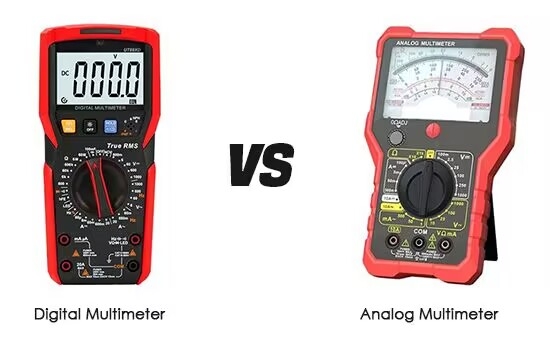
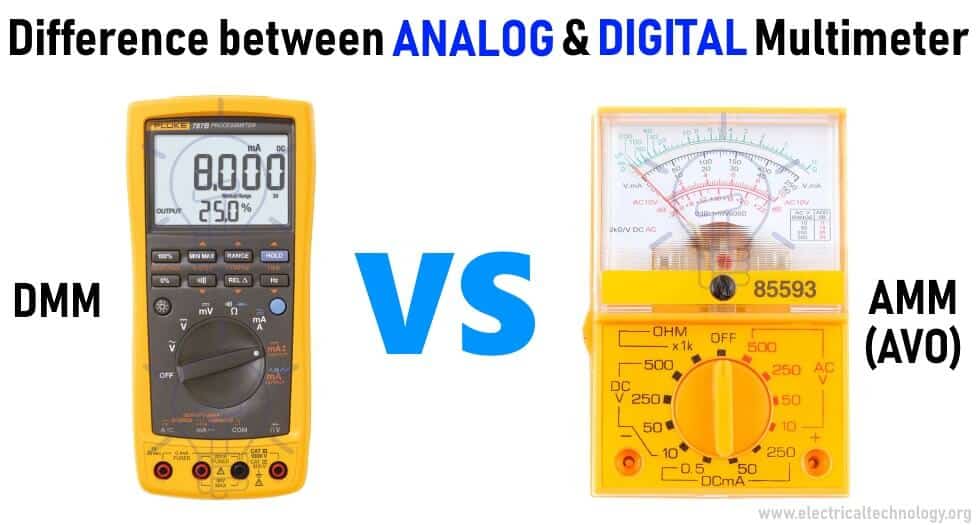
- Analog multimeters: These have a needle that moves over a scale.
- Digital multimeters (DMMs): These show the measurement as numbers on a screen.
Each type has its own strengths and weaknesses. Understanding these can save you time, money, and frustration.
How Analog Multimeters Work
Analog multimeters, sometimes called VOMs (Volt-Ohm-Milliammeters), have been around for decades. They use a moving coil meter. When you measure something, the electrical current flows through a coil, which moves the needle over a printed scale.
Key Features Of Analog Multimeters
- Needle display: The pointer moves over a scale, showing the value.
- Multiple scales: Usually, there are several scales on the dial for voltage, current, and resistance.
- Mechanical movement: The needle’s movement is smooth, not instant.
- No batteries needed for most voltage/current tests: Only resistance measurement requires a battery inside.
Advantages Of Analog Multimeters
- Real-time trend visibility: You can see changes as they happen, which is great for monitoring slowly changing signals or unstable circuits.
- No digital lag: The needle moves instantly, so you see the change without delay.
- Sensitive to small changes: Small flickers in current or voltage are easier to notice.
- Works without power (in some cases): If you only measure voltage or current, the battery is not needed.
Where Analog Multimeters Are Used
- Repairing old electronics: Many older devices were designed with analog meters in mind.
- Tuning radio circuits: The smooth movement helps with delicate adjustments.
- Teaching and demonstrations: The needle movement shows how electricity flows.
Limitations Of Analog Multimeters
- Reading errors: It’s easy to misread the scale, especially for beginners.
- Parallax error: If you look at the scale from an angle, the reading can be wrong.
- Lower accuracy: Typically, analog meters have an accuracy of about ±2% to ±3%.
- Fragile: The moving parts can be damaged by drops or rough handling.
- Limited features: Most analog meters only measure basic properties.
How Digital Multimeters Work
Digital multimeters (DMMs) are the modern standard. They use electronic circuits to convert the measurement into a number, which is displayed on a liquid crystal display (LCD).
Key Features Of Digital Multimeters
- Numeric display: Shows the exact value, often with decimal points.
- Autoranging: Many DMMs automatically select the best range for the measurement.
- Multiple functions: Commonly measure voltage, current, resistance, and often more (capacitance, temperature, frequency).
- Data hold and recording: Some can store or freeze readings.
- Battery powered: Needed for all functions.
Advantages Of Digital Multimeters
- High accuracy: Many models offer ±0.5% or better accuracy.
- Easy to read: The number on the display leaves no doubt.
- Extra features: Auto-ranging, backlight, buzzer for continuity, and sometimes Bluetooth.
- Durable: Fewer moving parts, so they survive drops better.
- Safer: Usually have better protection circuits to handle overloads.
Where Digital Multimeters Are Used
- Modern electronics repair: Laptops, smartphones, industrial equipment.
- Education: Most schools and training centers use DMMs.
- Field work: Electricians and technicians rely on them for fast, accurate results.
- Data logging: Some models can track measurements over time, useful for troubleshooting.
Limitations Of Digital Multimeters
- Lag with fast-changing signals: If the signal changes quickly, the display might not keep up.
- Battery dependence: If the battery dies, the meter stops working.
- Sensitive to electromagnetic interference: Strong radio signals can sometimes cause errors.
Side-by-side Comparison: Analog Vs Digital Multimeter
To help you see the differences at a glance, here’s a direct comparison.
| Feature | Analog Multimeter | Digital Multimeter |
|---|---|---|
| Display Type | Needle and scale | Numeric (LCD/LED) |
| Accuracy | ±2% to ±3% | ±0.5% or better |
| Response to signal changes | Immediate, smooth needle movement | May lag on fast changes |
| Ease of reading | Can be difficult, possible parallax error | Very easy, direct number shown |
| Functions | Basic (V, A, Ω) | Advanced (V, A, Ω, temp, freq, etc.) |
| Durability | Fragile (moving parts) | More robust, fewer moving parts |
| Power source | Battery only for resistance | Battery required for all functions |
| Cost | Usually cheaper | Wide range, from low-cost to expensive |
| Use in noisy environments | Less affected by interference | Can be affected by strong EMI |
| Suitability for beginners | Harder to learn | Easier to use |
Practical Uses: When To Choose Analog Or Digital
Choosing between analog and digital depends on what you need. Here are common scenarios where one might be better than the other.
When Analog Multimeters Are Best
- Observing trends: If you need to watch a voltage rise and fall slowly, the moving needle is very helpful. For example, when charging a capacitor, the needle shows the charging curve.
- Tuning circuits: In radio and audio work, you can see small changes and adjust smoothly.
- Troubleshooting unstable signals: Analog meters show the “average” value and small fluctuations.
- Low-cost needs: If budget is tight and you only need basic measurements, analog is affordable.
When Digital Multimeters Are Best
- Precise measurements: When you need to know the exact voltage or resistance, a digital meter gives you clear numbers.
- Testing modern electronics: Most devices today need accurate readings to avoid damage.
- Multifunction requirements: If you also want to measure temperature, frequency, or test diodes, digital is the only choice.
- Field work: Digital meters are tough and easy to read in different lighting conditions.
- Data recording: Some DMMs can connect to a computer or phone to log measurements.
Key Specifications To Compare
When buying a multimeter, look at these important specs:
- Accuracy: How close is the reading to the true value? DMMs usually win here.
- Resolution: The smallest change it can detect. Digital meters can show 0.01V or less.
- Range: The maximum and minimum values it can measure.
- Input impedance: High input impedance is better, especially for digital meters, because it does not load the circuit.
- Safety ratings: Look for CAT II, CAT III, or CAT IV ratings for electrical safety.
- Build quality: Is the case strong? Are the test leads safe and flexible?
- Extra features: Auto-ranging, backlight, temperature probe, continuity buzzer, etc.
Here’s a comparison of typical values for each:
| Specification | Analog Multimeter | Digital Multimeter |
|---|---|---|
| Accuracy | ±2% to ±3% of full scale | ±0.5% to ±1% of reading |
| Resolution | Limited by scale | High (up to 0.001V) |
| Input Impedance | ~20 kΩ/V | 1 MΩ or more |
| Overload Protection | Usually limited | Often includes fuses and protection circuits |
| Battery Life | Long (used only for resistance) | Depends on model; some last for years |
| Weight | Lighter | Varies (light to heavy) |
Real-world Example: Measuring A Battery
Let’s look at how both types work with a simple test—measuring a 1.5V AA battery.
- Analog multimeter: You set the range, connect the probes, and watch the needle move. It might land near the 1.5V mark. But if the needle is between lines, you guess the exact value. If the battery is weak, the needle moves slowly or shakes.
- Digital multimeter: You connect the probes, and the display shows something like 1.47V. No guessing needed. If the voltage changes (battery under load), you see the number change instantly.
This simple test shows why DMMs are popular for most people today. But for certain repairs, seeing the movement of the needle is still useful.
Advanced Features In Digital Multimeters
Modern digital multimeters do much more than just basic measurements. Here are some features you’ll find in advanced models:
- Auto-ranging: No need to set the range manually. The meter finds the right range for you.
- True RMS measurement: Measures the actual effective value of AC signals, important for modern electronics.
- Diode and continuity test: Check if a wire is broken or a diode is good, with a beep for easy checking.
- Backlit display: Easy to read in low light.
- Temperature measurement: With a probe, you can check component or room temperature.
- Data hold: Freeze the display to write down a value.
- Bluetooth or USB interface: Connect to a computer or phone for logging and analysis.
These features make DMMs very flexible for all kinds of work.
Understanding Accuracy And Resolution
Many people confuse accuracy with resolution, but they are not the same.
- Accuracy is how close the reading is to the real value. For example, if the true voltage is 5.00V and the meter reads 5.05V, the accuracy is ±0.05V.
- Resolution is the smallest change the meter can show. If it displays 5.01V, it has 0.01V resolution.
Analog meters have limited resolution because of the printed scale. Digital meters can show several decimal places, but if the accuracy is low, those extra digits do not mean much.
Common Mistakes When Using Multimeters
Even experienced users sometimes make mistakes. Here are some to watch for:
- Wrong range selection: On analog meters, if you pick too low a range, you might damage the meter.
- Not zeroing before resistance measurement: Analog meters need to be adjusted to zero before measuring resistance.
- Ignoring polarity: Connecting probes backwards can give wrong readings, especially with analog meters.
- Measuring voltage in current mode: This can blow a fuse or damage the meter.
- Using a damaged test lead: Broken or frayed leads can be dangerous and give wrong results.
- Forgetting battery check: A weak battery in either type can cause errors, especially in analog meters for resistance checks.
Being careful can avoid accidents and false readings.
Safety Considerations
Safety should never be ignored. Both analog and digital multimeters can be dangerous if misused, especially with high voltage circuits.
- Always check the test leads for cracks or exposed wires.
- Use meters with proper safety ratings (CAT II, CAT III, CAT IV) for your application.
- Never use a meter on a circuit beyond its rated voltage.
- Replace blown fuses with the correct type.
- Disconnect power before changing measurement mode.
Some DMMs have additional safety features, like ceramic fuses and overload warning beeps. With analog meters, the fuse is often easier to blow, so extra care is needed.
Price Differences And Value For Money
You’ll find a wide price range for both types. Analog meters can cost as little as $10, while advanced DMMs can reach $500 or more.
- Entry-level DMMs: $15–$50. Good for most home and hobby use.
- Professional DMMs: $70–$300. Higher accuracy, safety, and features.
- Analog meters: $10–$40. Basic models, often with only essential measurements.
Digital meters are usually worth the extra cost because of their accuracy and features, but if you only need simple tests, an analog meter is enough.
Maintenance And Care
Taking care of your multimeter will make it last longer:
- Store in a dry place: Moisture can damage the internal parts.
- Replace batteries regularly: A leaking battery can ruin the meter.
- Clean the probes: Dirty probes can give false readings.
- Avoid dropping: Analog meters are especially fragile.
- Check calibration: Professional meters should be calibrated every year for best accuracy.
Environmental Impact
Many people overlook the environmental side. Analog meters use fewer electronic parts and are easier to recycle. Digital meters have more plastics, batteries, and sometimes hard-to-recycle parts. Always dispose of old meters and batteries properly.
Which One Should You Buy?
If you’re starting out or want the most flexible tool, a digital multimeter is usually the best choice. It’s easier to read, more accurate, and has more features. But if you work with old equipment, need to see trends, or want a simple, low-cost tool, an analog multimeter is still useful.
Some professionals keep both types. For example, a radio technician might use an analog meter for tuning, but a digital meter for accurate voltage checks.
Non-obvious Insights Most Beginners Miss
- Analog meters can load sensitive circuits: The lower input impedance of analog meters can affect the circuit you’re testing. This is a problem when measuring high-impedance circuits, like some sensor outputs. Digital meters, with their high input impedance, avoid this problem.
- Not all digital meters are accurate: Cheap DMMs may look good but can have poor build quality, inaccurate readings, or even safety risks. Always check for safety ratings and reviews before buying.
- Battery choice matters: Some DMMs use 9V batteries, others use AA or AAA. Battery life and availability can vary. Some analog meters use odd-sized batteries for resistance checks, which can be hard to find.
- Overvoltage protection is better in DMMs: Many digital meters have built-in protection, like MOVs (Metal Oxide Varistors) or fuses, that analog meters lack.
- Old analog meters can drift: Over time, the springs in analog meters can weaken, and the calibration can drift, making readings less reliable.
Latest Innovations In Digital Multimeters
The world of digital meters is always changing. Today’s models may include:
- Wireless connectivity: Sync readings to your phone or laptop.
- Graphing displays: Some high-end meters show trends as a graph, combining analog-style feedback with digital accuracy.
- Voice output: For visually impaired users, some meters can speak the reading.
- Smart functions: Auto-detecting what you are measuring, minimizing user error.
These innovations are pushing DMMs even further ahead, especially for professionals.
Analog Multimeters: Still Relevant?
Some may think analog meters are old-fashioned. But they remain valuable in certain areas:
- Educational tools: The moving needle helps students understand what happens in a circuit.
- Signal monitoring: For unstable or slowly changing signals, the needle is easier to interpret than flickering numbers.
- Low-cost repairs: In places where digital meters are expensive or hard to get, analog models fill the gap.
The Future Of Multimeters
Digital meters will likely continue to dominate, with more smart features and integration into connected tools. But analog meters will not disappear entirely. In some specialized fields, they are still the best choice. As technology evolves, expect to see even more advanced measurement tools.
If you want to explore deeper, check the detailed multimeter history and principles at Wikipedia.
Frequently Asked Questions
What Is The Main Difference Between Digital And Analog Multimeters?
The main difference is the display. Analog meters use a moving needle, while digital meters show numbers on a screen. Digital meters are usually more accurate and easier to read.
Can I Use A Digital Multimeter For All Tasks?
For most tasks, yes. Digital multimeters cover almost all needs, from home repairs to professional work. However, for observing slow changes or tuning, an analog meter can be more helpful.
Are Analog Multimeters More Durable Than Digital Ones?
Not usually. Analog meters have delicate moving parts that can break if dropped. Digital meters are generally tougher and less likely to be damaged by bumps.
What Safety Features Should I Look For In A Multimeter?
Look for CAT safety ratings, overload protection, and good quality test leads. Digital meters often have more built-in safety features than analog models.
Why Do Professionals Sometimes Use Both Types?
Professionals use both because each type has unique strengths. For example, an analog meter is great for monitoring trends, while a digital meter is better for precise readings and advanced features.
Choosing the right multimeter comes down to your needs, preferences, and the kind of work you do. Both analog and digital multimeters have their place. With this guide, you can make an informed, confident choice and avoid common beginner mistakes.
Whether you’re fixing a toaster or designing a new gadget, the right multimeter will always be your best friend.