
Drill bits are small tools, but they play a big role in construction, woodworking, metalworking, and even simple home repairs. If you have ever needed to make a hole, you know how important it is to use the right type of drill bit. Choosing the wrong drill bit can damage your material, break your equipment, or waste your time. The world of drill bits is surprisingly diverse, with each type made for a specific job, material, or finish. In this article, you will discover all the main types of drill bits, how they work, and when you should use them.
Whether you are a beginner or someone with experience, understanding the differences can save you money and prevent mistakes. Some drill bits are designed for wood, some for metal, and others for concrete or glass. There are also special shapes and features that help you drill faster, cleaner, or more accurately.
By the end, you’ll know exactly which drill bit you need for any project and avoid common problems most people face.
Understanding Drill Bits: The Basics
Before looking at each type, it’s important to know what makes up a drill bit. Most drill bits have three main parts:
- The shank: This is the end you insert into the drill.
- The body: This is the long part with the cutting edges, sometimes called flutes.
- The point: This is the tip that makes contact with the material.
Drill bits are measured by their diameter, usually in millimeters or inches. The material and coating of a drill bit also matter a lot. For example, some are made from high-speed steel (HSS), others from carbide, and some have coatings like titanium or black oxide for extra strength or durability.
A common mistake is thinking one drill bit can do every job. In reality, using the wrong bit can cause holes to be too big, too rough, or too shallow, and it can even break the bit or the drill.
Twist Drill Bits
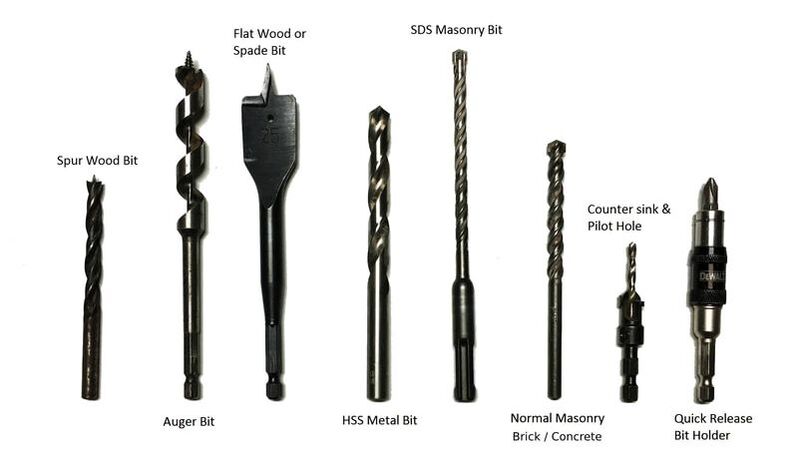
Twist drill bits are the most common type you will find. They are easy to recognize by their spiral shape and sharp tip. These bits are usually made from high-speed steel and can be used for drilling into wood, metal, and plastic.
The spiral or flute helps remove chips as you drill, keeping the hole clean. Most home toolkits come with a set of twist drill bits because they are so versatile. However, they are not ideal for very hard materials like masonry or ceramics.
Key features:
- Best for: Wood, plastic, soft metals
- Sizes: Range from tiny (less than 1 mm) to large (over 25 mm)
- Advantages: Cheap, easy to find, suitable for general use
Beginner insight: Many people push too hard when using twist drill bits, which can overheat and dull the tip. Let the bit do the work and use steady pressure.
Brad Point Drill Bits
Also called wood bits, brad point drill bits have a sharp point at the tip and spurs on the sides. This design helps the bit stay centered on wood and prevents it from wandering. The spurs create a clean edge around the hole, which is useful for furniture making or any visible woodwork.
Key features:
- Best for: Hardwood, softwood, plywood
- Sizes: Usually 3 mm to 16 mm
- Advantages: Clean, accurate holes; less splintering
Non-obvious tip: For soft materials like pine, a brad point bit gives a much neater finish than a twist bit, which can cause the wood fibers to tear.
Masonry Drill Bits
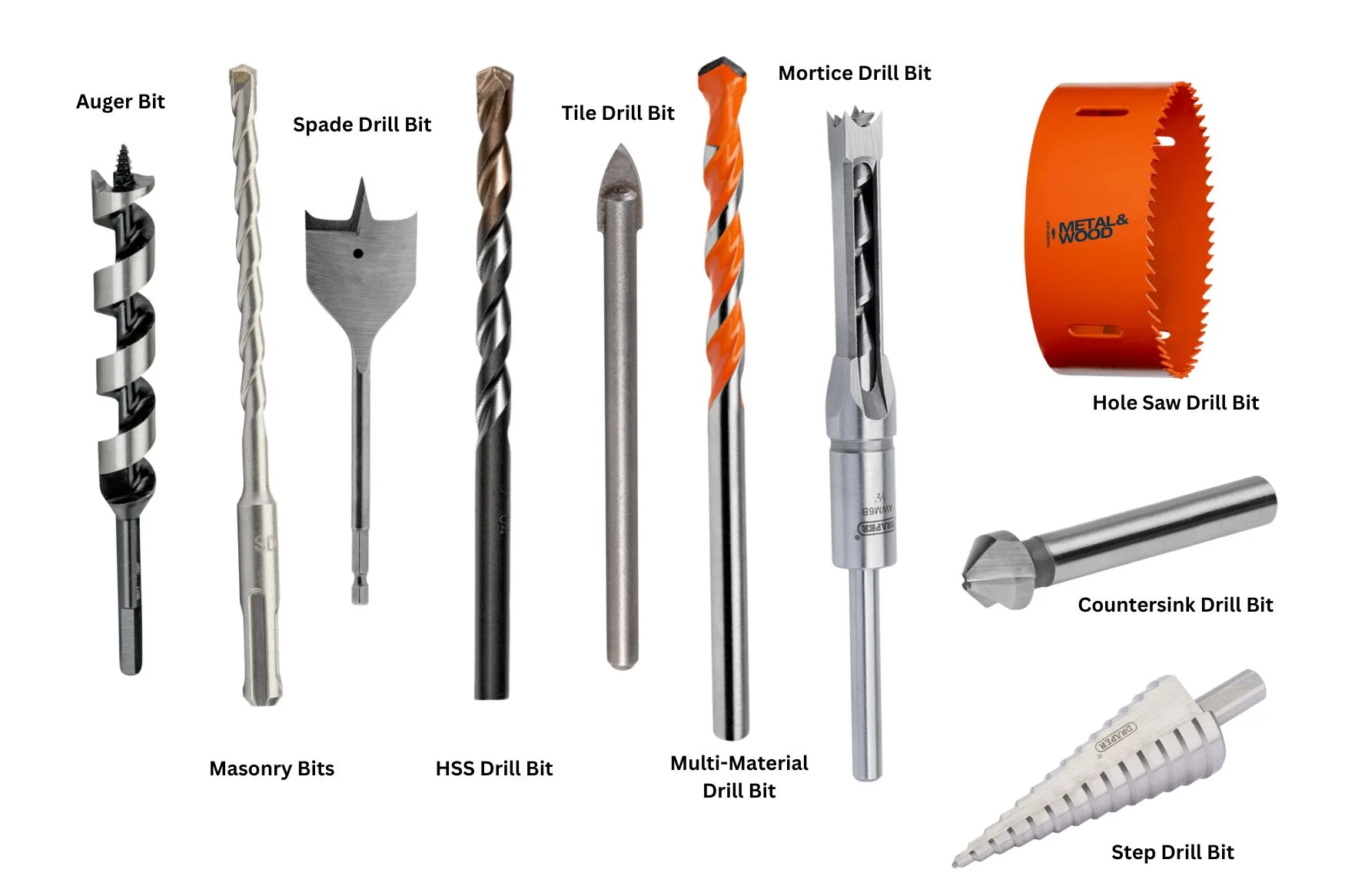
Masonry bits are designed for drilling into hard surfaces like brick, concrete, and stone. They have a tungsten carbide tip, which is much harder than regular steel. The tip is usually slightly wider than the body, helping to break up the material as it drills.
Key features:
- Best for: Brick, stone, concrete, cement blocks
- Sizes: Commonly 4 mm to 16 mm; larger sizes available
- Advantages: Tough tip, resists heat
Expert advice: When drilling into hard masonry, use a hammer drill if possible. Masonry bits can overheat quickly—take breaks to cool the bit.
Spade Drill Bits
Spade bits have a flat, paddle-shaped tip with a sharp point in the center. They are made for drilling large holes in wood, especially for running wires or pipes through studs.
Key features:
- Best for: Softwood, hardwood, plywood
- Sizes: Usually 6 mm to 38 mm
- Advantages: Fast, rough holes; cheap
Common mistake: Spade bits can cause a lot of tear-out on the back of the hole. Place a scrap piece of wood behind your work to get a cleaner exit.
Forstner Drill Bits
Forstner bits are known for their ability to create very clean, flat-bottomed holes in wood. They have a center point with a circular rim and cutting edges. This makes them perfect for woodworking where the appearance of the hole matters, like installing cabinet hinges.
Key features:
- Best for: Hardwood, softwood, plywood, MDF
- Sizes: 10 mm to 50 mm or more
- Advantages: Flat-bottom holes, smooth sides, precise depth
Extra tip: Forstner bits can be used to drill overlapping holes, something most other bits can’t do.
Auger Drill Bits
Auger bits have a long, spiral body and a screw tip that helps pull the bit through wood. They are used for deep holes in thick wood, often for large construction or carpentry projects.
Key features:
- Best for: Timber, logs, thick planks
- Sizes: 6 mm to 25 mm or larger
- Advantages: Deep, clean holes; self-feeding tip
Beginner insight: Auger bits require a slower drill speed and a lot of torque. Using them with a cordless drill may drain the battery quickly.
Step Drill Bits
Step drill bits are cone-shaped with a series of increasing diameters, or steps. They are mainly used for drilling thin materials like sheet metal or plastic. With one bit, you can drill many different hole sizes.
Key features:
- Best for: Sheet metal, plastic, thin wood
- Sizes: Steps usually range from 4 mm to 32 mm
- Advantages: Multiple hole sizes, deburring edges
Non-obvious tip: Step bits are perfect for enlarging existing holes without causing the material to tear.
Hole Saw Drill Bits
Hole saws are cylindrical bits with saw-like teeth around the edge. They cut a large hole by removing a ring of material, leaving the center piece mostly intact. They are used for making holes for doorknobs, pipes, or wiring.
Key features:
- Best for: Wood, plastic, drywall, soft metals
- Sizes: 14 mm to over 100 mm
- Advantages: Large diameter holes, efficient cutting
Important note: Hole saws need a pilot bit in the center to keep them steady. Without it, the saw can wander and ruin your work.
Countersink Drill Bits
Countersink bits are designed to create a conical hole for screw heads, allowing them to sit flush with or below the surface of the material. They often have multiple flutes and a sharp edge for smooth cutting.
Key features:
- Best for: Wood, plastic, soft metals
- Sizes: 6 mm to 19 mm
- Advantages: Neat, professional finish for screws
Common mistake: Don’t drill too deep with a countersink bit, or the screw may sink below the surface and weaken the joint.
Tile And Glass Drill Bits
Drilling into ceramic tile or glass needs a very special bit. These bits have a spear-shaped carbide tip or are coated with diamond particles. They cut slowly and should be used with water to keep them cool.
Key features:
- Best for: Ceramic tile, glass, porcelain, mirrors
- Sizes: 3 mm to 14 mm
- Advantages: Prevents cracking and chipping
Important insight: Always use low speed and steady pressure. Overheating is the main cause of cracks when drilling tile or glass.
Core Drill Bits
Core bits are like giant hole saws, used for drilling big holes in masonry or concrete. Instead of solid material, they cut a ring, leaving a core of material behind. These are used for plumbing, wiring, or HVAC installations.
Key features:
- Best for: Concrete, stone, brick
- Sizes: 20 mm to 150 mm or more
- Advantages: Large, deep holes in hard material
Pro tip: Core drilling often requires water cooling and a powerful, specialized drill.
Bullet Point Drill Bits
These bits have a unique tip shaped like a bullet. They are designed mainly for drilling into metal, especially thin sheet metal. The shape helps start the hole cleanly and reduces wandering.
Key features:
- Best for: Thin metal, aluminum, plastic
- Sizes: 3 mm to 12 mm
- Advantages: Precise starting, less slipping
Non-obvious insight: If you often drill into metal panels, bullet point bits reduce the need for a center punch.
Rivet Drill Bits
Rivet bits are small, precise bits for drilling holes that will accept rivets. They are made from tough steel and sized to match common rivet diameters.
Key features:
- Best for: Metal sheets, aircraft work, auto repair
- Sizes: 2 mm to 5 mm
- Advantages: Accurate, smooth holes for rivets
Beginner mistake: Using a bit that is too large for the rivet will make the joint loose and weak.
Left-handed Drill Bits
Most drill bits are right-handed, meaning they turn clockwise. Left-handed drill bits turn counter-clockwise and are mainly used for removing broken bolts or screws.
Key features:
- Best for: Extracting broken fasteners
- Sizes: 3 mm to 13 mm
- Advantages: Can remove stuck screws as they drill
Non-obvious tip: Sometimes, the action of drilling with a left-handed bit will loosen and remove the broken screw without any extra tools.
Cobalt Drill Bits
Cobalt drill bits are made from steel with a high percentage of cobalt. They are extra hard and can withstand high temperatures. These bits are ideal for drilling into tough metals like stainless steel or cast iron.
Key features:
- Best for: Stainless steel, cast iron, hardened metals
- Sizes: 1 mm to 13 mm
- Advantages: Long life, resists heat and wear
Pro insight: Cobalt bits are brittle. Avoid side pressure, as they can snap more easily than standard bits.
Titanium-coated Drill Bits
These are regular high-speed steel bits with a titanium nitride coating. The coating makes them more durable, reduces friction, and helps them last longer, especially when drilling metal.
Key features:
- Best for: Metal, plastic, wood
- Sizes: 1 mm to 13 mm
- Advantages: Longer life, less heat buildup
Beginner tip: The coating wears off if you sharpen the bit. After that, it performs like a regular HSS bit.
Black Oxide Drill Bits
Black oxide bits are coated with a thin layer of black oxide, which helps resist rust and increases durability. They are a step up from plain HSS bits and are good for general-purpose drilling.
Key features:
- Best for: Wood, plastic, soft metals
- Sizes: 1 mm to 13 mm
- Advantages: Rust-resistant, affordable
Non-obvious insight: Black oxide bits are great for damp environments, as the coating protects against corrosion.
Glass And Tile Diamond Drill Bits
Diamond drill bits use industrial diamonds embedded in the tip to grind through very hard materials. They work by abrasion, not cutting.
Key features:
- Best for: Glass, ceramic, porcelain, granite
- Sizes: 4 mm to 60 mm or more
- Advantages: Clean holes in brittle, hard materials
Important advice: Always use water when drilling with a diamond bit to keep it cool and extend its life.
Installer Drill Bits
Installer bits, also known as bell hanger bits, are long, flexible bits used by electricians and plumbers to run wires or pipes through walls and floors. The tip often has a small hole so wire can be threaded through after drilling.
Key features:
- Best for: Wood, drywall, plaster
- Sizes: 6 mm to 16 mm; length can be up to 450 mm
- Advantages: Long reach, pulls wire through holes
Pro insight: The flexibility of installer bits helps them work in tight spaces, but they can bend if forced too hard.
Annular Cutter Drill Bits
Annular cutters are hollow bits, like a small cup with teeth around the edge. They are used in magnetic drills for making large, clean holes in thick metal.
Key features:
- Best for: Steel, iron, thick metal plate
- Sizes: 12 mm to 100 mm
- Advantages: Cuts only the edge, faster than twist bits for big holes
Beginner mistake: Annular cutters need a pilot pin to center the hole and eject the slug (core). Forgetting the pin can damage the cutter.
Wood Plug Cutter Bits
Plug cutters are used to make wooden plugs that can fill screw holes or cover fasteners in woodworking projects. They create a short, round plug that matches the grain of the wood for a seamless finish.
Key features:
- Best for: Hardwood, softwood
- Sizes: 6 mm to 16 mm
- Advantages: Custom wood plugs, professional appearance
Non-obvious tip: Use the same wood for the plug as your project for a perfect match.
Screw Extractor Drill Bits
Screw extractors are special bits used to remove screws with damaged heads. They have a reverse thread that bites into the damaged screw as you turn counter-clockwise.
Key features:
- Best for: Stripped or broken screws
- Sizes: 3 mm to 12 mm
- Advantages: Removes screws without damaging the material
Important advice: Go slow. Forcing a screw extractor can break it inside the hole, making removal much harder.
Comparison Of Common Drill Bit Types
Choosing the right drill bit often depends on the material and the size of the hole. Here’s a simple comparison to help you decide:
| Drill Bit Type | Best For | Usual Size Range | Special Features |
|---|---|---|---|
| Twist Bit | Wood, Metal, Plastic | 1-25 mm | General purpose, easy to find |
| Brad Point | Wood | 3-16 mm | Clean holes, stays centered |
| Masonry Bit | Brick, Stone, Concrete | 4-16 mm | Carbide tip, tough |
| Spade Bit | Wood | 6-38 mm | Large, rough holes |
| Hole Saw | Wood, Plastic, Metal | 14-100 mm | Large diameter holes |
Drill Bit Materials And Coatings
The material and coating of a drill bit make a big difference in its performance and lifespan. Here’s a quick guide:
| Material/Coating | Best For | Advantages | Limitations |
|---|---|---|---|
| High-Speed Steel (HSS) | Wood, Soft Metal | Affordable, versatile | Wears faster on hard metals |
| Cobalt | Stainless Steel, Hard Metal | Heat resistant, long life | Brittle, expensive |
| Titanium Coating | Metal, Wood, Plastic | Durable, low friction | Coating wears off with sharpening |
| Black Oxide | General Use | Rust resistant, affordable | Not for hard metals |
| Carbide | Concrete, Masonry, Tile | Very hard, heat resistant | Brittle, needs special drills |
| Diamond Coating | Glass, Tile, Stone | Grinds hard materials | Needs water cooling |
Choosing The Right Drill Bit: Practical Tips
- Match the bit to the material: Use wood bits for wood, masonry bits for concrete, and metal bits for metal. Using the wrong bit can ruin your work.
- Check the drill speed: Harder materials need slower speeds. Too much speed causes overheating.
- Start with a small pilot hole: For large holes, drill a small hole first to guide the bigger bit.
- Use coolant or water: Drilling metal, tile, or glass? Add oil or water to keep the bit cool.
- Inspect your bits: Dull or damaged bits make rough holes and can damage your drill.
Advanced insight: Many professionals keep separate sets of bits for different materials. Mixing wood, metal, and masonry bits in one box can lead to confusion and mistakes.
Safety When Using Drill Bits
Drilling seems simple, but accidents can happen quickly. Follow these safety guidelines:
- Wear safety glasses to protect your eyes from flying chips.
- Clamp your work so it doesn’t move or spin.
- Use the right drill speed for the bit and material.
- Let the bit cool between uses; hot bits can burn or break.
- Don’t force the bit; apply steady, gentle pressure.
Most injuries happen when people rush or use the wrong bit for the job. Take your time, and always double-check your setup.
Drill Bit Maintenance And Storage
A drill bit will last much longer if you take care of it. Here’s how:
- Clean after use: Remove dust and chips with a brush or cloth.
- Store in a dry place: Moisture causes rust, especially on steel bits.
- Sharpen regularly: Dull bits make bad holes and overwork your drill.
- Keep in a case: Use a storage box to keep bits organized by size and type.
If a drill bit is chipped or bent, replace it. Trying to use damaged bits is unsafe and usually leads to bad results.
Special Use Drill Bits
Some drill bits are made for very specific tasks:
- Glass and tile bits: For delicate, brittle materials.
- Installer bits: For electricians running wires.
- Annular cutters: For industry and metalwork.
- Plug cutters: For fine woodworking finishes.
If you have a unique project, ask at your local hardware store. They can help you choose a specialty bit that will save you time and trouble.
Environmental Impact And Recycling
Most drill bits are made of steel or other metals, which are recyclable. Instead of throwing away old, dull, or broken bits, take them to a metal recycling center. Some brands even offer recycling programs for used bits.
Non-obvious insight: Sharpening old bits can save money and reduce waste. Many local tool shops offer sharpening services.
Real-world Examples
- Electricians use installer bits to drill through walls and pull cable.
- Plumbers use hole saws and core bits to run pipes through floors.
- Woodworkers rely on brad point and Forstner bits for neat, visible holes.
- Metalworkers use cobalt or annular cutters for precise holes in steel.
The right drill bit can turn a difficult job into an easy one, and the wrong bit can turn a simple job into a disaster.
Most Common Beginner Mistakes
- Using a wood bit on metal or concrete.
- Drilling too fast, causing heat and dulling.
- Not cooling the bit, leading to cracks or chips.
- Ignoring the size—using a bit that’s too big or too small for the screw or anchor.
- Trying to force a dull or damaged bit through hard material.
Learning from these mistakes saves time, tools, and frustration.
Where To Learn More
If you want to go deeper, check out this resource: Wikipedia: Drill Bit. It has in-depth technical details and diagrams for every type of drill bit.
Frequently Asked Questions
What Is The Most Common Type Of Drill Bit?
The most common drill bit is the twist drill bit. It works for wood, plastic, and metal, and almost every drill kit includes several sizes of twist bits.
Can I Use A Metal Drill Bit On Wood?
Yes, you can use a metal drill bit on wood, but it may not give a clean hole. For the best result, use a brad point or spade bit for wood.
How Can I Tell If A Drill Bit Is For Masonry?
Masonry bits have a thick, often silver or gray tip made of carbide. The tip is usually wider and blunter than a wood or metal bit.
Why Do My Drill Bits Keep Getting Dull?
Drill bits get dull if you drill at too high speed, use them on the wrong material, or don’t use coolant. Dull bits also result from drilling into nails, screws, or other hard objects hidden in the material.
How Should I Store My Drill Bits To Make Them Last Longer?
Store drill bits in a dry, organized box or case. Keep them separated by size and type to avoid damage. Clean them after use, and avoid leaving them in damp places to prevent rust.
Choosing the right drill bit is more than just picking the first one you find in your toolbox. With so many types available, understanding their differences lets you work faster, safer, and with better results. Next time you start a project, remember these tips, and you’ll drill with confidence every time.