
Cutting metal fast and accurately often means using a plasma cutter. These machines are popular in workshops, factories, and even home garages. But a common question for both beginners and experienced users is: how thick can a plasma cutter cut? The answer is not as simple as giving a single number. It depends on the cutter’s power, the type of metal, the quality of cut you need, and a few other important factors.
Many people buy plasma cutters expecting them to cut through anything. But pushing a machine past its limits can lead to poor results or even damage. In this guide, you’ll learn what really controls plasma cutter thickness, what to expect from different machines, and how to get the best results for your projects.
Along the way, you’ll see practical tips, real numbers, and expert insights that are often missed in basic guides.
What Is A Plasma Cutter And How Does It Work?
A plasma cutter uses a jet of superheated, electrically ionized gas to slice through conductive metals. The process starts when compressed air or gas passes through a narrow nozzle and an electric arc turns it into plasma. This plasma reaches temperatures over 20,000°C, melting the metal instantly and blowing it away.
The key advantage of plasma cutting is speed and versatility. It can cut steel, stainless steel, aluminum, copper, and more. Compared to oxy-fuel torches, plasma cutters are faster, safer, and can handle thinner metals with less distortion.
Key Parts Of A Plasma Cutter
- Power supply: Generates the electrical energy.
- Arc starting circuit: Creates the initial plasma arc.
- Torch: Directs the plasma and contains the nozzle.
- Ground clamp: Completes the electric circuit.
Understanding these basics helps you see why machine power and setup matter so much for cutting thickness.
What Controls Plasma Cutter Thickness?
The maximum thickness a plasma cutter can cut depends on several factors working together:
- Amperage (Power Output)
- The higher the amperage, the thicker the metal you can cut.
- Most small hobby units offer 20–40 amps. Industrial machines go up to 200 amps or more.
- Type of Metal
- Mild steel is easiest to cut. Stainless steel and aluminum need more power for the same thickness.
- Cut Quality Required
- “Severance cut” means the thickest the machine can possibly slice, but the edge will be rough.
- “Quality cut” means a smooth edge, suitable for welding or painting.
- Cutting Speed
- Cutting too fast or too slow affects the edge and may reduce thickness capability.
- Air Pressure and Gas Quality
- Clean, dry air at the right pressure is vital. Moisture or oil reduces performance.
- Torch and Consumables Condition
- Worn tips or incorrect parts limit the cut.
Most guides only talk about amps, but all these factors play a role. For example, a 60-amp plasma cutter might cut 7/8 inch mild steel cleanly, but only 5/8 inch aluminum at the same quality.
Typical Cutting Thickness By Amperage
Here’s a look at what you can expect from common plasma cutter sizes, assuming mild steel and a quality cut:
| Plasma Cutter Amperage | Maximum Quality Cut | Maximum Severance Cut |
|---|---|---|
| 20 amps | 1/8 inch (3 mm) | 1/4 inch (6 mm) |
| 40 amps | 1/2 inch (12 mm) | 3/4 inch (19 mm) |
| 60 amps | 7/8 inch (22 mm) | 1 1/4 inch (32 mm) |
| 80 amps | 1 inch (25 mm) | 1 1/2 inch (38 mm) |
| 100+ amps | 1 1/2 inch (38 mm) | 2+ inch (50+ mm) |
- Quality cut: Smooth edge, little dross, ready for use.
- Severance cut: Machine can barely get through, rough edge, lots of cleanup.
Most users need a quality cut, not just severance ability.
Differences By Metal Type
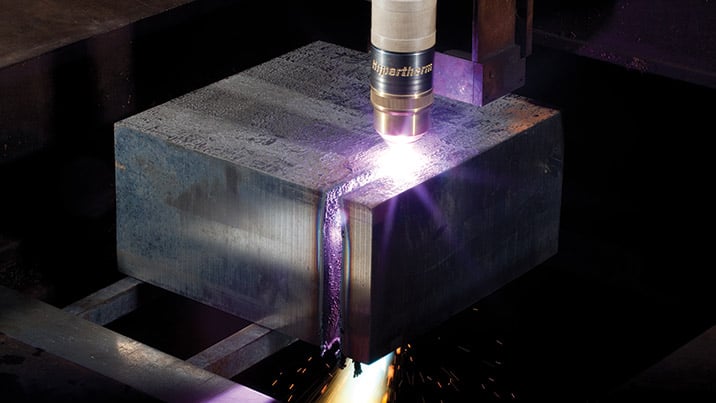
Not all metals cut equally with plasma. Mild steel is easiest, followed by stainless steel and then aluminum, which is hardest because it reflects heat and melts differently.
Example: 60-amp Plasma Cutter
- Mild steel: Quality cut up to 7/8 inch (22 mm)
- Stainless steel: Quality cut up to 5/8 inch (16 mm)
- Aluminum: Quality cut up to 1/2 inch (12 mm)
This means if you buy a plasma cutter rated for 1 inch in steel, do not expect the same in aluminum. This is a common mistake for new users.
Real-world Examples And Machine Ratings
Manufacturers often advertise the maximum severance cut, not the quality cut. Always check both ratings.
| Model | Amps | Quality Cut (Mild Steel) | Severance Cut (Mild Steel) |
|---|---|---|---|
| Hobart AirForce 40i | 40 | 5/8 inch (16 mm) | 7/8 inch (22 mm) |
| Hypertherm Powermax45 XP | 45 | 5/8 inch (16 mm) | 1 inch (25 mm) |
| Miller Spectrum 625 X-TREME | 40 | 5/8 inch (16 mm) | 3/4 inch (19 mm) |
| Everlast PowerPlasma 60S | 60 | 7/8 inch (22 mm) | 1 1/8 inch (29 mm) |
Insight: Some brands are conservative with their ratings, while others exaggerate. Always look for independent tests or user reviews.
Cut Quality Explained: Quality Cut Vs. Severance Cut
Quality cut means the edge is clean, straight, and needs little or no grinding. This is important if you plan to weld, paint, or use the part immediately.
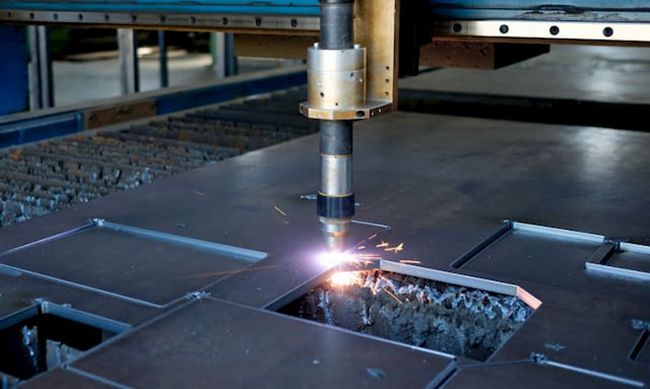
Severance cut is the thickest the plasma arc can melt through. The edge will be rough, uneven, and covered with dross (slag). Cleanup takes extra time, and sometimes the edge is unusable.
When To Use Each
- Quality cut: For finished pieces, precision work, or when fit-up matters.
- Severance cut: For quick separation, demolition, or when edge quality is not critical.
Other Factors That Limit Cutting Thickness
Air Supply And Quality
Plasma cutters need clean, dry, and steady air. If your compressor is too small or air is wet or dirty, the cut will suffer. This is often overlooked by beginners. Water or oil in the air lines can cause sputtering, poor arc stability, and limit how thick you can cut.
Torch And Consumables Condition
The torch tip, electrode, and shield wear out over time. Worn consumables make the arc unstable. This reduces cutting thickness and quality. Always check and replace parts as needed.
Cutting Speed And Technique
Cutting too slowly overheats the edge and makes a wider kerf (cut width), reducing max thickness. Going too fast leaves uncut spots and more dross. Practice makes a big difference, even with the same machine.
Power Supply Voltage
Some plasma cutters run on 120V (household power), others on 240V (industrial). Higher voltage supports higher amps and thicker cutting.
Plasma Cutter Vs. Other Cutting Methods
Plasma cutting is not the only way to cut thick metal. Here’s how it compares:
| Method | Max Thickness (Mild Steel) | Edge Quality | Best For |
|---|---|---|---|
| Plasma Cutter | Up to 2 inches (50 mm) | Good (quality cut) | Speed, complex shapes, thin to medium thick |
| Oxy-Fuel Torch | Up to 12 inches (300 mm) | Rough | Very thick steel, field work |
| Band Saw | 6+ inches (150+ mm) | Very good | Precision cuts, low volume |
| Abrasive Cutoff Saw | Up to 4 inches (100 mm) | Fair | Basic shop work |
| Laser Cutter | Up to 1 inch (25 mm) | Excellent | Sheet metal, high precision |
Non-obvious insight: Plasma is not always the best for extremely thick steel. Oxy-fuel is still preferred for demolition or heavy plate, but plasma is better for aluminum and stainless steel, where oxy-fuel cannot cut at all.
Choosing The Right Plasma Cutter For Your Needs
If you mostly cut sheet metal, a small unit is fine. For frames or structural steel, buy more power than you think you need. Here’s what to consider:
- Material Type and Maximum Thickness
- Buy a machine rated for at least 25% thicker than your normal work.
- Consider the hardest metal you’ll cut (aluminum needs more power).
- Duty Cycle
- This tells you how long you can cut before the machine must cool down. More amps often mean shorter duty cycles.
- Portability
- Smaller machines are lighter but have less capacity.
- Air Compressor
- Make sure your air supply matches the plasma cutter’s needs.
- Budget
- Cheaper units usually have lower max thickness and shorter lifespans.
- Cutting Table or CNC
- For straight lines or automation, check if the plasma cutter supports CNC controls.
Common buyer mistake: Focusing only on amps. Also check air compressor size, duty cycle, and whether you need a true quality cut.
Practical Examples: What You Can Cut
- Auto body panels (18 gauge, 1.3 mm): Any plasma cutter, even 20 amps.
- Angle iron (1/4 inch, 6 mm): 30–40 amps works well.
- Truck frame (1/2 inch, 12 mm): At least 50 amps for a clean edge.
- Heavy plate (1 inch, 25 mm): 80–100 amps, industrial machine.
For home shops, most work is under 3/8 inch (10 mm) thick, so a 40-amp unit is often enough. Fabricators and repair shops need more.
Tips For Maximizing Cutting Thickness
- Use a New Tip and Electrode
- Old consumables reduce arc focus.
- Set Correct Air Pressure
- Usually 60–70 psi for most units.
- Cut Slowly but Steadily
- Don’t rush, but don’t linger in one spot.
- Keep the Torch at a Consistent Angle
- Perpendicular for cleanest cuts.
- Use a Drag Shield for Thin Metals
- Helps maintain correct height.
- Let the Machine Cool
- Exceeding duty cycle overheats the unit.
- Check for Good Ground Connection
- Poor ground causes weak arc.
- Clean the Metal Surface
- Rust or paint reduces conductivity.
Non-obvious insight: Sometimes, preheating very thick metal with a torch (just warming, not cutting) helps the plasma arc start and cut more easily.
When Plasma Is Not The Best Choice
Plasma cutters are not perfect for every job. Here are limits:
- Very thick steel (over 2 inches/50 mm): Oxy-fuel is better.
- Non-conductive materials (glass, plastic, wood): Plasma cannot cut these.
- Precision requirements under 0.01 inch (0.25 mm): Laser or waterjet is better.
- Dirty, painted, or rusty metal: Plasma can cut, but edge quality drops.
Safety And Best Practices
Plasma cutting is safer than oxy-fuel, but it has risks:
- Eye protection: The arc is bright and creates UV light.
- Ventilation: Fumes from cutting are hazardous, especially with coated metals.
- Gloves and long sleeves: Protect from sparks and hot metal.
- Proper grounding: Prevents electrical shock.
Always read your machine’s manual and follow safety rules. Never cut near flammable materials.
How Technology Is Changing Plasma Cutting
Modern plasma cutters are getting smarter and more capable. Some use CNC controls for automated cutting. Others have pilot arcs that allow starting without touching the metal, helpful for cutting grates or rusty steel.
Inverter technology now makes powerful plasma cutters lighter and more efficient. Some units run on both 120V and 240V, making them flexible for job sites. Expect even thicker cutting in smaller packages in the future.
Cutting Thick Metal: Advanced Techniques
For very thick pieces (over 1 inch/25 mm), skilled operators use special tricks:
- Bevel cutting: Tilting the torch to create angled edges for welding.
- Multiple passes: Sometimes, it’s better to cut from both sides or make several passes.
- Preheating: Warming the metal with a torch before plasma cutting helps the arc stay stable.
These techniques require practice and experience. Beginners should start with flat, clean, single-pass cuts.
Maintenance To Preserve Cutting Ability
Regular maintenance extends the life of your plasma cutter and keeps cutting thickness at its best:
- Clean air filter and water separator weekly.
- Check and replace consumables before they fail.
- Inspect torch cable for cracks or wear.
- Keep nozzle clear of spatter buildup.
Neglecting maintenance leads to weak arcs and limits thickness—often before the machine’s specs are reached.

Typical Problems And How To Solve Them
- Edge is rough or full of dross: Check speed, air pressure, or try new consumables.
- Cannot pierce thick metal: Increase amps, slow down, or preheat.
- Arc sputters or stops: Moist air, poor ground, or worn tip.
- Blowback or double arc: Nozzle or electrode is worn out.
Don’t keep cutting if something feels wrong. It’s safer and cheaper to stop and check.
Cost Vs. Cutting Thickness
Heavier-duty plasma cutters cost more, but it’s often worth it if you regularly cut thick metal. For example:
- Entry-level (20–30 amps): $300–$600, up to 1/4 inch (6 mm)
- Mid-range (40–60 amps): $700–$1,500, up to 1 inch (25 mm)
- Industrial (80+ amps): $2,000+, up to 2 inches (50 mm) or more
If you mostly cut thin sheet, you don’t need to overspend. But always buy a little more power than you think you need—machines rarely cut as thick in practice as on the box.
Environmental Factors Affecting Thickness
- Ambient temperature: Very cold or hot air can impact arc quality.
- Altitude: Higher altitudes mean lower air pressure, which can limit performance.
- Humidity: More water in the air can cause arc instability unless well filtered.
These are small effects but can matter at the limits of your machine’s ability.
The Bottom Line: How Thick Can A Plasma Cutter Cut?
- Small plasma cutters (20–30 amps): Up to 1/4 inch (6 mm) quality cut.
- Medium plasma cutters (40–60 amps): Up to 1 inch (25 mm) quality cut.
- Large plasma cutters (80+ amps): Up to 2 inches (50 mm) quality cut, sometimes more.
Remember, metal type, cut quality, and air supply are just as important as the amp rating. For most users, a 40–60 amp machine will handle nearly all workshop needs. For special jobs, rent or borrow a larger machine.
Always check both quality cut and severance cut ratings, and buy for the thickest material you plan to cut regularly, not just once.
If you want to see technical details and more examples, check out this Wikipedia guide to plasma cutting.
Frequently Asked Questions
How Thick Can A 50 Amp Plasma Cutter Cut?
A 50 amp plasma cutter can usually make a quality cut up to 5/8 inch (16 mm) on mild steel. For a severance cut, it might reach 3/4 inch (19 mm) or a bit more, but the edge will be rough. For aluminum or stainless steel, expect a slightly lower maximum.
What Is The Difference Between Severance Cut And Quality Cut?
Quality cut means the edge is smooth and straight, ready for welding or painting. Severance cut is the thickest the machine can slice through, but the edge will be rough, uneven, and need lots of cleaning. Most people should focus on the quality cut rating for practical work.
Can Plasma Cutters Cut Non-metal Materials?
No, plasma cutters only work on electrically conductive metals (like steel, aluminum, copper). They cannot cut wood, plastic, glass, or ceramics. For those, use a saw, waterjet, or laser designed for non-metals.
Do I Need A Special Air Compressor For Plasma Cutting?
You need an air compressor that delivers clean, dry air at the right pressure (usually 60–70 psi) and volume (often 4–6 CFM for small cutters). Oil or water in the air reduces cut quality and thickness. Some plasma cutters have built-in compressors for light work.
How Do I Get A Cleaner Cut On Thicker Metal?
- Use a new tip and electrode
- Set correct air pressure
- Cut slowly and steadily
- Keep the torch angle consistent
- Preheat thick metal for easier starting
If you still get rough edges, check your ground clamp and try slightly slower speed.
Plasma cutting is a powerful tool, but knowing its real limits helps you choose the right machine and get the best results. By understanding what affects cutting thickness, you’ll avoid common mistakes and work more safely and efficiently every time.