
Needle nose pliers are one of those tools you often see in toolboxes, workshops, and craft rooms. But many people—especially beginners—are not sure what makes these pliers special or when to use them. If you have ever wondered what needle nose pliers are used for, or if you are trying to decide if you need them for your own projects, this guide will give you clear, practical answers.
Needle nose pliers stand out because of their long, pointed jaws. They let you reach into small spaces and hold tiny objects that other pliers cannot grip. These pliers are not just for electricians or jewelers—almost everyone who works with tools will find a use for them at some point.
The more you know about the real uses and advantages of needle nose pliers, the better you can choose and use them.
What Are Needle Nose Pliers?
Needle nose pliers are a type of hand tool with long, slender jaws that taper to a point. This shape lets them reach into tight spaces and hold very small parts. The jaws have a textured surface (called serrations) to give a better grip. Most needle nose pliers also have a cutting edge near the base for snipping wires.
These pliers are usually made from hardened steel for strength and durability. The handles are often coated with rubber or plastic for comfort and to stop slipping. Some have insulated handles for electrical work.
Needle nose pliers come in several sizes, from about 4 inches (10 cm) up to 8 inches (20 cm) or more. The longer the jaws, the deeper you can reach—but shorter jaws give more control for delicate work.
Main Uses Of Needle Nose Pliers
People use needle nose pliers in many fields—electrical work, jewelry making, automotive repair, crafts, and even fishing. Here are the main ways they are used:
1. Gripping Small Objects
One of the most common uses is gripping tiny parts. The pointed jaws can pick up screws, beads, wires, and fasteners in places where fingers are too big. This is useful when working inside electronics, clocks, or any project with small parts.
2. Bending And Shaping Wire
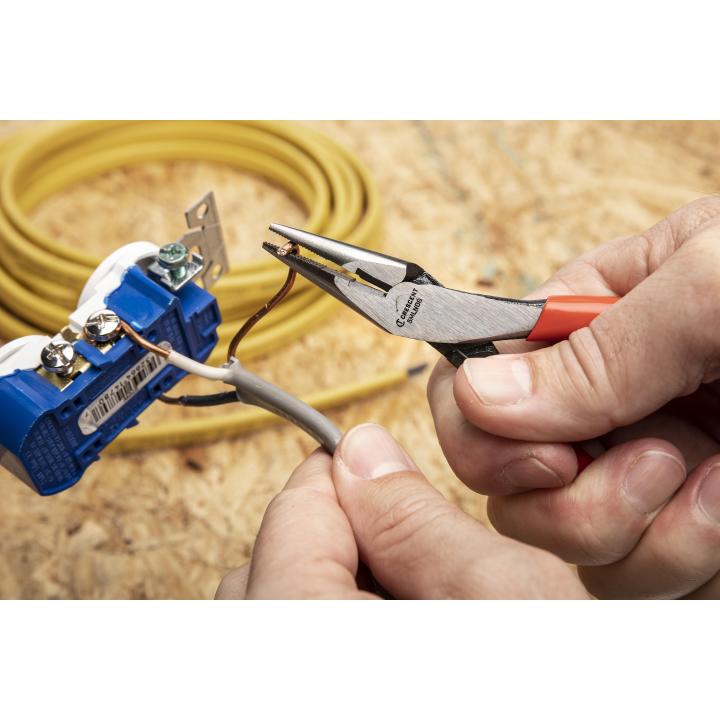
Needle nose pliers are perfect for bending wire into loops, angles, or custom shapes. Electricians use them to twist wires together or form hooks for connecting to screws. Jewelers use them for making earrings, clasps, or wire-wrapped stones.
3. Reaching Confined Spaces
When you need to reach into tight spots, needle nose pliers are the tool of choice. For example, you might need to pull a wire out from behind a car dashboard or grab a dropped screw from inside a small machine.
4. Holding While Soldering
If you solder wires or electronics, you know it’s hard to hold hot parts safely. Needle nose pliers are often used as a third hand to hold wires steady while soldering. The long jaws keep your fingers away from heat.
5. Cutting Wire
Many needle nose pliers have a cutting edge near the pivot. This lets you snip soft wire, zip ties, or thin nails while working. It’s not as strong as dedicated wire cutters, but it’s useful for quick jobs.
6. Removing And Installing Small Components
In electronics, model building, or repair, you often need to pull out or push in pins, connectors, or fuses. Needle nose pliers let you do this without damaging the parts.
7. Making Jewelry
Jewelry makers use needle nose pliers for almost every step: bending jump rings, closing clasps, shaping decorative wire, and even picking up small beads. The control and precision are essential for fine jewelry work.
8. Fishing Tasks
Anglers often keep needle nose pliers in their tackle box. They use them to remove hooks from fish, bend split rings, or crimp sleeves on fishing line.
9. Bending Sheet Metal Tabs
When repairing electronics, you might need to bend or straighten metal tabs that hold parts in place. Needle nose pliers give you the leverage and control to do this without damaging delicate circuits.
10. Working With Fuses And Relays
In cars, motorcycles, and appliances, fuses and relays are packed tightly. Needle nose pliers help you grip and pull these parts out safely, especially in small fuse boxes.
11. Crafting And Hobby Work
Crafters use needle nose pliers for beadwork, wire art, model building, and floral arrangements. The tool lets you manipulate tiny pieces with accuracy.
12. Twisting And Looping
Needle nose pliers are perfect for making neat loops at the end of wires (for example, when connecting to screws or making hooks). Twisting wires together for a strong connection is also easier with these pliers.
13. Electronics Assembly And Repair
When building or fixing electronics, you need to hold, bend, or insert small wires and components. Needle nose pliers are almost always on the workbench for this reason.
14. Removing Broken Fasteners
If a nail or staple breaks and leaves a small end sticking out, you can often grip it with needle nose pliers and pull it free. They are also helpful for removing cotter pins from machinery.
15. Unlocking Stuck Zippers
This use is less common, but needle nose pliers can gently pull a stuck zipper tab back onto track or grip the tiny zipper head when it breaks.
16. Adjusting Eyeglass Frames
The thin jaws are ideal for making small adjustments to eyeglass arms or nose pads without scratching the frame.
17. Handling Hot Items
In situations where you need to move a small hot item (like a soldered wire or a tiny part from an oven), needle nose pliers let you grip it safely.
18. Removing And Placing Springs
Many machines and toys use small springs. Needle nose pliers make it easier to stretch, hook, or remove these springs without losing or damaging them.
19. Installing Gaskets And Seals
Auto mechanics use needle nose pliers to position small rubber gaskets or seals inside engines or pumps, where fingers cannot reach.
20. Opening Split Rings
Split rings are used in keychains and jewelry. The pointed jaws can wedge open the ring so you can add or remove keys or charms without hurting your nails.
Types Of Needle Nose Pliers
There are several types of needle nose pliers, each designed for specific tasks. Let’s compare some of the common types:
| Type | Main Feature | Typical Use |
|---|---|---|
| Standard Needle Nose | Straight, pointed jaws | General gripping, bending wire |
| Bent Nose Pliers | Jaws bent at 45° or 90° | Reaching awkward angles |
| Long Nose Pliers | Extra-long jaws | Deep access in electronics, automotive |
| Mini Needle Nose | Small size, fine tips | Jewelry, watch repair, crafts |
| Insulated Needle Nose | Handles rated for electricity | Electrical wiring, live circuits |
Each type has its strengths. For example, bent nose pliers are excellent for picking up parts at tricky angles, while insulated pliers are essential for electrical safety.
How To Choose The Right Needle Nose Pliers
Choosing the right pair can make your work faster and safer. Here are key factors to consider:
- Size of the Jaws: For electronics or jewelry, choose pliers with fine, narrow jaws. For automotive or general use, medium to long jaws are better.
- Jaw Strength: Thicker jaws can handle more force, but may not fit small spaces.
- Cutting Edge: Decide if you need a cutting edge. If you often cut wire, look for pliers with a sharp, durable cutter.
- Handle Comfort: Soft, non-slip grips reduce hand fatigue, especially during long work sessions.
- Insulation: For electrical work, use pliers with proper insulation rated for high voltage.
- Jaw Serration: Deeper serrations grip better, but can mark soft materials like jewelry wire.
- Build Quality: Cheap pliers often misalign or break under pressure. Choose a trusted brand if possible.
It’s smart to try the pliers in your hand before buying. Make sure they open and close smoothly, and the tips meet perfectly for the best grip.
Real-world Examples Of Needle Nose Pliers In Action
Let’s look at a few real-life situations where needle nose pliers make a difference:
- Repairing a Laptop: You need to reach a tiny screw inside the case. Regular pliers are too big, but needle nose pliers can get it.
- Making a Necklace: You want to close a small jump ring without scratching it. The fine tips give perfect control.
- Fixing a Car Fuse: The fuse is stuck deep in the box. Needle nose pliers pull it out safely.
- Fishing Trip: A fish swallows the hook. Needle nose pliers reach inside the mouth to remove it without injury.
- Soldering a Circuit Board: You hold the wire steady with the pliers while soldering, keeping your fingers away from the hot tip.
These examples show why needle nose pliers are a must-have for many jobs.
How Needle Nose Pliers Compare To Other Pliers
You might wonder how needle nose pliers are different from other types. Here’s a quick comparison:
| Feature | Needle Nose Pliers | Linesman Pliers | Slip Joint Pliers |
|---|---|---|---|
| Jaw Shape | Long, pointed | Short, flat | Wide, adjustable |
| Main Use | Precision, small spaces | Cutting, twisting, heavy work | General gripping, plumbing |
| Wire Cutting | Light (soft wire) | Heavy (thicker wire) | Some (not all models) |
| Best For | Electronics, jewelry, crafts | Electrical, construction | Household, automotive |
The main advantage of needle nose pliers is their ability to reach and grip in places where other pliers are too bulky.
Tips For Safe And Effective Use
To get the best results and avoid injury, follow these tips:
- Don’t use as a hammer: Needle nose pliers are not strong enough for heavy blows.
- Don’t cut hard wires: The cutting edge is for soft copper, aluminum, or craft wire—not steel or nails.
- Keep jaws aligned: Always check that the tips meet evenly. Misaligned jaws can slip and damage your work.
- Use the right size: Large pliers can crush delicate items; small pliers may not grip thick wires.
- Clean regularly: Dust and rust can make the jaws stick. Wipe pliers after use and oil the joint if needed.
- Store properly: Keep pliers in a toolbox or pouch. Dropping them can bend the tips.
- Wear safety glasses: When cutting wire, small pieces can fly into your eyes.
Many beginners forget to check the jaw alignment. Even a small gap means you cannot grip tiny parts firmly.
Common Mistakes To Avoid
Here are mistakes people often make with needle nose pliers:
- Using for prying: The thin jaws can snap if you try to pry open lids or stuck objects.
- Twisting thick wires: This can bend the tips out of shape.
- Using in wet conditions: Unless your pliers are stainless steel, moisture can cause rust.
- Ignoring handle comfort: Cheap, hard handles can cause blisters during long use.
- Not cleaning after soldering: Solder can build up on the jaws, making them sticky.
Avoiding these mistakes will extend the life of your pliers and protect your projects.
Caring For Needle Nose Pliers
Proper care ensures your tool lasts for years. Here’s how:
- Wipe after use: Remove dirt, oil, or metal shavings.
- Oil the joint: A drop of light oil keeps movement smooth.
- Sharpen cutting edge: If the cutter becomes dull, sharpen with a fine file or take to a professional.
- Rust prevention: Store in a dry place. Silica gel packs in your toolbox can absorb moisture.
- Inspect regularly: Check for loose handles, rust, or bent tips.
If your pliers get sticky, soak them in a little white vinegar to remove rust, then dry and oil them.
When To Replace Needle Nose Pliers
Even good tools wear out. Replace your needle nose pliers if:
- The jaws no longer meet evenly.
- The tips are bent and cannot be straightened.
- The cutting edge is chipped or very dull.
- The handles are cracked or loose.
- The pliers feel wobbly or unsafe.
Investing in a new pair is safer than struggling with damaged tools.
The History And Evolution Of Needle Nose Pliers
Needle nose pliers evolved from basic gripping tools used for centuries. Early pliers were made by blacksmiths for holding hot metal. As electrical and mechanical work became more complex, the need for precise, fine-tipped pliers grew.
By the early 20th century, needle nose pliers became standard for electricians, jewelers, and mechanics. Today, you can find dozens of specialized versions, each designed for a particular industry.
The design remains simple—two levers and a pivot—but the materials and manufacturing have advanced. Modern pliers are stronger, lighter, and more comfortable than ever before.
Who Uses Needle Nose Pliers?
Needle nose pliers are used by:
- Electricians: For wiring, bending, and pulling small parts in electrical boxes.
- Jewelers: For making and repairing jewelry.
- Automotive technicians: For working in engine bays and fuse boxes.
- Craftspeople: For making art, models, or floral arrangements.
- Fishermen: For handling hooks and split rings.
- Homeowners: For household repairs, from fixing a lamp to opening a key ring.
- Hobbyists: For electronics kits, radio building, or RC model repair.
Some professionals use needle nose pliers every day. For example, an electrician may reach for them dozens of times on a single job.

Needle Nose Pliers Vs. Tweezers
Beginners sometimes confuse needle nose pliers with tweezers. Here’s a quick look at the differences:
| Feature | Needle Nose Pliers | Tweezers |
|---|---|---|
| Material | Steel (heavy duty) | Steel or plastic (light duty) |
| Grip strength | Strong, can bend/cut wire | Light, only for picking up |
| Cutting edge | Often included | Never |
| Typical use | Electrical, mechanical, crafts | Electronics, medical, beauty |
If you need to hold or bend something with force, use needle nose pliers. If you only need to pick up a small item gently (like a splinter or an eyelash), tweezers are better.
Needle Nose Pliers In Specialized Trades
Some industries use custom versions of needle nose pliers:
- Aerospace: Long-reach pliers for wiring in tight aircraft panels.
- Dentistry: Modified pliers for bending orthodontic wires.
- Watchmaking: Ultra-fine pliers for gears and springs.
- Telecommunications: Insulated pliers for working around live phone wires.
These special tools are often more expensive, but they make critical tasks possible.
Non-obvious Insights For Beginners
- Tip Hardness Matters: Cheap pliers can have soft jaws that wear down or bend with use. Always test the hardness if you plan to use them often.
- Jaw Serration Style: For jewelry or delicate work, choose pliers with shallow or polished jaws to avoid leaving marks.
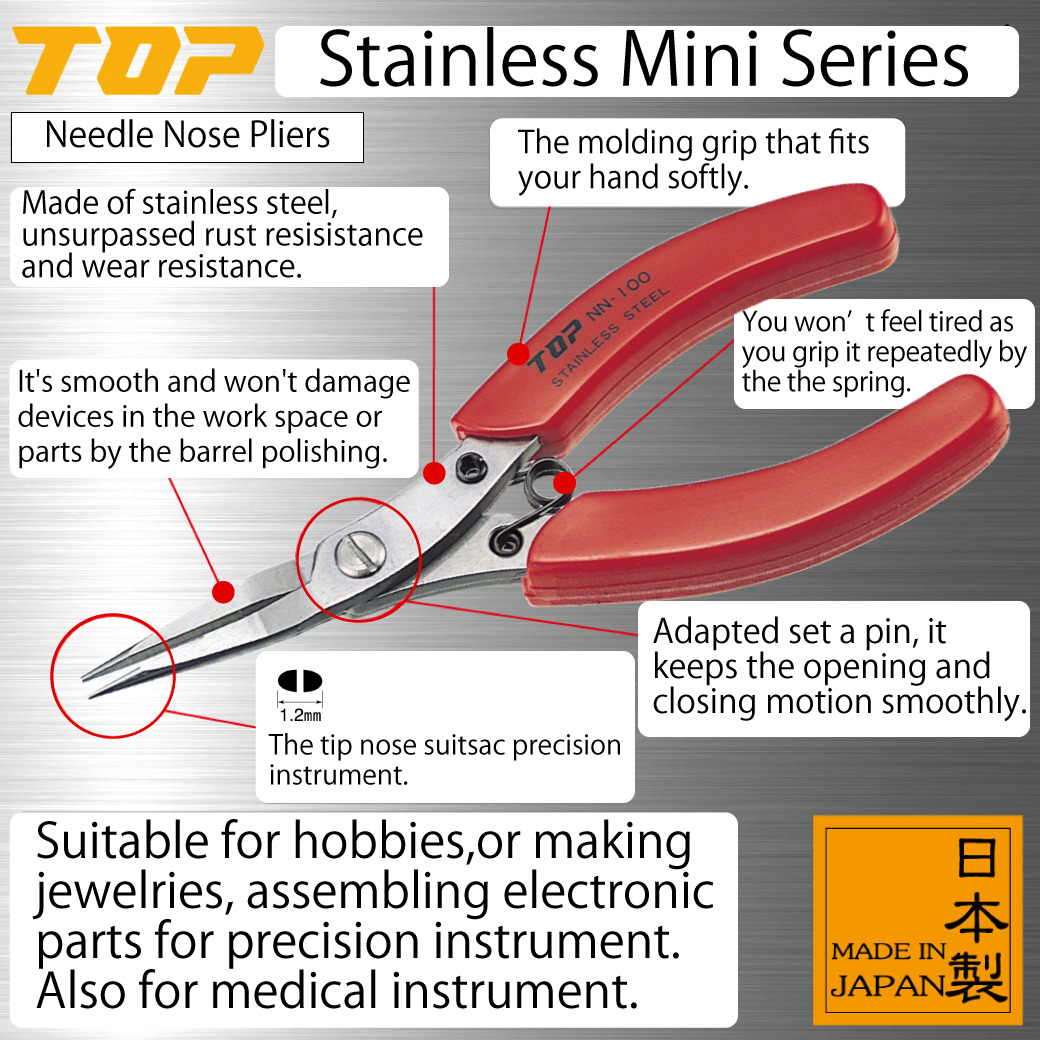
- Spring-Loaded Handles: Some models have a spring that opens the pliers automatically. This reduces hand strain during repetitive work, but not everyone likes it.
Many beginners buy the wrong type because they do not realize how much jaw shape and serration affect performance.
Where To Learn More
If you want to read more about the history and design of hand tools, check out this Wikipedia page on pliers.
Frequently Asked Questions
What Is The Main Difference Between Needle Nose Pliers And Regular Pliers?
The main difference is the long, pointed jaws of needle nose pliers. This lets you reach into tight spaces and grip small objects, which regular pliers cannot do as well. Regular pliers (like linesman or slip-joint) are better for heavy gripping and cutting thicker materials.
Can Needle Nose Pliers Cut Wire?
Yes, most needle nose pliers have a cutting edge near the pivot. They are best for cutting soft wire, like copper or aluminum. They are not designed for cutting hard steel wire or nails.
Are Needle Nose Pliers Safe For Electrical Work?
If you are working with live wires, you must use insulated needle nose pliers rated for electrical safety. Regular pliers can conduct electricity and are dangerous in these situations.
Why Do My Needle Nose Pliers Slip When Gripping Small Items?
This usually happens when the jaw tips are misaligned or the serrations are worn out. Make sure the jaws meet evenly and grip well. Cheap pliers often have poor alignment.
What Is The Best Way To Care For Needle Nose Pliers?
Keep them clean and dry. Oil the pivot joint regularly. Store in a dry place to prevent rust. Do not use for tasks they are not designed for, like prying or cutting hard materials.
Needle nose pliers are a simple tool, but their uses are nearly endless. With the right pair, you can make repairs, create art, and solve tough problems in tight spaces. Once you experience their precision and control, you’ll wonder how you ever managed without them.