
A rotary hammer drill is a powerful tool that many people see on construction sites, but few truly understand its full range of uses. If you ever need to drill into tough concrete, break up old tiles, or even carve channels into brick walls, this is the tool professionals trust.
But what makes it so different from a regular hammer drill or an impact driver? And why do both contractors and serious DIYers consider it essential? Let’s explore the real-world functions, types, and benefits of the rotary hammer drill, and learn why it’s often the best choice for the hardest jobs.
Understanding The Rotary Hammer Drill
A rotary hammer drill is a heavy-duty power tool designed mainly for drilling and chiseling hard materials like concrete, stone, and masonry. Unlike standard drills, it combines two actions: a rotary motion and a strong hammering action. This dual movement allows the bit to not only spin but also pound forward into the material, making it much more effective on tough surfaces.
Rotary hammers use a piston mechanism to generate high impact force (measured in joules), much stronger than the simple cams used in regular hammer drills. This is why they are much more efficient for tasks that would quickly wear out or even damage less powerful tools.
Main Uses Of A Rotary Hammer Drill
1. Drilling Into Concrete And Masonry
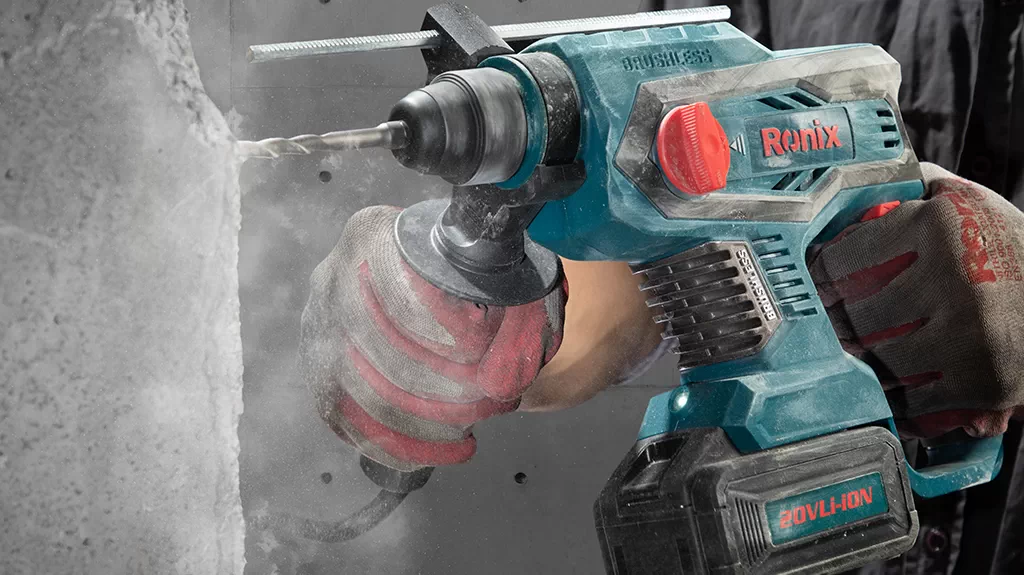
The most common use for a rotary hammer drill is drilling holes in concrete, brick, and stone. Whether you are installing anchors for a new railing, running electrical cables through a wall, or mounting heavy fixtures, this tool makes the job fast and accurate. Standard drills often struggle or fail completely with such hard materials, but a rotary hammer can create precise holes with much less effort from the operator.
2. Chiseling And Demolition Work
Rotary hammer drills can switch to a hammer-only mode, turning them into a mini jackhammer. This makes them perfect for tasks like:
- Removing old ceramic tiles from floors or walls
- Breaking up small areas of concrete or masonry
- Chipping away bricks for renovations
- Removing excess mortar
The chisel attachment, combined with the high impact force, means you can break apart materials that would be almost impossible with a hand tool or standard drill.
3. Creating Large Diameter Holes
Sometimes, you need to make bigger holes for plumbing pipes, HVAC ducts, or electrical conduits. Rotary hammers can use large-diameter bits, such as core bits, to cut through thick walls. This is essential for renovation projects where access is limited, and accuracy is important.
4. Driving Ground Rods
When installing grounding rods for electrical systems, you often need to drive a long metal rod several feet into the earth. Hard or rocky ground can make this very difficult, but a rotary hammer drill, equipped with a rod driver attachment, can push the rod deep with relative ease.
5. Channeling And Chasing
Running cables or pipes often means making long, straight grooves (called chases) in concrete or brick. With a chisel bit, the rotary hammer can cut these channels much faster and cleaner than a hammer and chisel, reducing both labor and dust.
6. Removing Plaster, Render, And Other Wall Coverings
Renovation work often requires stripping old plaster, render, or stucco from walls. Using a wide chisel in a rotary hammer can remove these coatings quickly without damaging the underlying brick or blockwork.
7. Setting Anchors And Rebar Doweling
Construction projects often need chemical or mechanical anchors set into concrete. Rotary hammer drills create the clean, deep holes required for secure anchor installation. They’re also used for rebar doweling, where new concrete needs to be tied into existing slabs or walls.
8. Tile Removal And Floor Preparation
Flooring professionals use rotary hammers to remove tiles and thin-set mortar, as well as break up old concrete layers. The tool’s power saves hours of manual labor and reduces operator fatigue.
9. Masonry Screw And Bolt Installation
Installing masonry screws or expansion bolts requires accurately drilled holes. Rotary hammer drills do this quickly, making them the preferred tool for mounting heavy items on concrete or brick surfaces.
10. Breaking Up Asphalt And Small Concrete Slabs
For small demolition jobs, like removing patches of asphalt or concrete slabs (such as for a new garden bed or post), a rotary hammer with a pointed chisel can break up the material without needing a full-size jackhammer.
How A Rotary Hammer Drill Works
The main difference between a rotary hammer and other drills is the electro-pneumatic hammering mechanism. Here’s a simple explanation:
- An electric motor drives a piston inside the tool.
- The piston compresses air, which drives another piston forward.
- This “flying” piston strikes the end of the drill bit, creating a hammering effect.
This design allows the tool to deliver thousands of blows per minute (BPM), with each blow much stronger than that produced by a standard hammer drill. The operator feels less vibration, and the tool does most of the work.
Rotary Hammer Drill Vs. Hammer Drill Vs. Impact Driver
Many people confuse these three tools. Let’s see how they compare.
| Feature | Rotary Hammer Drill | Hammer Drill | Impact Driver |
|---|---|---|---|
| Hammering Mechanism | Electro-pneumatic | Mechanical (cam plate) | Rotational impact |
| Best For | Concrete, masonry, demolition | Light masonry, brick, wood | Driving screws, bolts |
| Power | High | Medium | Low/Medium |
| Drill Bit Type | SDS, SDS-Plus, SDS-Max | Standard masonry bits | Hex shank bits |
| Chiseling Mode | Yes | No | No |
Key insight: Many beginners think a hammer drill can do everything a rotary hammer can. In reality, hammer drills are for light-duty work. For serious drilling in concrete or any demolition, you need a rotary hammer.

Types Of Rotary Hammer Drills
There are several styles, each with its own strengths:
Pistol Grip Rotary Hammer
This is the most common for general use. The pistol grip design balances power and control, making it good for overhead or horizontal drilling.
D-handle Rotary Hammer
With a D-shaped rear handle, these are easier to control during vertical drilling or chiseling. Plumbers and electricians like them for overhead work.
Sds-plus Vs. Sds-max
These terms refer to the bit shank size and locking system:
- SDS-Plus: For lighter, more precise jobs (holes up to 1 inch in diameter).
- SDS-Max: For heavy-duty work (holes 1 inch and larger, demolition tasks).
Combination (3-mode) Hammers
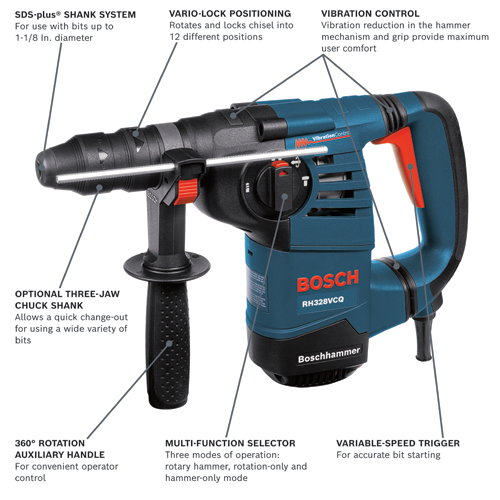
Many rotary hammers allow you to switch between drill only, hammer drill, and hammer only (chisel) modes. This makes them very versatile for different tasks.
Key Features And Specifications
When choosing a rotary hammer drill, here’s what really matters:
- Impact Energy (Joules): Higher numbers mean more power for tough jobs.
- Blows Per Minute (BPM): Indicates how many times per minute the tool delivers a hammer blow.
- Rotation Speed (RPM): Affects how fast the bit spins; lower speeds are better for tough materials.
- Bit Compatibility: Make sure the tool fits SDS-Plus or SDS-Max bits as needed.
- Weight: Heavier tools are harder to handle for long periods but offer more power.
- Vibration Control: Reduces hand and arm fatigue, important for all-day use.
- Corded vs. Cordless: Corded models offer constant power; cordless provide mobility.
Common Tasks And Real-world Examples
Installing Concrete Anchors
Suppose you need to secure heavy shelves in a garage with concrete walls. A rotary hammer will quickly drill deep, clean holes for anchor bolts, saving time and ensuring a solid hold.
Demolishing A Small Concrete Patio
Removing a 10×10 ft. concrete slab by hand is exhausting. With a rotary hammer and a pointed chisel, one person can break it into manageable pieces in a few hours.
Running Electrical Conduit Through Brick
Electricians often use rotary hammers to make straight channels in brickwork for conduit. This keeps wires hidden and protected.
Rebar Doweling
When building an extension, new concrete must bond with old. Workers use a rotary hammer to drill holes and insert rebar dowels, ensuring structural strength.
Choosing The Right Rotary Hammer Drill
Selecting the right model can be confusing. Here are the most important factors:
- Job Size and Frequency
- For occasional home use, an SDS-Plus pistol grip is usually enough.
- For daily construction work, invest in an SDS-Max model.
- Material Type
- For concrete, brick, and stone, more impact energy is better.
- For tile or plaster removal, lighter tools with variable speed work well.
- Power Source
- Corded tools never run out of power but need an outlet.
- Cordless models are improving and offer freedom but may not match the power of the largest corded versions.
- Comfort and Safety
- Look for anti-vibration handles, good balance, and dust control features.
- Brand and Reliability
- Top brands like Bosch, DeWalt, and Makita are trusted by professionals.
Typical Mistakes When Buying
- Choosing a tool that’s too light for the job (it will wear out quickly or take too long).
- Ignoring vibration control—this can lead to hand fatigue or even injury.
- Forgetting about bit compatibility—SDS-Max bits will not fit in an SDS-Plus tool.
Safety Tips For Using A Rotary Hammer Drill
- Wear hearing and eye protection. These tools are loud and create flying debris.
- Use both hands for better control and to prevent accidents.
- Check for hidden wires or pipes before drilling or chiseling walls.
- Let the tool do the work. Don’t force it—if it’s not making progress, use a stronger tool or bit.
- Take breaks to avoid fatigue, especially on long demolition tasks.
Insight: Many new users push too hard or try to drill at the wrong angle. This can break bits and make the work harder. Always keep the tool perpendicular to the surface for best results.
Rotary Hammer Drill Attachments And Accessories
The true power of a rotary hammer drill comes from its wide range of attachments:
- Pointed chisels for breaking concrete or stone.
- Flat chisels for tile removal or surface smoothing.
- Core bits for large holes.
- Rod drivers for setting ground rods.
- Scraping blades for removing glue or thin-set.
Buying quality accessories is just as important as choosing the right drill. Cheap bits may dull quickly or even shatter during use.
Professional And Diy Applications
Rotary hammer drills are used by:
- Construction workers for forming and demolition
- Electricians and plumbers for making wall chases and setting anchors
- Landscapers for breaking up hard ground or rock
- Serious DIYers handling heavy remodeling projects
While not every homeowner needs one, anyone working regularly with concrete, masonry, or stone will benefit from owning or renting a rotary hammer.
Maintenance And Care
A rotary hammer is a serious investment. Proper care ensures long life:
- Clean the tool after use to remove dust and debris.
- Lubricate the bit shank as recommended by the manufacturer.
- Check the power cord or battery contacts for damage.
- Replace worn brushes (for corded models) to keep the motor strong.
- Store in a dry place to prevent rust and corrosion.
Environmental And Efficiency Considerations
Rotary hammer drills are more efficient than traditional methods. They reduce the time and physical effort needed for heavy jobs, and modern models use less energy thanks to improved motors and mechanisms.
However, they are noisy and create dust. Use dust extraction attachments where possible, and always work in a well-ventilated area.
When To Rent Vs. Buy
- Rent: For one-time demolition or drilling jobs, renting a rotary hammer can be cost-effective. Rental stores offer high-power, well-maintained models.
- Buy: If you frequently work with concrete or masonry, or plan a long-term project, owning your own tool saves money and ensures it’s always available.
Non-obvious insight: Many tool rental shops offer a free bit with a rental, but these bits are often worn out. Bringing or buying your own ensures better performance and safety.
Real-world Data: Rotary Hammer Vs. Manual Methods
How much faster is a rotary hammer compared to hand tools? Here’s a comparison for tile removal on a 100 sq ft surface:
| Method | Time Needed | Operator Fatigue | Result Quality |
|---|---|---|---|
| Rotary Hammer (wide chisel) | 1-2 hours | Low/Medium | Even, smooth |
| Hammer & Chisel (manual) | 6-8 hours | High | Rough, uneven |
| Hammer Drill | 4-6 hours | Medium/High | Varies |
This shows why rotary hammers are so popular for both professionals and ambitious DIYers.
Innovations And Trends In Rotary Hammer Drills
Modern rotary hammers include features like:
- Active vibration control to protect the user’s hands.
- Cordless brushless motors for longer battery life and more power.
- Integrated dust extraction to keep worksites cleaner.
- Smart electronics that prevent overload and improve tool life.
As battery technology improves, cordless rotary hammers are closing the gap with corded models in terms of power and runtime.
Practical Tips For Beginners
- Always match the bit type to your tool (SDS-Plus or SDS-Max).
- Start with a small pilot hole if you’re unsure of the material.
- Don’t use wood or metal bits in hammer mode—this can ruin both the bit and the tool.
- If drilling overhead, wear a dust mask and safety goggles to protect yourself from falling debris.
- Let the bit cool after long periods of use; overheating can cause premature wear.
Important: Never use a rotary hammer in hammer-only mode on delicate surfaces, as the impact can cause cracks or unwanted damage.
Common Problems And Solutions
Bit gets stuck in concrete: Stop and reverse the tool if possible. Do not force it, as this can break the bit.
Tool overheats: Take breaks, especially during heavy chiseling. Check for blockages in ventilation.
Vibration is too high: Use anti-vibration gloves or upgrade to a model with better vibration control.
Dust clouds: Attach a vacuum or use integrated dust extraction.
Real-world Case: Homeowner Renovation
Sarah, a homeowner, wanted to install a heavy-duty TV mount on her brick wall. Her regular drill barely scratched the surface. After renting a rotary hammer and using an SDS-Plus masonry bit, she drilled four perfect holes in minutes. The job was not only easier but also safer, and the result was much more secure.
Where To Learn More
The best way to become comfortable with a rotary hammer is hands-on practice. Many hardware stores offer tool demos, and manufacturers provide detailed guides and videos. For more technical details, you can visit the Wikipedia Rotary Hammer page.
Frequently Asked Questions
What Is The Difference Between A Rotary Hammer And A Demolition Hammer?
A rotary hammer is designed for both drilling and light to medium chiseling. It uses a rotating action plus hammering, making it versatile for holes and demolition. A demolition hammer is typically heavier, does not rotate, and is used only for breaking up concrete or masonry.
Can I Use A Rotary Hammer Drill On Wood Or Metal?
You can use a rotary hammer on wood or metal in drill-only mode with the correct bit. Do not use hammer action on these materials, as it can damage both the tool and the workpiece.
How Do I Choose The Right Bit For My Rotary Hammer?
Check your tool’s specification: SDS-Plus bits fit smaller, lighter tools; SDS-Max bits are for heavier, more powerful models. Always match the bit type and size to your application—use masonry bits for concrete, chisel bits for demolition, and so on.
Is A Rotary Hammer Drill Too Powerful For Home Diy?
Not necessarily. For jobs like drilling into concrete or removing tile, it’s the right tool. For light tasks like assembling furniture or drilling into drywall, it’s overkill—use a standard drill instead.
How Can I Reduce Dust When Using A Rotary Hammer Drill?
Many models have dust extraction attachments. You can also use a shop vacuum near the drilling area or wet down the surface before chiseling. Always wear a dust mask for safety.
A rotary hammer drill is a must-have for anyone who works with concrete, brick, or stone. It’s not just about raw power—it’s about efficiency, safety, and getting the job done right. With the right knowledge and tool, even the toughest materials become manageable.
Whether you’re a professional or a serious DIYer, understanding what a rotary hammer drill is used for will help you choose wisely and work smarter on your next big project.