
Measuring a sanding belt may sound simple, but many people get it wrong. The right size sanding belt is critical for your tool’s performance and your safety. Choosing the wrong size can lead to wasted money, damaged tools, and a lot of frustration.
Understanding how to measure a sanding belt correctly is not only about using a tape measure, but also about knowing the details—like what to measure, what tools to use, and what mistakes to avoid. Whether you are a hobbyist, a professional woodworker, or just trying to replace an old sanding belt, this guide will give you a complete, step-by-step explanation with practical advice and insights.
Why Accurate Measurement Matters
Precision in measuring a sanding belt is more important than many people realize. A belt that is too short will not fit your sander, and a belt that is too long will slip or not track properly. Both situations can damage the sander or produce poor-quality work. Also, using the wrong size may void your tool’s warranty or even pose a safety risk. Manufacturers build sanders with specific belt sizes for a reason: to ensure the tool operates at its best. Measuring correctly helps avoid unnecessary returns, saves money, and reduces downtime.
Key Dimensions Of A Sanding Belt
When measuring a sanding belt, you need to focus on two main sizes:
- Belt length (circumference) – The distance around the sanding belt’s loop.
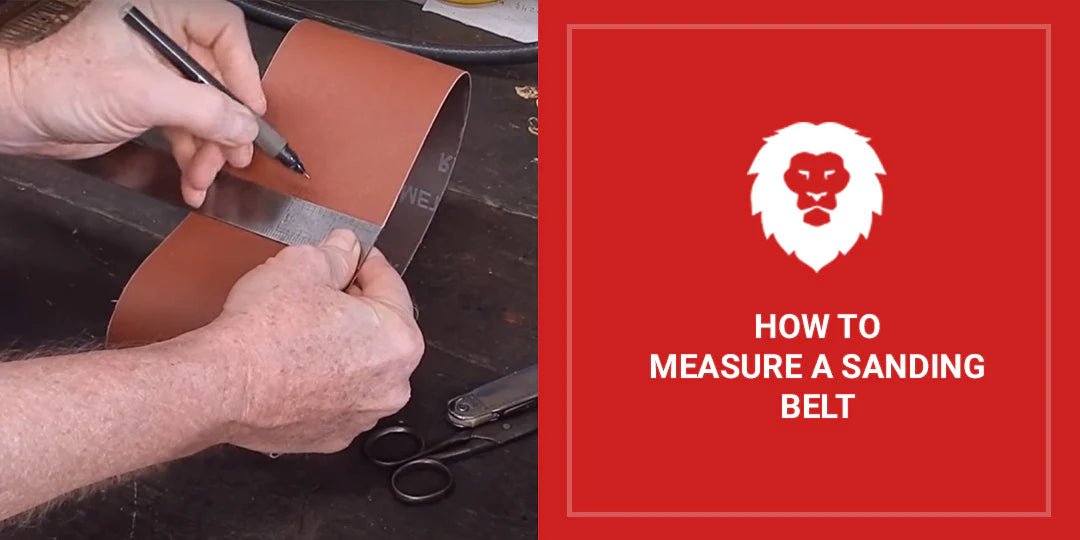
- Belt width – The distance from one side of the belt to the other, perpendicular to the seam.
Manufacturers almost always list belt sizes as “length x width. ” For example, a “36 x 4 inch” belt is 36 inches in circumference and 4 inches wide. Some sanders use metric sizes, so you may see belts listed in millimeters as well.
Tools Needed To Measure A Sanding Belt
Before you start, gather these tools for best results:
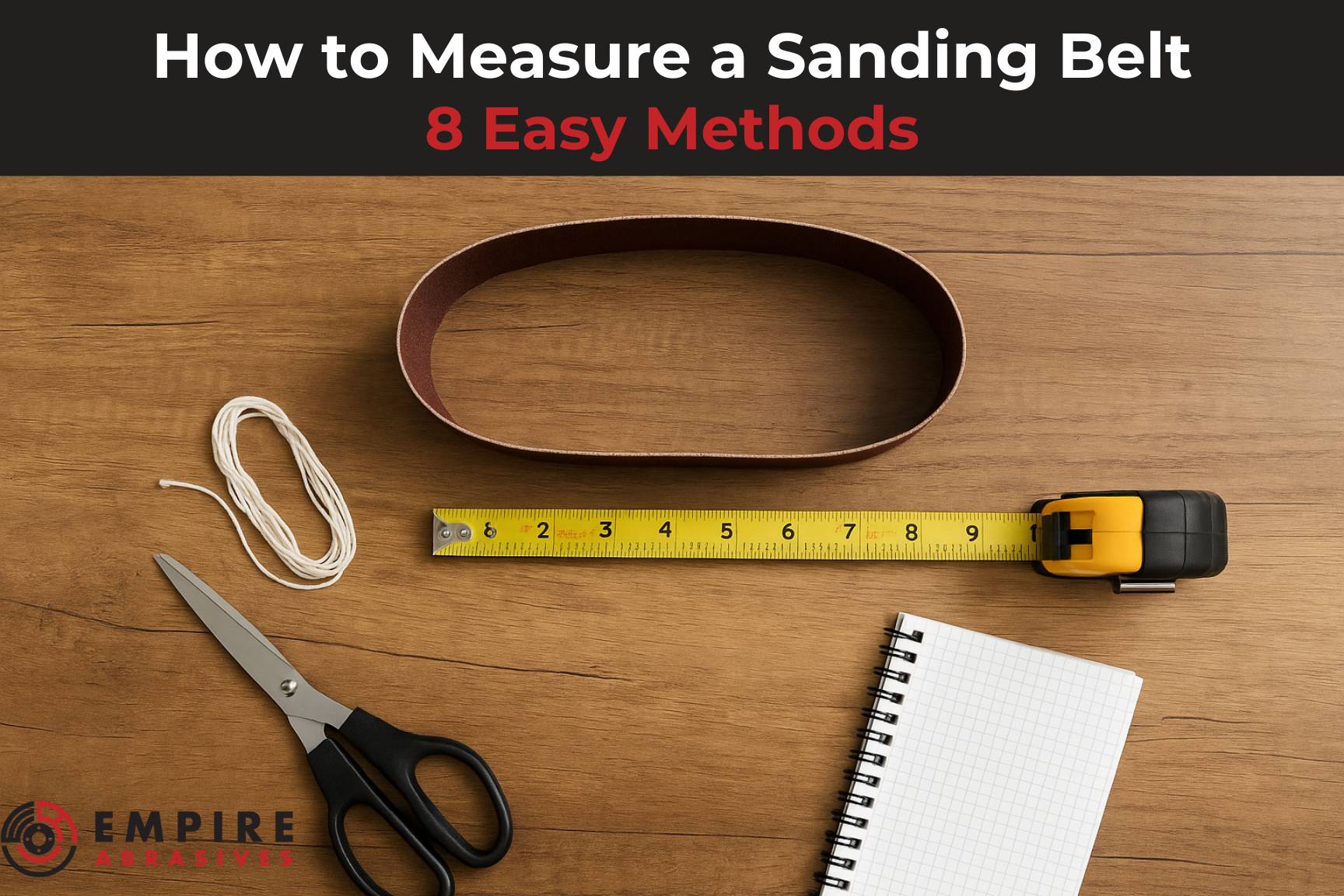
- Flexible tape measure (tailor’s measuring tape works well)
- Marker or chalk
- Straightedge or ruler (for width)
- Flat surface
- Notebook (to write down measurements)
A flexible measuring tape makes it easy to measure the length accurately, especially for older or worn belts.
Step-by-step Guide: Measuring A Used Sanding Belt
If you have an old belt that fits your sander, measuring it is the simplest way to find the right size. Follow these steps for the most accurate result.
1. Lay The Belt Flat
Place the used belt on a clean, flat surface. Make sure the belt is not twisted. If the belt is very worn or has stretched, you may want to measure your sander directly for confirmation.
2. Mark A Starting Point
Use a marker or chalk to make a clear line on one side of the belt. This line will be your starting and ending point for measuring the circumference.
3. Measure The Length
Place the end of your tape measure at the mark you made. Carefully run the tape measure all the way around the belt, following its loop, until you return to your starting mark. Note the measurement—this is your belt length (circumference).
4. Measure The Width
Lay the belt flat and use a ruler or straightedge to measure the distance from one edge to the other. This is the belt width.
5. Record The Measurements
Write down your measurements as “length x width. ” For example, “36 x 4 inches. ” Be precise—rounding can cause you to buy the wrong size.
Measuring Without An Old Belt
Sometimes, you may not have an old belt to measure. Maybe you bought a used sander without a belt, or your old belt broke and is missing. In this case, you need to measure the sander itself.
Measuring The Sander’s Belt Path
This method works for most portable and stationary belt sanders. You will need a flexible tape measure or a piece of string.
Steps:
- Unplug the sander for safety.
- Open the belt housing to expose the rollers.
- Wrap the tape measure or string around the entire belt path, following where the belt would go (over both rollers and any tensioners).
- Mark the meeting point on the tape or string.
- Lay out and measure the string if used, or read the measurement on the tape. This is your belt length.
- Measure the width of the roller surface. This is your belt width.
Tip: Add 1/8 inch (about 3 mm) to the length if you are measuring an older sander, to account for minor wear or stretching.
Common Sanding Belt Sizes And Their Uses
Sanding belts come in a range of sizes, with certain standards for popular sanders. Here’s a quick overview:
| Belt Size (Inches) | Common Use | Compatible Sanders |
|---|---|---|
| 3 x 21 | General woodworking, furniture | Most handheld belt sanders |
| 3 x 18 | Cabinet work, hobby | Smaller handheld sanders |
| 4 x 24 | Floor sanding, large surfaces | Heavy-duty sanders |
| 6 x 48 | Stationary sanders, metal shops | Benchtop sanders |
| 1 x 30 | Knife sharpening, small crafts | Mini belt sanders |
Non-obvious insight: Some sanders can accept belts that are 1/2 inch wider or narrower, but this is not always recommended. Always check your sander’s manual.
Converting Between Inches And Millimeters
Belt sizes are sometimes listed in metric, especially for European or Asian tools. To convert:
- 1 inch = 25.4 mm
For example, a 3 x 21 inch belt is about 76 x 533 mm.
| Inches | Millimeters (mm) |
|---|---|
| 1 x 30 | 25 x 762 |
| 2 x 48 | 50 x 1219 |
| 3 x 18 | 76 x 457 |
| 4 x 24 | 102 x 610 |
| 6 x 48 | 152 x 1219 |
Practical tip: Always double-check with your supplier before ordering, especially if you’re mixing metric and imperial measurements.
Identifying The Belt’s Direction And Seam
Many sanding belts have a directional arrow printed on the inside. This matters because some belts have a joint (seam) that is designed to run in one direction. When measuring, always measure the belt with the arrow pointing forward, as you would install it on the sander.
If the arrow is missing, look for the seam. The smoother side usually faces forward, while the rougher side faces the rear.
Measuring Custom Or Odd-sized Sanding Belts
Sometimes, you may need a non-standard belt size, especially for older or custom machinery. In this case:
- Measure the sander’s path as explained earlier.
- Contact a specialty supplier with your measurements. Many suppliers can custom-make belts to your specifications.
- Provide both width and length (do not skip either).
- Specify the grit and material if ordering custom belts.
Advanced tip: For long or wide belts, measure twice to avoid errors. Even a 1/4 inch mistake can make a belt unusable.
Mistakes To Avoid When Measuring Sanding Belts
Many first-time users make simple mistakes that cost time and money. Here are the most common issues:
- Measuring only the width – Both length and width are needed.
- Measuring the belt when it’s stretched or worn – Old belts can be longer than when new.
- Forgetting to note the units – Confusing inches and millimeters is common.
- Not checking the sander’s manual – The manufacturer’s recommended size is usually best.
- Guessing instead of measuring – Even if the belt “looks right,” always measure to confirm.
Using Manufacturer’s Information
Most sanders have a sticker, plate, or manual listing the correct belt size. Check the tool itself for this information. If you cannot find it, search the manufacturer’s website using your sander’s model number. This is often the easiest way to be sure.
Expert insight: Some older sanders use sizes that are no longer standard. In this case, you may need to look for aftermarket or custom belts.
How To Measure A Sanding Belt With No Tape Measure
If you do not have a flexible tape measure, you can use a piece of string or even a strip of paper.
- Wrap the string or paper around the belt or the sander’s belt path.
- Mark where it overlaps at the starting point.
- Lay the string flat and measure it with a ruler or yardstick.
This method is not as precise as a tape measure but can work in a pinch.

Measuring Sanding Belts For Drum Sanders
Drum sanders often use belts or strips that are installed differently from portable sanders. For drum sander belts:
- Measure the length of the abrasive strip (not looped).
- Measure the width of the strip.
- Some drum sanders require you to cut the strip to length, so always check the manual.
Non-obvious insight: Drum sanders often use tapered strips. Measure both the narrow and wide ends if this is the case.
What To Do If Your Measurement Is Between Standard Sizes
Sometimes your measurement does not match a standard belt size. In this situation:
- Check for stretch or wear on your old belt.
- Consult your sander’s manual for the recommended size.
- Choose the closest standard size that does not exceed the sander’s maximum allowed length.
- Contact a supplier if you need an exact size.
Manufacturers design sanders for standard sizes. Forcing a belt to fit can damage your sander.
Sanding Belt Material And Joint Types
When ordering new belts, especially custom sizes, you may need to know about the material and joint (seam) type.
Materials:
- Aluminum oxide: General purpose, wood/metal
- Zirconia: Heavy stock removal
- Ceramic: Aggressive sanding, long life
Joint types:
- Overlap joint: Strong, common in smaller belts
- Butt joint: Smooth, for precision sanding
Check your sander’s requirements before ordering.
Measuring For Tracking And Tension Adjustments
Every belt sander has a tracking adjustment to keep the belt centered. If you use a belt that is too long, you may reach the limit of this adjustment and the belt will slide off. If the belt is too short, you may not be able to install it at all.
Tip: Always test-fit a new belt before starting work. Run the sander for a few seconds to check tracking.
Measuring Used Vs. New Sanding Belts
Old sanding belts can stretch up to 1/2 inch (12 mm) over time. When measuring a used belt, subtract a small amount (around 1/8 inch or 3 mm) from your measurement to account for this. If in doubt, compare your measurement with the manufacturer’s specifications.
How To Read Sanding Belt Labels
Most sanding belts have a label on the package or on the belt itself. This label will look like “3 x 21” or “76 x 533 mm.” The first number is always the width, and the second is the length.
Some labels also indicate:
- Grit size (e.g., 80, 120)
- Material (e.g., AO for aluminum oxide)
- Direction arrow
Double-check all numbers before purchasing.
Measuring For Sanding Belt Storage
If you order belts in bulk, you may want to build a storage rack. Measure the overall length and width of the belt to design pegs or hooks that fit. Store belts flat or hang them loosely to avoid creasing.
Tip: Avoid storing belts in humid conditions. Moisture can cause belts to warp or come apart at the seam.
Comparing Sanding Belt Sizes
A side-by-side comparison can help you see how different sizes fit different tools.
| Belt Size | Fits Tool Type | Common Application |
|---|---|---|
| 3 x 21 in | Portable belt sander | General woodworking |
| 4 x 36 in | Benchtop sander | Cabinet building |
| 1 x 42 in | Knife grinder | Blade sharpening |
| 6 x 48 in | Industrial sander | Metal shop |
Practical tip: When in doubt, take your old belt to the hardware store for direct comparison.
How To Order The Right Size Online
Online shopping requires extra care with measurements. Always:
- Read the product description carefully.
- Check both length and width in the listing.
- Look for reviews to confirm the size fits your model.
- Contact the seller if you are unsure.
If possible, order from a supplier with a good return policy.
How Often To Replace Sanding Belts
A worn or clogged belt does not work well, even if the size is correct. Replace belts when:
- The abrasive is smooth or shiny.
- The belt slips or tears.
- Material burns or scorches during use.
Extra insight: Using a worn belt can overheat your sander, leading to motor damage.
Summary Of Measuring A Sanding Belt
Measuring a sanding belt is all about accuracy and attention to detail. Focus on both length and width, use the right tools, and double-check against manufacturer recommendations. When in doubt, measure twice and consult a professional supplier. Avoid common mistakes, and your sanding projects will go smoothly.
Frequently Asked Questions
How Do I Know What Size Sanding Belt My Sander Needs?
Check your sander’s manual or look for a label on the tool. Most manufacturers list the correct belt size as “length x width.” If you cannot find this, measure the old belt or use a tape measure around the sander’s belt path.
Can I Use A Sanding Belt That Is Slightly Too Long Or Short?
It is not recommended. A belt that is too long may not track properly or could slip off, while a belt that is too short may not fit at all or put extra strain on the machine. Always use the correct size for safety and performance.
What Is The Difference Between Sanding Belt Length And Width?
Length is the distance around the belt’s loop (the path it travels on the sander). Width is the distance from one edge to the other. Both measurements are critical for the belt to fit and work correctly.
How Do I Convert Belt Sizes Between Inches And Millimeters?
Use the conversion: 1 inch = 25.4 mm. For example, a 3 x 21 inch belt is about 76 x 533 mm. Double-check with your supplier if you are unsure, since rounding errors can occur.
Where Can I Learn More About Sanding Belt Sizes And Applications?
You can find detailed information on abrasive belt sizes, materials, and applications on the Wikipedia Abrasive Belt page.
Choosing and measuring the right sanding belt is a valuable skill for anyone working with wood, metal, or plastic. With the steps and tips in this guide, you will save time, avoid frustration, and get the best results from your sander every time.