
When you look at the tools used in upholstery, fencing, auto repair, and even pet cage making, there’s one tool you’ll see again and again: hog ring pliers. These pliers are often overlooked, yet they are essential for fastening rings that hold materials together, join wires, or clamp fabrics. If you have ever wondered how to use hog ring pliers properly or want to master their different uses, you are in the right place. This guide will walk you through everything you need to know—from the basics, to advanced tips, to common mistakes beginners make.
Whether you are a DIY enthusiast, a professional upholsterer, or just someone needing to fix a fence or car seat, understanding hog ring pliers will save you time, frustration, and money. Many people struggle at first, but with the right technique and a little practice, you’ll find this tool simple and effective.
Let’s get started on the journey to making your work cleaner, faster, and more secure.
What Are Hog Ring Pliers?
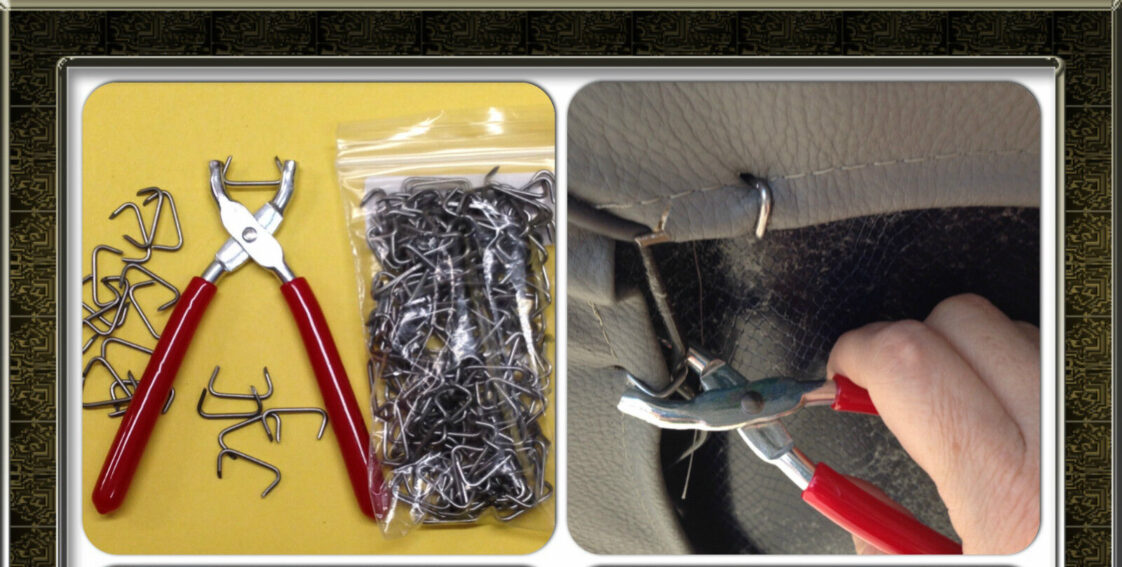
Hog ring pliers are a specialized type of pliers designed to close metal rings called hog rings. These rings function as fasteners, clamping two or more materials together. The pliers have grooves at the tip to hold the open ring in place. When you squeeze the handles, the ring closes around the items you’re joining.
Hog ring pliers are used in many industries:
- Upholstery (attaching fabric to furniture frames)
- Automotive (securing seat covers)
- Fencing (joining wire mesh)
- Pet cages (assembling wire cages)
- Agriculture (fastening bags or netting)
Because of their strong grip and ease of use, they are a favorite for jobs that need both speed and strength. Different sizes and designs exist for various tasks, but the core function is always the same: to close rings securely and quickly.
Types Of Hog Ring Pliers
There are several types of hog ring pliers. Choosing the right type is important for your project and can save you effort.
| Type | Key Features | Best For |
|---|---|---|
| Manual Hog Ring Pliers | Basic, hand-powered, affordable | Small DIY tasks, upholstery |
| Automatic Hog Ring Pliers | Feed rings automatically, faster | Large projects, professional use |
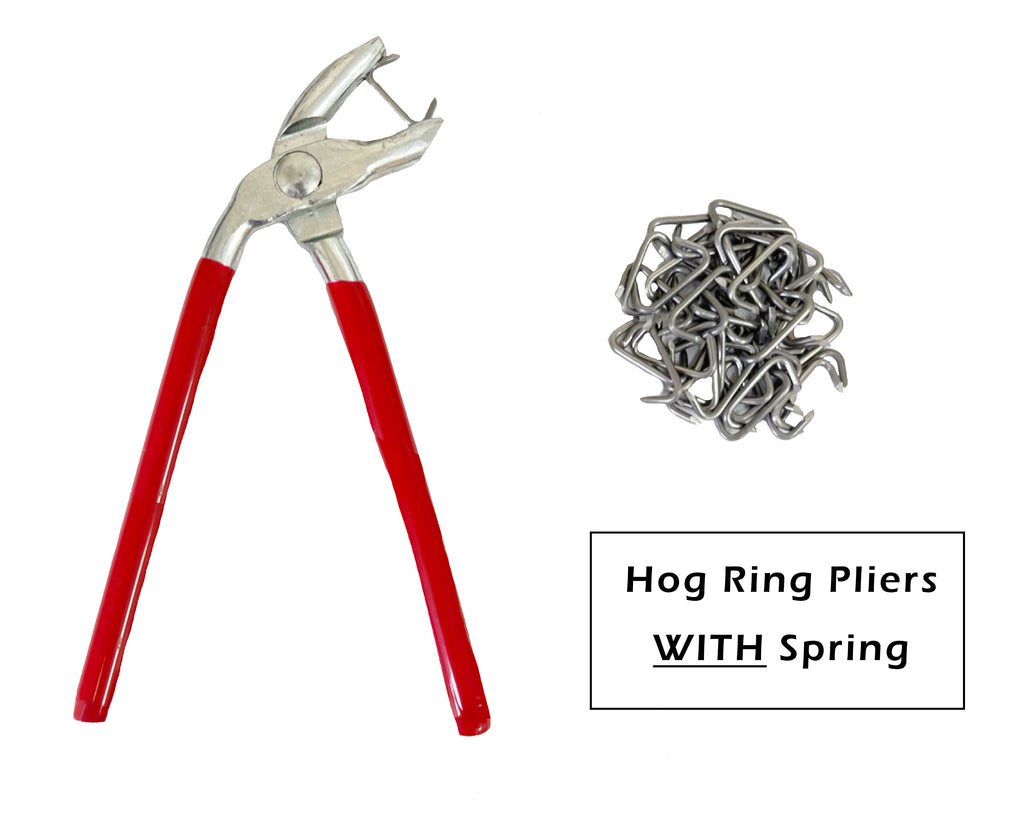
| Spring-Loaded Pliers | Spring opens jaws after squeeze | Reduces hand fatigue, repetitive jobs |
| Specialty Pliers | Curved jaws, angled handles | Hard-to-reach areas, unique materials |
Manual pliers are the most common for home and light professional use. Automatic pliers are faster but cost more and are usually found in workshops or factories. Spring-loaded options reduce fatigue if you need to use them for long periods. Specialty pliers may be needed for unique shapes or tight spaces.

Choosing The Right Hog Ring Pliers
Picking the wrong pliers is one of the most common mistakes. Here’s what you should look for:
- Size of Rings: Make sure your pliers match the size of the hog rings you plan to use. Using the wrong size can result in weak connections.
- Material Quality: Look for pliers made from hardened steel. Cheaper materials bend or break under pressure.
- Handle Comfort: Padded or ergonomic handles are important if you will use the pliers for long periods.
- Spring Mechanism: If you have lots of rings to close, a spring-loaded design will make your work easier.
- Jaw Design: Some jobs need straight jaws; others need angled or curved jaws to reach tricky spots.
Don’t just choose based on price. Consider the type of project and how often you will use the pliers. For example, a hobbyist fixing a chair can use basic manual pliers, but a fence installer may want a spring-loaded or automatic type.
Understanding Hog Rings
Before using the pliers, you need to understand hog rings themselves. Hog rings are C-shaped metal fasteners that, when squeezed, form a closed loop. They come in many sizes and materials.
Common Hog Ring Materials
- Galvanized steel: Resists rust, good for outdoor use
- Stainless steel: High corrosion resistance, lasts longer
- Aluminum: Lightweight, but less strong
- Plastic-coated: For extra grip or rust protection
Sizes And Applications
| Ring Size (mm) | Typical Use | Strength |
|---|---|---|
| 10-15 | Light upholstery, small cages | Low |
| 16-20 | Car seats, medium fencing | Medium |
| 21-25 | Heavy fencing, large bags | High |
Always match the ring to your job. Using a ring that’s too small can result in a weak hold, while a ring that’s too large may not close properly.
Preparing To Use Hog Ring Pliers
Good results start with preparation. Here’s how to get ready:
- Select Correct Pliers and Rings: Match the pliers and ring size to your job.
- Gather Materials: Have all materials on hand—fabric, wire mesh, covers, or whatever you are joining.
- Check the Pliers: Make sure the pliers are clean, the jaws close tightly, and the spring (if any) works smoothly.
- Organize Your Workspace: Clear space to avoid accidents. Have rings in a tray or bowl for easy access.
- Wear Safety Gear: Wear safety glasses. Flying rings or wire ends can cause injury. Gloves can protect your hands, especially with heavy-duty work.
A small but useful tip: Test the pliers on a scrap piece first. This lets you see how much force you need and avoid mistakes on your actual project.
Step-by-step: How To Use Hog Ring Pliers
Let’s go through the process from start to finish. While the basic steps are simple, paying attention to detail makes a big difference.
1. Load The Hog Ring
Hold the pliers in your dominant hand. Take a hog ring and place it in the grooves at the jaw tip. The open end should face outward. Squeeze gently so it stays in place but does not close yet.
Non-obvious insight: Some pliers can hold multiple rings if they are automatic or have a magazine. For manual pliers, load one ring at a time for better control.
2. Position The Materials
Bring the two materials you want to join together. For example, overlap two pieces of wire, or place fabric over a frame. Hold them in place with your other hand, or use clamps for larger projects.
3. Place The Hog Ring
Position the loaded pliers so the open ring surrounds both materials. Make sure the ring is centered over the joint for a strong grip.
Pro tip: For round materials like wires, the ring should wrap around both for maximum hold. For flat materials, aim for the thickest or most reinforced section.
4. Squeeze The Handles
Firmly squeeze the plier handles. The jaws close, forcing the hog ring to bend into a round or oval shape. The ring should close tightly, holding the materials together.
Don’t rush. If the ring is not centered or slips, release and reposition before squeezing fully.
5. Release And Inspect
Release the handles. The spring (if present) will open the pliers. Inspect the closed ring. It should be snug, with the ends overlapping slightly but not cutting into the material.
Another key tip: If the ring is too loose, you may need to use a smaller ring, squeeze harder, or select a different jaw size. If the ring crushes or breaks, the ring or pliers may be too weak for your task.
6. Repeat As Needed
Continue loading, placing, and closing rings along the length of the material. Space rings evenly for strength and appearance.
For long runs (like fencing), mark where each ring should go before starting. This keeps the line neat and reduces mistakes.
Advanced Tips For Better Results
Even experienced users sometimes miss small tricks that make a big difference. Here are some advanced tips:
- Pre-bend wires or fabric to the shape you want before applying hog rings. This makes closing easier and ensures the finished product looks tidy.
- Stagger ring placement for extra strength, especially in high-stress areas.
- Double-ring for critical joints. Place two rings close together for added security.
- Use pliers with a stopper for consistent ring closure size if you need uniform results.
- Lubricate plier joints occasionally. This keeps the movement smooth and prevents sticking.
- Change jaw inserts if yours are worn. Worn jaws can slip and fail to close rings properly.
One non-obvious mistake is using rings with sharp ends on soft materials. These can cut fabric or damage animal cages. Choose rings with smooth ends for delicate work.
Common Mistakes And How To Avoid Them
Mistakes can waste time and ruin materials. Here are the most common issues and how to avoid them:
- Using the Wrong Size Ring
- Always match the ring size to your project. Test on a scrap first.
- Improper Loading
- If the ring is not seated in the groove, it will fly out or close unevenly.
- Closing Too Quickly
- Rushing can result in misaligned rings or damaged materials.
- Over-Squeezing
- Too much force can snap the ring or damage what you are joining.
- Ignoring Safety
- Always wear glasses. Rings can shoot out unexpectedly.
- Not Inspecting Each Joint
- Check each closed ring before moving on. It is harder to fix mistakes later.
A useful insight: Many people try to close two thick wires with a small ring. If it feels too hard, stop and use a larger ring or thinner material.
When To Use Hog Ring Pliers
Hog ring pliers are not just for one job. Here are some of the most common uses, with examples:
- Upholstery: Attaching seat covers to car frames or chair springs.
- Fencing: Joining sections of wire mesh or attaching mesh to fence posts.
- Pet cages: Building or repairing rabbit hutches, bird cages, and kennels.
- Bag closing: Fastening the tops of feed or sandbags.
- Automotive: Securing foam or fabric in car seats.
- Agriculture: Tying netting, plant support mesh, or irrigation pipes.
The versatility of hog ring pliers makes them a must-have for many home and professional toolkits.
Comparing Hog Ring Pliers To Other Fastening Tools
Hog ring pliers are just one option. It’s helpful to see how they compare with other methods, such as cable ties, wire twists, or staples.
| Method | Strength | Reusability | Speed | Best for |
|---|---|---|---|---|
| Hog Ring Pliers | High | Low | Fast | Permanent joins |
| Cable Ties | Medium | Low | Very fast | Temporary fixes |
| Wire Twists | Medium-High | Medium | Slow | Custom work, repairs |
| Staples | Low-Medium | Low | Very fast | Paper, light fabric |
Hog rings provide a permanent, strong connection. They are much stronger than cable ties or staples and faster than twisting wire by hand. However, once closed, hog rings are usually not reusable.
Maintenance And Care For Hog Ring Pliers
To keep your pliers working smoothly for years, a little care is needed:
- Clean after use: Wipe off dirt, glue, or metal shavings.
- Oil moving parts: Use a drop of light machine oil on the pivot for smooth action.
- Store dry: Keep them in a dry place to prevent rust.
- Check for damage: Look for bent jaws, broken springs, or worn grips. Replace parts if needed.
- Sharpen or replace jaws: Dull or damaged jaws make closing rings harder and less secure.
Many people forget to oil the joints, leading to stiff movement and extra hand strain. Just a minute of care after each use can double the lifespan of your tool.
Safety Tips For Using Hog Ring Pliers
Safety is easy to overlook but crucial. Even small fasteners can cause injury if misused.
- Wear safety glasses: Rings can fly out if not loaded correctly.
- Use gloves: Protect hands from wire ends and sharp ring points.
- Keep away from children: Both pliers and rings are choking hazards.
- Check work area: Remove tripping hazards and keep materials organized.
- Dispose of old rings safely: Collect and discard them so pets or wildlife don’t get hurt.
A non-obvious safety point: When working with animal cages or pet enclosures, run your hand over the finished join to check for sharp points. File down or cover any that could cause injury.
Where To Buy Hog Ring Pliers And Rings
You can find hog ring pliers at hardware stores, home centers, and online retailers. For specialized pliers, visit suppliers that focus on upholstery, fencing, or automotive tools.
Brands like Stanley, Bostitch, and Arrow are trusted for quality and durability. Always check reviews and make sure you’re buying the correct size for your rings.
For rings, buy in bulk for large projects to save money. For small jobs, starter packs are available. Make sure to get the right material (e. g. , galvanized for outdoor, stainless for marine use).
If you want to read more about the history and technical details, the Wikipedia page on Hog Rings is a useful resource.
Practical Examples: Real-life Uses
Here are a few real-world examples to show the value of hog ring pliers:
- Replacing Car Seat Covers: Auto upholstery shops use hog ring pliers to attach new fabric tightly to the seat frame. Without the rings, the cover would shift or come loose.
- Building a Rabbit Hutch: When joining sections of wire mesh, hog rings provide a smooth, secure connection that’s safe for animals and quick to install.
- Repairing a Chain-Link Fence: Instead of twisting wire by hand, a few squeezes with hog ring pliers can reattach loose mesh in seconds.
- Sealing Feed Bags: Farmers often close heavy bags with hog rings to keep out pests and moisture.
These examples show how versatile and time-saving the tool can be in everyday situations.
Troubleshooting: Fixing Common Problems
Even with good technique, sometimes things go wrong. Here’s how to fix typical problems:
- Ring won’t close fully: Check if the plier jaws are worn or if the ring is too hard. Try a softer ring or replace the jaws.
- Ring flies out of pliers: Make sure you are loading the ring correctly and not squeezing before it’s in position.
- Material slips out: Use clamps or a helper to hold materials steady, especially for large jobs.
- Hand fatigue: Take breaks, or use spring-loaded pliers for long projects.
If you regularly face a problem, check if your tools match your job. Sometimes switching to a different plier or ring size solves the issue.
Frequently Asked Questions
How Do I Know What Size Hog Ring To Use?
Choose a ring that, when closed, will fit snugly around the materials you are joining. For wire mesh, measure the combined thickness of the wires. For fabric, use a ring that will hold the layers tightly without tearing. Test on a scrap piece if unsure.
Can I Use Regular Pliers Instead Of Hog Ring Pliers?
Regular pliers can sometimes close small rings, but they don’t have the special grooves to hold the ring steady. This often leads to uneven or unsafe joints. For best results, always use proper hog ring pliers.
Are Hog Rings Reusable?
Most hog rings are designed for one-time use. Once closed, they are difficult to reopen without damaging the ring. If you need a reusable solution, consider using wire twists or clips instead.
How Do I Remove A Hog Ring?
Use diagonal cutters or end nippers to snip through the ring. Wear safety glasses, as cut ends can fly off. Never try to pry open a ring with your fingers, as this can cause injury.
What’s The Difference Between Automatic And Manual Hog Ring Pliers?
Manual pliers require you to load and close each ring by hand. Automatic pliers have a magazine that feeds rings automatically, making the process faster for large jobs. However, automatic pliers cost more and are usually only needed for frequent or commercial use.
Mastering hog ring pliers opens up many possibilities, from professional upholstery to quick home repairs. With the right tool, correct technique, and a little practice, you’ll work faster and more confidently. Pay attention to safety, choose the right size and type for your project, and maintain your tools for years of reliable use.
Now that you know how to use hog ring pliers, you can tackle tough fastening jobs with ease and achieve professional-looking results every time.