
Choosing the right saw can change the way you work with wood, metal, or plastic. For many people, skill saws and jigsaws are two of the most common power tools in the workshop. But which one should you use? The answer depends on your project, materials, and the type of cuts you want to make. Understanding the difference between a skill saw (also called a circular saw) and a jigsaw can save you time, money, and frustration. In this guide, you’ll learn exactly how these tools work, what makes each one unique, and which is better for different jobs. We’ll look at real-life examples, common mistakes, and expert tips to help you make the best choice.
What Is A Skill Saw?
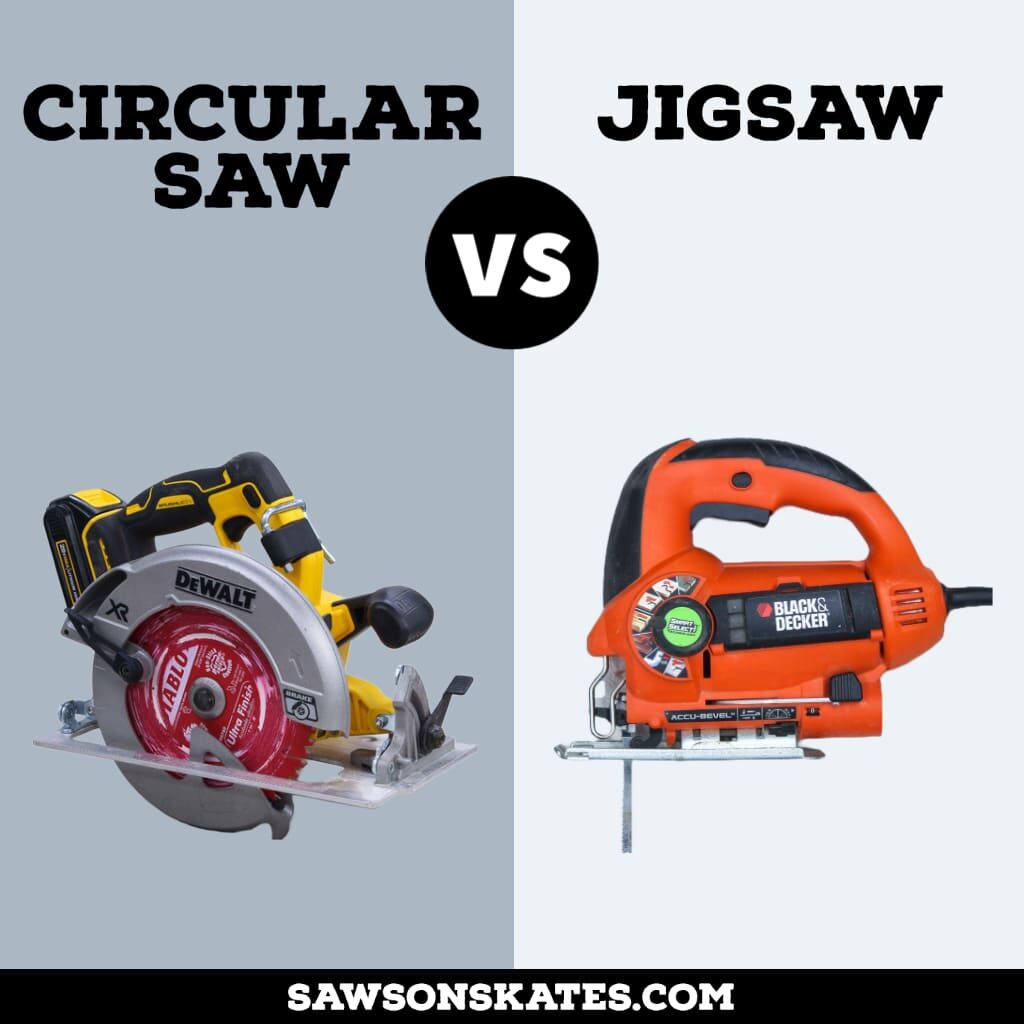
A skill saw is a type of circular saw. The name comes from the famous “Skilsaw” brand, but today, most people use “skill saw” to describe any handheld circular saw. This tool is designed to make fast, straight cuts in wood, plywood, and even some metals or plastics with the right blade. The blade is round, sharp, and spins at high speed. You push the saw across the material to make your cut.
Key Features Of Skill Saws
- Blade Size: Most common blades are 7-1/4 inches, but you can find smaller or larger sizes.
- Power: Usually between 10–15 amps for corded versions. Cordless models use lithium-ion batteries.
- Cutting Depth: Can cut through thick materials, usually up to 2.5 inches deep.
- Speed: High RPM (revolutions per minute), often 4,000–5,000 RPM.
- Guide Plate (Shoe): The flat metal base that slides over your material for stability.
- Bevel Adjustment: Lets you tilt the saw for angled cuts.
Typical Uses
Skill saws are best for:
- Cutting long, straight lines in plywood, lumber, or boards.
- Making crosscuts (cutting across the grain) or rip cuts (cutting along the grain).
- Cutting framing lumber for construction.
- Trimming deck boards, doors, or flooring.
Strengths
- Fast and powerful: Cuts quickly through thick materials.
- Straight cuts: Excellent for long, straight lines.
- Versatile: With the right blade, can cut wood, plastic, some metals.
Weaknesses
- Limited curves: Not good for cutting detailed shapes or tight curves.
- Heavier and louder: Can be tiring to use for long periods.
- Kickback risk: Can be dangerous if not handled properly.
What Is A Jigsaw?
A jigsaw is a handheld power tool with a thin, straight blade that moves up and down rapidly. It’s designed for making curved, detailed, and irregular cuts in wood, metal, plastic, or even tile. You guide the saw along your desired line, and the blade follows, allowing much more freedom than a skill saw.
Key Features Of Jigsaws
- Blade Type: Thin, narrow, and straight. Blades can be swapped out for different materials.
- Stroke Rate: Measures how many times the blade moves up and down per minute (SPM). Typical range: 500–3,000 SPM.
- Orbital Action: Some jigsaws let you adjust the blade’s movement for faster, rougher cuts or smoother, cleaner cuts.
- Variable Speed: Lets you control how fast the blade moves.
- Shoe/Base: Flat plate for stability, can tilt for bevel cuts.
Typical Uses
Jigsaws are ideal for:
- Cutting curves, circles, or detailed shapes.
- Making cutouts in kitchen countertops or drywall.
- Cutting thin metal sheets or plastic.
- Trimming laminate flooring around corners.
Strengths
- Curved cuts: Can handle tight curves and complex shapes.
- Lightweight: Easy to control and maneuver.
- Safer for beginners: Less kickback than a skill saw.
Weaknesses
- Slower: Not as fast for long, straight cuts.
- Less power: Struggles with thick or dense materials.
- Less precise on straight lines: Can wander off the line if not guided carefully.
Head-to-head: Skill Saw Vs Jigsaw
To really understand which tool is right for you, let’s compare them on several key factors. Here’s a detailed look at how they perform in different situations:
| Feature | Skill Saw | Jigsaw |
|---|---|---|
| Cut Type | Straight, long cuts | Curved, intricate cuts |
| Material Thickness | 2–3 inches (wood) | Up to 1.5 inches (wood) |
| Speed | Very fast | Slower |
| Precision (Straight Cuts) | High | Medium |
| Precision (Curved Cuts) | Low | High |
| Weight | Heavier | Lighter |
| Noise | Loud | Quieter |
| Ease of Use | Medium | Easy |
How Each Tool Works: Step-by-step
Using A Skill Saw
- Mark your cut line with a pencil or chalk.
- Set the blade depth so it’s just below the thickness of your material.
- Adjust the bevel if you need an angled cut.
- Secure your material with clamps to keep it from moving.
- Align the saw’s guide with your cut line.
- Start the saw, wait for the blade to reach full speed.
- Push the saw slowly and steadily along the line.
- Finish the cut and release the trigger.
Pro Tip: Let the saw do the work. Don’t force it—this reduces kickback and gives a smoother cut.
Using A Jigsaw
- Choose the right blade for your material (wood, metal, plastic).
- Mark your pattern or curve on the surface.
- Secure the material to a workbench.
- Set the orbital action for fast or fine cuts.
- Adjust the speed if needed.
- Start the saw, and let the blade reach full motion.
- Guide the saw along your line, turning as needed.
- Lift the saw off the material before stopping the blade.
Pro Tip: For tight curves, use a narrow blade and go slowly. Don’t twist the blade—move the whole saw.
When To Use A Skill Saw
A skill saw shines in these situations:
- Building a deck: Cutting straight lines in 2x4s, 2x6s, or plywood.
- Framing walls: Making fast, repeated cuts in lumber.
- Cutting large sheets: Breaking down plywood or MDF for cabinets.
- Making bevel cuts: Cutting at angles for trim or molding.
If your project needs speed, power, and straight lines, a skill saw is the better choice.
When To Use A Jigsaw
A jigsaw is best when:
- You need curved or intricate shapes: Making holes for sinks, electrical outlets, or creative designs.
- Cutting in tight spaces: The compact size fits where bigger saws can’t.
- Working with thin materials: Cutting laminate, thin plywood, or plastic panels.
- Finishing work: Trimming flooring around corners or pipes.
If your project needs flexibility and control for curves, a jigsaw will serve you well.

Real-world Example Projects
Building A Bookshelf
- Skill saw: Cut long, straight boards for the frame and shelves.
- Jigsaw: Cut curves or decorative edges on the top of the shelf.
Installing Laminate Flooring
- Skill saw: Rip boards to length and width for large, straight cuts.
- Jigsaw: Trim pieces to fit around door frames, pipes, or corners.
Crafting A Wooden Sign
- Skill saw: Cut the main rectangular or square background.
- Jigsaw: Cut out letters, shapes, or round edges.
Safety Tips And Common Mistakes
Both tools have risks if used incorrectly. Here’s how to stay safe and avoid common errors:
Safety For Skill Saws
- Wear eye and ear protection: Blades can send debris flying, and saws are loud.
- Check the blade guard: Make sure it moves freely before you cut.
- Don’t cut small pieces: The blade can catch and throw them.
- Keep hands away: Always keep fingers far from the blade’s path.
Safety For Jigsaws
- Use the right blade: Wrong blades can break or bend.
- Secure your material: The blade can catch if the piece moves.
- Let the blade stop before lifting: Prevents accidental cuts or broken blades.
Common Mistakes With Skill Saws
- Setting blade too deep: Increases kickback risk and wears out the blade.
- Forcing the cut: Leads to crooked lines or dangerous kickback.
- Skipping clamps: Unstable materials are harder and riskier to cut.
Common Mistakes With Jigsaws
- Using a dull blade: Causes burning and rough edges.
- Turning too sharply: Can snap the blade or damage your work.
- Pushing too fast: Leads to wandering cuts and rough finishes.
Non-obvious insight: With both saws, using higher-quality blades often gives cleaner, safer results than upgrading the tool itself. Many beginners spend money on a better saw but ignore the blade, which is just as important.
Skill Saw And Jigsaw: Blade Differences
Choosing the right blade makes a big difference.
Skill Saw Blades
- Blade Size: Typically 7-1/4 inches.
- Teeth per Inch (TPI): Lower TPI (e.g., 24) for rough cuts, higher TPI (e.g., 60) for fine cuts.
- Material: Steel for wood, carbide-tipped for longer life, special blades for metal or masonry.
Jigsaw Blades
- Blade Length: 2–4 inches, narrow for tight curves.
- TPI: Low TPI (6–10) for fast wood cuts, high TPI (14–32) for metal or fine cuts.
- Material: High-carbon steel, bi-metal for metal cutting, tungsten for tile.
Pro tip: For clean cuts in plywood or laminate, use a fine-tooth blade and cut with the “good side” facing down (for skill saws) or up (for jigsaws, depending on blade direction).
Cost Comparison
Let’s look at the average costs of each tool and their blades:
| Item | Skill Saw | Jigsaw |
|---|---|---|
| Tool Price (Basic Model) | $50–$120 | $30–$100 |
| Blade Price | $7–$30 | $3–$15 |
| Maintenance Cost | Low | Low |
| Typical Lifespan | 5–10 years | 3–8 years |
Skill saws tend to cost more up front, but both are affordable for most DIY users.
Skill Saw Vs Jigsaw: Portability And Convenience
- Skill saws are heavier and bulkier, but cordless models are getting lighter. They require two hands and a sturdy surface.
- Jigsaws are light and easy to carry. You can use them with one hand, even in tight spaces or overhead.
If you often work in small areas or need to move around a lot, a jigsaw may be more convenient.
Which Tool Is Better For Beginners?
Most beginners find a jigsaw less intimidating. It’s lighter, safer, and easier to control. Mistakes are less dangerous, and you can practice on scrap wood without much risk. However, for anyone wanting to build furniture, decks, or anything with long, straight cuts, learning to use a skill saw is a valuable skill.
Expert Tips For Better Results
- Use guides: For straight cuts with a skill saw, clamp a straight board as a guide.
- Let the blade do the work: Forcing the saw causes rough cuts and can be dangerous.
- Change blades often: Dull blades make more mistakes than bad technique.
- Practice on scrap: Try test cuts before working on your real project.
- Keep blades clean: Resin and pitch build up on blades, causing burns and slowing cuts.
- Use masking tape: For extra clean jigsaw cuts on plywood, stick tape over your cut line to reduce splintering.
Non-obvious insight: When cutting curves with a jigsaw, make relief cuts (small straight cuts from the waste area up to your curve) to help the blade turn without binding.
Environmental Impact And Power Source
Most skill saws and jigsaws are electric, but you can choose between corded and cordless.
- Corded tools: Offer unlimited runtime but need a power outlet.
- Cordless tools: Use rechargeable batteries. More convenient but may run out of power on big jobs.
Battery-powered saws have improved a lot in recent years. Some cordless skill saws now rival corded models for power, but you may need extra batteries for all-day projects.
In terms of environmental impact, both tools are similar. Choosing a high-efficiency tool and recycling old blades and batteries reduces waste.
Maintenance And Longevity
Taking care of your saw extends its life:
- Clean after each use: Wipe off dust and resin.
- Check the cord or battery: Look for cracks or damage.
- Lubricate moving parts: Especially the blade clamp on jigsaws.
- Store in a dry place: Prevents rust and damage.
Skill saws and jigsaws both last many years with simple care.
Choosing The Right Tool For Your Project
Ask yourself these questions before buying:
- What materials will I cut most often?
- Thick boards and plywood: Skill saw.
- Thin panels, curves, or shapes: Jigsaw.
- Do I need straight or curved cuts?
- Mostly straight: Skill saw.
- Mostly curved: Jigsaw.
- How much space do I have?
- Small workshop or tight spots: Jigsaw is easier.
- What is my budget?
- Both are affordable, but jigsaws are usually cheaper.
If you can only buy one tool, a jigsaw is more flexible for beginners and smaller jobs. But for building, framing, or lots of straight cuts, a skill saw is the better investment.

Alternatives And Accessories
Some projects need more than just a skill saw or jigsaw.
- Track saws: Like skill saws but use a rail for super-straight cuts.
- Table saws: For repeatable, high-precision cuts in a workshop.
- Reciprocating saws: For demolition, not fine woodworking.
Accessories like laser guides, dust blowers, and edge guides can improve accuracy and safety for both skill saws and jigsaws.
Comparing Popular Brands
Some well-known brands offer both tools, including:
- DeWalt
- Makita
- Bosch
- Skil
- Milwaukee
Each has its strengths. For example, Bosch jigsaws are famous for smooth, low-vibration cutting. Skil’s circular saws are often recommended for first-time buyers. Always check reviews and warranty before buying.
For more technical details on saws and how they work, the Wikipedia page on saws is a helpful resource.
Frequently Asked Questions
What Is The Main Difference Between A Skill Saw And A Jigsaw?
A skill saw uses a round, spinning blade to make long, straight cuts quickly and is best for thick materials. A jigsaw uses a thin, up-and-down blade to cut curves, shapes, and smaller details. Each tool is designed for different types of cuts.
Can I Use A Jigsaw Instead Of A Skill Saw For Cutting Plywood?
You can use a jigsaw, but it will be much slower and the edges may not be perfectly straight. For long, straight cuts in plywood, a skill saw is faster and gives a cleaner edge. Use a jigsaw for cutting curves or notches.
Which Saw Is Safer For Beginners?
A jigsaw is usually safer because it has less kickback and is lighter. It’s easier to control, especially for small or detailed cuts. However, always follow safety guidelines and wear protection with any power tool.
How Do I Choose The Right Blade For Each Saw?
Check the material you want to cut (wood, metal, plastic) and choose a blade with the right TPI (teeth per inch) and material. For fine cuts, use higher TPI. For fast, rough cuts, use lower TPI. Make sure the blade fits your saw model.
Do I Need Both A Skill Saw And A Jigsaw?
If you do many types of projects, owning both is ideal. The skill saw handles straight, heavy cuts, while the jigsaw does curves and details. Many DIYers start with a jigsaw for its flexibility and add a skill saw as they tackle bigger jobs.
Choosing the right saw is about matching the tool to your project, your skill level, and your workshop. With the information above, you’re ready to make confident, smart choices for your next build. Whether you pick a skill saw, a jigsaw, or both, practice and safety are the keys to great results.