
When you pick up a jigsaw for the first time, it’s easy to see why this tool is a favorite for woodworkers, DIYers, and professionals alike. Jigsaws allow you to cut curves, shapes, and straight lines in wood, metal, plastic, and more. But before you buy, you face a big decision: Barrel grip jigsaw or top handle? This choice affects not only your comfort but also your accuracy, safety, and the results you get on every project.
Both designs have loyal fans and clear benefits, but they also suit different hands, skills, and types of work. Some users swear by the close control of a barrel grip, while others won’t use anything but a top handle for its classic, upright feel.
Understanding the differences—and which is best for your needs—can save you money, time, and frustration.
Let’s dive deep into the world of jigsaws, comparing every angle of barrel grip and top handle models. By the end, you’ll know exactly which style fits your workbench, your hands, and your ambitions.
What Is A Jigsaw?
A jigsaw is a power tool designed for cutting curves and shapes in various materials. The blade moves up and down quickly, letting you guide it along lines and patterns. Jigsaws can cut wood, metal, laminate, plastics, and even tiles with the right blade. They’re known for their flexibility—no other saw is as nimble when it comes to following a drawn line or making tight turns.
Most jigsaws today are electric, available in both corded and cordless versions. Their main use is in woodworking, but you’ll find them in metal shops, construction sites, and DIY garages everywhere.
Barrel Grip Jigsaw: Features And Benefits
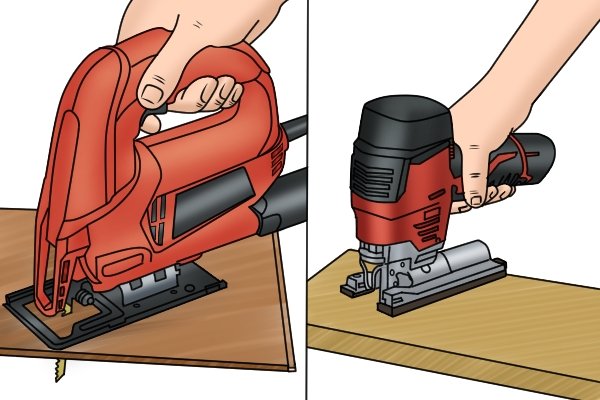
A barrel grip jigsaw has a cylindrical body that you hold much like a thick flashlight. The grip runs along the length of the tool, and your palm wraps around the barrel. The trigger is usually on the side or underneath, where your fingers naturally rest.
Advantages Of Barrel Grip Jigsaws
1. Low Profile Control
With your hand closer to the cutting surface, you get better control, especially when following curves. This low grip reduces the distance between your hand and the blade, so small movements of your wrist translate directly to the saw’s direction.
That’s why many pros prefer barrel grips for detailed work.
2. Better Visibility
Because your hand is low and out of the way, you have a clearer view of the blade and the cut line. For intricate patterns, this extra visibility can prevent mistakes and wasted material.
3. Precision In Tight Spaces
The compact shape of a barrel grip jigsaw lets you work in tight spots where a larger handle would get in the way. Cutting inside cabinets, drawers, or corners is often easier.
4. Ideal For Overhead And Upside-down Cuts
Since you grip the barrel, it’s easier to flip the tool or use it at awkward angles. This is useful for making cuts above your head or underneath surfaces.
Drawbacks Of Barrel Grip Jigsaws
- May Be Harder for Small Hands: Some users, especially those with small hands or less grip strength, find barrel grips harder to hold for long periods.
- Less Familiar for Beginners: If you’ve only used other saws with a top handle, the barrel grip might feel awkward at first.
- Trigger Position Can Cause Fatigue: The trigger is usually on the side or bottom, which may cause hand fatigue during long sessions.
Top Handle Jigsaw: Features And Benefits
A top handle jigsaw (sometimes called a “D-handle”) has a prominent, arching handle above the main body of the tool. The trigger is in the handle, much like a pistol grip. This is the style most people picture when they think of a jigsaw.
Advantages Of Top Handle Jigsaws
1. Familiar, Comfortable Grip
The top handle feels natural for most people. If you’ve used drills or other power tools, you’ll find the grip familiar and easy. This is a big plus for beginners.
2. One-handed Operation
The upright handle makes it simple to use the tool with one hand, which is great when you need your other hand free for holding material or steadying your work.
3. Less Fatigue For Long Cuts
Because your wrist is in a neutral position, you can use a top handle jigsaw for longer periods without tiring as quickly. This matters for large projects or repeated straight cuts.
4. Safe Start And Stop
The trigger is right under your index finger. It’s easy to start and stop the tool quickly, reducing the risk of accidents.
Drawbacks Of Top Handle Jigsaws
- Less Control for Intricate Cuts: Your hand sits higher above the cutting surface, so you lose some of the fine control you get with a barrel grip.
- Bulkier Profile: The top handle can get in the way in tight spaces or when making awkward cuts.
- Reduced Visibility: Your hand and the handle may block your view of the blade and line.
Key Differences Between Barrel Grip And Top Handle Jigsaws
Understanding the core differences can help you match the right tool to your needs.
| Feature | Barrel Grip Jigsaw | Top Handle Jigsaw |
|---|---|---|
| Grip Style | Horizontal, palm wraps around body | Vertical, hand holds top arch |
| Control | Better for curves & detail | Better for straight, long cuts |
| Visibility | Clear view of blade/line | Hand may block view |
| Comfort | May tire small hands | Comfortable for most users |
| Operation | Requires more grip strength | Easy one-handed use |
| Best For | Precision, tight spaces | General use, beginners |
Ergonomics And Comfort: Which Feels Better?
Comfort is subjective, but there are physical factors to consider.
With a barrel grip, your wrist stays low, and your palm is close to the cutting surface. This gives great control but can tire your hand, especially if the tool is heavy or you have small hands. The trigger position also means your fingers work harder to keep the saw running. Some users with arthritis or hand weakness find this difficult.
A top handle lets your wrist stay upright. The grip is larger and feels more like holding a cordless drill or power screwdriver. For long, straight cuts, or if you need to guide the saw with one hand, this style is easier on your body.
Non-obvious insight: Many left-handed users find barrel grip models more comfortable, since most top handle jigsaws are designed for right-handed users. The barrel grip is more “neutral” and can be used comfortably in either hand.
Another overlooked factor: If you often cut at odd angles, like upside-down or overhead, a barrel grip jigsaw is easier to maneuver and less likely to slip.
Accuracy And Control
If your projects require precision, the jigsaw’s design matters. Barrel grip jigsaws put your hand closer to the blade, so every adjustment is more direct. For patterns, curves, and small shapes, this can mean cleaner results and fewer slips.
Top handle jigsaws, while comfortable, can feel “top-heavy” to some users. Small corrections are harder to make, and your hand is farther from the action. For straight lines, this doesn’t matter much, but for tight curves or intricate scrollwork, it can be a drawback.
A surprising detail: Some pros add a second hand to the barrel or front of a top handle jigsaw for more control. But with a barrel grip, you get that control naturally.
Performance In Different Materials
Both jigsaw types can cut wood, metal, plastic, and more, but handling can change depending on the material.
Wood
For plywood, MDF, and hardwoods, both jigsaws work well. Barrel grip models give you a steadier hand when following curves. Top handle models are faster for long, straight rip cuts.
Metal
Metal cutting needs a slow, controlled feed to avoid blade bending or breakage. The close control of a barrel grip is an advantage here, especially on thin sheet metal.
Plastic And Laminate
These materials can chip or crack if handled roughly. A barrel grip’s precision helps avoid mistakes, but the comfort of a top handle is better for longer, repetitive jobs.
Tile
With a special blade, either jigsaw can cut tile, but accuracy is critical to avoid ruining expensive material. Barrel grip jigsaws are often preferred for this detail work.
Safety Considerations
Safety should always come first. Both jigsaw types have built-in safety features like blade guards, lock-off switches, and blade ejection systems. However, design affects how you use them safely.
With a top handle, your hand is farther from the blade. This can feel safer, especially for beginners. The trigger is easy to release if you need to stop quickly.
With a barrel grip, your hand is closer to the blade and the workpiece. This can make some users nervous. But, because you have more control, you’re less likely to let the saw wander off the line or “jump” unexpectedly.
Key safety tip: Always keep fingers away from the blade path and use clamps to hold your material steady. Never force the tool—let the jigsaw do the work.

Weight And Size Differences
Barrel grip jigsaws are often shorter and slightly heavier than top handle models. The barrel is solid and packed with components, while the top handle has more empty space. This extra weight can help keep the saw stable, but it can also make it tiring to hold over long periods.
Top handle jigsaws are usually taller and lighter. Their balance feels different, with more weight above your hand. For long, repetitive cuts, this may be less tiring.
Here’s a quick look at average weights and sizes:
| Type | Average Weight | Average Length | Average Height |
|---|---|---|---|
| Barrel Grip | 2.3–2.7 kg (5–6 lbs) | 23–26 cm (9–10 in) | 7–9 cm (3–3.5 in) |
| Top Handle | 1.8–2.3 kg (4–5 lbs) | 23–25 cm (9–9.8 in) | 13–16 cm (5–6.5 in) |
Remember, these numbers vary by brand and model, but the basic trend holds.
Blade Change Mechanisms
Modern jigsaws use tool-less blade change systems. However, the mechanism can be easier to reach on some models than others.
- Barrel grip jigsaws often have the blade release close to the barrel, so you may need to turn the tool or use two hands.
- Top handle jigsaws usually have the release near the front or on top, which may be more accessible.
This difference is small, but if you change blades often, it can affect your workflow.
Price Differences
Cost is always a consideration. Both types of jigsaws range from budget models under $50 to premium, professional tools costing $200 or more.
- Barrel grip jigsaws tend to be priced slightly higher, especially in professional lines. This is due to their popularity among serious woodworkers and pros, as well as the extra engineering in the compact body.
- Top handle jigsaws are the most common and available in more budget-friendly versions.
For example:
- Entry-level top handle: $40–$80
- Entry-level barrel grip: $70–$120
- Pro-grade top handle: $120–$200+
- Pro-grade barrel grip: $150–$250+
However, prices overlap, and sales or deals can make either option affordable.
Popular Brands And Models
Both types are made by leading tool manufacturers. Here are a few top choices:
Barrel Grip:
- Bosch JS120BN
- Makita XVJ01Z
- Festool Carvex PSC 420
Top Handle:
- Bosch JS470E
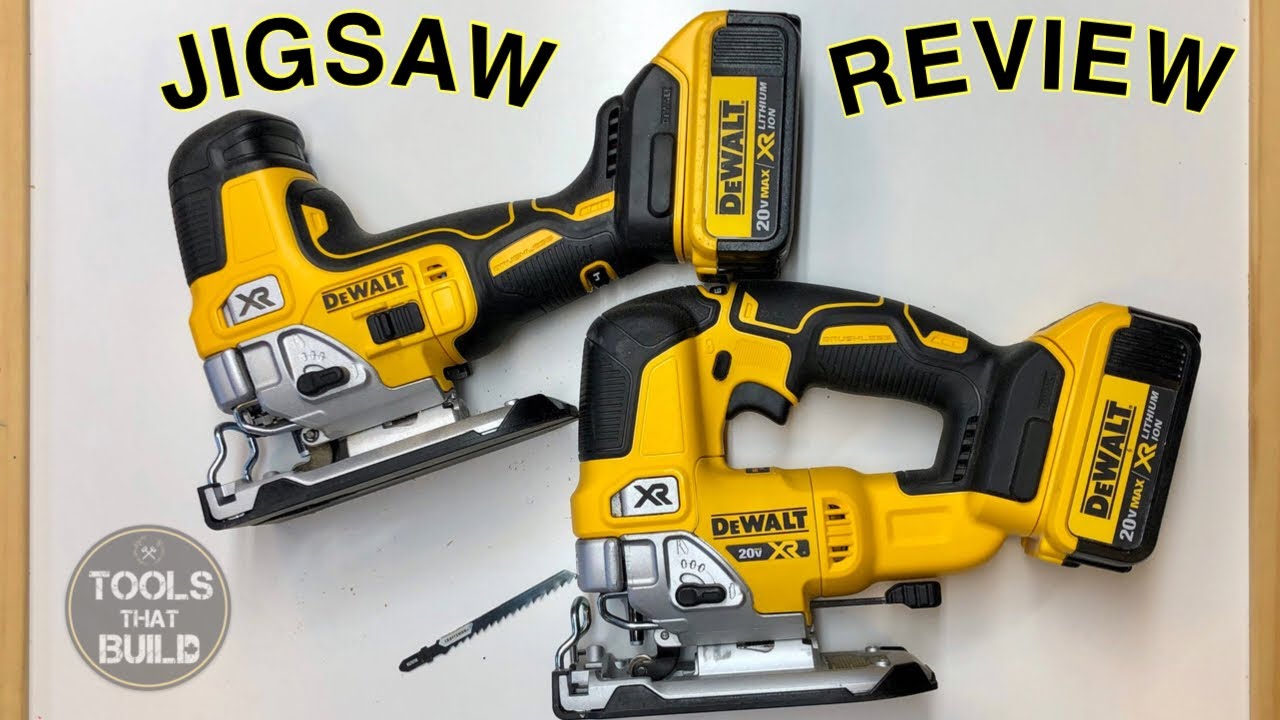
- DeWalt DCS331B
- Makita JV0600K
Bosch is well-known for its barrel grip jigsaws and has set the standard in this category. Makita and Festool offer excellent pro-grade models. For top handle, DeWalt and Makita are top picks, with options for both hobbyists and pros.
When To Choose A Barrel Grip Jigsaw
A barrel grip jigsaw is your best choice if:
- You cut a lot of curves, patterns, or detailed shapes.
- You work in tight spaces or awkward angles.
- You want maximum control and blade visibility.
- You’re left-handed and want a neutral grip.
- You’re comfortable with a heavier, low-profile tool.
Example: Cabinet makers and furniture builders often choose barrel grip jigsaws for their precision and accuracy.
When To Choose A Top Handle Jigsaw
A top handle jigsaw suits you if:
- You mostly cut straight lines or gentle curves.
- You prefer a familiar, upright grip.
- You want to use the saw with one hand often.
- You do long sessions and want to reduce fatigue.
- You’re a beginner or have smaller hands.
Example: Home DIYers, general carpenters, and beginners often start with top handle models.
Common Mistakes When Choosing A Jigsaw
Many buyers make mistakes that can cost time and money. Here are the most frequent:
- Ignoring Ergonomics: Choosing a jigsaw based on price or power, not how it fits your hand.
- Overlooking Blade Compatibility: Not all jigsaws accept all blade types. Some cheaper models are limited.
- Not Testing in Store: You can’t know how a jigsaw feels until you hold it. Try both styles, if possible.
- Forgetting About Weight: A heavier tool is harder for long jobs. Don’t just look at power specs.
- Missing Safety Features: Look for features like a lock-off switch, dust blower, and adjustable base.
User Experience And Real-world Feedback
Reading user reviews and talking to professionals gives insight you won’t get from specs alone.
Barrel grip users often mention:
- “I can follow lines so much better for scroll cuts.”
- “Takes some getting used to, but now I won’t use anything else.”
- “Feels solid and precise, but my hand gets tired after long cuts.”
Top handle users say:
- “Easy for quick jobs and straight cuts.”
- “I like being able to use it one-handed.”
- “Not as precise for curves, but great for general woodworking.”
Pro tip: Many experienced woodworkers keep both types on hand and switch depending on the job.
Advanced Features To Look For
No matter which style you choose, look for these features:
- Variable speed control: Lets you adjust the blade speed for different materials.
- Orbital action: Makes the blade move in a slightly elliptical path for faster, rougher cuts.
- Tool-less blade change: Swap blades quickly without extra tools.
- Dust blower: Clears the cut line for better visibility.
- LED lights: Help you see the line in poor lighting.
- Adjustable base plate: Tilt the base for bevel cuts up to 45 degrees.
These features can make a bigger difference than grip style alone, especially if you work with many materials.
Side-by-side Summary
For a quick reference, here’s a direct comparison.
| Aspect | Barrel Grip | Top Handle |
|---|---|---|
| Best For | Curves, precision, tight spots | Straight cuts, general use, one-handed work |
| Control | High, especially for detail | Good, best for long cuts |
| Comfort | May fatigue small hands | Comfortable for most users |
| Visibility | Excellent | Good, but hand may block line |
| Price Range | Mid to high | Low to high |
| Learning Curve | Higher for beginners | Low, familiar grip |
Expert Tips For Getting The Best Results
- Always use the right blade for your material. Wood, metal, laminate, and tile each need a specific blade.
- Let the saw do the work—don’t force it. Forcing leads to crooked cuts and broken blades.
- Secure your material with clamps. Both hands should be on the saw or free to guide it.
- Mark your cut lines clearly, and use the built-in dust blower or a vacuum to keep them visible.
- Try both styles before buying. Even a few minutes in a store can reveal which feels right.
Where To Buy And Learn More
Major hardware stores, tool shops, and online retailers carry a wide selection of both jigsaw types. If you want to dig deeper into the history, features, and engineering of jigsaws, check out the Wikipedia page on jigsaws.
Frequently Asked Questions
What Is The Main Difference Between Barrel Grip And Top Handle Jigsaws?
The main difference is the grip style. Barrel grip models have a low, horizontal body you hold like a flashlight, giving better control for curves and details. Top handle models have an upright grip, which is comfortable and familiar, best for straight cuts and general use.
Which Jigsaw Is Better For Beginners?
Most beginners find top handle jigsaws easier to use because of their familiar grip and simple one-handed operation. They’re less tiring and safer for most users starting out.
Are Barrel Grip Jigsaws Only For Professionals?
No, but they are preferred by professionals for precision work. Hobbyists and advanced DIYers can also use them, especially if they want more control for detailed cuts.
Can Left-handed Users Use Both Types Of Jigsaws?
Yes. However, barrel grip jigsaws are often more comfortable for left-handed users because their grip is neutral, while most top handle models are designed with right-handed triggers and controls.
Do Both Types Use The Same Blades?
Almost all modern jigsaws (both barrel grip and top handle) use T-shank blades, but some budget models may only accept U-shank blades. Always check compatibility before buying new blades.
Choosing between a barrel grip jigsaw and a top handle jigsaw is about matching your tool to your tasks and your hands. Each style has its strengths, and the right choice can make your projects easier, safer, and more enjoyable.
Take your time, try both if you can, and let the work you do guide your decision. The best jigsaw is the one that feels right every time you pick it up.