
When winter arrives, clearing snow from driveways and sidewalks becomes a daily job for many people. Choosing the right snowblower can make this task much easier and less tiring. Two main types of snowblowers are available: single stage and two stage. Each has its own strengths and weaknesses. But which one is best for your needs? Let’s explore the details, differences, and real-life uses of both types so you can make a smart decision.
What Is A Single Stage Snowblower?
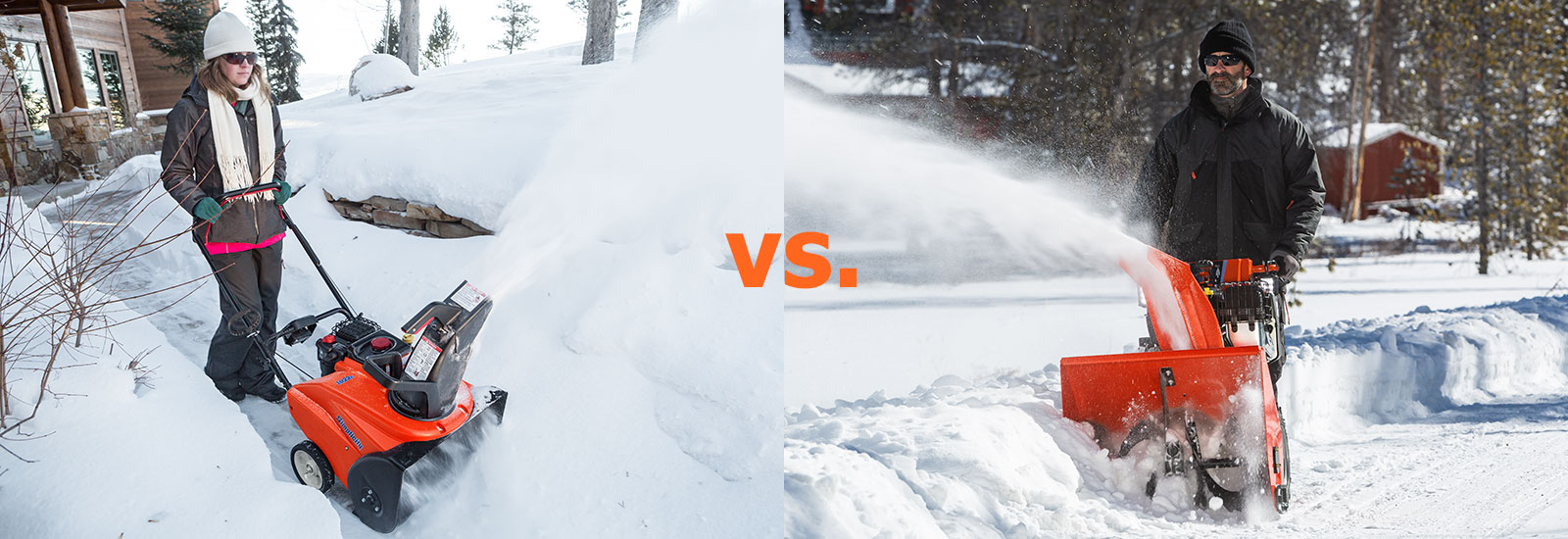
A single stage snowblower is a simple machine designed for light to moderate snowfall. The name “single stage” means it completes the snow removal process in one motion. The auger (the spiral blade in front) touches the ground, scoops up the snow, and throws it out through a chute—all in one step.
Single stage snowblowers are usually compact, lightweight, and easy to handle. They run on either electricity (corded or battery) or gas. These machines are very popular with homeowners who need to clear small areas like short driveways, walkways, and patios.
How It Works
The auger spins quickly, scraping the snow off the ground and pushing it directly into the discharge chute. Because the auger touches the ground, it can clean right down to the pavement, leaving little snow behind. However, this design also means it can wear down faster if used on rough surfaces.
What Is A Two Stage Snowblower?
A two stage snowblower is a more powerful and complex machine. It is designed for heavier, deeper snow and larger areas. The “two stage” name comes from its two-step process: first, the auger collects the snow and feeds it to an impeller (a fast-spinning fan). Then, the impeller blows the snow out through the chute at a greater distance.
These machines are often larger and heavier than single stage models. They usually use gas engines and are built to handle bigger jobs, such as long driveways, wide sidewalks, or even small parking lots.
How It Works
The auger in a two stage snowblower does not touch the ground. Instead, it floats slightly above, collecting snow and sending it to the impeller. The impeller then shoots the snow out forcefully. Because the auger does not scrape the surface, these machines can be used on gravel or uneven ground without picking up stones or debris.
Key Differences Between Single Stage And Two Stage Snowblowers
Understanding the core differences can help you decide which snowblower is right for you. Here are the main points of comparison:
| Feature | Single Stage | Two Stage |
|---|---|---|
| Snow Removal Steps | One (auger does all) | Two (auger + impeller) |
| Surface Contact | Auger touches ground | Auger floats above ground |
| Suitable Surfaces | Pavement only | Pavement, gravel, grass |
| Snow Depth | Up to 8-12 inches | Up to 18-24+ inches |
| Throwing Distance | 15-25 feet | Up to 50 feet |
| Power Source | Gas, electric, battery | Gas (mostly) |
| Clearing Width | 16-22 inches | 24-30+ inches |
| Weight | Light (20-40 lbs) | Heavy (150-300+ lbs) |
| Price Range | $100-$500 | $600-$2000+ |
Pros And Cons Of Single Stage Snowblowers
Advantages
1. Lightweight And Easy To Maneuver
Single stage models are much lighter than two stage ones. Most people can push them with one hand, and turning is simple, even in tight spaces.
2. Lower Cost
They are more affordable—usually less than half the price of a good two stage snowblower.
3. Simple Maintenance
There are fewer moving parts, so maintenance is easy. Most repairs can be done at home.
4. Cleans Down To Pavement
Because the auger touches the ground, it removes nearly all the snow, reducing the need for extra shoveling.
5. Smaller Size For Storage
These machines take up little space in a garage or shed.
Disadvantages
1. Limited Power
They struggle with deep, heavy, or wet snow. Clearing more than 8-12 inches at once is difficult.
2. Not For Gravel Or Uneven Ground
The auger can pick up rocks and damage both the machine and your property.
3. Shorter Throw Distance
Snow does not travel far, so it may pile up nearby.
4. Harder To Use On Slopes
Since they are not self-propelled, pushing them up inclines can be tiring.
5. Shorter Lifespan
The direct contact with the ground wears the auger faster, especially on rough surfaces.

Credit: maceqlongmont.powerdealer.honda.com
Pros And Cons Of Two Stage Snowblowers
Advantages
1. Handles Deep And Heavy Snow
Two stage models can clear snow that is 18-24 inches deep, or even more with premium units.
2. Works On Gravel And Uneven Surfaces
The auger stays off the ground, so you can use it on gravel driveways without worry.
3. Self-propelled
Most two stage snowblowers have powered wheels, so you do not need to push. This makes them easier to use on slopes or long driveways.
4. Long Throw Distance
The impeller can shoot snow 40-50 feet away, keeping your cleared area clean.
5. Wider Clearing Path
Many models clear a path 24-30 inches wide in one pass, which saves time.
6. Durable Build
Stronger parts and a robust frame mean these machines last longer, even with heavy use.
Disadvantages
1. High Cost
Prices are much higher, sometimes reaching $2,000 or more for top models.
2. Bulky And Heavy
Their size and weight make them harder to store and move, especially if you have limited space.
3. Requires More Maintenance
More moving parts and complex features mean more can go wrong. Maintenance is important.
4. Learning Curve
Operating and maintaining a two stage snowblower takes time to learn, especially for beginners.
5. No Pavement Scraping
Because the auger does not touch the ground, you may need to scrape a thin layer of snow left behind.
Which Snowblower Should You Choose?
Choosing between a single stage and two stage snowblower depends on several important factors. Let’s look at them one by one.
1. Snowfall Amount In Your Area
If you live somewhere with light to moderate snowfall—rarely more than 8 inches at a time—a single stage model is often enough. In areas with heavy, frequent snowfalls or big storms, a two stage machine is a better investment.
2. Size Of Area To Clear
For small driveways, short sidewalks, or patios, a single stage snowblower saves space and money. For long driveways or large open spaces, a two stage model will clear snow faster and with less effort.
3. Surface Type
If you only need to clear smooth pavement, a single stage snowblower is suitable. For gravel, dirt, or uneven ground, two stage models are safer and more effective.
4. Physical Strength And Age
A single stage snowblower is easier to lift and turn, making it ideal for anyone with limited strength. Two stage models are heavier but often self-propelled, reducing the need to push.
5. Budget
If you want to spend less, single stage models are the best choice. If you are willing to invest more for performance and durability, consider a two stage snowblower.
6. Storage Space
Single stage snowblowers fit in tight spaces, while two stage machines need more room.
Practical Examples
Let’s look at some real-life scenarios to see how the choice works out.
Suburban Homeowner With A Short Driveway
Marina lives in a suburb where it snows about 6 inches at a time, and her driveway is 30 feet long. She needs a machine she can lift and store easily. A single stage, electric snowblower is perfect for her.
It’s light, affordable, and does the job.
Rural Homeowner With A Long Gravel Driveway
Jack has a 200-foot gravel driveway and gets snowfalls of 10-16 inches. A two stage snowblower is best. It won’t pick up gravel, and the self-propelled feature saves him time and effort. The machine’s power clears the deep drifts quickly.
Elderly User With Limited Strength
Linda is in her seventies and needs to clear her walkway, which is only 20 feet long. She chooses a lightweight, battery-powered single stage snowblower. It’s easy for her to handle and doesn’t require much storage space.
Business Owner Clearing Parking Lots
A small business owner needs to clear a parking lot after each snowstorm. A large, commercial-grade two stage snowblower is the right choice. It covers wide areas fast and handles deep snow well.
Single Stage Snowblower: Best Use Cases
- Light snowfalls (up to 8 inches)
- Small areas (walkways, short driveways, decks)
- Flat, paved surfaces
- Homeowners with storage limitations
- People who prefer less maintenance
Two Stage Snowblower: Best Use Cases
- Heavy snowfalls (10+ inches)
- Large areas or long driveways
- Gravel or uneven terrain
- Users needing self-propelled help
- Business or frequent, heavy-duty use
Non-obvious Insights For Buyers
1. Auger Wear and Replacement
Many new buyers do not realize that the auger on a single stage snowblower wears down faster because it scrapes the ground. If you clear rough pavement or hit small stones, you may need to replace the rubber paddles every few seasons.
Two stage models avoid this problem, so their augers last longer.
2. Snow Type Matters
Wet, heavy snow is much harder to move than light, fluffy snow. Single stage blowers often get clogged or cannot throw wet snow far. Two stage machines handle wet snow better, but even they can clog if not cleaned regularly.
Always check the snow type in your area before buying.
3. Chute Controls and Adjustments
Adjusting the direction and height of the snow chute is easier on many two stage models. Some even offer joystick controls or heated handles—features not usually found on single stage machines. This can make a big difference in comfort during long clearing sessions.
4. Electric vs. Gas Power
Electric single stage snowblowers are quieter and cleaner but have less power and limited runtime. Gas-powered models are stronger but need fuel and produce fumes. Two stage machines are mostly gas-powered, so consider where you plan to use them and if noise or emissions are a concern.
5. Storage Preparation for Winter
Both types of snowblowers need seasonal care. Gas models require draining fuel or using stabilizer before storage. Electric models should be kept in a dry area, and batteries should be charged before winter. Many users forget these steps and find their machines won’t start the next season.
Comparing Performance: Real-world Data
Here’s a direct comparison of two popular models from each category, showing how they perform in key areas.
| Feature | Single Stage (Toro Power Clear 721 E) | Two Stage (Ariens Deluxe 28) |
|---|---|---|
| Clearing Width | 21 inches | 28 inches |
| Clearing Depth | 12 inches | 21 inches |
| Throw Distance | 35 feet | 50 feet |
| Weight | 87 lbs | 249 lbs |
| Power Source | Gas | Gas |
| Self-Propelled | No | Yes (multiple speeds) |
| Price Range | $650 | $1,400 |
Common Buyer Mistakes (and How To Avoid Them)
1. Overestimating Or Underestimating Needs
Some buyers choose a two stage snowblower for a tiny driveway, wasting money and storage space. Others buy a single stage for heavy snow areas and struggle when storms hit. Always match your machine to your real needs.
2. Ignoring Surface Type
Using a single stage snowblower on gravel can break the machine and be dangerous. Always check your surface before buying.
3. Not Considering Storage And Transport
Two stage snowblowers can be very heavy and wide, making them hard to move or fit in a small garage.
4. Skipping Research On Features
Extra features like electric start, heated grips, or easy chute control can make winter much easier. Don’t just look at power—consider comfort.
5. Neglecting Maintenance
Both types need regular care. Not changing oil, replacing worn parts, or storing them incorrectly leads to early breakdowns.
Cost Of Ownership
The price of a snowblower is just the start. Owning one also means spending money on fuel, oil, replacement parts, and occasional repairs.
- Single stage models generally cost less to maintain, but frequent use wears out the auger faster.
- Two stage models are built tougher, but repairs are more expensive, and they use more fuel.
On average, expect to spend $30-$50 per year for a single stage, and $70-$120 per year for a two stage model (including tune-ups, oil, and minor parts).
Environmental Impact
If you are concerned about the environment, electric single stage snowblowers are the cleanest option. They produce no direct emissions, are quieter, and require less maintenance. Two stage gas models produce more noise and fumes but are necessary for heavy jobs.
According to the U.S. Environmental Protection Agency, small gas engines like those in snowblowers can release significant air pollutants. If you only need to clear small areas, consider going electric for a greener choice. You can learn more about this issue on the EPA’s official site.

Future Trends In Snowblowers
Technology is changing snow removal. Battery-powered single stage machines are becoming more powerful and can now compete with small gas models for light snow. Some new two stage snowblowers offer electronic chute control, LED lights for nighttime use, and even tracks instead of wheels for better grip on hills.
As battery and electric motor technology improves, expect to see more eco-friendly options in both categories. For now, gas two stage models remain the best for heavy-duty needs, but this may change in the coming years.
Frequently Asked Questions
What Is The Main Difference Between A Single Stage And A Two Stage Snowblower?
The main difference is that a single stage snowblower uses its auger to scoop and throw snow in one step, while a two stage snowblower uses an auger to gather snow and an impeller to throw it in a second step. This makes two stage models more powerful and better for deep or heavy snow.
Can A Single Stage Snowblower Be Used On Gravel?
No, single stage snowblowers should not be used on gravel. Their auger touches the ground and can pick up rocks, which can damage the machine and cause injury. Two stage models are safer for gravel surfaces because the auger does not touch the ground.
How Much Snow Can A Two Stage Snowblower Handle?
Most two stage snowblowers can handle snow up to 18-24 inches deep in one pass. Some commercial models can clear even deeper drifts, making them suitable for areas with heavy snowfall.
Are Electric Snowblowers As Good As Gas-powered Ones?
Electric snowblowers (usually single stage) are quieter, lighter, and need less maintenance, but they are less powerful. They work well for small areas and light snow. For deep or heavy snow, gas-powered two stage models are still the best choice.
How Do I Maintain My Snowblower For Long Life?
Regular maintenance is key. For gas models, change the oil, check spark plugs, and drain or stabilize fuel before storage. For electric models, keep the battery charged and store in a dry area. Always replace worn auger parts and check chute controls before each season.
Making Your Final Choice
Choosing between a single stage and a two stage snowblower comes down to your snowfall, area size, surface type, and budget. Both machines do the job, but each is better in certain situations. If you only clear small, paved areas and get light snow, a single stage model is your best bet. For large areas, deep snow, or mixed surfaces, a two stage snowblower is worth the investment. Take the time to consider your real needs, and you’ll save money and effort every winter.