
Polishing your car with a buffer can transform a dull, scratched finish into a shiny, mirror-like surface. Many car owners feel nervous about using a buffer, worried they might make mistakes or damage the paint. But with the right steps and a little practice, anyone can achieve professional-looking results at home.
This guide will show you exactly how to polish a car with a buffer, from preparation to finishing, so you can restore your car’s shine and protect its paint for years.
Why Use A Buffer Instead Of Hand Polishing?
A buffer, also called a dual-action polisher or rotary polisher, gives faster and more even results than hand polishing. It helps you remove deeper scratches, swirls, and oxidation that are hard to fix by hand. Buffers also reduce the physical effort needed, saving your arms and time.
Hand polishing is good for small touch-ups, but a buffer is the tool for bigger jobs or badly weathered paint. Buffers distribute pressure evenly and keep the pad moving, lowering the risk of uneven results or damaging the paint.
Understanding Different Types Of Buffers
Choosing the right buffer makes polishing safer and easier. There are two main types:
| Type | Best For | Pros | Cons |
|---|---|---|---|
| Dual-Action (DA) Polisher | Beginners, home use | Safe, less heat, easy to control | Less aggressive, may not remove deep defects |
| Rotary Polisher | Professionals, heavy correction | Powerful, removes deep scratches | Can burn paint, harder to master |
Dual-action polishers are the best choice for most car owners. They move in two directions at once, lowering the chance of making mistakes. Rotary polishers spin in one direction, working faster but with more risk.
What You Need Before You Start
Gathering the right supplies is important. Here’s what you need:
- Buffer/Polisher: Dual-action for beginners.
- Polishing Pads: Foam or microfiber; different colors mean different cutting strength.
- Polishing Compound: For removing scratches and oxidation.
- Finishing Polish: For extra gloss after compounding.
- Microfiber Towels: For wiping and buffing.
- Masking Tape: To protect trim and edges.
- Car Wash Supplies: Soap, buckets, mitts.
- Clay Bar Kit: For deep cleaning before polishing.
- Pad Conditioner or Water Spray: To keep pads cool and moist.
- Personal Protection: Gloves, eye protection, optional mask.
It’s easy to forget small things like masking tape or enough towels. Many beginners also overlook pad cleaning, which is vital for good results.
Step 1: Thoroughly Wash And Prepare The Car
Start with a clean surface. Any dust, sand, or dirt left on the paint can scratch it during polishing.
- Rinse the car to remove loose dirt.
- Wash with a pH-neutral car shampoo using the two-bucket method (one for soapy water, one for rinsing the mitt).
- Dry with a microfiber towel.
- Use a clay bar with lubricant to remove bonded contaminants. This step is often skipped but makes a big difference, helping the polish work better and preventing pad contamination.
If your car feels rough after washing, it still has contaminants. Clay barring smooths the surface for best results.
Step 2: Inspect The Paint Condition
Look at the paint under good lighting. Use a flashlight or sunlight to spot swirls, scratches, and oxidation. Touch the paint to feel if it’s smooth.
- Light swirls and haze: Use a finishing polish.
- Deeper scratches or oxidation: Use a compound first, then a polish.
Different parts of your car may need different approaches. For example, the hood often gets more damage from sun and road debris.
Step 3: Tape Off Sensitive Areas
Masking tape is your best friend here. Cover:
- Window trim
- Rubber seals
- Plastic edges
- Emblems
- Headlights and taillights
This protects them from polish splatter and accidental damage. Take your time—rushing here can create a lot of cleanup later.
Step 4: Choose The Right Pad And Polish
Not all pads and polishes are the same. Here’s a quick comparison:
| Pad Type | Use | Cut Level |
|---|---|---|
| Heavy Cut (wool/microfiber) | Deep scratches, heavy oxidation | Strong |
| Medium Cut (orange foam) | Moderate swirls, light scratches | Medium |
| Finishing (black/white foam) | Gloss, final polish | Light |
Use a test spot on a small area to see which pad and compound work best. Start with the least aggressive combo; only move to stronger options if needed.
Step 5: Apply Polish To The Pad
Put 4–6 small pea-sized dots of polish on the pad. Some people use an “X” pattern, but dots give more even coverage and less waste. Spread the polish on the paint by dabbing the pad in several spots before turning on the buffer.
- Condition the pad with a spritz of water or pad conditioner to prevent dry buffing.
- Don’t overload the pad. Too much polish creates excess dust and less effective polishing.
Beginners often use too much product, thinking more is better. In fact, a little goes a long way.
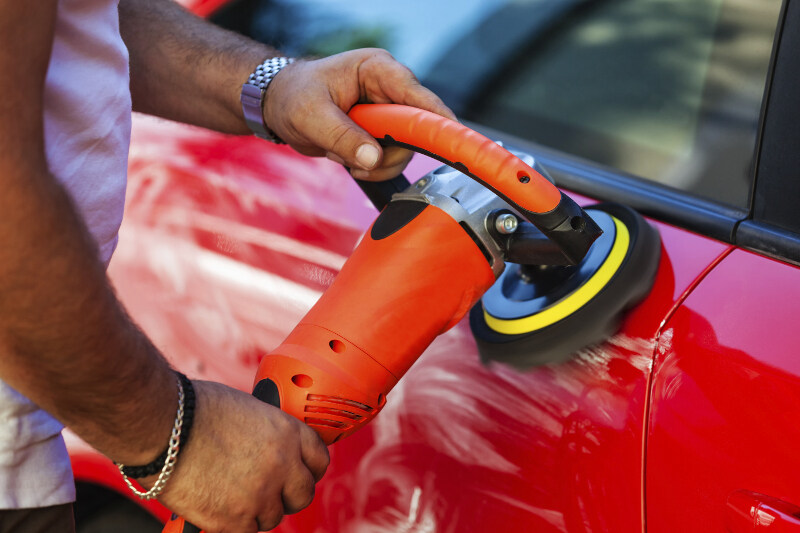
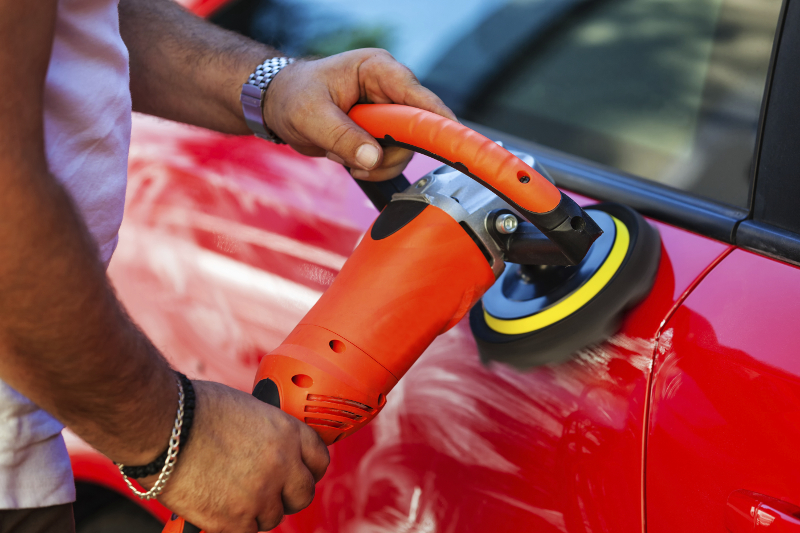
Step 6: Set Buffer Speed And Pressure
Plug in the buffer and set it to a low speed (speed 2–3 on most DA polishers). Place the pad flat on the paint before starting.
- Start slow to spread the polish evenly.
- Increase speed to 4–5 for actual polishing.
- Use light pressure—let the machine do the work. Pressing hard can create heat and damage the paint.
A common mistake is tilting the buffer or pushing down too much. Always keep the pad flat and move smoothly.
Step 7: Work In Small Sections
Divide the car into small sections—about 2 feet by 2 feet (half a door panel or a quarter of the hood).
- Make overlapping passes in a crosshatch pattern (side-to-side, then up-and-down).
- Move slowly—about 1 inch per second.
- Work the polish until it turns clear or starts to haze.
Don’t try to polish the whole car in one go. Small, focused areas give the best results and prevent drying out.
Step 8: Wipe Off Polish Residue
After working a section, stop the buffer and lift it off the paint before turning it off. Use a clean microfiber towel to gently wipe away any polish residue.
- Flip the towel often to avoid smearing.
- Inspect the finish—if you still see defects, repeat with the same or a more aggressive combo.
If residue is hard to remove, you might be using too much product or not working it long enough.
Step 9: Repeat On The Whole Car
Continue around the car, section by section. Reapply polish to the pad as needed (usually after each section). Clean the pad every few panels to prevent buildup.
- Change pads if they become saturated or lose effectiveness.
- Be patient—a full car can take several hours to polish properly.
Many people rush this part and get uneven results. Take breaks if you need to; quality matters more than speed.
Step 10: Finishing Polish For Extra Gloss
After compounding, switch to a finishing pad and a finishing polish. This step removes any haze left by the compound and brings out a deep, wet shine.
- Repeat the polishing steps with the finishing pad and polish.
- Use less product—finishing polish is more fluid and spreads easily.
This step is often skipped but makes a big difference, especially on dark colors.
Step 11: Final Inspection And Cleanup
Once you finish polishing, check your work in different lighting. Walk around the car and look for missed spots or leftover residue.
- Remove masking tape carefully.
- Wipe down the entire car with a clean microfiber towel.
- Check for polish in crevices—use a soft brush or compressed air if needed.
A bright flashlight or direct sunlight will reveal swirls or haze you might miss indoors.
Step 12: Apply Wax Or Sealant
Polishing removes old protection. To keep your new shine, apply a car wax or paint sealant right after polishing.
- Use a foam or microfiber applicator to spread wax or sealant.
- Buff off with a clean towel after it hazes.
- Protects the finish and makes future cleaning easier.
Wax or sealant also adds depth to the shine and shields against UV and road grime.
Common Mistakes And How To Avoid Them
Even experienced users can make mistakes. Here are some to watch out for:
- Skipping surface prep: Polishing a dirty or contaminated surface creates scratches.
- Using the wrong pad/polish: Too aggressive can damage paint, too mild won’t remove defects.
- Polishing too fast: Rushing leaves uneven results and missed defects.
- Pressing too hard: Generates heat, risks burning or thinning paint.
- Not cleaning pads: Dirty pads reduce effectiveness and can scratch.
- Ignoring masking tape: Polish stains on trim are hard to remove.
- Polishing in direct sun: Product dries too fast and can damage paint.
- Overlapping too much: Leads to uneven shine.
- Not inspecting work: Missed defects are harder to fix later.
Being aware of these pitfalls saves time and frustration.
How Often Should You Polish A Car?
Most cars only need machine polishing once or twice a year. Over-polishing can thin the clear coat, especially on older cars with less paint. If you keep your car waxed and clean, polishing less often is fine.
- New cars: Once a year, or as needed for spots.
- Older cars: Every 1–2 years, unless defects appear.
- Show cars: More often, but always check paint thickness.
If you see fading, heavy swirls, or oxidation, it’s time to polish. Otherwise, regular washing and waxing will keep your car looking good.
Real-world Examples And Results
Let’s look at what you can expect. A 10-year-old sedan with faded, scratched paint can regain 80–90% of its original shine with a buffer and the right products. Deep scratches that catch a fingernail may not disappear, but most swirls, light scratches, and haze will be gone.
A newer car with minor swirls can look showroom-new after a light polish. Dark colors show the most improvement, as swirls are more visible.
Professional detailers often charge $200–$500 for a full paint correction. Doing it yourself can save a lot, but take your time to match the quality.
Choosing The Right Polishing Products
The market has many polishes and compounds. Here’s what to look for:
- Reputable brands: Meguiar’s, 3D, Menzerna, Chemical Guys, Griot’s Garage.
- Clear coat safe: Modern cars use clear coat, so pick products labeled as safe.
- Low dust: Some older compounds create lots of dust—choose newer, low-dust formulas.
- No fillers: Some “polishes” hide defects with oils instead of removing them. Look for true abrasives.
If you’re unsure, check reviews or ask at a detailing forum.
Pad Maintenance And Cleaning Tips
Clean pads work better and last longer. Here’s how to maintain them:
- After each section: Use a brush or pad cleaning tool to remove spent polish.
- After each use: Wash foam pads with warm water and mild soap. Rinse well.
- Dry pads completely before next use—damp pads don’t polish well.
- Store pads in a clean, dry place.
Never use a pad that’s torn or full of old product. This causes uneven results and can scratch the paint.
Safety Tips When Using A Buffer
Buffers are safe if used correctly. Follow these tips:
- Wear eye protection—polish can splatter.
- Keep cords away from the car to avoid scratches.
- Work in a well-ventilated area—polish fumes can be strong.
- Unplug the buffer when changing pads.
- Don’t polish hot paint—let the car cool down first.
Take your time and focus on each step. Buffers are powerful tools, but they’re safe in careful hands.
Weather And Lighting: When’s The Best Time To Polish?
Ideal polishing conditions:
- Shade or garage: Direct sun dries polish too fast.
- Cool paint: Not hot from sun or driving.
- Dry weather: Humidity can affect polish performance.
- Good lighting: Use LED work lights or bright daylight to spot defects.
Many beginners try to polish in their driveway on a sunny day, but this often leads to frustration. Take the car inside or wait for a cloudy, cool day for best results.
Advanced Tips For A Mirror-like Finish
Want that extra level of gloss? Here are some tips:
- Jewel the paint: Use a soft pad and ultra-fine polish at low speed for a final pass.
- Multiple pad types: Start aggressive, then use softer pads as you refine.
- Inspect with isopropyl alcohol (IPA): Wipe panels with diluted IPA to remove oils and check true paint condition.
- Layer protection: After polishing, apply a sealant, then a carnauba wax for added depth.
- Use a paint gauge: If you plan to polish often, a thickness gauge helps avoid over-thinning.
These steps are common among professional detailers and can make your car stand out at shows or meets.
What About Ceramic Coatings?
After polishing, some car owners choose a ceramic coating for long-term protection. These are liquid polymers that bond to the paint, lasting 1–3 years or more.
- Apply only on polished, defect-free paint.
- More durable than wax or sealant.
- Requires careful prep and application.
If you’re new to polishing, try wax or sealant first. Ceramic coatings are a bigger commitment but offer amazing protection and gloss.
The Environmental Impact Of Polishing
Polishing uses chemicals and creates waste (old pads, towels, used product). Be mindful:
- Dispose of used pads and towels responsibly.
- Don’t rinse polish down storm drains.
- Choose eco-friendly products when possible.
Many modern car care brands now offer biodegradable or water-based options.
Polishing Classic Cars Or Single-stage Paint
Older cars may have single-stage paint (no clear coat). These are softer and easier to correct, but also easier to damage.
- Use less aggressive pads and polish.
- Polish slowly and check often.
- Paint transfer (color on the pad) is normal with single-stage paint.
Test a small area first, and always err on the side of caution.
Buffer Vs. Hand Polishing: When To Use Each
Hand polishing is best for:
- Small scratches or spots.
- Tight areas (door handles, around emblems).
- Very soft or delicate paint.
Buffer polishing is better for:
- Whole-car corrections.
- Deep swirls, oxidation, or heavy defects.
- When you want maximum gloss.
Many detailers use both: a buffer for big panels, hand polishing for edges and details.

Cost Breakdown: Diy Vs. Professional Polishing
Wondering if it’s worth doing yourself? Here’s a cost comparison:
| Item | DIY (Yourself) | Professional Service |
|---|---|---|
| Buffer/Polisher | $80–$200 (one-time) | Included |
| Pads & Polish | $40–$80 per job | Included |
| Microfiber Towels | $20–$40 (reusable) | Included |
| Labor | Free (your time) | $200–$500 per car |
| Total | $140–$320 (first time) | $200–$500 each time |
The initial investment is higher for DIY, but you save money over time. Plus, you control the process and learn a valuable skill.
Non-obvious Insights Most Beginners Miss
- Polishing removes paint: Even with a buffer, each pass removes a small layer of clear coat. Don’t overdo it—paint is not unlimited.
- Pad rotation matters: On curves and edges, keep the pad flat. Buffers lose cutting power on edges and can burn paint if not careful.
- Lighting is critical: Many defects can only be seen under certain lights. Check your work from multiple angles.
Paying attention to these details separates a good polish from a great one.
Frequently Asked Questions
How Long Does It Take To Polish A Car With A Buffer?
It usually takes 4 to 8 hours to polish a car with a buffer, depending on the car’s size, condition, and your experience. Beginners should set aside a full day to avoid rushing and missing spots.
Can I Use A Buffer On Any Car Paint?
Most modern cars have a clear coat that is safe for buffer polishing. However, very old or delicate paint (especially single-stage) needs extra care and less aggressive products. Always test a small area first.
How Do I Clean Polishing Pads During A Job?
After every 1–2 panels, use a pad brush or compressed air to remove spent polish. For deep cleaning, wash pads with warm water and mild soap, rinse well, and dry completely before reuse.
What’s The Difference Between Compounding And Polishing?
Compounding uses more abrasive products and pads to remove deep defects. Polishing uses milder abrasives to refine the surface and boost gloss. Most jobs need both: compound first, polish second.
Where Can I Find More Information About Car Polishing Techniques?
For more in-depth guides and tips, check out resources like the Wikipedia Auto Detailing page.
Polishing a car with a buffer is a rewarding skill that brings instant results. With careful preparation, the right tools, and attention to detail, you can make your car look better than new. Remember, practice makes perfect—every car and every paint job is a little different.
Enjoy the process, and take pride in your car’s reflection.