
A table saw is one of the most important tools in any woodworking shop. Whether you are a beginner learning to build your first project, or a professional carpenter working on custom furniture, understanding your table saw’s capabilities is crucial. One feature that often confuses new users is rip capacity. This single measurement can decide what kind of work you can do and whether a table saw meets your needs. But what exactly is rip capacity, and why does it matter so much? Let’s break down everything you need to know, from the basics to advanced tips, so you can choose and use your table saw with complete confidence.
What Is Rip Capacity?
Rip capacity means the maximum width of wood you can cut on a table saw, measured from the saw blade to the furthest point the rip fence can reach, usually on the right side. Imagine you want to cut a large sheet of plywood into two parts. The rip capacity tells you the widest piece you can safely and accurately cut using the fence as a guide.
For example, if your table saw has a rip capacity of 24 inches, you can cut a piece of wood up to 24 inches wide. If your project requires cutting a 30-inch wide board, you need a saw with at least 30 inches of rip capacity.
Rip capacity only measures the width you can cut, not the length. The length is almost unlimited since you can keep pushing the material through the blade.
Why Rip Capacity Matters In Woodworking
Choosing the right rip capacity is not just about numbers. It affects what types of projects you can do, how safely you can work, and even how fast you finish tasks.
- Project Size: If you mainly work with small boards or trim, a small rip capacity is enough. But if you want to cut big plywood sheets, like for cabinets or furniture, you need a larger rip capacity.
- Accuracy and Safety: Using the fence gives you straight, clean cuts. If the fence can’t reach far enough, you might try to cut freehand, which is dangerous and usually leads to mistakes.
- Efficiency: A bigger rip capacity means fewer adjustments, less time moving fences around, and faster workflow.
- Future-Proofing: Your needs might grow. A saw with a bit more rip capacity lets you try bigger projects later.
How Rip Capacity Is Measured
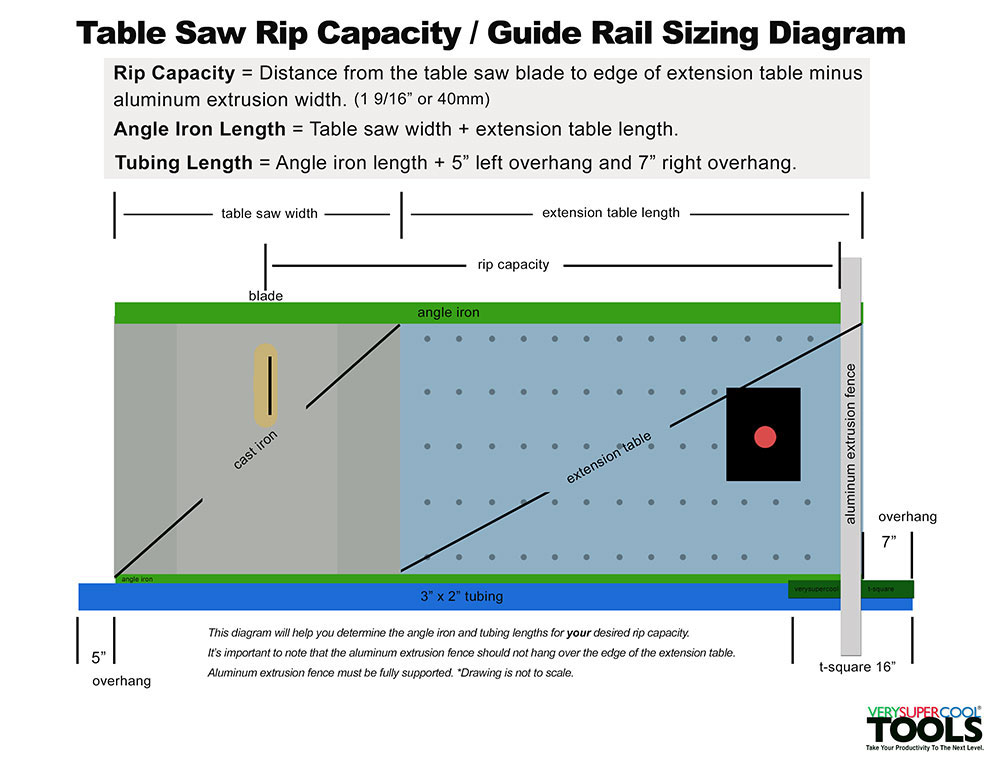
Rip capacity is always measured from the blade to the fence. Most often, this is the distance from the blade to the right edge of the table, where the fence can lock in place. Some saws also let you set the fence on the left side, but the right-side measurement is the standard.
Let’s look at a few examples:
- If you set the fence 20 inches from the blade, your rip capacity for that cut is 20 inches.
- If the manufacturer says the saw has a 30-inch rip capacity, that’s the maximum you can set the fence from the blade.
Manufacturers may list two numbers: one for the right, one for the left. Most important is the right-side rip capacity, since most cuts are made this way.
Typical Rip Capacities For Different Table Saws
Not all table saws are built the same. Different types offer different rip capacities. Here’s a breakdown of the most common types and what to expect:
| Type of Table Saw | Common Rip Capacity (Right) | Typical Use |
|---|---|---|
| Benchtop/Portable | 20–24 inches | Small jobs, DIY, site work |
| Contractor | 24–30 inches | Remodeling, light cabinetry |
| Hybrid | 30–36 inches | Serious hobbyists, small pro shops |
| Cabinet | 36–52 inches | Professional woodworking, large panels |
| Industrial | Up to 60+ inches | Heavy-duty, production shops |
As you can see, the bigger and heavier the saw, the wider the rip capacity. For most home woodworkers, something between 24 and 36 inches is enough.
How Rip Capacity Affects What You Can Build
The type of projects you want to build will decide how much rip capacity you need. Here are some examples:
- Bookshelves or cabinets: Often made from plywood sheets that are 4 feet (48 inches) wide. To cut these in half, you need at least a 24-inch rip capacity. But to cut them in one pass, a 48-inch capacity is needed.
- Trim and molding: These pieces are usually narrow, so a 20-inch capacity works fine.
- Furniture tops or panels: Might need 30–36 inches of capacity for a single wide board.
- Custom doors: May require up to 36–40 inches.
If you only cut narrow boards or do small projects, a big rip capacity is not needed. But if you ever want to work with full sheets or wide boards, it’s better to buy a saw with a higher rip capacity.
Rip Fence Systems: The Key To Rip Capacity
The rip fence is the part of the table saw that locks parallel to the blade and guides your wood during the cut. The quality and design of the rip fence directly affect the rip capacity.
Types Of Rip Fence Systems
- Standard T-Square Fence
- Most common on modern saws.
- Slides smoothly and locks down solid.
- Easy to adjust for wider cuts.
- Rack-and-Pinion Fence
- Uses gears for smoother, more precise adjustments.
- Often found on portable saws.
- Rail Extension Fence
- Lets you add rails to increase rip capacity.
- Useful for upgrading a saw later.
A good fence system is sturdy and accurate. Cheap fences may flex or move during a cut, which is dangerous and can ruin your material.
Upgrading Rip Capacity With Fence Extensions
Many woodworkers add fence extensions or extra rails to their saws. This can boost the rip capacity by several inches—or even double it. For example, some 30-inch saws can be upgraded to 50 inches with a new rail system. Always check if your saw supports this before buying.
What Limits Rip Capacity?
Even with a big table and a fancy fence, some things can limit your real-world rip capacity:
- Table size: If the table is small, large boards may tip or fall.
- Fence design: Some fences lose accuracy at the far end.
- Saw power: Cutting big, thick boards needs more power.
- Shop space: You need enough room to move large materials.
Remember, maximum rip capacity is only useful if your workspace can actually handle the material.
Rip Capacity Vs. Crosscut Capacity
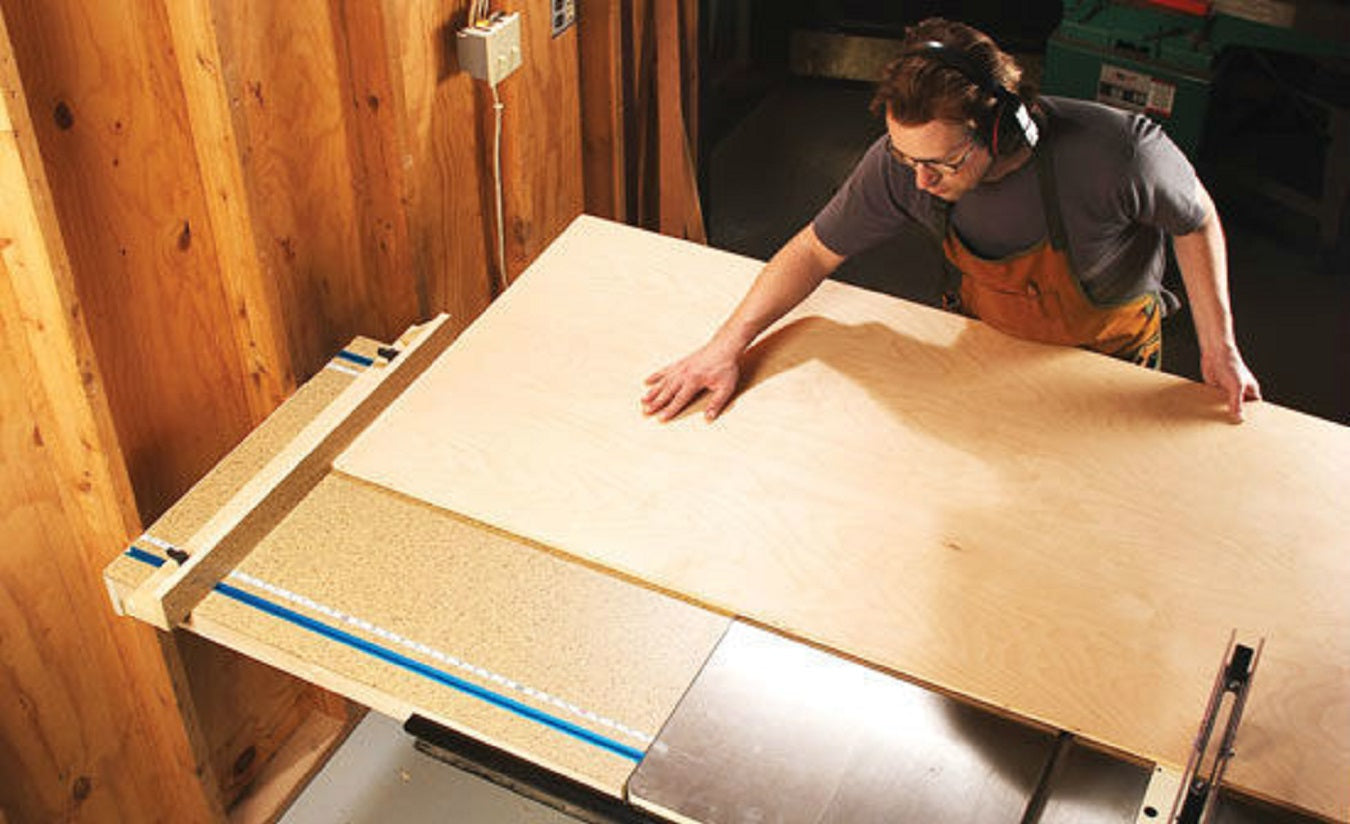
Don’t confuse rip capacity with crosscut capacity. Rip capacity is the maximum width you can cut (blade to fence, along the grain). Crosscutting is cutting across the grain, usually using a miter gauge or sled. Table saws are designed for ripping, but you need a miter saw or radial arm saw for wide crosscuts.
How To Choose The Right Rip Capacity For Your Needs
Deciding how much rip capacity you need depends on your projects, space, and budget. Here’s a simple process to help:
- List your common projects: Do you cut full sheets, narrow boards, or something in between?
- Measure your material: What’s the widest board or panel you work with?
- Check your workspace: Can you fit a big saw and large sheets in your shop?
- Consider future needs: Will your projects get bigger over time?
- Balance cost and features: More rip capacity usually means a bigger, more expensive saw.
If you’re unsure, go a little bigger. Many woodworkers regret buying a saw that’s too small, but rarely one that’s too big.
Example: Making Kitchen Cabinets
Most cabinet-grade plywood comes in 4×8 foot sheets (48 inches wide). To cut these in half lengthwise, you need at least a 24-inch rip capacity. For more complex cuts, a 36–52 inch capacity is ideal. If you plan to do a lot of cabinet work, invest in a saw with higher rip capacity.
Upgrading Rip Capacity: Is It Worth It?
Some table saws allow you to upgrade the rip capacity by adding longer rails or a new fence system. This is often cheaper than buying a new saw, but there are pros and cons:
Advantages:
- Save money by keeping your current saw
- Customizable to your needs
- Can dramatically increase capacity
Disadvantages:
- Not all saws support upgrades
- May require extra space
- Upgrades can be tricky to install
Before upgrading, check with your saw’s manufacturer or search for compatible upgrade kits. Some brands, like Biesemeyer and Incra, offer high-quality fence and rail systems.
Rip Capacity And Table Saw Safety
A higher rip capacity lets you cut bigger pieces, but safety comes first. Here are key tips:
- Always use the rip fence for straight cuts.
- Never remove the blade guard unless absolutely necessary.
- Use push sticks for narrow rips.
- Support large sheets with an outfeed table or roller stands.
- Never try to “freehand” a rip cut without the fence.
A common mistake is trying to rip a board wider than your saw’s capacity. This is dangerous and can cause the wood to bind, kick back, or damage your saw.
Common Mistakes When Considering Rip Capacity
Even experienced woodworkers can make errors when thinking about rip capacity. Here are some to avoid:
- Ignoring workspace limits: A big saw is useless if you can’t fit large boards in your shop.
- Overestimating needs: Paying for a 52-inch rip capacity when you only cut 12-inch boards is often a waste.
- Forgetting fence quality: A wide rip means nothing if the fence is flimsy or inaccurate.
- Not planning for upgrades: Buying a saw that can’t be upgraded can limit your future options.
Comparing Rip Capacity: Popular Table Saw Models
To see how rip capacity differs between models, here’s a comparison of several popular saws:
| Model | Type | Right Rip Capacity | Left Rip Capacity | Approx. Price |
|---|---|---|---|---|
| DeWalt DWE7491RS | Portable | 32.5 in | 22 in | $599 |
| Ridgid R4512 | Contractor | 30 in | 15 in | $649 |
| Grizzly G0690 | Cabinet | 29.5 in | 12 in | $2,295 |
| SawStop PCS31230-TGP236 | Cabinet | 36 in | 12 in | $3,599 |
| Powermatic PM2000B | Cabinet | 50 in | 12 in | $4,099 |
Notice how price and rip capacity often go up together. But you don’t always need the largest saw—match the saw to your real needs.
Non-obvious Insights About Rip Capacity
Most beginners focus only on the number, but there are two less-known truths:
- Material Handling is as Important as Capacity: Even with a 50-inch rip capacity, managing large sheets is hard without extra support. Building or buying a simple outfeed table makes cutting safer and easier.
- Fence Parallelism Matters: As fences slide further from the blade, some can become slightly angled, causing binding or burning. Always check your fence for parallel alignment, especially at maximum extension.
Improving Your Table Saw’s Rip Capacity Without Upgrades
You don’t always have to buy new parts to cut wider boards. Experienced woodworkers use these tricks:
- Flip and Cut: Cut half the width, then flip the board and finish the cut from the other side. This works for boards just a little wider than your fence allows, but not for full sheets.
- Temporary Fence Extensions: Clamp a straight board to your table to act as a wider fence, but only for light-duty work. Be careful—this is less accurate and safe than a real fence.
- Circular Saw for First Cut: Use a circular saw to break down large sheets, then finish the precise cut on your table saw.
Rip Capacity And Dust Collection
Bigger rips often mean more sawdust. When cutting wide panels, your dust collector or shop vacuum works harder. Ensure your dust collection system matches your cutting needs, or clean up often to keep your workspace safe.
Rip Capacity And Blade Selection
Cutting wide boards puts more stress on your table saw blade. Use a sharp, high-quality blade. For thick or hardwood boards, choose a blade with fewer teeth (like 24T or 30T) for faster rips. For plywood or clean cuts, a blade with more teeth (like 40T or 60T) gives smoother results.
Factors Beyond Rip Capacity To Consider When Buying A Table Saw
Rip capacity is just one part of the buying decision. Also consider:
- Motor power: More power means easier cuts through thick wood.
- Stability: Heavier saws vibrate less, giving smoother cuts.
- Dust collection: Keeps your workspace clean and safe.
- Safety features: Look for riving knives, blade guards, and emergency stops.
- Table size and extensions: Makes handling big panels easier.
- Accuracy and repeatability: Quality fences and miter slots matter.
Choosing a saw that balances all these factors gives better results than just picking the biggest rip capacity.
Real-world Example: Choosing Between 24-inch And 36-inch Rip Capacity
Imagine you’re a hobbyist who wants to build kitchen cabinets and small furniture. You have a choice:
- 24-inch rip capacity: Cheaper, lighter, fits in a small garage. Good for most tasks, but you must break down large sheets with another saw.
- 36-inch rip capacity: More expensive, heavier, needs more space. Lets you cut bigger panels in one pass.
If space and budget allow, the 36-inch saw is more flexible. But if you rarely cut large sheets, the 24-inch saw may be enough, especially if you already own a circular saw for breaking down panels.
Rip Capacity And Portable Table Saws
Portable table saws offer convenience and mobility, but usually have smaller rip capacities. Recent models, like the DeWalt DWE7491RS with 32.5-inch rip capacity, make it possible to cut larger panels even on the go. However, stability and accuracy may not match full-size saws. Always clamp your work, use supports, and double-check fence alignment when working with portable models.
Rip Capacity And Workshop Layout
Large rip capacity demands more space. Plan your workshop to:
- Allow room behind and beside the saw for feeding big panels.
- Include outfeed support to prevent boards from falling off the back.
- Keep walkways clear for safety.
Measure your shop before buying a saw with a huge rip capacity. Sometimes, less is more if your space is tight.
Upgrading Your Rip Fence For Higher Capacity
If your table saw supports it, you can buy a longer rail and fence system. Popular brands like Biesemeyer and Incra are known for accuracy and durability. Installation usually takes a few hours, but the results are worth it if you need to cut wide panels. Always follow the manufacturer’s instructions and check for fence parallelism after installation.

How Rip Capacity Impacts Professional Woodworking
For professional shops, high rip capacity is a must. It allows:
- Cutting full sheets of plywood or MDF in a single pass.
- Faster workflow with fewer setup changes.
- The ability to take on larger, more profitable jobs.
Many pros use cabinet saws with 50-inch or even 60-inch rip capacities. But these saws are big, heavy, and expensive—only worth it if you regularly cut large panels.
Pros And Cons Of High Rip Capacity
Every feature has upsides and downsides. Here’s a quick overview:
Pros
- Can handle bigger projects
- Increases flexibility
- Fewer material handling steps
- Future-proofs your workshop
Cons
- Costs more money
- Needs more space
- Heavier and less portable
- May not be needed for small jobs
Common Myths About Rip Capacity
Some myths confuse buyers. Let’s clear them up:
- Myth: Higher rip capacity always means a better saw.
- Truth: Accuracy, power, and fence quality matter just as much.
- Myth: You can always upgrade later.
- Truth: Not all saws accept larger rails or fences.
- Myth: Only pros need high rip capacity.
- Truth: Even hobbyists may need it for large projects.
Maintenance Tips For Rip Fence And Capacity
To get the most from your rip capacity:
- Clean rails and fence guides regularly.
- Lubricate moving parts with dry lubricant.
- Check fence alignment each month.
- Tighten bolts and locks as needed.
A well-maintained fence keeps your cuts accurate and safe.
Rip Capacity In Summary
Rip capacity is a simple measurement, but it controls what you can build, how safely you work, and how efficiently you finish projects. By understanding rip capacity, you can choose the right table saw, upgrade wisely, and plan your workshop for the future.
If you want to go deeper on table saw features, the Wikipedia Table Saw page covers more technical details and saw types.
Frequently Asked Questions
What Is The Difference Between Rip Capacity And Crosscut Capacity?
Rip capacity is the maximum width of wood you can cut with the fence, parallel to the grain. Crosscut capacity refers to how wide a board you can cut across the grain, usually using a miter gauge or sled. Rip capacity is usually much greater than crosscut capacity on a table saw.
How Much Rip Capacity Do I Need For Cabinet Making?
For most cabinet projects using standard 4×8 foot plywood sheets, a 36-inch rip capacity is ideal. This lets you rip panels for cabinet sides and shelves in one pass. At minimum, look for at least 24 inches, but you’ll need to cut large sheets in stages.
Can I Increase My Table Saw’s Rip Capacity?
Yes, if your saw supports it. You can buy longer rails and a new fence system to boost your rip capacity. Check your saw’s manual or maker for upgrade options. Not all saws can be upgraded, so check before buying.
Are Portable Table Saws Good For Large Rip Cuts?
Some newer portable saws offer up to 32-inch rip capacity, enough for many plywood cuts. However, stability and accuracy may be lower than full-size cabinet saws. Use outfeed supports and double-check fence alignment for best results.
What Happens If I Try To Rip A Board Wider Than My Saw’s Capacity?
Attempting to cut wood wider than your saw’s rip capacity is dangerous. You may lose control of the material, the cut will be inaccurate, and there’s a risk of kickback. Always use the fence, and if your saw can’t handle the width, use a circular saw or have your material cut to size at the store.
Understanding rip capacity helps you choose the right table saw, plan projects safely, and get the best results for years to come. With this knowledge, you’re ready to tackle any woodworking task, big or small.