
Starting a Stihl leaf blower can feel confusing, especially if you’re new to power tools or have never handled small engines before. Maybe you’ve stood in your yard, pulling the starter cord again and again, only to get nothing but frustration.
You’re not alone. Many first-time users run into the same issues—wrong choke position, stale fuel, or simply missing a critical step. But with the right approach, you can start your Stihl leaf blower reliably every time, whether it’s your first season or you’re using it year-round.
This guide will show you, step by step, how to start a Stihl leaf blower the right way. You’ll learn about safety, preparation, the actual starting process, and what to do if something goes wrong. Along the way, you’ll get practical advice and real-world examples that most manuals skip.
Whether you own a handheld Stihl blower or a more powerful backpack model, this article covers what you need.
Understanding Your Stihl Leaf Blower
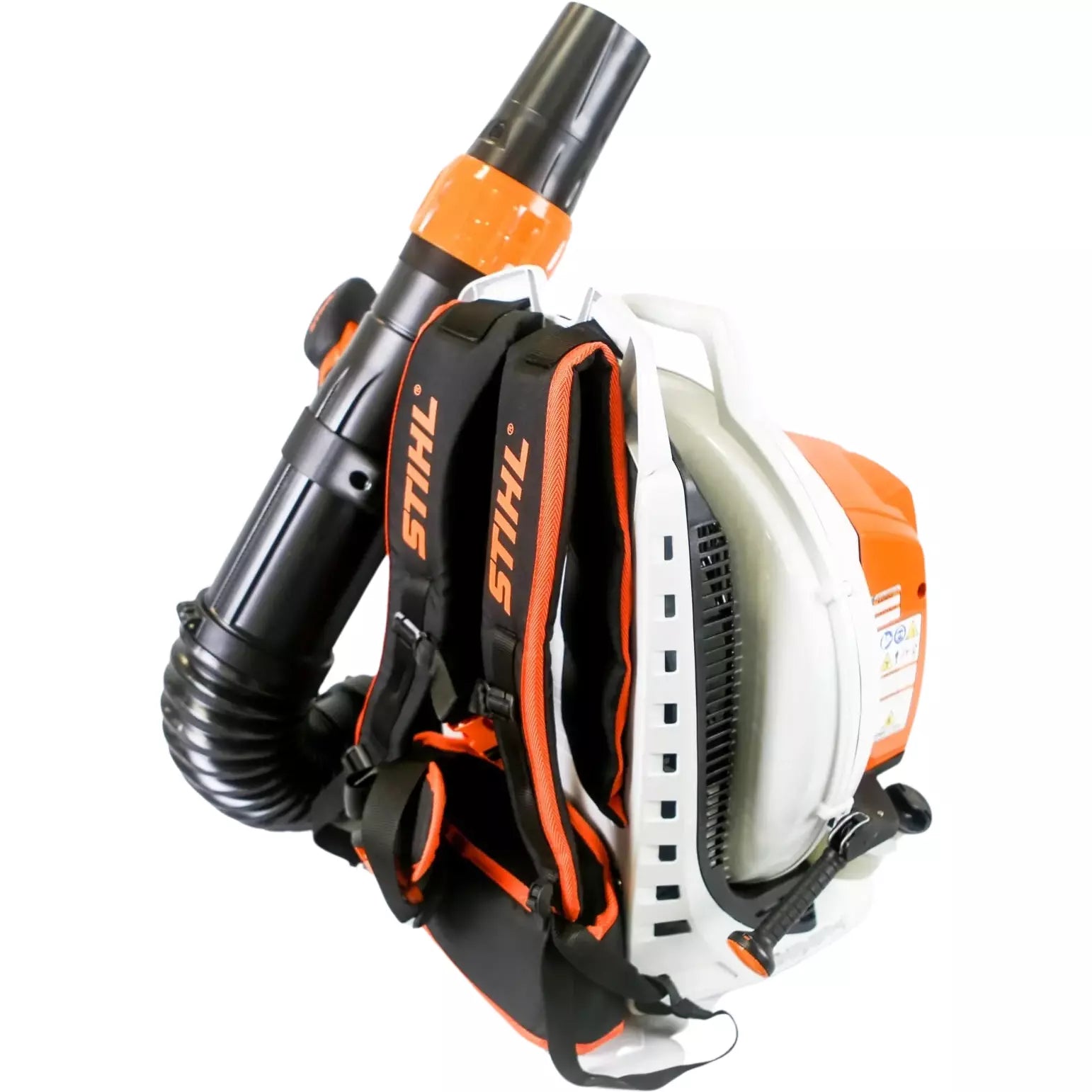
Before starting, it helps to know the basics of your Stihl leaf blower. Stihl makes several types: handheld (like the BG 56, BG 86), backpack (such as the BR 200, BR 600), and battery-operated models. Most of this guide focuses on gas-powered blowers, since they’re the most common and have the most steps for starting.
Main components to know:
- Fuel tank: Where you add the fuel mix.
- Air filter cover: Houses the air filter, which must be clean.
- Primer bulb: Helps deliver fuel to the carburetor before starting.
- Choke lever: Adjusts air/fuel mix for cold starts.
- Throttle trigger: Controls engine speed.
- Starter grip and cord: Used to crank the engine.
- On/Off switch: Powers the ignition system.
- Spark plug: Ignites the fuel/air mix.
If your blower uses a battery, the steps are simpler—just ensure the battery is charged and installed. However, most Stihl blowers you see in landscaping are gas-powered.
Safety First: Preparation Before Starting
Never rush the start-up. Taking a few minutes to prepare ensures your blower runs smoothly and keeps you safe.
Check Your Surroundings
Clear the area where you’ll start the blower. Remove sticks, rocks, or anything that could become a projectile. Make sure children and pets are indoors or far away. Avoid starting near open windows—gas engines emit fumes.
Wear Proper Safety Gear
Always protect yourself when working with power tools. Wear:
- Eye protection: Safety glasses or goggles.
- Hearing protection: Ear plugs or earmuffs; most Stihl blowers are above 90 dB.
- Gloves: For grip and to avoid blisters.
- Long pants and closed shoes: To protect legs and feet from debris.
Inspect The Blower
A quick check prevents bigger problems later.
- Look for fuel leaks around the tank or fuel lines.
- Check the air filter is clean and seated well.
- Make sure the spark plug cap is tight.
- Examine the starter cord for fraying or damage.
- Verify all screws and bolts are snug.
Fueling The Blower
Stihl gas blowers use a two-stroke fuel mix. This means you must mix gasoline with 2-cycle engine oil before filling the tank. Using straight gasoline will damage the engine.
Correct mix ratio: 50:1 (50 parts gasoline to 1 part oil). For example, mix 2.6 oz (77 ml) of Stihl 2-cycle oil per 1 US gallon (3.8 L) of gasoline.
Tips for mixing:
- Use fresh, unleaded gasoline (89 octane or higher).
- Shake the fuel can before pouring.
- Never store mixed fuel longer than 30 days. Old fuel causes starting problems.
- Always fill the tank outdoors with the engine off.
If you use the wrong mix, the engine can seize or fail. This is a common mistake among beginners.
Step-by-step Guide: How To Start A Stihl Leaf Blower
Let’s break down the process into clear steps. Most gas-powered Stihl blowers follow this method:
1. Place The Blower On A Flat Surface
Set your blower on the ground. The nozzle should point away from people, windows, and anything fragile. Stability prevents tip-overs during starting.
2. Set The Controls
Find the On/Off switch (sometimes marked “I/O” or “1/0”). Flip to the “On” or “I” position. If your blower has a throttle lock or trigger, engage it to keep the throttle slightly open.
3. Engage The Choke
For a cold engine (not run in the last hour):
- Move the choke lever to the “Choke” or “Start” position. This limits air, making it easier to ignite cold fuel.
For a warm engine (run recently):
- Set the choke to “Run” or “Open.” No need to restrict air for a warm start.
4. Press The Primer Bulb
Look for a small rubber bulb near the carburetor. Press and release the primer bulb 5 to 6 times. You should see fuel move through the fuel line. If the bulb is empty, keep pressing until you see fuel inside.
Note: Over-priming (pumping too much) can flood the engine, making starting harder.
5. Pull The Starter Cord
Grip the handle firmly. Place one hand on the blower housing to hold it steady. With your other hand, pull the starter cord briskly until you feel resistance, then pull sharply. Do not yank the cord to full length—this can damage the recoil system.
Typical result: The engine should “pop” or try to start after 2–5 pulls.
6. Move Choke To Half/run Position
If the engine fires but doesn’t keep running, move the choke lever to the “half” or “run” position. Try starting again with a few more pulls.
If it starts, let it run for 5–10 seconds, then move the choke fully to “run” or “open. ”
7. Allow Engine To Warm Up
Let the blower idle for about 30 seconds before using full throttle. This warms the engine oil and prevents stalling.
8. Use The Throttle To Begin Work
Squeeze the throttle trigger to increase speed and start blowing leaves or debris. Release the trigger to return to idle.
Starting A Stihl Backpack Leaf Blower
Backpack models like the BR 200, BR 350, or BR 600 have similar steps, but there are a few differences.
- Throttle lock: Most backpack blowers have a throttle lock. Squeeze the throttle, then press the lock button to keep it open during starting.
- Decompression valve: On larger blowers, press this button before pulling the starter cord. It reduces pressure, making pulling easier.
- Harness: Always wear the blower harness after starting. Starting with the blower on your back is not recommended due to safety risks.
Otherwise, follow the same steps as above for choke, primer, and pulling the starter cord.

Common Mistakes To Avoid
Many starting problems are due to small errors. Here’s what to watch out for:
- Wrong choke setting: Starting with the choke in the “run” position on a cold engine will prevent starting. Always use “choke” for the first start of the day.
- Old or bad fuel: If the fuel smells sour or the blower has sat unused for months, drain and refill with fresh mix.
- Not pressing the primer bulb: Skipping this means dry carburetor, so no fuel reaches the engine.
- Weak pulls: Half-hearted pulls won’t spin the engine fast enough. Use a sharp, quick motion.
- Leaving the blower on its side: Always start on a flat surface to avoid flooding.
- Forgetting the On/Off switch: Many people try to start with the switch in “Off” and think the blower is broken.
- Over-priming: Too much fuel floods the engine, making it harder to start.
What If Your Stihl Leaf Blower Won’t Start?
If you follow all steps and your Stihl blower still won’t start, don’t panic. Troubleshooting is usually straightforward.
1. Check The Fuel
- Is it fresh? Old fuel gums up the carburetor.
- Is the mix correct? Too much oil or straight gas can cause trouble.
2. Inspect The Spark Plug
- Remove the spark plug and check for fouling, carbon deposits, or moisture.
- Clean or replace if dirty or worn.
3. Air Filter
- A clogged air filter chokes the engine. Remove and clean or replace if needed.
4. Primer Bulb And Fuel Lines
- Cracked or leaking primer bulbs/fuel lines prevent fuel from reaching the carburetor. Replace if damaged.
5. Flooded Engine
If you smell fuel or see wetness at the exhaust:
- Set choke to “run.”
- Hold throttle wide open.
- Pull starter cord 6–10 times. This clears excess fuel and allows fresh air in.
6. Engine Compression
If all else fails, check compression. Low compression means worn internal parts—a repair shop can test this for you.
Real-world Examples: Starting Different Stihl Models
Let’s look at three popular models. This comparison helps you understand the small differences in starting procedure.
| Model | Type | Choke/Primer | Special Steps |
|---|---|---|---|
| BG 56 C-E | Handheld | Choke, Primer | Easy2Start system reduces effort |
| BR 600 | Backpack | Choke, Primer | Decompression valve for easier pulls |
| BGA 57 | Battery | None | Just insert battery and press trigger |
Notice that battery models skip most steps—no fuel, choke, or primer.
Tips For Reliable Starting Every Time
Experienced users have a few tricks that make starting easier and extend tool life.
1. Use High-quality Fuel And Oil
Cheap oil or low-octane fuel leads to carbon buildup and hard starts. Always use Stihl-branded 2-cycle oil and mid-grade gasoline. This protects the engine and keeps the carburetor clean.
2. Store Properly
At the end of the season, run the blower until the fuel tank is empty. This prevents gum and varnish in the carburetor. For long-term storage, add a stabilizer to your fuel mix.
3. Service Regularly
Replace the spark plug and air filter every season or after 25 hours of use. Clean cooling fins to prevent overheating.
4. Read The Owner’s Manual
Every model has small differences. The manual has diagrams and safety warnings that save time and money. You can download PDFs from the official Stihl website.
5. Avoid Common Myths
- “More oil is better.” False—too much oil causes smoke and fouled plugs.
- “You don’t need to clean the air filter.” Incorrect—dirty filters starve the engine.
- “You must pull the starter cord as fast as possible.” Not true—steady, sharp pulls are best.

Troubleshooting Table: Quick Solutions
For fast help, use this table to diagnose common problems.
| Problem | Likely Cause | Solution |
|---|---|---|
| Blower won’t start | Old fuel, wrong choke, off switch | Replace fuel, check choke/switch |
| Engine floods | Too much priming/choke | Open throttle, pull cord to clear |
| Starts, then stalls | Dirty air filter, bad plug | Clean filter, replace plug |
| Starter cord stuck | Engine seized, debris, cord damage | Inspect recoil, free flywheel |
| Runs rough | Clogged carburetor, wrong mix | Clean carb, use fresh mix |
Battery-powered Stihl Blowers: Starting Steps
Stihl’s battery blowers (like BGA 57, BGA 86) are much simpler.
- Charge the battery fully.
- Insert the battery until it clicks into place.
- Set the On/Off switch to “On.”
- Press the trigger to start blowing.
No fuel, choke, or primer required. Battery models are quieter and require less maintenance but have shorter run times.
Non-obvious tip: Remove the battery when not in use. This prevents accidental starts and extends battery life.
When To Seek Professional Help
If your blower still won’t start after these steps, it may need professional service. Signs you should visit a repair shop:
- Recoil starter is jammed or broken.
- Consistent fuel leaks.
- Engine has very low compression (hard to pull, little resistance).
- Blower smokes heavily or makes loud knocking noises.
Trying to fix serious engine issues yourself can make things worse. Service centers have special tools and training.
Safety Reminders For Every Use
Never bypass safety steps to save time. Injuries can happen fast with powerful tools.
- Never refuel a hot engine. Let it cool for at least 5 minutes.
- Keep hands and clothing away from moving fan blades.
- Do not start indoors. Engine exhaust is poisonous.
- Use only recommended attachments and parts.
Frequently Asked Questions
How Often Should I Replace The Spark Plug In My Stihl Leaf Blower?
Change the spark plug every 25 hours of use or once per season, whichever comes first. A fresh plug ensures reliable starting and smooth engine operation. Inspect it more often if your blower runs rough or is hard to start.
What Should I Do If My Blower Floods And Won’t Start?
Set the choke to “run”, hold the throttle open, and pull the starter cord several times. This clears extra fuel from the cylinder. Avoid pressing the primer bulb again until the engine fires.
Can I Use Regular Motor Oil Instead Of 2-cycle Oil For The Fuel Mix?
No. Only use 2-cycle oil designed for air-cooled engines. Regular motor oil will not mix properly and can cause engine failure. Stihl’s own brand or a JASO-FC or ISO-L-EGD certified oil is safest.
Why Does My Blower Start, Then Stall Immediately?
This often means the air filter is dirty or the spark plug is fouled. Check and clean the air filter, and replace the spark plug if needed. Also, make sure you’re using fresh fuel with the correct mix ratio.
Are Stihl Battery-powered Blowers As Powerful As Gas Models?
Battery blowers are quieter and easier to start, but gas models still offer more power for heavy or long jobs. For small yards, battery blowers are usually sufficient. For professional or large-property use, gas is better.
Starting your Stihl leaf blower doesn’t have to be a struggle. With the right preparation and careful steps, you’ll be clearing leaves and debris with confidence. Remember to use fresh fuel, check all parts, and follow the correct starting sequence.
These habits not only make starting easy—they also extend the life of your tool. Keep safety first, maintain your blower, and you’ll get years of reliable service from your Stihl equipment.