
Keeping a chainsaw sharp is one of the most important things you can do for both safety and performance. A dull chainsaw will not only slow down your work, but it can also make the tool dangerous and strain the engine.
Many people feel uncertain about sharpening their own chainsaw, but once you understand the process, it’s a straightforward job that saves money and time. Whether you’re a homeowner with a small saw or a professional who uses one daily, learning how to sharpen a chainsaw is a valuable skill.
A sharp chainsaw cuts wood cleanly and efficiently. You’ll notice less sawdust, smoother cuts, and the chainsaw pulling itself into the wood with little force. In contrast, a dull chain will force you to push hard, create fine sawdust instead of chips, and even smoke as it struggles.
These are all signs your saw needs sharpening. In this guide, I’ll walk you through every step, from understanding chainsaw teeth to using different sharpening methods. Along the way, you’ll find practical tips, real examples, and answers to common questions.
Let’s get your chainsaw back to peak performance.
Understanding Chainsaw Chain Anatomy
Before sharpening, it’s useful to know how a chainsaw chain works. Each chain is made of individual links, but the main parts to focus on are the cutters and depth gauges (sometimes called rakers).
- Cutters: These are the teeth that actually slice through wood. Each cutter has a curved top plate and a side plate. The sharp part is the top corner where these meet.
- Depth Gauges: These small bumps sit in front of each cutter. Their job is to control how deep the cutter bites into the wood.
A common beginner mistake is only sharpening the cutters and ignoring the depth gauges. If the depth gauge is too high, even a sharp cutter will not bite well. Keeping both in the correct shape is key to a safe, fast cut.
Chains come in different pitch and gauge, but for sharpening, the most important thing is the angle of the cutters. Your chainsaw manual will list the correct file diameter and sharpening angle.
Signs Your Chainsaw Needs Sharpening
Knowing when to sharpen is as important as knowing how. Here are signs your chainsaw is dull:
- Fine sawdust: Sharp chains make wood chips, not dust.
- You push hard: The saw should feed itself into the cut.
- Crooked cuts: If the saw cuts at an angle, one side is sharper than the other.
- Smoke or burning smell: Dull teeth cause friction, which heats the bar.
- Chain bounces or rattles: A smooth cut means a sharp chain.
Don’t wait until the chain is completely dull. Sharpening regularly is easier and keeps your saw in top shape.
Tools You Need For Sharpening
To sharpen a chainsaw properly, you need the right tools. The most common options are:
- Round file: This matches the diameter of your chain’s cutters.
- File guide: Holds the file at the right angle.
- Flat file: Used for lowering the depth gauges.
- Depth gauge tool: Ensures consistent height.
- Vise: Holds the bar steady while you file.
There are also electric sharpeners and rotary tools (like Dremel) for faster work, but hand files are best for beginners to learn the basics.
Here’s a comparison of common sharpening tools:
| Tool Type | Speed | Precision | Best For |
|---|---|---|---|
| Round File & Guide | Medium | High | Manual sharpening, beginners |
| Electric Sharpener | Fast | Very High | Frequent sharpening, professionals |
| Rotary Tool | Fast | Medium | Quick touch-ups |
Preparing Your Chainsaw For Sharpening
Safety is the first step. Begin by:
- Turning off the engine and disconnecting the spark plug wire (for gas saws).
- For electric saws, unplug the tool or remove the battery.
- Wear work gloves and safety glasses.
Next, clean the chain:
- Use a brush to remove sawdust and oil.
- Check for damage. If cutters are broken, cracked, or severely worn, the chain may need replacement.
Lock the bar in a vise to prevent movement. This makes filing more accurate and safer.
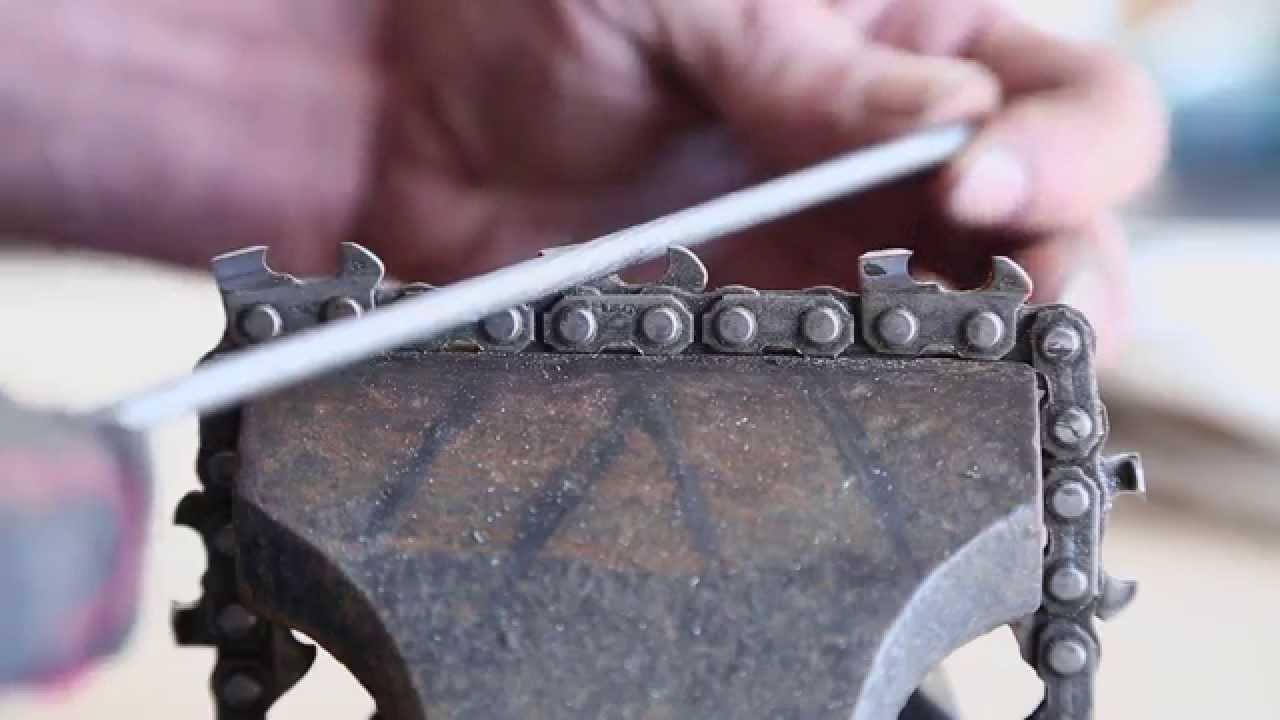
How To Sharpen A Chainsaw With A File
This is the most common and recommended method for most users. Here’s how to do it step by step.
1. Identify The Shortest Cutter
Every time you sharpen, you should file all cutters to match the shortest one. Mark it with a permanent marker. This ensures each tooth is the same length and cuts evenly.
2. Select The Correct File And Guide
Chains come in different sizes, usually needing a 4. 0mm, 4. 8mm, or 5. 5mm file. Use your manual or the markings on the chain. Attach the file to the guide. The guide keeps your angle correct, which is usually 25° or 30°.
3. Position The File On The Cutter
Lay the file across the cutter at the correct angle. About one-fourth of the file should sit above the top plate. Hold the file so it matches the cutter’s top edge.
4. File With Even Strokes
Push the file forward, away from you, applying light, even pressure. Lift it off the cutter on the return stroke to avoid dulling. Count your strokes (usually 3–6 per tooth) and use the same number for each cutter.
5. Sharpen All Cutters On One Side
Work your way around the bar, sharpening every other cutter, as they alternate left and right. Once you finish one side, rotate the saw and file the other side.
6. Check Your Work
The cutters should be shiny and sharp, with no rolled edges or flat spots. If one tooth is much shorter, file the others to match.
7. Lower The Depth Gauges
After sharpening the cutters, use the depth gauge tool. Place it over the chain and use the flat file to lower any depth gauge that sticks up above the tool. This step is often skipped by beginners and leads to poor cutting.
Using An Electric Chainsaw Sharpener
Electric sharpeners save time, especially if you have many chains to maintain. They work like a small bench grinder.
- Mount the sharpener on a stable surface.
- Set the correct angle (found in your manual).
- Place the chain in the holder.
- Lower the grinding wheel onto the cutter for a brief, light touch.
Be careful not to overheat the cutters, as this removes hardness from the steel.
Rotary Tool Sharpening
A rotary tool, like a Dremel, can be fitted with special grinding stones for chainsaw chains.
- Choose the right stone size for your chain.
- Install the stone in the tool.
- Hold the tool at the proper angle, matching the cutter’s top plate.
- Gently grind each cutter.
This method is fast but can remove too much metal if you’re not careful. It’s best for quick touch-ups, not major sharpening.
Practical Tips For Best Results
Here are some insights that many beginners miss:
- Sharpen little, but often. It’s easier to touch up a chain regularly than to restore a very dull one.
- Consistent angle matters more than speed. Rushing or changing angles leads to uneven cuts.
- Mark your starting point. Use a marker to avoid sharpening the same cutter twice or missing one.
- Check chain tension before sharpening. A slack chain moves while filing, making it hard to get an even edge.
- Replace the chain when needed. If the cutters are much shorter than the rest of the chain or have visible damage, it’s time for a new one.
Common Mistakes And How To Avoid Them
Learning how to sharpen a chainsaw isn’t hard, but these errors are easy to make:
- Sharpening at the wrong angle: This produces poor cutting and uneven wear.
- Ignoring depth gauges: Too high, and the saw won’t cut; too low, and the saw becomes aggressive and dangerous.
- Filing only one side: The chain will pull to one direction, making it hard to control.
- Over-filing: Removing too much metal shortens chain life.
- Not cleaning the chain first: Dirt and oil make sharpening harder and can damage files.
When To Replace A Chainsaw Chain
Even the best sharpening can’t save a chain that’s worn out. Replace your chain if you notice:
- Cracked or broken cutters.
- Cutters are less than 4mm long.
- Chain doesn’t hold an edge after sharpening.
- Visible damage from hitting rocks or metal.
A new chain is often cheaper than repairing a damaged saw or risking safety.
Sharpening Different Types Of Chains
Not all chains are the same. Here are the main types:
- Standard (full chisel): Square-cornered cutters, fast but dull quickly.
- Semi-chisel: Rounded cutters, slower but keep an edge longer.
- Low-kickback: For beginners, safer but a bit slower.
Always match the file and angle to your chain type. Your owner’s manual or the chain’s packaging will show the correct specs.
How Often Should You Sharpen?
Frequency depends on use:
- After hitting dirt, rocks, or nails: Sharpen immediately.
- For heavy use (daily): Touch up every tank of gas.
- Occasional users: Check sharpness before each session.
Keeping the chain sharp is easier than fighting with a dull one.

Professional Sharpening Vs. Doing It Yourself
Some people prefer to send their chains to a shop. This is fine, but costs add up, and you lose time. Sharpening yourself means:
- More control over your tools.
- Faster turnaround.
- Lower costs.
If you’re not comfortable, try hand sharpening a few times before investing in an electric sharpener.
Here’s a look at the cost and convenience:
| Sharpening Method | Cost per Sharpen | Time Required | Skill Needed |
|---|---|---|---|
| DIY (Hand File) | $0.10–$0.20 (file cost) | 15–20 min | Low–Medium |
| DIY (Electric) | $0.05 (electricity) | 5–10 min | Medium |
| Professional Service | $5–$10 | 1–3 days wait | None |
Safety Precautions When Sharpening
Chainsaw chains are made of hardened steel and can be sharp even when dull. Always:
- Wear protective gloves to avoid cuts.
- Use eye protection against metal filings.
- Disconnect power sources.
- Work in a well-lit area.
Be careful with electric sharpeners—use only as directed.
Caring For Your Chain After Sharpening
Once you’ve sharpened your chain, take these steps:
- Clean off metal filings with a brush.
- Oil the chain to prevent rust.
- Check chain tension before reinstalling or using.
- Run the saw briefly and check for smooth operation.
Proper care extends chain life and keeps your saw ready for any job.
Troubleshooting Cutting Problems After Sharpening
Sometimes, a freshly sharpened chain still doesn’t cut right. Here’s what to check:
- Chain cuts to one side: One side is sharper or shorter. File all cutters to the shortest length and keep angles equal.
- Chain stalls or skips: Depth gauges may be too high; lower them with the gauge tool.
- Chain burns wood: Cutters are dull or filed at the wrong angle. Resharpen carefully.
If problems persist, consult your manual or a professional.
Sharpening In The Field
You don’t always have a workbench. For field sharpening:
- Carry a small file and guide in your saw’s case.
- Use a stump or log to brace the bar.
- Take extra care—outdoor conditions make filing harder, but regular touch-ups keep you working safely.
Environmental And Cost Benefits Of Regular Sharpening
A sharp chain uses less fuel and produces less pollution, as the engine doesn’t have to work as hard. You’ll also save money by extending the life of both the chain and the saw. Regular sharpening means fewer chains to buy and less downtime.

Expert Insights: Two Things Most Beginners Miss
- Depth gauges are critical: Many new users skip this step, but a sharp cutter with a high depth gauge won’t cut well. Always check and lower them as needed.
- File direction matters: Only push the file forward. Filing in both directions dulls the cutter and the file. Always lift the file on the return stroke.
Additional Resources
For more technical details and chain specifications, see the official Wikipedia Chainsaw article.
Frequently Asked Questions
How Do I Know What Size File To Use On My Chainsaw Chain?
Check your owner’s manual or the markings on your chain. Common sizes are 4. 0mm, 4. 8mm, or 5. 5mm. Using the wrong size can damage the cutters or make sharpening ineffective.
Can I Sharpen A Chainsaw Chain Too Many Times?
Each sharpening removes a little metal. When the cutters are less than 4mm long, or the chain no longer holds an edge, it’s time to replace it. Most chains can be sharpened 10–15 times if done correctly.
Why Does My Chainsaw Cut Crooked After Sharpening?
This usually means one side of the chain is sharper or shorter than the other. Make sure you file all cutters to the same length and angle. Mark your starting point and count your strokes for each tooth.
Is It Okay To Use An Electric Sharpener For All Chain Types?
Yes, but always set the correct angle for your chain type. Avoid overheating the cutters, as this can weaken the steel. Practice with a used chain before sharpening new ones.
Should I Sharpen The Chain Or Buy A New One?
If the chain is undamaged and the cutters are still long enough, sharpening is best. Replace the chain if it’s cracked, broken, or can’t hold a sharp edge after filing.
Sharpening your own chainsaw is a practical skill that saves money, increases safety, and gives you better results with less effort. With the right tools, knowledge, and a little practice, you’ll keep your saw sharp and ready for any challenge.