
A dull drill bit can turn a simple hole into a frustrating task. If you’ve ever struggled with a bit that squeals, burns, or simply refuses to cut, you know the value of a sharp edge. While buying new bits is always an option, sharpening your own with a bench grinder is faster, saves money, and can even improve the life of your tools. But many people feel nervous about using a grinder for this job, worried about damaging the bit or even causing injury. The good news: with the right knowledge and a steady hand, anyone can master this useful skill.
This guide takes you step by step through the entire process of sharpening drill bits using a bench grinder. You’ll learn not just the basics, but also the details that beginners often miss—such as how to check for correct angles, how to avoid overheating, and what common mistakes to avoid.
Whether you’re a DIY enthusiast, a professional tradesperson, or just want to save on tool costs, sharpening drill bits is an essential skill that pays off quickly. Let’s dive in.
Why Drill Bits Get Dull
Even the best drill bits lose their edge over time. Every time a bit cuts into wood, metal, or plastic, its tip wears down. Harder materials and faster speeds make bits dull faster. Heat from friction, especially if you drill without proper lubrication or cooling, can soften the metal at the tip. This causes the bit to lose its sharpness and bite.
Dull bits not only slow you down. They also:
- Overheat quickly
- Wander or slip on hard surfaces
- Produce rough, oversized holes
- Increase the risk of tool breakage
Sharpening restores the tip, giving the bit a new lease on life.
The Basics: How A Bench Grinder Sharpens Drill Bits
A bench grinder is a simple, powerful tool that uses a spinning abrasive wheel to grind away metal. By holding the bit at the correct angle against the wheel, you remove just enough material to create a sharp, precise cutting edge.
The key points:
- The goal is to recreate the original tip geometry.
- You must grind both cutting edges evenly.
- Cooling the bit to prevent overheating is essential.
Sharpening with a bench grinder is faster than using a file or hand tool. It works well for common twist drill bits, especially those made of high-speed steel (HSS).

Tools And Safety Equipment You Need
Before starting, gather everything you need:
- Bench grinder (preferably with a fine grinding wheel, 60-80 grit)
- Safety goggles or face shield
- Work gloves
- Drill bits to be sharpened
- Coolant container (water or cutting oil)
- Permanent marker (for marking the cutting edge)
- Bench grinder rest or drill bit jig (optional, for extra control)
- Dust mask (optional, especially for extended work)
Safety is vital. Always wear eye protection, as grinding produces sparks and tiny metal fragments. Gloves protect your hands, but be sure they are snug—loose gloves can catch in the wheel. Work in a well-lit, ventilated area.
Understanding Drill Bit Geometry
Before you sharpen, it helps to know what you’re trying to achieve. A standard twist drill bit has:
- Chisel edge: The very tip that starts the hole.
- Lips (cutting edges): The two sharp edges that actually cut the material.
- Land (relief angle): The area just behind the cutting edge, which must be ground away so the edge can cut.
- Point angle: The angle between the two lips, usually 118° for general-purpose bits.
The goal when sharpening is to:
- Restore the sharpness of the lips
- Keep both cutting edges the same length and angle
- Maintain the correct point angle
If the two lips are not the same, the bit will cut unevenly, making oversized or off-center holes.
Step-by-step: How To Sharpen Drill Bits On A Bench Grinder
Sharpening a drill bit on a bench grinder is a skill that improves with practice. Follow these steps for consistent results.
1. Prepare The Bench Grinder
- Make sure the grinder is securely mounted on a bench.
- Check that the grinding wheel is in good condition, with no cracks or large chips.
- Adjust the tool rest so it’s close to the wheel (1/16 inch gap) and set at an angle that supports the bit.
- Fill your coolant container with water and have it nearby.
2. Inspect And Mark The Drill Bit
- Clean the bit to remove any oil or dirt.
- Use a permanent marker to color the cutting edges. This helps you see exactly where you are grinding.
- Check the bit for any major damage—if it’s bent or chipped badly, replacement is safer than sharpening.
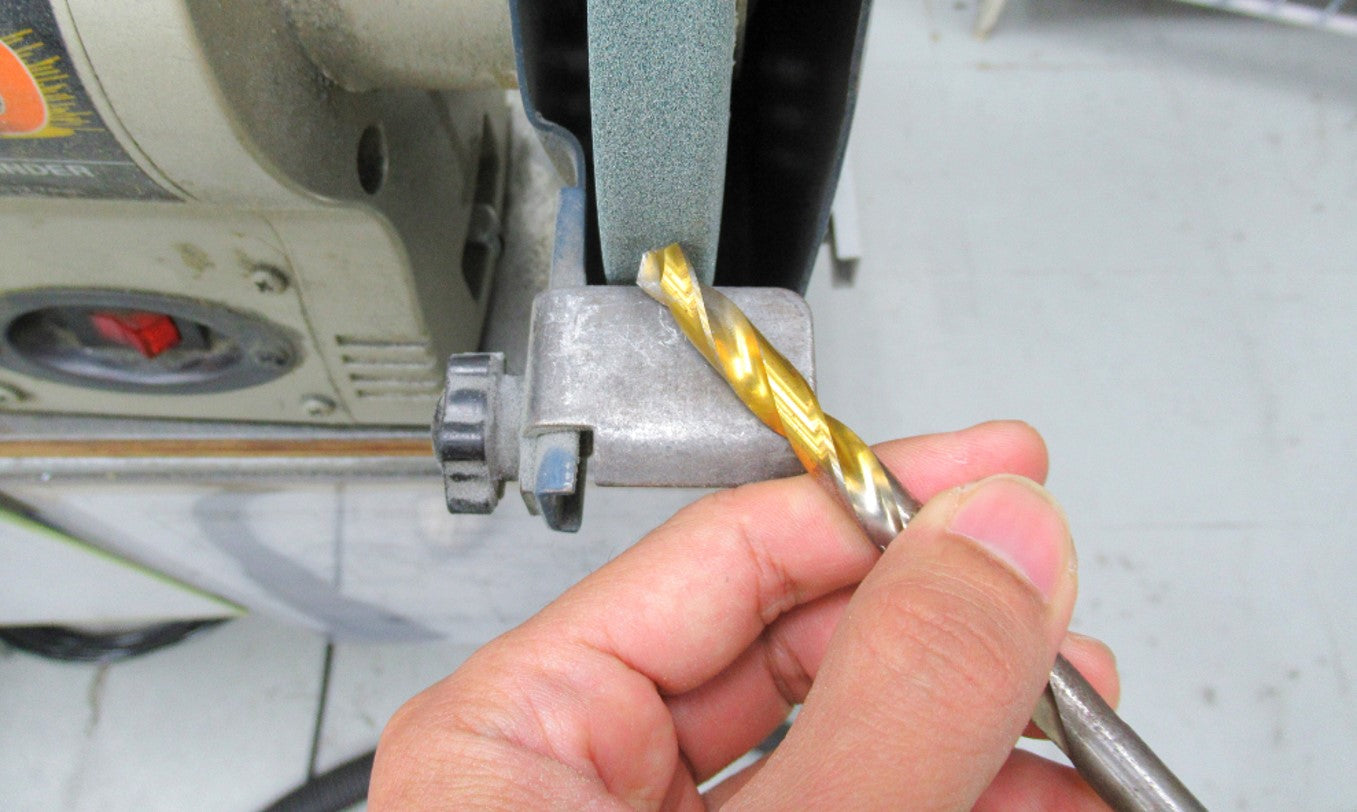
3. Position The Bit
- Hold the bit with both hands for control.
- Place your fingers close to the tip, but not touching the wheel.
- Align the bit so the cutting edge is horizontal to the grinding wheel.
4. Set The Angle
- For most general-purpose bits, aim for a 118° point angle.
- Tilt the bit slightly upward (about 60° from the wheel’s surface) to match the existing angle on the bit.
- The relief angle (the slope behind the cutting edge) should be about 12°–15°.
5. Start Grinding
- Gently touch the cutting edge to the wheel.
- Move the bit in a gentle rocking motion: Forward to grind the edge, then slightly roll the bit to follow the curve of the tip.
- Do not press hard—let the wheel do the work.
- Grind for only 1–2 seconds at a time.
6. Cool The Bit
- After each brief grind, dip the bit into water to cool it.
- Overheating can soften the steel and ruin the bit.
- If you see the tip turning blue, it’s too hot—stop and let it cool fully.
7. Repeat On The Other Side
- Rotate the bit 180° and repeat the same process on the second cutting edge.
- Try to remove the same amount of material from each side.
- Use the marker line to check your progress.
8. Check Symmetry And Point Angle
- Both lips should be the same length and angle.
- The tip should come to a sharp, centered point.
- If one side is longer, grind a little more off the longer side.
9. Fine-tune The Relief
- After the main grinding, lightly touch up the area behind the cutting edge.
- This helps reduce friction and improves cutting.
10. Test The Bit
- Try drilling into a scrap piece of wood or metal.
- A well-sharpened bit will cut cleanly, without wandering or squealing.
Common Mistakes And How To Avoid Them
Even experienced users make errors when sharpening drill bits. Here are the most frequent problems and how to prevent them.
Uneven Cutting Edges
If one side is longer or at a different angle, the bit will wobble and make an oversized hole. Always check symmetry after each grind.
Overheating The Bit
Grinding too long without cooling causes the tip to turn blue—this means the steel is losing its hardness. Use brief touches and cool often.
Wrong Point Angle
Sharpening at too steep or too shallow an angle changes how the bit cuts. Stick to the original angle unless you need a special shape (like for drilling plastic or sheet metal).
Grinding Away Too Much Material
It’s easy to get carried away and shorten the bit’s life. Remove just enough metal to restore the edge.
Not Restoring The Relief Angle
If the area behind the cutting edge is flat, the bit will rub instead of cut. Always add a slight slope behind the edge.
Advanced: Sharpening Different Types Of Drill Bits
While standard twist drill bits are most common, you may also use:
- Brad point bits (for wood)
- Masonry bits (for concrete)
- Cobalt or carbide bits (for tough metals)
Each type has unique features.
Brad Point Bits
These have a central point and two cutting spurs. Use a fine wheel and be extra careful not to grind away the center point.
Masonry Bits
These have a carbide tip. You can touch up the steel body, but do not grind the carbide tip unless you have a special diamond wheel.
Cobalt/carbide Bits
Extremely hard and durable, but can chip if ground too aggressively. Use a light touch and avoid overheating.
Using A Drill Bit Sharpening Jig
For beginners, keeping the correct angle and symmetry is hard. A sharpening jig can help.
A jig is a small device that holds the bit at the exact angle needed. You simply insert the bit and move the jig against the grinder. Many affordable jigs are available online or at hardware stores.
Benefits of using a jig:
- Consistent angles every time
- Easier for beginners
- Reduces risk of overheating
Drawbacks:
- Takes time to set up for each bit size
- May not fit very small or very large bits
Comparing Bench Grinder To Other Sharpening Methods
There are several ways to sharpen drill bits. Here’s how a bench grinder compares to other methods.
| Method | Speed | Precision | Cost | Skill Needed |
|---|---|---|---|---|
| Bench Grinder | Fast | Medium-High | Low (if you own a grinder) | Medium |
| Hand File | Slow | High | Very Low | High |
| Drill Bit Sharpener (electric) | Very Fast | Very High | Medium-High | Low |
| Sharpening Stone | Very Slow | Medium | Very Low | High |
Bench grinders offer a strong balance between speed and accuracy, especially for people who already have one in their workshop.
Key Features To Look For In A Bench Grinder
If you’re thinking about buying a bench grinder mainly for sharpening drill bits, here’s what matters most:
- Wheel Grit: 60-80 grit is ideal for drill bits. Coarser wheels (36-46 grit) remove metal quickly but can leave rough edges.
- Wheel Size: 6-inch or 8-inch wheels are standard. Larger wheels last longer and keep the bit cooler.
- Adjustable Tool Rest: Makes it easier to set and hold angles.
- Variable Speed: Slower speeds help avoid overheating.
- Sturdy Base: Reduces vibration and gives better control.
- Eye Shields/Spark Guards: Important for safety.
Some grinders come with built-in drill bit sharpening attachments, making the job even easier.
:max_bytes(150000):strip_icc()/SPR-how-to-sharpen-drill-bits-8347500-step4-94dbd6b3e8d74730aed372c30a472d02.jpg)
When Should You Sharpen Instead Of Replace?
Not every dull bit is worth saving. Here’s a simple way to decide:
- Sharpen if: The bit is high-quality, only slightly dull, or you use it often.
- Replace if: The bit is bent, cracked, or has been sharpened many times and is now too short.
Sometimes, low-cost bits are not worth the time to sharpen, especially if they wear out quickly. But for expensive or specialized bits, sharpening is always worth it.
Practical Tips For Better Results
These tips can help you get more life and better performance from your drill bits:
- Always use cutting oil or lubricant when drilling metal to reduce heat and wear.
- Clean bits after use to remove debris and prevent rust.
- Store bits in a case or organizer so they don’t bang together and dull.
- Mark your favorite, sharp bits with a colored band for quick identification.
- Practice on old, cheap bits before working on your best set.
Real-world Example: Savings From Sharpening Drill Bits
Let’s see how much you can save by sharpening instead of replacing.
Suppose you use 20 drill bits per year, and each costs $3. If you sharpen each bit three times before replacing, you only need to buy 5 new bits a year.
| Scenario | Bits Bought/Year | Total Cost/Year |
|---|---|---|
| Replace every dull bit | 20 | $60 |
| Sharpen 3 times before replacing | 5 | $15 |
Over 5 years, that’s a savings of $225—more than enough to pay for a quality bench grinder.
How To Maintain Your Bench Grinder For Drill Bit Sharpening
A well-kept grinder gives better, safer results. Here’s how to keep yours in top shape:
- Dress the grinding wheel regularly with a wheel dresser. This removes buildup and keeps the wheel flat.
- Replace the wheel if it becomes cracked, glazed, or too worn down.
- Keep the tool rest adjusted close to the wheel.
- Clean dust and debris from the grinder after use.
- Lubricate moving parts as recommended by the manufacturer.
What Beginners Often Miss
Most people focus on the cutting edge, but experienced users pay attention to two less obvious details:
- Chisel Angle Adjustment: The small flat point at the tip is vital for centering the bit. Grinding too much here makes the bit wander. Keep the chisel edge as short as possible.
- Lip Length Symmetry: Even a small difference in the length of the two lips can ruin accuracy. Use calipers or even a ruler to check both sides.
Another insight: a slightly blunted (not razor sharp) edge sometimes lasts longer, especially for drilling abrasive materials. Super-sharp edges can chip quickly in hard use.
Safety Reminders When Sharpening Drill Bits
Bench grinders are powerful tools. Always follow these safety basics:
- Wear eye protection and keep your face away from the wheel.
- Never wear loose clothing or jewelry.
- Secure long hair.
- Use the wheel guard and spark deflectors.
- Do not use a wheel that wobbles, rattles, or is cracked.
- Never force the bit into the wheel; use gentle, controlled movements.
Troubleshooting: If Your Sharpened Drill Bit Isn’t Working
If you find that your newly sharpened bit still doesn’t cut well, check for these issues:
- Uneven lips: Recheck the length and angle of both sides.
- Wrong relief angle: If the bit rubs instead of cuts, grind a bit more behind the edge.
- Burned tip: Overheating ruins temper. Try sharpening again, but if the bit still struggles, it may be permanently damaged.
- Incorrect point angle: For special materials, adjust the angle (e.g., 135° for harder metals).
Environmental Benefits Of Sharpening Drill Bits
Sharpening doesn’t just save money—it also reduces waste. Millions of dull bits end up in landfills each year. By sharpening and reusing, you:
- Reduce metal waste
- Lower demand for new manufacturing
- Save on packaging and shipping impacts
This small step helps make your workshop more sustainable.
Frequently Asked Questions
How Often Should I Sharpen My Drill Bits?
You should sharpen drill bits whenever you notice reduced performance—such as slow drilling, squealing, or burning. For heavy users, sharpening after every big project keeps bits in top shape. For occasional users, a few times per year may be enough.
Can I Sharpen Small Drill Bits (under 1/8 Inch) On A Bench Grinder?
It’s possible, but small bits are harder to hold and easy to overheat. Use a light touch and consider a sharpening jig for better control. Sometimes, it’s more practical to replace very small bits.
What Is The Best Grinding Wheel For Sharpening Drill Bits?
A 60-80 grit aluminum oxide wheel is ideal for general-purpose steel drill bits. For carbide-tipped bits, use a diamond wheel. Make sure the wheel is clean and flat for best results.
Is A Drill Bit Sharpener Better Than A Bench Grinder?
Drill bit sharpeners are easier for beginners and give consistent results, but they are more expensive and often limited to standard bit sizes. A bench grinder is more versatile but takes practice to master. Both can produce excellent results.
Where Can I Learn More About Drill Bit Sharpening Techniques?
For more advanced techniques and visual guides, consider visiting Wikipedia’s page on drill bit sharpeners. Videos and tutorials are also widely available online.
Sharpening drill bits with a bench grinder is a skill anyone can learn. With some practice and patience, you’ll have sharp, reliable bits ready for any project—saving money, time, and frustration. Take your time, pay attention to the details, and soon you’ll wonder why you ever threw away a dull bit.