
Framing a house or building a deck is a serious project. If you want the structure to be strong and built to last, you need the right tools. One of the most important tools for this job is a nail gun.
But what size nail gun should you use for framing? This question might sound simple, but the answer can make a big difference in your work quality, speed, and safety. Choosing the wrong size nail gun may slow you down or damage your materials.
In this guide, you’ll find everything you need to know about selecting the right nail gun for framing, with real-world examples, expert tips, and practical comparisons.
Why Nail Gun Size Matters In Framing
Framing is the backbone of any structure. The nail gun size you use affects not only how well the frame holds together but also how quickly and safely you can finish the job. Nail guns come in different types and sizes, each designed for specific tasks.
If your nail gun is too small, your nails may not hold the lumber tightly, and the frame can become weak. If your nail gun is too large, you risk splitting the wood or wasting materials. A properly sized nail gun helps you:
- Secure lumber efficiently
- Meet building codes
- Reduce fatigue and injury risk
- Avoid damaging materials
Many beginners think any nail gun will work for framing. In reality, using the right size means fewer jams, better control, and stronger structures.
Common Types Of Nail Guns Used For Framing
Not all nail guns are suitable for framing. Here are the main types you’ll encounter:
1. Stick Framing Nailers
These use a long, straight magazine to hold nails. They’re popular in professional framing because they are easy to reload and work well in tight spaces.
2. Coil Framing Nailers
These use a round magazine that holds more nails. They’re heavier but reduce the need for frequent reloading, making them ideal for big projects.
3. Pneumatic Framing Nailers
These connect to an air compressor. They’re powerful and reliable, often used on construction sites.
4. Cordless Framing Nailers
These run on batteries or fuel. They offer portability without the need for hoses but may have less power and need frequent battery changes.
5. Electric Framing Nailers
Plugged into power, these are less common for heavy-duty framing but are sometimes used for light framing work.
What Does ‘size’ Mean In Nail Guns?
When people ask about nail gun size, they might mean:
- The physical size of the nail gun itself
- The gauge or thickness of nails it fires
- The length of nails it can handle
For framing, the most important things are the nail length and gauge. Nail gun size usually refers to these features, not just the tool’s dimensions.
Framing Nail Gun Gauges And Sizes Explained
Framing nail guns are built to shoot thicker, longer nails. Here’s what you need to know:
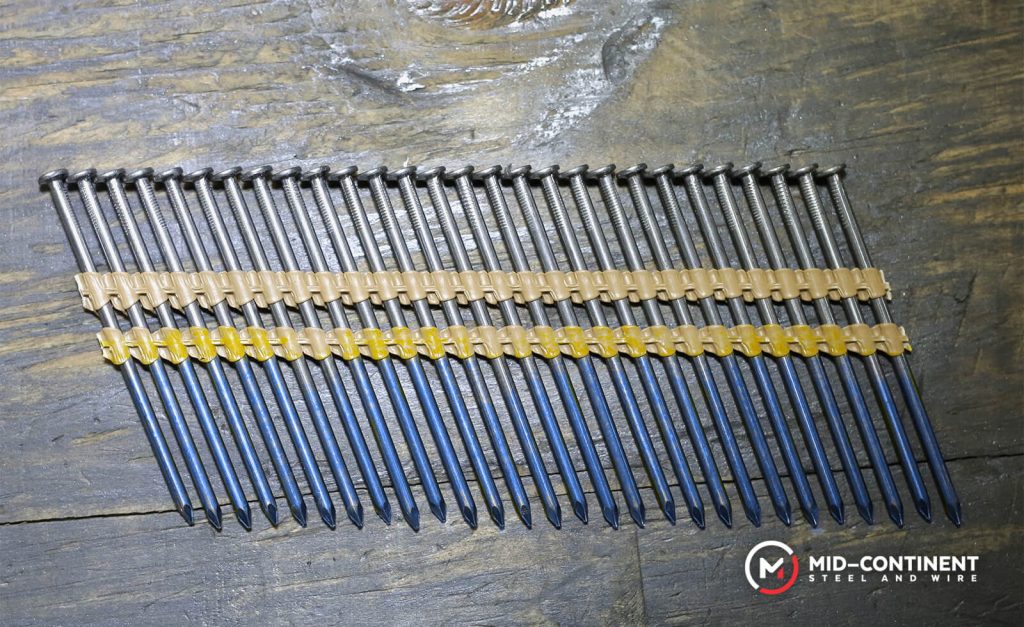
- Nail Gauge: This is the thickness of the nail. Lower gauge numbers mean thicker nails. For framing, you usually use 16, 15, or 10 gauge nails.
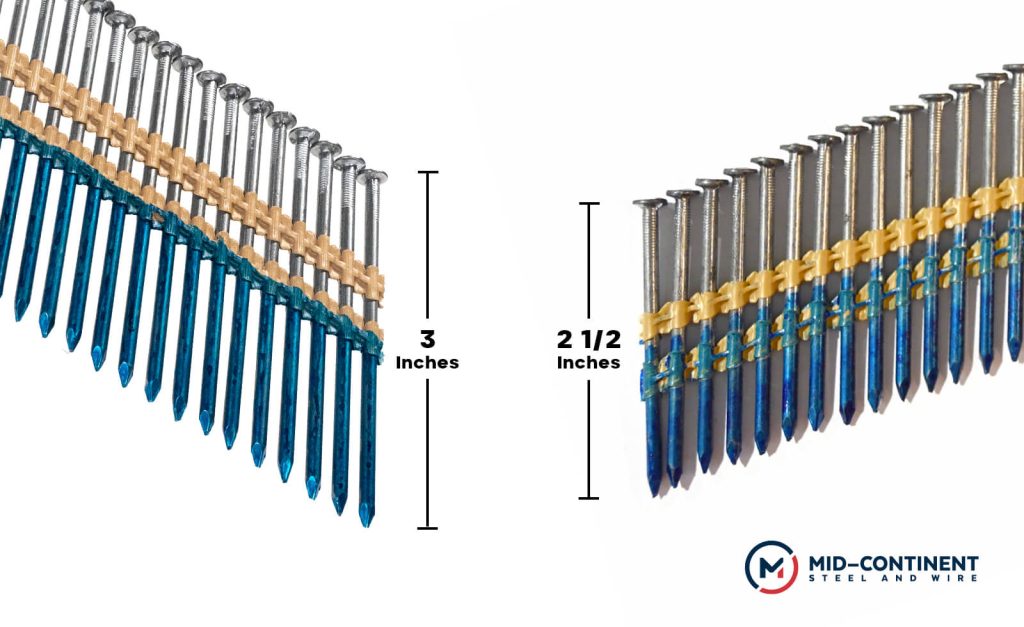
- Nail Length: For framing, common nail lengths are from 2 inches to 3-1/2 inches.
Most framing nail guns use 21-degree, 28-degree, or 30-34-degree magazines. The angle affects how the nails are loaded but doesn’t change the nail’s holding power.
The Best Nail Gun Size For Framing
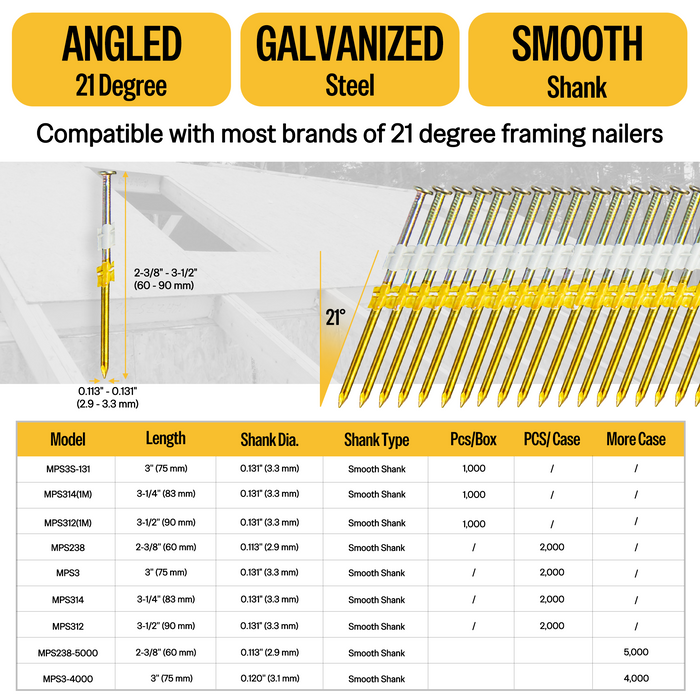
For most framing jobs, the best nail gun size is a full-size framing nailer that fires 16d nails (3-1/2 inches long, 0.131-inch diameter). This is the standard for framing walls, floors, and roofs.
- Nail Gauge: 10 to 12 gauge
- Nail Length: 2 to 3-1/2 inches (most common: 3-1/4 or 3-1/2 inches)
- Magazine Angle: 21°, 28°, or 30-34°
- Nail Type: Full round head or clipped head
Why does this size matter? Building codes often require 16d nails for structural framing because they provide strong holding power. Using smaller nails may not pass inspection.
Comparing Framing Nail Gun Sizes
Let’s compare the most popular framing nail gun sizes and their uses:
| Nailer Type | Nail Gauge | Nail Length | Best For |
|---|---|---|---|
| Full-Size Framing Nailer | 10-12 | 2″ – 3-1/2″ | Wall, roof, floor framing |
| Compact Framing Nailer | 12-14 | 1-1/2″ – 3″ | Smaller framing, repairs |
| Finish Nailer | 15-16 | 1″ – 2-1/2″ | Trim, molding, light framing |
As you can see, full-size framing nailers handle the thickest and longest nails, making them the top choice for framing.
Nail Gun Angles: Do They Matter For Size?
Framing nail guns come in different magazine angles, such as 21°, 28°, and 30-34°. These angles refer to how the nails are arranged in the magazine. The angle helps you fit the nail gun into tight corners, but it does not change the nail’s size or strength.
- 21-degree nailers use full round-head nails. They are often required by building codes in some areas.
- 28-degree nailers may use clipped head or offset nails.
- 30-34-degree nailers are more compact, making them easier to use in tight spaces.
How To Choose The Right Nail Gun Size For Your Project
Choosing the right nail gun size depends on your project’s needs. Here’s how to decide:
1. What Are You Framing?
- Wall framing: Use a full-size framing nailer with 3-1/2 inch, 10-12 gauge nails.
- Floor joists or roof trusses: Use the same size.
- Small repairs: A compact framing nailer with shorter nails may work.
- Decks or fences: You can use a framing nailer, but check if your material needs galvanized nails for outdoor use.
2. Consider Local Building Codes
Some codes require full round-head nails for structural safety. Always check before buying a nail gun.
3. What Material Are You Using?
- Hardwood: You may need a more powerful nailer or pre-drill holes to avoid splitting.
- Softwood: Standard framing nailers work well.
4. How Often Will You Use It?
If you frame often, invest in a robust pneumatic framing nailer. For occasional use, a cordless or compact nailer may be enough.
Credit: mcswusa.com
The Difference Between Framing Nailers And Finish Nailers
A common mistake is using a finish nailer for framing. Finish nailers shoot thinner, shorter nails (usually 15 or 16 gauge, up to 2-1/2 inches long). They are meant for trim, molding, and light carpentry—not for supporting walls or roofs.
Using a finish nailer for framing can lead to weak joints and failed inspections.
Top Features To Look For In A Framing Nail Gun
When buying a nail gun for framing, don’t just focus on size. Other features matter, too:
- Adjustable depth control helps you set nails flush without damaging wood.
- Jam clearing makes maintenance easier.
- Trigger options (single shot or bump fire) let you control speed and safety.
- Ergonomic grip reduces fatigue.
- Magazine capacity affects how often you reload.
Common Mistakes When Choosing Nail Gun Size
Many people choose the wrong size nail gun for these reasons:
- Thinking bigger is always better. Oversized nail guns can split wood and are harder to handle.
- Using finish nailers for framing. These can’t handle the demands of heavy framing.
- Not checking building codes. Some areas require specific nail types and sizes.
- Ignoring nail compatibility. Not all nails fit all guns, even if they are the same gauge.
Real-world Examples: Nail Gun Size For Different Framing Projects
Let’s look at some examples to make things clear:
Building A Wall Frame
A typical wall frame uses 2×4 studs spaced 16 inches apart. The best nail gun size is a full-size framing nailer shooting 16d (3-1/2 inch, 0.131-inch diameter) nails.
Framing A Deck
Deck framing uses larger lumber, such as 2×8 joists. Use a framing nailer with 3-inch or 3-1/4 inch galvanized nails to prevent rust.
Basement Partition
For non-load-bearing walls, you can use a compact framing nailer with 2-1/2 inch nails, but check local codes.
Roof Trusses
Roof trusses need strong connections. Always use a full-size framing nailer with 3-1/2 inch nails.
Cost And Weight Comparison: Different Size Nail Guns
Bigger, more powerful nail guns are usually heavier and more expensive. Here’s a quick comparison:
| Nailer Type | Weight (lbs) | Average Price (USD) | Best For |
|---|---|---|---|
| Full-Size Framing Nailer | 8 – 10 | $200 – $350 | Professional framing |
| Compact Framing Nailer | 6 – 8 | $120 – $250 | DIY, repairs |
| Finish Nailer | 4 – 6 | $80 – $180 | Trim, moldings |
If you work all day, consider weight and balance. Heavier nailers can cause fatigue.
Nail Gun Power Source: Does It Affect Size Choice?
The power source (pneumatic, cordless, electric) doesn’t directly affect the nail size but does affect performance:
- Pneumatic nailers are best for frequent, heavy-duty framing.
- Cordless nailers are lighter and portable but may be less powerful.
- Electric nailers are for light work.
If you’re building a house, go with a pneumatic framing nailer. For home repairs, a cordless model is often enough.
How Nail Type Affects Nail Gun Size
Nail guns are designed to fire specific nail types:
- Full round head nails: Maximum holding power, required by some codes.
- Clipped head nails: Fit more in the magazine but may not be allowed everywhere.
- Galvanized nails: For outdoor framing to resist rust.
Always use the right nails for your gun and project.
How To Read Nail Gun Labels And Specs
Nail gun boxes and manuals have lots of technical info. Here’s what matters:
- Gauge: Lower numbers mean thicker nails (10-12 is best for framing)
- Length: 2-3.5 inches for framing
- Angle: 21°, 28°, or 30-34°
- Nail Type: Full round or clipped head
If you see a gun labeled “16 gauge, 2-inch max length,” it’s not for framing.
When To Use A Smaller Or Larger Nail Gun
There are times when a smaller or larger nail gun makes sense:
- Smaller nail gun: Use for small repairs, tight spaces, or when weight is a concern.
- Larger nail gun: Only if you’re working with very thick lumber (rare in house framing).
For most framing, a standard full-size framing nailer is perfect.
Maintenance Tips For Framing Nail Guns
Taking care of your nail gun is key:
- Clean regularly to prevent jams.
- Oil pneumatic nailers as directed.
- Use correct nails to avoid damage.
- Inspect for wear before each use.
Well-maintained tools last longer and work better.
Safety Tips When Using Framing Nail Guns
Nail guns are powerful tools. Here’s how to stay safe:
- Wear safety glasses and gloves.
- Keep hands away from the nail exit.
- Never bypass safety features.
- Disconnect power before clearing jams.
Most injuries happen when people rush or skip safety steps.
Environmental Considerations: Nail Gun Size And Noise
Larger nail guns are usually louder. Consider your work environment:
- Use hearing protection if working indoors or for long periods.
- Cordless nailers are a bit quieter but still require caution.
If working in a residential area, check noise rules.
Credit: mcswusa.com
Pro Tips For Getting The Best Results
- Practice on scrap wood before starting your project.
- Set the nail depth correctly to avoid overdriving or underdriving.
- Check for jams regularly.
- Store nail guns dry to prevent rust.
One non-obvious tip: If you’re working overhead or on a ladder, use a lighter, cordless nailer to reduce strain and improve control.
How To Test If Your Nail Gun Is The Right Size
Before framing, test your nail gun:
- Load the correct nails.
- Fire into scrap lumber similar to your framing material.
- Check nail depth and holding power.
- Adjust depth setting if needed.
If the nail doesn’t go all the way in or splits the wood, reconsider your nail or gun choice.
When To Rent Vs. Buy A Framing Nail Gun
If you only frame once a year, renting a full-size framing nailer can save money. But for frequent projects, investing in a quality tool is better. Some hardware stores let you try different sizes before buying.
Where To Learn More
For more detailed building code information and framing techniques, visit the National Association of Home Builders.
Credit: www.meiteusa.com
Frequently Asked Questions
What Is The Best Nail Gun Size For Framing A House?
The best size is a full-size framing nailer that shoots 16d (3-1/2 inch, 10-12 gauge) nails. This size meets building code requirements and provides the holding power needed for structural frames.
Can I Use A Finish Nailer For Framing?
No. Finish nailers are for trim and light carpentry. They use thinner, shorter nails that are not strong enough for framing walls, floors, or roofs. Always use a framing nailer for structural work.
What Angle Nail Gun Should I Use For Framing?
21-degree, 28-degree, or 30-34-degree nail guns are all suitable for framing. The angle affects magazine size and tool shape, not nail strength. Check which nails are available locally and what your project requires.
Are Cordless Framing Nailers Good For Framing?
Cordless framing nailers are convenient and portable. They work well for small to medium projects but may not have the power or battery life for all-day, heavy-duty framing. For large jobs, pneumatic nailers are better.
How Do I Know If My Nail Gun Is Compatible With Framing Nails?
Check the gauge, length, and nail type listed in your nail gun’s manual or on the tool itself. For framing, you need a gun rated for 10-12 gauge and 2 to 3-1/2 inch nails. Only use nails approved for your tool.
Framing is tough work, but with the right size nail gun, your project will be safer, faster, and meet the highest standards. Always take time to match your tool to your task, and you’ll build something strong and lasting.