
If you walk past a construction site, you will often hear the deep, rhythmic thumping of a heavy-duty tool echoing off concrete walls. That sound usually comes from a rotary hammer. This tool is not just a bigger version of a regular drill—it’s a specialized machine, built to break through the toughest materials like concrete, brick, and stone.
But what exactly is a rotary hammer used for, and why do professionals and DIY enthusiasts rely on it for demanding jobs?
Understanding the rotary hammer’s purpose and capabilities can save you time, money, and frustration on your next project. Whether you’re planning to renovate your bathroom, install a fence, or tackle large-scale commercial work, knowing when and how to use a rotary hammer is essential.
This guide will explain everything, from its main uses and types to buying tips, safety advice, and real-world examples.
What Is A Rotary Hammer?
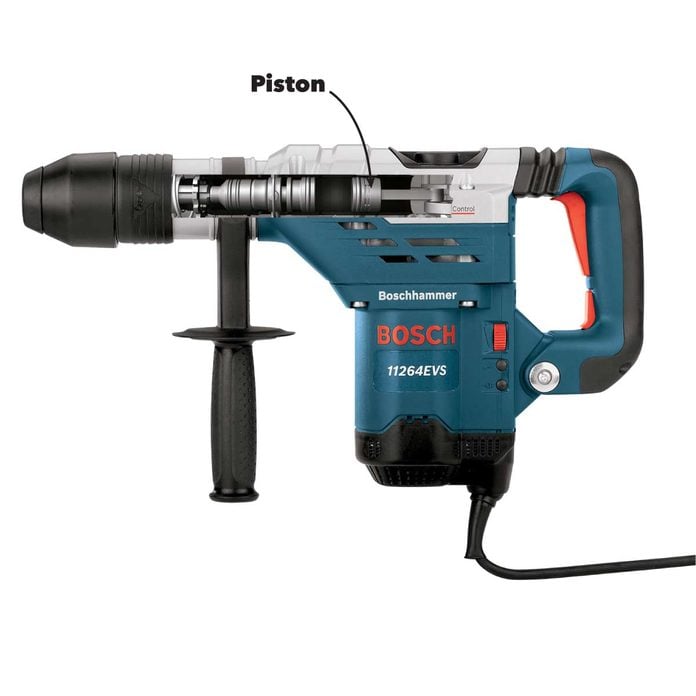
A rotary hammer is a powerful tool designed for heavy-duty drilling and chiseling. It uses a piston mechanism to create a rapid hammering action, combined with rotation. This mechanism allows it to break up hard materials that a regular drill cannot handle. The force of each blow is much stronger than that of a standard hammer drill, making it ideal for construction and renovation tasks.
There are two main actions happening at once in a rotary hammer: the bit spins, and at the same time, it moves back and forth quickly. This combination of rotation and impact is what gives the tool its name and unique effectiveness.
How Does A Rotary Hammer Work?
The secret behind a rotary hammer’s power lies in its electro-pneumatic (EP) mechanism. Unlike hammer drills that use two metal discs to create vibration, a rotary hammer has a piston that compresses air. This air pushes another piston, which delivers a hard blow to the back of the drill bit. The impact energy is much higher, allowing the tool to cut or break tough materials with less effort from the user.
There are three main modes on most rotary hammers:
- Rotary-only: The bit spins, like a regular drill. Used for wood or metal.
- Hammer-only: The bit does not spin, but hammers in and out—good for chiseling tasks.
- Rotary hammer: Both rotation and hammering happen together, perfect for drilling into concrete.
Switching between modes makes the rotary hammer a versatile tool, useful for drilling, chiseling, and breaking.

Credit: www.midlandtool.com
Main Uses Of A Rotary Hammer
A rotary hammer’s main job is to drill into or break up hard materials. But its actual uses are much wider. Here are the most common applications:
1. Drilling Holes In Concrete
The most popular use is creating holes in concrete for anchors, bolts, or rebar. Regular drills struggle with this task, often overheating or stalling. Rotary hammers can quickly make holes as wide as 2 inches (50 mm) or more, depending on the model and bit.
2. Chiseling And Demolition
Rotary hammers can act as mini-jackhammers. With a chisel bit, they break up tiles, concrete slabs, or masonry. This is useful for removing old flooring, breaking up sidewalks, or creating openings in walls. The hammer-only mode is especially effective for demolition.
3. Masonry Drilling
Brick, stone, and cinder blocks are common in building walls and fireplaces. Rotary hammers drill clean, precise holes in these materials for plumbing pipes, electrical conduit, or fasteners. The impact action prevents the bit from getting stuck.
4. Removing Tiles
Bathroom and kitchen renovations often require removing ceramic tiles attached with strong adhesives. A rotary hammer with a flat chisel bit can quickly loosen and lift tiles without damaging the surface underneath, saving hours of manual labor.
5. Breaking Up Hard Surfaces
Tasks like removing old driveways, patios, or thick stucco call for extra power. Rotary hammers can break up large areas of hardened surfaces efficiently, turning a long, exhausting job into a much faster process.
6. Digging And Trenching
Some rotary hammers can be fitted with special spade or chisel attachments for digging into hard-packed soil or clay. This is handy for installing underground cables, pipes, or small landscaping projects where shovels are slow or ineffective.
7. Driving Ground Rods
Electricians often need to drive copper or steel rods into the ground for electrical grounding. A rotary hammer with the right bit can drive these rods into compacted soil or through rocky terrain much faster than a sledgehammer.
8. Removing Mortar
Restoration or repair of brickwork may require removing old mortar without damaging bricks. With a narrow chisel bit, a rotary hammer can chip away mortar quickly, making repointing easier and less risky.
9. Installing Anchors And Fasteners
Heavy-duty shelves, supports, or structural connections often require strong anchors in concrete. Rotary hammers drill the precise holes needed for wedge anchors, sleeve anchors, or drop-in anchors, ensuring they hold securely.
10. Core Drilling
Some rotary hammers can use specialized core bits to cut large-diameter holes for HVAC ducts, pipes, or cables. While not as large as dedicated core drills, rotary hammers can handle smaller core drilling jobs up to about 4 inches (100 mm) in diameter.
Rotary Hammer Vs. Hammer Drill Vs. Regular Drill
Understanding the differences between these tools can help you choose the right one for your project. Here’s a comparison:
| Feature | Rotary Hammer | Hammer Drill | Regular Drill |
|---|---|---|---|
| Impact Power | Very High | Moderate | None |
| Main Use | Concrete, Masonry, Demolition | Light Masonry, Brick, Concrete | Wood, Metal, Plastic |
| Mechanism | Piston/Electro-pneumatic | Cam/disc | Rotary only |
| Drill Bit Type | SDS/SDS-Max | Standard Masonry | Standard Twist |
| Weight | Heavy (5–20 lbs) | Medium (3–7 lbs) | Light (2–5 lbs) |
| Cost | High | Medium | Low |
A key insight: For occasional small holes in brick or soft concrete, a hammer drill may be enough. But for repeated, large, or deep holes in hard concrete, only a rotary hammer will perform efficiently and last.
Types Of Rotary Hammers
Rotary hammers come in different designs, power sources, and sizes. Choosing the right type depends on your needs.
1. Pistol-grip Rotary Hammers
These have a shape similar to a large hand drill. The pistol grip makes them easier to control for drilling overhead or in tight spaces. They are lighter (typically 5–10 lbs) and suitable for small- to medium-sized holes.
2. D-handle Rotary Hammers
The D-shaped rear handle gives extra leverage and control, especially for horizontal drilling. They often have higher power than pistol-grip models, making them better for extended use.
3. Sds-plus Vs. Sds-max
These terms refer to the type of chuck and bit shank:
- SDS-Plus: Fits bits up to 1-1/8 inch (28 mm) diameter, used for light/medium work.
- SDS-Max: Fits larger bits up to 2 inches (50 mm) or more, for heavy-duty commercial use.
4. Corded Vs. Cordless
- Corded rotary hammers offer unlimited runtime and maximum power, perfect for big demolition or drilling jobs.
- Cordless rotary hammers are powered by lithium-ion batteries and provide mobility on job sites without outlets. Modern batteries (like 18V, 36V, or 40V) can deliver surprising power for their size, but runtime is limited.
5. Combination Hammers
These heavy rotary hammers can switch between drilling, hammer drilling, and chiseling. They are larger and often used in construction for both making holes and breaking concrete.
Choosing The Right Rotary Hammer
Selecting the right rotary hammer depends on the material, hole size, and job length. Here are some key factors:
Power And Impact Energy
Rotary hammers are rated by impact energy (joules or ft-lbs). More energy means faster work but also more weight. For example, a 2-3 joule (1.5-2.5 ft-lb) model is enough for small holes, while 10+ joules (7+ ft-lb) is needed for demolition.
Speed (rpm And Bpm)
Higher revolutions per minute (RPM) and blows per minute (BPM) make drilling faster. However, more power is often more important than speed when working in hard materials.
Bit System
SDS-Plus is fine for most home users and light trades. SDS-Max is best for heavy commercial tasks. Make sure your chosen bits match the tool’s chuck.
Vibration Control
Extended use of rotary hammers can cause hand fatigue or even injury (vibration white finger). Look for anti-vibration handles or built-in damping systems for comfort and safety.
Weight And Size
A heavier rotary hammer is more tiring to use, especially overhead or all day. Choose a tool you can handle safely for the duration of your typical tasks.
Price And Brand
Reputable brands like Bosch, Makita, DeWalt, and Hilti tend to last longer and offer better service support. Prices range from $100 for basic models to over $1000 for large SDS-Max machines. Avoid cheap, no-name brands for demanding work.
Common Mistakes When Choosing
- Picking a model that is too light for the job, causing slow progress and tool damage.
- Choosing a tool that is too heavy or powerful for small tasks, making it uncomfortable and risking injury.
- Not checking compatibility between the rotary hammer and the drill bits you already own.
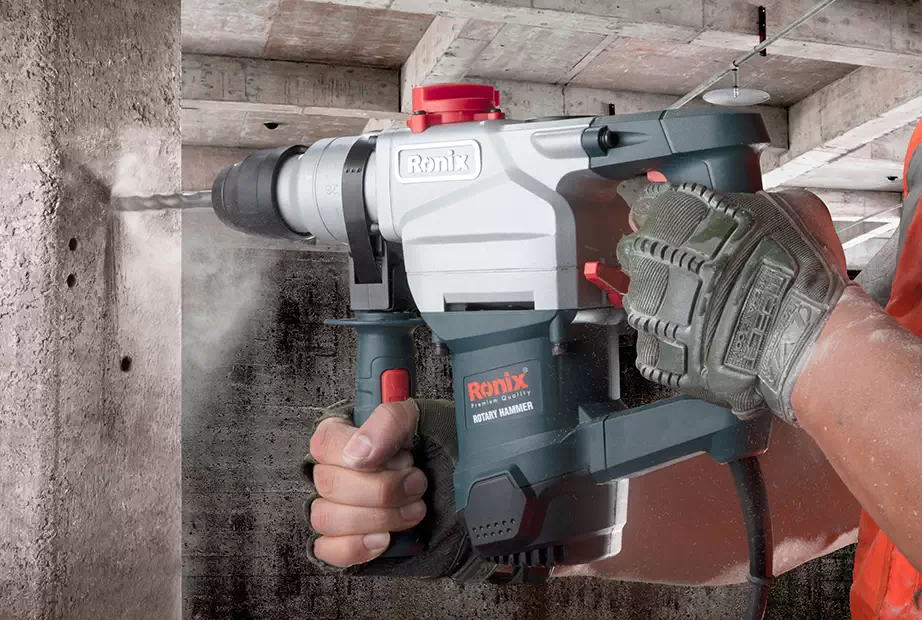
Credit: ronixtools.com
Essential Accessories And Attachments
The right accessory can make a rotary hammer more versatile. Some common attachments include:
- Chisel bits: Flat, pointed, or scaling chisels for breaking, removing tiles, or scraping.
- Core bits: For making larger holes, such as for pipes or vents.
- Dust extraction systems: Attach to the tool or bit to collect concrete dust, improving safety and cleanliness.
- Depth stops: Helps drill holes to a precise depth for anchor installation.
- Chuck adapters: Allow use of standard drill bits, but only in rotary-only mode.
A non-obvious tip: Using the wrong bit type (e.g., standard twist bits in hammer mode) can damage both the bit and the rotary hammer. Always use SDS-type bits for safety and best performance.
Safety Tips For Using Rotary Hammers
Rotary hammers are powerful and potentially dangerous if misused. Follow these safety guidelines:
- Wear safety glasses and hearing protection. The noise and flying debris can cause injury.
- Use gloves to reduce vibration and improve grip.
- Secure your material. Make sure concrete pieces or tiles won’t shift during drilling or chiseling.
- Start slow. Begin drilling at low speed to avoid bit wandering, then increase speed as needed.
- Let the tool do the work. Pressing too hard can break bits or the tool’s mechanism.
- Check for pipes and wires before drilling into walls or floors to avoid dangerous accidents.
- Keep hands away from moving parts and rotating bits.
Experienced users know that regular maintenance—cleaning the tool, checking the cord or battery, and greasing the chuck—can extend the rotary hammer’s life and prevent accidents.
Real-world Applications And Examples
Rotary hammers are seen in many industries and situations:
- Construction sites: Installing rebar, anchor bolts, or breaking up old foundations.
- Home renovation: Removing bathroom tiles, creating openings for new doors or windows.
- Plumbing and electrical work: Drilling precise holes through masonry for pipes and cables.
- Landscaping: Digging through rocky soil for fence posts or irrigation systems.
- Commercial demolition: Breaking up thick concrete floors and walls.
One example: A commercial electrician saved hours by using a rotary hammer to drill through 12-inch concrete walls for conduit runs, compared to using a standard drill that would have overheated or failed.
A little-known use: Some rescue workers use rotary hammers to breach reinforced concrete during emergencies, where speed and reliability are critical.
Maintenance And Care
A rotary hammer is an investment, so proper care is important:
- Clean after every use. Remove dust from vents and the bit holder.
- Lubricate the chuck and moving parts as recommended by the manufacturer.
- Inspect bits for wear. Dull or bent bits can damage the tool or produce poor results.
- Check the power cord or battery for signs of damage.
- Store in a dry place, ideally in the case provided.
A tip many beginners miss: If you notice a burning smell, excess vibration, or loss of power, stop using the tool and have it serviced. Ignoring these signs can lead to expensive repairs or injuries.
Credit: www.familyhandyman.com
Rotary Hammer Performance: Data And Examples
To understand how much faster a rotary hammer can be, here’s a sample performance comparison with a hammer drill:
| Task | Rotary Hammer | Hammer Drill |
|---|---|---|
| Drilling 1/2″ hole in 4″ concrete | 20 seconds | 2 minutes |
| Breaking up 10 sq ft tile floor | 8 minutes | 45 minutes (with hand tools) |
| Driving 8′ ground rod | 3 minutes | 15-20 minutes (manual) |
The rotary hammer completes tough jobs up to 5–6 times faster, with less user fatigue.
Environmental And Legal Considerations
Drilling and breaking concrete creates a lot of dust, which often contains silica—a hazardous material if inhaled. In many countries, construction laws require dust extraction systems or respirators when using rotary hammers indoors.
Many cities have noise restrictions. Rotary hammers can reach noise levels above 100 decibels, so work during allowed hours and notify neighbors if needed.
Recycling old concrete or masonry (when possible) is better for the environment and may be required by local regulations.
When Not To Use A Rotary Hammer
There are times when a rotary hammer is not the right tool:
- Drilling wood, plastic, or thin metal: Use a regular drill instead. The hammer action can damage these materials.
- Precision drilling: For small, accurate holes, a lighter tool is better.
- Fragile masonry: Some old bricks or stone can crack under the hammering force. Test in a hidden area first.
Cost Vs. Value: Should You Buy Or Rent?
Rotary hammers are an investment, with prices ranging from $100 to over $1000. If you need one for a single project, renting may be smarter. Most tool rental shops offer daily or weekly rates, and you can often rent the right bits as well.
If you regularly work with concrete, masonry, or do demolition, owning your own tool is more cost-effective in the long run.
A common mistake: Buying a cheap rotary hammer for heavy work. These often break or wear out quickly. It is better to rent a high-quality tool for big jobs than to buy a low-end one that will fail.
Rotary Hammer Innovations And Trends
Modern rotary hammers are more powerful, compact, and safer than ever:
- Brushless motors: These are more efficient and require less maintenance.
- Advanced battery technology: Some cordless models now match the power of corded tools for most jobs.
- Smart electronics: Features like kickback control, overload protection, and soft start improve safety.
- Integrated dust extraction: Some models come with built-in vacuum systems for cleaner work.
According to Wikipedia, rotary hammers were first developed in the 1930s, and their technology has steadily improved, making them a critical tool for modern construction.
Rotary Hammer: Key Takeaways
- A rotary hammer is the best tool for drilling, chiseling, and breaking concrete, brick, and stone.
- It uses a powerful, piston-driven hammer action, far stronger than a regular drill or hammer drill.
- Main uses include drilling anchor holes, breaking up old concrete, removing tiles, and digging in hard ground.
- Choose the right type (SDS-Plus or SDS-Max, corded or cordless) based on your task and material.
- Always use proper bits and follow safety tips to avoid injury or tool damage.
- For most DIYers, renting is a smart option for big jobs, while professionals will benefit from owning a high-quality rotary hammer.
- Modern models offer greater efficiency, dust control, and reduced vibration.
A rotary hammer can turn the most stubborn, time-consuming job into something manageable, saving your energy and delivering professional results. Whether you’re a tradesperson or a homeowner planning a major project, understanding this tool’s capabilities will help you work smarter and safer.
Frequently Asked Questions
What Is The Difference Between A Rotary Hammer And A Hammer Drill?
A rotary hammer uses a piston to create powerful blows, making it much more effective for drilling or breaking concrete and masonry. A hammer drill uses a lighter cam mechanism and is best for light masonry or brick. Rotary hammers are stronger, heavier, and more suitable for tough jobs.
Can I Use A Rotary Hammer For Wood Or Metal?
Rotary hammers are designed for hard materials like concrete or stone. They can drill wood or metal in rotary-only mode (no hammering), but they are heavy and less precise than a regular drill. Use a standard drill for wood or metal for better results.
What Size Rotary Hammer Do I Need For Home Use?
For general home tasks, an SDS-Plus rotary hammer with 2–4 joules of impact energy is enough. This size can handle most anchor holes and light demolition. For regular heavy demolition or large core drilling, consider an SDS-Max model.
How Do I Choose The Right Bit For My Rotary Hammer?
Always match the bit shank (SDS-Plus or SDS-Max) to your rotary hammer’s chuck. Use masonry bits for drilling, chisel bits for breaking or removing tiles, and core bits for large holes. Never use standard twist bits in hammer mode.
Is It Safe To Use A Rotary Hammer Indoors?
Yes, but always wear hearing and eye protection. Use a dust extraction system or respirator, as drilling concrete releases harmful dust. Check for hidden pipes or wires before drilling. Follow all local safety regulations for best results.