
Gas Vs Electric Chainsaw: Which One Is Right For You?
Choosing between a gas chainsaw and an electric chainsaw is a big decision for both beginners and experienced users. With so many options, it can feel confusing. Each type has strong points, but also some weak sides. Whether you cut firewood, prune trees, or do professional work, the right tool can save you time and effort. If you rush this choice, you might end up with a saw that is too heavy, too weak, or difficult to maintain.
This guide breaks down all the important details. You’ll learn how each type works, their main differences, and what really matters for your use. You’ll also see real examples, common mistakes, and smart tips for picking the best chainsaw for your needs.
By the end, you’ll feel confident in your choice, knowing you’re not wasting money or risking safety.
How Gas Chainsaws Work
A gas chainsaw uses a small two-stroke engine powered by gasoline mixed with oil. When you pull the starter cord, it sparks the fuel, and the engine drives a metal chain around a bar. These saws are known for their raw power and ability to cut through thick logs and hardwood with ease.
Gas chainsaws come in various sizes, from small 12-inch bars for light pruning to heavy-duty 24-inch models for felling large trees. They need regular maintenance—like changing spark plugs, cleaning air filters, and mixing fuel. But for many, the power and mobility make it worth the extra work.
A key point: Gas chainsaws are not limited by a cord or battery. You can use them anywhere, for as long as you have fuel. This is why professionals often choose gas when they need performance without interruptions.
How Electric Chainsaws Work
An electric chainsaw runs on electricity. There are two main types:
- Corded electric chainsaws plug into a standard power outlet. They offer consistent power, but you need to stay near a plug or use an extension cord.
- Cordless (battery-powered) chainsaws use rechargeable lithium-ion batteries. These are portable, quiet, and easy to start—no fuel mixing or pulling cords.
Electric chainsaws tend to be lighter and simpler to use than gas models. They are perfect for small jobs: pruning, cutting small branches, and light firewood work. Many homeowners prefer them because maintenance is minimal—just keep the chain sharp and the oil topped up.
One thing beginners often miss: Modern electric chainsaws have become much more powerful in recent years. Some battery models now compete with small gas saws for cutting speed, especially for wood under 12 inches thick.
Key Differences At A Glance
Below is a quick comparison of the main features of gas and electric chainsaws.
| Feature | Gas Chainsaw | Electric Chainsaw |
|---|---|---|
| Power Source | Gasoline (mix with oil) | Electricity (cord or battery) |
| Starting Method | Pull cord (manual) | Push button (easy) |
| Noise Level | Loud (90-110 dB) | Quieter (80-90 dB) |
| Weight | Heavier (10-20 lbs) | Lighter (6-12 lbs) |
| Maintenance | High (engine care) | Low (just chain and oil) |
| Mobility | Unlimited, anywhere | Limited by cord/battery |
| Cutting Power | Best for large, tough jobs | Best for small to medium jobs |
Performance: Power And Cutting Ability
Gas Chainsaws
Gas chainsaws are famous for high cutting power. A typical gas model can easily slice through thick logs, wet wood, and dense hardwoods. This makes them the top choice for logging, storm cleanup, and felling large trees. Most gas chainsaws have engines between 30cc and 60cc, with bar lengths from 16 to 24 inches or more.
Professionals rely on gas chainsaws because they don’t slow down under heavy load. For example, a 50cc gas saw with a 20-inch bar can cut through a 16-inch oak log in seconds—something most electric saws cannot do as quickly.
Electric Chainsaws
Electric chainsaws have improved a lot, especially battery-powered ones. High-end cordless saws now use 40V or even 80V batteries. Some can deliver nearly the same speed as a small gas saw for logs up to 12 inches thick.
However, electric saws usually slow down or stop if pushed too hard, especially in wet or dense wood. They are best for trimming, pruning, and cutting small to medium logs.
A surprising fact: For jobs like storm cleanup in the backyard or regular tree maintenance, an electric chainsaw is often faster to set up. There’s no need to mix fuel, and you just push a button to start.
Weight And Handling
Gas Chainsaws
Gas chainsaws are heavier due to their engine, fuel tank, and metal parts. A typical homeowner model weighs about 12 to 15 pounds, while pro models can reach 20 pounds or more. This extra weight gives stability for big cuts, but can cause fatigue, especially during long jobs or when working above your shoulders.
Electric Chainsaws
Electric chainsaws are lighter—most battery models are 8 to 12 pounds. Corded saws can be even lighter since they have no battery. This makes them easy to carry, control, and use for longer periods. Women, older adults, and anyone new to chainsaws often find electric models much less tiring.
Beginners sometimes overlook balance. A well-balanced saw feels easier to guide and safer to use. Many electric chainsaws have their weight centered near the handle, which helps with accuracy and control.
Starting And Ease Of Use
Gas Chainsaws
Starting a gas chainsaw often means pulling a cord and adjusting a choke. If the engine is cold, it may take several tries. Flooded engines (too much fuel in the chamber) are a common frustration for beginners.
Electric Chainsaws
Electric chainsaws are much simpler—just push a button or squeeze a trigger. There’s no choke, no carburetor, and no fuel mixing. This makes electric chainsaws ideal for quick jobs or for users who don’t want the hassle of engine troubleshooting.
A non-obvious tip: If you need to stop and restart often (for example, clearing brush), an electric chainsaw saves a lot of time.
Maintenance And Longevity
Gas Chainsaws
Maintaining a gas chainsaw is more involved. You need to:
- Mix fuel and oil correctly (usually at a 50: 1 or 40:1 ratio)
- Clean or replace the air filter regularly
- Sharpen the chain and check chain tension
- Change spark plugs and check the carburetor
- Clean exhaust ports and mufflers
Neglecting maintenance reduces power and can damage the engine. But with good care, a gas chainsaw can last for many years—even decades.
Electric Chainsaws
Electric chainsaws require much less upkeep:
- Keep the chain sharp and properly tensioned
- Add bar and chain oil as needed
- Clean debris from the chain and housing
Batteries will eventually lose capacity. Most last for about 3-5 years or 300-500 charge cycles. High-quality brands offer replacement batteries, but it’s an extra cost to consider.
One insight many miss: If you use your saw only a few times per year, an electric saw will almost always be ready to go. Gas saws can develop fuel issues if left unused for months.
Noise And Vibration
Gas Chainsaws
Gas chainsaws are loud—often 100 decibels or more at full throttle. This is enough to cause hearing loss with long-term exposure. Vibration is also strong, which can lead to hand fatigue or numbness (called “white finger”) after long use.
Electric Chainsaws
Electric chainsaws are much quieter. Most operate at 80-90 decibels, which is still noisy but less harmful. Vibration is lower too, making them more comfortable for small jobs or for people sensitive to noise.
If you live in a neighborhood with noise rules, an electric chainsaw is much less likely to disturb others.
Environmental Impact
Gas Chainsaws
Gas chainsaws produce exhaust fumes, including carbon monoxide and hydrocarbons. Using them indoors or in enclosed spaces is dangerous. They also spill some fuel and oil, which can harm soil or plants.
Electric Chainsaws
Electric chainsaws have no direct emissions. If your electricity comes from clean sources, the impact is even lower. They also use less bar oil, and there’s no gasoline to spill.
More cities are moving to ban gas-powered outdoor equipment for environmental reasons. Choosing electric can future-proof your investment.
Cost: Purchase And Long-term Value
Gas Chainsaws
Gas chainsaws cost more upfront—often $180 to $600 for a quality model. Professional-grade saws can be over $800. Over time, you’ll spend on:
- Gasoline and two-stroke oil
- Spark plugs and filters
- Regular maintenance or repairs
But if you need heavy-duty cutting, this investment makes sense.
Electric Chainsaws
Electric chainsaws range from $60 to $400 for most consumer models. Corded saws are cheapest because there’s no battery. For cordless saws, batteries and chargers can add $50 to $150 to the price.
Operating costs are lower—just chain oil and, occasionally, a new battery. For light users, electric chainsaws offer great value.
A practical example: If you cut firewood every weekend, the higher cost of gas may pay off. If you only trim a few branches each season, electric is usually smarter and cheaper.
Mobility And Where You Can Use Them
Gas Chainsaws
Gas chainsaws go anywhere—deep in the woods, remote job sites, or large properties. As long as you have fuel, you’re not tied to a cord or waiting for a battery to recharge.
Electric Chainsaws
Corded electric saws are limited by the length of the extension cord. Most people use 50- or 100-foot cords, which may not reach far from the house or power outlet.
Cordless saws are more mobile, but battery life is a limit. Cutting thick logs drains batteries quickly—most last 20 to 40 minutes of hard use per charge. Some users buy extra batteries to swap, but this adds cost.
If you clear brush or maintain trees far from home, gas is still king. For backyard work near power, electric is more than enough.
Safety Considerations
Gas Chainsaws
Gas chainsaws are more powerful—and more dangerous in untrained hands. The extra weight and vibration can make them harder to control, especially for beginners. Kickback (when the chain catches and the saw jumps back) is a serious risk.
Electric Chainsaws
Electric chainsaws are generally safer for beginners:
- Lighter and easier to hold
- Instant stop when you release the trigger
- Less chance of kickback with low-power models
But make no mistake: Both types can cause severe injury if used carelessly. Always wear safety gear (helmet, gloves, eye and hearing protection), and follow the manual.
A safety tip many overlook: Electric cords can trip you or get cut accidentally. Always keep cords clear of the chain’s path.
When To Choose Gas
Gas chainsaws are best when:
- You cut large trees (over 14 inches thick)
- You work far from power outlets
- You need to cut for many hours without stopping
- You want the highest cutting speed and power
They are ideal for professional loggers, arborists, rural property owners, and anyone who regularly handles big jobs.
When To Choose Electric
Electric chainsaws are best when:
- You mostly do light or medium cutting (under 12 inches)
- You want low noise and no fumes
- You prefer easy startup and low maintenance
- You work near your house or in a small yard
They are perfect for homeowners, gardeners, and anyone who wants convenience and safety for small tasks.
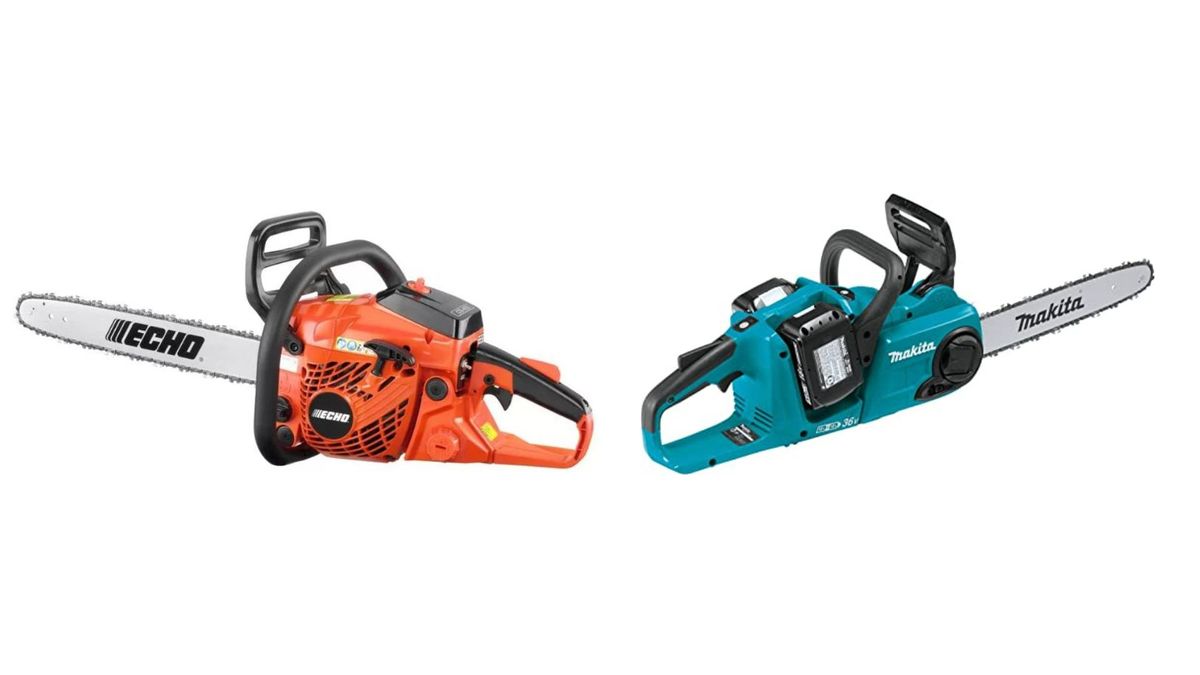
Credit: www.toptenreviews.com
Real-world Examples
Let’s look at a few practical scenarios:
- Firewood for Home Heating: If you cut several cords of firewood each winter, a gas chainsaw will save time and effort. It handles big logs and doesn’t slow down when you need to cut all day.
- Storm Cleanup in the Suburbs: After a storm, you need to clear branches and small trees quickly. A cordless electric chainsaw is ready instantly—no trips to the gas station, no engine problems. You can work quietly without bothering neighbors.
- Tree Pruning in a Small Garden: For trimming fruit trees or cutting small limbs, a lightweight corded electric saw is ideal. You don’t need to worry about fuel, batteries, or heavy lifting.
- Remote Land Maintenance: On a large rural property, where power outlets are rare, a gas chainsaw is the only real choice. It won’t leave you stranded if you have enough fuel.
Durability And Weather Resistance
Gas Chainsaws
Gas chainsaws are built tough. They can handle wet weather, dirt, and rough use. Many models are designed for all-day, everyday work.
Electric Chainsaws
Electric chainsaws are not as robust. Battery and corded models shouldn’t be used in heavy rain, and water can damage the electronics. Most are made for occasional, light-duty use.
If you need a tool for year-round, all-weather work, gas is more reliable.

Credit: www.youtube.com
Common Buyer Mistakes
- Choosing Too Much Power: Many beginners buy the biggest gas saw they can afford. Heavy, powerful saws are harder to control and more dangerous. Choose only as much power as you need.
- Ignoring Maintenance: Owners often skip regular gas saw maintenance. This leads to poor performance, hard starting, and costly repairs.
- Forgetting About Battery Life: Buyers sometimes expect a cordless chainsaw to run all day. In reality, most batteries last less than an hour of heavy cutting.
- Underestimating Cord Limits: With corded saws, extension cords over 100 feet can cause voltage drop, reducing power and possibly damaging the motor.
- Not Wearing Safety Gear: Both types of chainsaws can cause serious injuries. Always use proper protection.
What Really Matters When Choosing
- Job Size: For big logs and frequent use, go gas. For small to medium jobs, electric is enough.
- Work Location: If there’s no power nearby, gas is better. For yard or garden work, electric is easier.
- Physical Strength: Electric saws are lighter and less tiring.
- Budget: Electric saws are cheaper to buy and run for most homeowners.
- Noise and Environment: Electric is quieter and cleaner.
A smart buyer always matches the tool to their actual needs—not just what looks powerful in the store.
Advanced Tips For Smart Buyers
- Try holding the saw in the store before buying. Comfort and balance matter more than specs.
- For cordless electric saws, invest in a second battery if you often work far from power.
- For gas saws, use fresh fuel and the right oil mix. Old fuel is a common cause of hard starting.
- Sharpen your chain regularly. A dull chain makes any saw, gas or electric, feel weak.
- Learn proper cutting technique. Even a strong saw struggles if the chain is pinched or forced.
Future Trends: Where Chainsaws Are Heading
Battery technology is advancing quickly. Some new cordless models now match small gas saws for power and runtime. Brands like Stihl, Husqvarna, and Makita lead the way with high-voltage systems and smart charging.
More cities are considering bans on gas-powered tools due to noise and pollution. Electric chainsaws may become the default for most homeowners in the next decade.
But gas isn’t going away soon. For heavy-duty, all-day cutting, gas chainsaws still set the standard.
For a detailed look at battery advances, see the lithium-ion battery article on Wikipedia.
In-depth Comparison: Corded Vs Cordless Electric Chainsaws
Electric chainsaws come in two flavors—corded and cordless. Here’s a closer look at how they compare.
| Feature | Corded Electric | Cordless Electric |
|---|---|---|
| Power Source | Wall outlet | Rechargeable battery |
| Runtime | Unlimited (as long as plugged in) | 20-60 minutes per battery |
| Mobility | Limited by cord length | Go anywhere (within battery limit) |
| Weight | Lighter (no battery) | Heavier (battery adds weight) |
| Best Use | Yards, near outlets | Remote work, quick jobs |
Top Brands For Each Type
Gas Chainsaws
- Stihl
- Husqvarna
- Echo
- Jonsered
- Poulan Pro
These brands are trusted by professionals worldwide. They offer models for both beginners and experts.
Electric Chainsaws
- Makita
- Greenworks
- EGO
- DEWALT
- Black+Decker
These companies lead in battery and electric tool technology. Their chainsaws are reliable and easy to use.
Quick Reference: Which Chainsaw For Which User?
| Type of User | Best Choice | Why |
|---|---|---|
| Professional logger | Gas chainsaw | Power, durability, unlimited runtime |
| Homeowner, large yard | Electric (cordless) | Lightweight, easy to start, enough power |
| Occasional user | Electric (corded) | Low cost, no battery maintenance |
| Remote landowner | Gas chainsaw | No power limits, tough jobs |
Frequently Asked Questions
What Size Chainsaw Do I Need?
For small branches and pruning, a 10-14 inch bar is enough. For firewood and medium logs, 16-18 inches works well. If you cut large trees, choose a bar 20 inches or longer. Always match the saw size to your main task for safety and comfort.
How Long Do Batteries Last In Cordless Chainsaws?
Most lithium-ion batteries last 20 to 40 minutes of hard cutting per charge. Light pruning uses less power, so you may get up to an hour. Battery life also depends on temperature, wood type, and chain sharpness.
Are Electric Chainsaws Safe For Beginners?
Yes, electric chainsaws are generally safer. They are lighter, easier to start, and stop instantly when you release the trigger. Still, always use safety gear and follow instructions. Chainsaws, even electric ones, can be dangerous if misused.
Can I Cut Down A Big Tree With An Electric Chainsaw?
A strong cordless electric chainsaw can cut small to medium trees. But for thick trunks (over 12 inches), a gas chainsaw is faster and safer. For large trees, always consider hiring a professional for safety.
What Maintenance Does A Chainsaw Need?
All chainsaws need a sharp chain, proper chain tension, and regular oiling. Gas saws need extra care: cleaning air filters, changing spark plugs, and using fresh fuel. Electric saws mainly need battery care and cleaning.
Making the right choice between gas and electric chainsaws can save you time, money, and effort. Think about your main tasks, where you’ll use the saw, and how much maintenance you’re willing to do. Both types have their place—pick the one that fits your life, and you’ll work smarter, not harder.

Credit: timbercroc.com