
Mosquitoes are more than just a summer nuisance. In many parts of the world, they’re a real health threat, spreading diseases like West Nile Virus, dengue, and malaria. For homeowners, campers, and even pest control professionals, fighting mosquitoes is a constant challenge. Traditional foggers and sprays can be helpful, but they often leave gaps, especially in large outdoor spaces. That’s where the leaf blower mosquito fogger steps in—offering a powerful, efficient, and surprisingly cost-effective way to take control of your outdoor environment.
If you’re new to this tool, you might wonder: Is it really better than regular foggers? How does it work? What do you need to know before using one? This guide will answer all your questions and help you understand if a leaf blower mosquito fogger is right for your needs. We’ll also look at real-world results, safety tips, and practical advice most beginners miss.
What Is A Leaf Blower Mosquito Fogger?
A leaf blower mosquito fogger is a modified or purpose-built leaf blower that sprays mosquito-killing insecticide as a fine mist. It combines the strong airflow of a leaf blower with a chemical tank and sprayer, distributing the solution over large areas. This method is often called “mist blowing” or “backpack misting.” Some devices are designed specifically for mosquito control, while others are DIY kits that attach to standard gas-powered leaf blowers.
The key benefit is coverage. Unlike handheld foggers, a leaf blower fogger can treat large yards, dense vegetation, and even tough-to-reach places under decks or in tree canopies. The mist penetrates leaves and shrubs where mosquitoes hide, making it much more effective than surface sprays.
How Does A Leaf Blower Mosquito Fogger Work?
Most mosquito foggers use either a liquid insecticide or a natural solution like essential oils. The fogger’s tank holds the liquid, which is pumped through a nozzle. The leaf blower’s powerful air stream breaks the liquid into tiny droplets, creating a fog or mist.
When you walk with the fogger, the mist is carried deep into grass, bushes, and other hiding spots. Mosquitoes come into contact with the droplets, which can kill them on contact or repel them for days or weeks.
A typical setup includes:
- A gas-powered or battery-powered leaf blower
- A chemical tank (often worn as a backpack)
- A hose and adjustable nozzle for spraying
- Controls for adjusting mist output and droplet size
Some commercial versions are built as all-in-one units, while DIY kits may attach to your existing leaf blower.
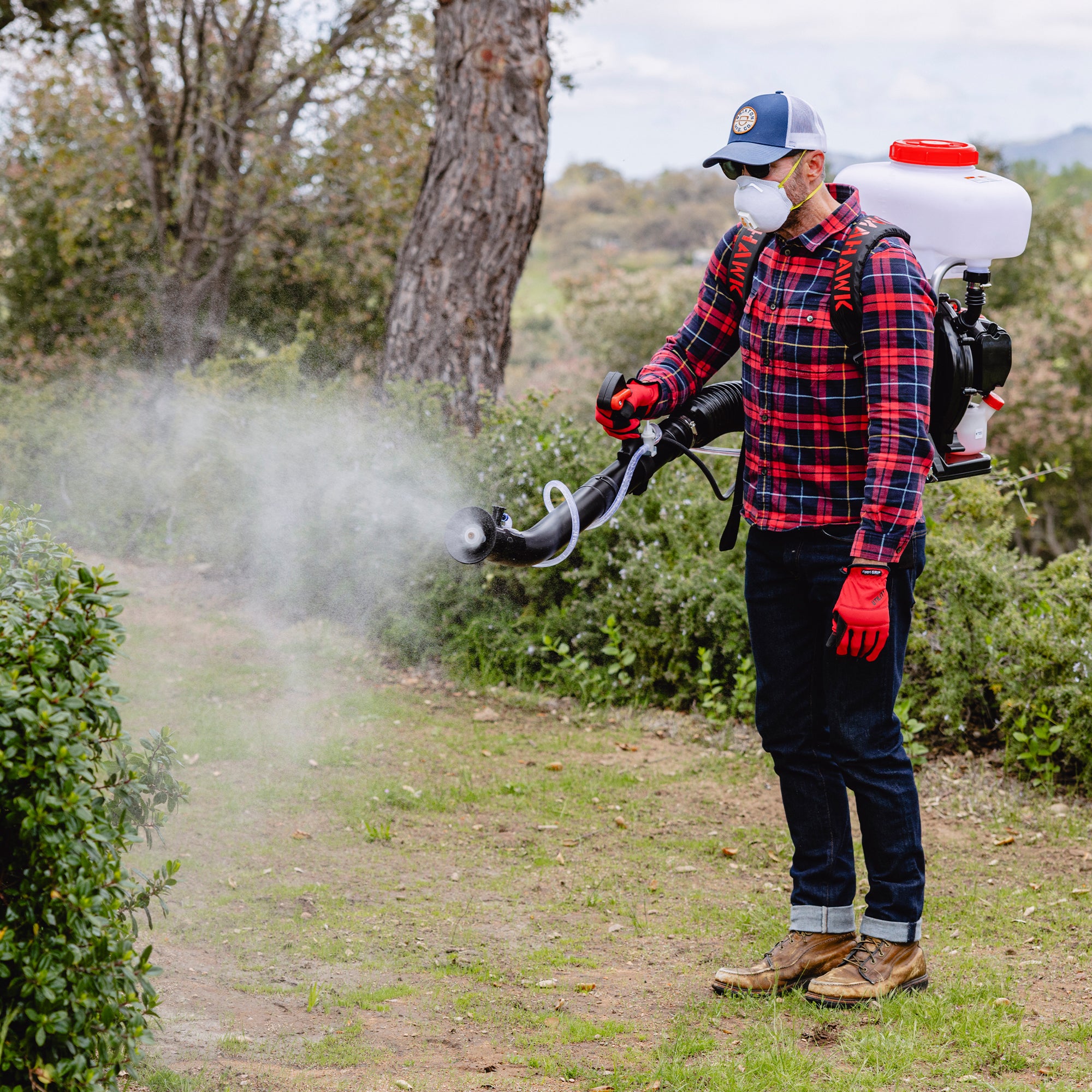
Credit: tomahawk-power.com
Why Use A Leaf Blower Mosquito Fogger? Key Benefits
1. Wide And Even Coverage
Leaf blower foggers can treat large yards or properties in minutes. The air flow carries the mist up to 30 feet, reaching into dense foliage and hard-to-access places. This means fewer missed spots and more complete mosquito control.
2. Saves Time And Effort
Compared to handheld pump sprayers or small foggers, a leaf blower fogger covers more area with less effort. This is especially useful for:
- Homeowners with big yards
- Campsites or event spaces
- Landscapers or pest control professionals
3. Better Penetration
Mosquitoes often hide on the underside of leaves or deep inside bushes. The high-velocity mist from a leaf blower fogger can reach these hiding spots, something regular sprays can’t do.
4. Flexible And Customizable
You can adjust the mist output, droplet size, and spray pattern. This lets you use different chemicals (synthetic or natural), target specific areas, or change your approach based on weather conditions.
5. Cost-effective
A quality backpack fogger can treat a full acre in less than 30 minutes, using less chemical than manual spraying. Over time, this can save money, especially if you treat your property regularly.
6. Multi-purpose Use
Many backpack foggers can also apply fertilizers, fungicides, or even disinfectants, making them a versatile tool for lawn care and gardening.
Types Of Leaf Blower Mosquito Foggers
There are two main types: dedicated mosquito foggers and DIY conversion kits.
Dedicated Mosquito Foggers
These are built from the ground up for pest control. They typically have:
- A built-in chemical tank (2-4 gallons)
- Adjustable misting nozzle
- Powerful blower motor (often gas-powered)
- Comfortable backpack straps
Popular brands include Stihl, Solo, and Tomahawk. These machines are more expensive but offer reliable performance and safety features.
Diy Conversion Kits
Some kits let you attach a sprayer tank and hose to your existing gas-powered leaf blower. They’re more affordable and good for occasional use, but may lack features like precise droplet control or comfortable straps.
DIY kits are popular among homeowners who already own a blower and want to try mosquito fogging without a big investment.
Comparing Fogging Methods
To better understand why leaf blower mosquito foggers are growing in popularity, here’s a side-by-side look at different mosquito control tools:
| Method | Covers Large Area | Penetrates Foliage | Ease of Use | Typical Cost |
|---|---|---|---|---|
| Leaf Blower Fogger | Yes | Excellent | Moderate | $250–$700 |
| Handheld Fogger | Limited | Average | Easy | $50–$200 |
| Pump Sprayer | Poor | Poor | Easy | $20–$100 |
| Professional Service | Excellent | Excellent | Very Easy | $60–$150/treatment |
Choosing The Right Mosquito Fogger
1. Size Of Your Property
If your yard is larger than half an acre, a leaf blower mosquito fogger is often the best choice. For smaller areas, a handheld fogger or pump sprayer may be enough.
2. Power Source
- Gas-powered models: Offer the most power and runtime, suitable for large properties.
- Battery-powered models: Quieter and more eco-friendly, but may have shorter run times.
3. Chemical Compatibility
Not all foggers can handle every type of insecticide or natural oil. Always check the manufacturer’s guidelines before mixing or spraying a new solution.
4. Comfort And Ergonomics
Backpack foggers can be heavy, especially when full. Look for padded straps, adjustable harnesses, and easy-to-reach controls.
5. Price And Warranty
A high-quality fogger is an investment. Check for a solid warranty and good customer support. Some brands offer spare parts and repair services, which can be helpful if you plan to use your fogger for years.

Credit: www.youtube.com
How To Use A Leaf Blower Mosquito Fogger: Step-by-step
Using a fogger is simple, but a few key steps can make a big difference in safety and effectiveness.
1. Choose The Right Time
Mosquitoes are most active at dawn and dusk. Fogging during these times increases the chance of contact and better results.
2. Prepare Your Solution
Mix your chosen insecticide or natural mosquito repellent according to the label. Never exceed recommended concentrations. Some popular choices include:
- Synthetic pyrethroids (common in commercial products)
- Permethrin
- Natural oils (like citronella, cedar, or garlic oil)
3. Wear Protective Gear
Always protect yourself. Wear:
- Long pants and sleeves
- Gloves
- Goggles or a face shield
- A mask, especially for strong chemicals
4. Fill The Tank And Prime The System
Fill the fogger’s tank with your mixture. Make sure all connections are tight, and prime the sprayer if needed.
5. Fog The Target Areas
Turn on the blower and start fogging:
- Move slowly, keeping the nozzle low and angled into bushes and grass
- Pay extra attention to shaded, damp areas—these are mosquito hotspots
- Work in a grid pattern to ensure no spots are missed
6. Allow Time To Dry
Keep children and pets away from treated areas until the solution has dried (usually 30–60 minutes).
7. Clean And Store
After use, rinse the tank and flush the hose with clean water. Store the fogger in a dry place, away from direct sunlight.
Mistakes To Avoid When Using A Leaf Blower Mosquito Fogger
Many beginners make simple mistakes that reduce effectiveness or even cause harm. Here’s what to watch out for:
- Over-applying chemicals: More isn’t always better. Using too much can harm plants, pets, or beneficial insects.
- Fogging during windy conditions: Wind can blow the mist away, wasting chemicals and missing target areas. Always fog on calm days.
- Ignoring safety gear: Even “natural” solutions can irritate skin or eyes. Always wear protection.
- Not reading the label: Some chemicals are not safe for edible plants or water sources. Check the label before spraying near vegetable gardens or ponds.
- Skipping regular maintenance: Clogged nozzles or dirty tanks can reduce performance and damage your fogger.
Safety Tips And Best Practices
Safety is always important when using any chemical sprayer. Here are some best practices:
- Only mix as much solution as you’ll use in one session. Leftover chemicals can break down or become unsafe.
- Store chemicals in their original containers, away from children and pets.
- Never spray directly on people, animals, or edible plants unless the product is labeled for such use.
- Rinse your fogger thoroughly after each use to prevent buildup.
- If you notice any signs of irritation (skin, eyes, breathing), stop immediately and seek fresh air.
For more detailed safety advice, visit the EPA Mosquito Control Resource.
Common Chemicals And Natural Alternatives
Choosing the right solution for your fogger is just as important as choosing the fogger itself. Here are some common options:
Synthetic Insecticides
- Permethrin: Popular and effective, but toxic to cats and some aquatic life.
- Pyrethroids: Widely used in professional mosquito control.
Natural Repellents
- Cedar oil: Safe for pets and people, but may need frequent reapplication.
- Garlic oil: Works as a natural repellent but has a strong odor.
- Neem oil: Offers some repellency, but not as long-lasting as synthetic chemicals.
Mixing Tips
- Always follow product instructions for dilution rates.
- Never mix different chemicals unless the manufacturer says it is safe.
- Test your solution on a small area first to make sure it doesn’t harm your plants.
Real-world Results: What To Expect
A leaf blower mosquito fogger is not a magic bullet, but it can reduce mosquito populations by 70–90% for up to three weeks, depending on weather and re-infestation. Here are some practical insights:
- Initial results: Most users see a big drop in mosquitoes within 24 hours.
- Ongoing treatments: For best control, fog every 2–3 weeks during peak season.
- Rain and watering: Heavy rain can wash away chemicals, so reapply after storms.
- Neighboring areas: If your neighbors don’t treat their yards, mosquitoes can return faster.
One thing beginners miss: mosquitoes can breed in tiny amounts of water, like plant saucers, gutters, or toys. Always combine fogging with removing standing water for best results.
Leaf Blower Mosquito Fogger Vs. Professional Mosquito Control
You might wonder if it’s better to hire a professional. Here’s a quick comparison:
| Factor | Leaf Blower Fogger (DIY) | Professional Service |
|---|---|---|
| Cost Over a Season | $250–$700 (one-time purchase) + $50–$100 for chemicals | $300–$600 (multiple visits) |
| Time Investment | 30–45 min/treatment | None (done for you) |
| Effectiveness | High (if used correctly) | High |
| Control & Flexibility | Total (choose chemicals, timing, area) | Limited |
| Learning Curve | Moderate | None |
If you enjoy DIY and want to save money long-term, a leaf blower mosquito fogger is a smart investment. If you prefer convenience, hiring a professional may be better.
Environmental Impact And Safe Use
Mosquito fogging can impact more than just pests. Here’s what you should know:
- Synthetic chemicals can harm bees, butterflies, and aquatic life if misused.
- Always avoid spraying blooming flowers or near water bodies.
- Natural oils are less toxic but may not be as long-lasting.
- Some cities require permits for large-scale fogging or restrict certain chemicals. Check local regulations before starting.
An often-overlooked tip: You can minimize environmental impact by fogging only problem areas, avoiding flowers, and using the lowest effective chemical concentration.
Maintenance And Troubleshooting
To keep your fogger working well:
- Rinse the tank and lines after every use.
- Inspect the nozzle for clogs or buildup.
- Check fuel or battery levels before each session.
- Store in a dry, cool location.
- Replace worn gaskets, hoses, or filters as needed.
Common issues and quick fixes:
- Clogged nozzle: Soak in warm, soapy water and gently clean with a soft brush.
- Weak mist: Check for blockages in the hose or low chemical levels.
- Leaking tank: Tighten connections or replace seals.
Regular maintenance will extend the life of your equipment and keep treatments effective.
Cost Analysis: Is A Leaf Blower Mosquito Fogger Worth It?
Initial costs can be high, but so are savings over time. Here’s a typical breakdown:
- Fogger unit: $250–$700 (one-time)
- Chemicals: $50–$100 per season
- Protective gear: $30–$70
Compare this to hiring a professional at $60–$150 per visit (average 4–6 visits per season), and the fogger pays for itself in less than two years for most users.
Less obvious savings: You gain flexibility, treat on your own schedule, and can use the fogger for other yard tasks.
Non-obvious Tips For Best Results
- Fog before outdoor gatherings: Treat your yard 2–4 hours before a party or barbecue for a mosquito-free event.
- Alternate chemicals: Switching between synthetic and natural repellents can prevent mosquito resistance.
- Use a fan: Set up a portable fan in outdoor seating areas. Mosquitoes are weak fliers, so a breeze, combined with fogging, makes your space even less attractive to them.

Credit: www.amazon.com
Frequently Asked Questions
What Is The Best Time Of Day To Use A Leaf Blower Mosquito Fogger?
The best times are early morning or late evening, when mosquitoes are most active and the wind is usually calm. Avoid fogging in strong sunlight or midday heat, as the mist can evaporate too quickly.
Are Leaf Blower Mosquito Foggers Safe For Pets And Kids?
Foggers are safe if used correctly. Keep children and pets indoors during fogging and until treated areas are dry. Always follow the chemical label for specific safety information.
How Often Should I Fog My Yard For Mosquitoes?
For most areas, fogging every 2–3 weeks during mosquito season is enough. After heavy rain or if you see more mosquitoes, you may need to fog more often.
Can I Use Natural Oils Instead Of Chemicals In My Fogger?
Yes, many foggers work with natural oils like cedar, citronella, or garlic. Just check that your fogger is compatible and always follow dilution instructions.
Do I Need A Special License To Use A Leaf Blower Mosquito Fogger?
In most places, you do not need a license for personal, at-home use. However, check local rules—some cities or states have restrictions on certain chemicals or large-scale fogging.
Take Control Of Your Outdoor Space
A leaf blower mosquito fogger is a powerful tool for anyone serious about reclaiming their yard from biting insects. With the right machine, the correct chemicals, and safe habits, you can enjoy your outdoor space with fewer pests and less worry. Remember, real success comes from combining fogging with simple steps like removing standing water and maintaining your equipment. With a bit of practice, you’ll wonder how you ever lived without it.