
If you work with fences—whether on a farm, ranch, or even around your garden—you know the right tool makes the job easier and safer. Among the many tools available, fence pliers are some of the most useful and versatile. But many people only use a few basic features, missing the real power of this tool. If you want to fix, build, or maintain wire fences with less effort, learning how to use fence pliers correctly can save you time, protect your hands, and even make your fence last longer. This guide will show you, step by step, how to use fence pliers, explain their parts, and share practical tips most beginners never learn.
What Are Fence Pliers And Why Are They Special?
Fence pliers look like large, heavy-duty pliers with a hammer on one side and a curved, sharp jaw on the other. They are designed to be a multi-tool for fencing, helping you cut wires, pull staples, twist wires, grip objects, and even hammer nails or staples. Unlike regular pliers or wire cutters, fence pliers are made to handle tough, outdoor fencing tasks.
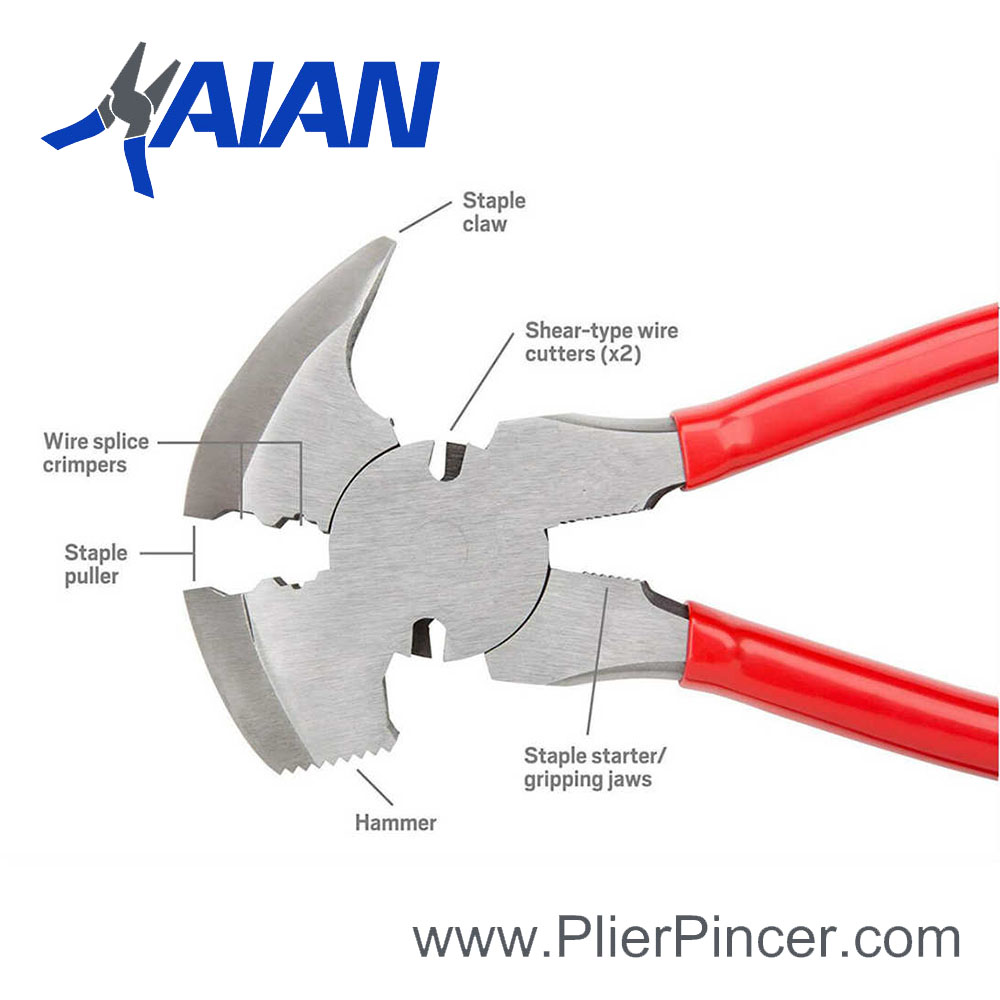
A typical set of fence pliers combines several tools in one:
- Hammer (for driving in staples or nails)
- Claw (for pulling out staples)
- Wire cutters (for cutting thick wire)
- Gripping jaws (for twisting and holding wire)
- Staple puller notch (for removing tough staples)
- Wire splicer (for wrapping and twisting wires securely)
Because of this, you can carry one tool and do almost every job needed for building or repairing a wire fence.
Getting To Know The Parts Of Fence Pliers
Before you start using fence pliers, it helps to understand each part and what it does. Here’s a breakdown:
| Part | Function |
|---|---|
| Hammer Head | Drives in staples or nails |
| Claw | Pry out staples or nails |
| Wire Cutter | Cuts thick wire, usually at the base of the jaws |
| Gripping Jaws | Hold, twist, or pull wire tight |
| Staple Puller Notch | Extra leverage to remove difficult staples |
| Handles | Insulated or non-insulated for grip; some are rubberized |
Some fence pliers have extra features, like a wire-bending groove or a longer handle for extra leverage. Usually, though, the basic design stays the same.
Choosing The Right Fence Pliers
Not all fence pliers are equal. The right pair will make your work smoother and safer. Here’s what to look for:
- Size and Weight: Most fence pliers are 10–12 inches long. Bigger models give more power, but can feel heavy after long use.
- Material: Good pliers are made from forged steel for strength. Cheap versions may bend or break under pressure.
- Handle Grip: Look for non-slip or rubberized handles. This protects your hands, especially when it’s wet or cold.
- Cutting Edge: Sharp, hardened cutters will slice through thick wire without much force.
- Brand Reputation: Trusted brands like Klein Tools, Irwin, and Channellock are popular for durability.
- Price: Expect to pay more for quality. Cheap pliers often do not last and can even be dangerous.
Non-obvious insight: Some fence pliers come with a small spring that reopens the jaws after each squeeze. If you do a lot of repetitive wire cutting, this can save time and reduce fatigue.
Safety First: Using Fence Pliers Properly
Fence work can be dangerous if you don’t use tools correctly. Here are a few safety tips to remember:
- Wear gloves: Always use thick gloves to protect against sharp wire edges and pinches.
- Wear eye protection: Wire pieces can snap and fly toward your face.
- Check for damage: Never use pliers with cracks, loose handles, or dull cutters.
- Use the right tool for the right job: Don’t use fence pliers to pry heavy objects or cut hardened steel bolts.
Common mistake: Many beginners use fence pliers as a hammer for heavy-duty tasks like driving large nails into wood. This can damage the tool or cause injury. Use the hammer side only for small staples or fencing nails.
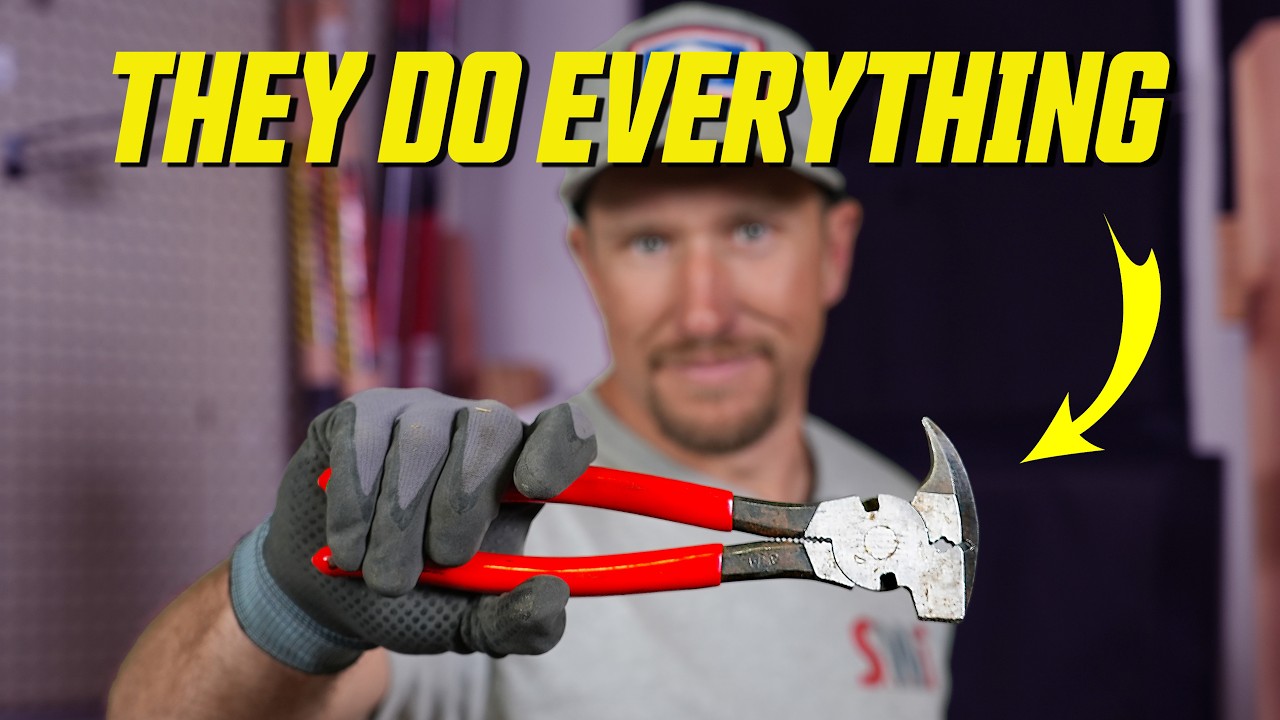
Credit: www.youtube.com
Basic Skills: How To Hold And Control Fence Pliers
Holding fence pliers the right way gives you more control and less fatigue. Here’s how:
- Grip the handles firmly with your dominant hand, keeping your fingers wrapped around both handles.
- Balance the tool by holding closer to the pivot point for control, or closer to the ends for extra power.
- Keep your wrist straight to avoid strain, especially when cutting or twisting.
- Use your other hand to steady wire or hold fence posts if needed.
If your pliers have a spring, let the spring reopen the jaws between uses instead of prying them open with your hand.
Step-by-step: How To Use Fence Pliers For Every Task
Let’s break down each main job you can do with fence pliers. Each task is a bit different, and knowing the right technique makes a big difference.
1. Cutting Wire
Fence pliers have a strong cutting edge at the base of the jaws. To cut wire:
- Place the wire deep into the cutter section.
- Squeeze the handles firmly.
- For thick or high-tension wire, use both hands for extra force.
Tip: For very thick or high-tensile wire, rock the pliers gently back and forth while squeezing—this can help the blades bite through without slipping.
Beginner mistake: Trying to cut wire with the gripping jaws, not the cutter. This will dull the jaws and make cutting much harder.
2. Removing Staples
Pulling out old or rusted staples is a common fence repair task. Here’s how to do it safely:
- Position the curved claw side under the staple.
- Wiggle the tool to loosen the staple.
- Pry up and out, using the handle as a lever.
- For stubborn staples, use the notch (if your pliers have one) to get extra grip and leverage.
Non-obvious insight: Sometimes, twisting the staple slightly before pulling can break the rust’s grip and make removal easier.
3. Driving In Staples Or Small Nails
The flat, hammer-like surface on fence pliers is perfect for driving in fence staples or small nails:
- Hold the staple with one hand and tap it into the post with the hammer side.
- Once started, use full swings to drive it in.
- Keep your other hand clear to avoid hitting your fingers.
Safety tip: If possible, start the staple with needle-nose pliers, then finish with fence pliers to avoid pinching your fingers.
4. Twisting And Splicing Wire
Joining two pieces of wire or tightening a loose section is easy with fence pliers:
- Place both wire ends in the gripping jaws.
- Twist the tool in a circular motion to wrap the wires together.
- For a neat splice, twist until the wires are tight but not broken.
To make a tensioned loop or tie wire to a post, use the jaws to bend and twist the wire into place.
Expert tip: Don’t over-twist. Too much twisting can weaken the wire and make it more likely to break in the future.
5. Pulling And Stretching Wire
To pull wire tight along a fence line:
- Grip the wire with the jaws, close to the post.
- Lean back, using your body weight for extra force.
- Once tight, secure the wire with a staple or tie.
Pro advice: For very long fences, use a dedicated wire stretcher, but for small repairs, fence pliers are often enough.
6. Removing Nails
Sometimes, you’ll need to pull out small nails, not just staples. The claw or notch can help:
- Slide the claw under the nail head.
- Pry up slowly, rocking the tool for extra leverage.
- For deeply embedded nails, use the notch for a stronger grip.
Mistake to avoid: Using fence pliers to pull big, construction nails. This can bend the tool or hurt your hand.
7. Bending And Shaping Wire
The gripping jaws and groove can be used to bend wire into hooks, loops, or other shapes:
- Place the wire where you want the bend.
- Squeeze the pliers and use your other hand to shape the wire around the jaws.
- For sharp bends, use the very tip of the jaws.
Hidden trick: Some professionals use the side of the hammer head to get a perfect, round bend in the wire.
Credit: plierpincer.com
Comparison: Fence Pliers Vs. Other Fencing Tools
How do fence pliers compare to other common fencing tools? Here’s a quick look:
| Tool | Main Uses | Strengths | Weaknesses |
|---|---|---|---|
| Fence Pliers | Cutting, twisting, gripping, hammering, pulling staples/nails | Multi-function, portable | Not as strong for big nails or very thick wire |
| Wire Cutters | Cutting wire | Sharp, fast cutting | Cannot twist, hammer, or pull staples |
| Hammer | Driving in staples/nails | Powerful, dedicated for nails | Cannot cut or grip wire |
| Needle-nose Pliers | Precise bending, holding small wire | Good for small, delicate work | Not strong enough for fencing wire |
| Wire Stretcher | Pulling wire tight | Maximum tension for long fences | Bulky, single use |
As you can see, fence pliers are the best all-in-one tool for most fencing tasks, especially for small to medium-sized jobs.
Real-world Example: Repairing A Fence With Fence Pliers
Imagine you find a broken section of barbed wire on your farm fence. Here’s how you would use fence pliers to fix it:
- Remove old staples: Use the claw to pull out any loose or broken staples from the fence post.
- Cut broken wire: Use the wire cutters to remove the damaged section.
- Splice new wire: Cut a piece of fresh wire, overlap with the old wire, and twist together using the jaws.
- Pull wire tight: Use the jaws to grip and stretch the wire, pulling it tight against the posts.
- Drive in new staples: Hold the wire in place and hammer new staples with the flat side.
- Bend ends safely: Use the jaws to bend any sharp wire ends away from where people or animals might get hurt.
This process, done with a single tool, saves time and lets you work efficiently—even if you’re alone in the field.
Maintenance: Taking Care Of Your Fence Pliers
Even the best fence pliers need care to stay sharp and effective. Here’s what you should do:
- Clean after use: Wipe off mud, rust, or wire debris.
- Oil moving parts: A drop of oil on the pivot keeps the jaws moving smoothly.
- Sharpen cutters if needed: If the wire cutter feels dull, use a small file to touch up the edge.
- Check for damage: Replace pliers with cracked handles or loose joints.
- Store dry: Keep them in a toolbox or hang them up, away from rain and moisture.
Pro tip: Never use your fence pliers for things like prying open cans or smashing rocks. This can bend the jaws or break the pivot, making the tool unsafe.
Advanced Tips: Getting More From Your Fence Pliers
Many experienced fencers use small tricks to get even more from their pliers. Here are a few:
- Use for emergency repairs: If your tractor breaks a hydraulic line, the strong jaws can temporarily pinch the line shut until you get proper repairs.
- Bend nails or staples: The jaws can be used to bend staples for custom sizes, or to straighten bent nails.
- Measure with the handles: Some pliers have notches or marks to help you measure staple depth or wire length.
- Tighten fence tension: For short fence lines, the pliers can act like a mini wire stretcher.
- Strip insulation: The sharp edges can strip insulation from electric fence wire in a pinch.
Non-obvious insight: Keeping a spare pair in your vehicle or ATV can save you a long walk if you drop your main tool in the field.
Common Mistakes To Avoid
Even people who use fence pliers for years can fall into these traps:
- Using them for heavy demolition: They’re not made for pulling out big boards or smashing concrete.
- Letting them rust: Leaving pliers outside, especially after wet weather, will ruin the pivot and cutters.
- Ignoring dull blades: Dull cutters mean more force and more risk of slipping, which can lead to injury.
- Forgetting safety gear: Always use gloves and glasses, even for “quick” repairs.
When To Replace Your Fence Pliers
No tool lasts forever, especially with hard outdoor use. Replace your pliers if:
- The jaws do not close fully or are misaligned.
- The pivot is loose or wobbly.
- The handles have deep cracks or missing insulation.
- The cutting edge has big nicks or won’t cut wire anymore.
Spending a little money on a new pair is far better than risking injury or a failed repair.

Credit: www.youtube.com
Choosing Between Types: Standard, Heavy-duty, And Specialty Fence Pliers
There are a few main types of fence pliers, each best for different jobs.
| Type | Features | Best For |
|---|---|---|
| Standard | 10-12 inches, classic multi-tool design | General repairs, small builds |
| Heavy-Duty | Larger, thicker jaws, long handles | Thick wire, tough old staples, commercial fencing |
| Specialty (Electric Fence) | Insulated handles, finer cutters | Electric fence work, where shock risk is higher |
| Mini Fence Pliers | Small, lightweight, limited features | Light repairs, garden or decorative fences |
Key advice: If you mainly work on barbed wire or high-tensile fences, invest in heavy-duty pliers. For home gardens, standard or mini pliers are enough.
How To Store And Transport Fence Pliers
Proper storage protects your tool and keeps you organized:
- Tool belt: Many fence workers keep pliers in a side pouch for quick access.
- Toolbox: For longer transport, a dry toolbox prevents rust.
- Hang on wall hooks: In the shed or barn, hang pliers by their handles to keep them off damp surfaces.
- Keep dry: If the pliers get wet, dry them thoroughly before storage.
Bonus tip: If you carry pliers in a vehicle, wrap them in an old rag to prevent rattling and rust.
How Fence Pliers Save You Money And Time
Why bother learning all these techniques? Because using fence pliers correctly means:
- Faster repairs: You can fix most problems on the spot without running back and forth for different tools.
- Safer hands: The right tool protects against cuts, blisters, and accidental injuries.
- Longer fence life: Properly tightened and spliced wire is less likely to break, sag, or rust.
- Fewer tools needed: One tool replaces several, saving space and money.
In fact, a study by AgriLife Extension found that regular fence maintenance—including the use of proper tools—can extend the life of a wire fence by up to 50%. That’s years of extra use and less expense.
Real-world Fence Pliers Brands And Models
Some popular and reliable fence pliers include:
- Klein Tools D213-9ST: Heavy-duty, durable, excellent for professionals
- Channellock 85: Good for general use, comfortable grip
- Irwin Vise-Grip 2078901: Affordable, all-in-one design, great for beginners
- DeWalt DWHT70273: Known for tough, long-lasting jaws
If you want more details on what makes a good pair, you can check out Wikipedia’s guide to pliers for technical information.
Frequently Asked Questions
What Are Fence Pliers Used For?
Fence pliers are a multi-purpose tool designed for building and repairing wire fences. They can cut wire, pull and drive staples, twist and splice wires, and even hammer small nails. Their unique shape lets you carry just one tool for most fencing jobs.
Can Fence Pliers Cut All Types Of Wire?
Most fence pliers can cut standard barbed wire, smooth wire, and electric fence wire. For extremely thick or high-tensile wire, you may need heavy-duty pliers or a dedicated wire cutter. Never use fence pliers on steel cable or hardened bolts, as this can damage the tool.
How Do I Keep My Fence Pliers Sharp?
To keep the cutting edge sharp, clean the blades after use, avoid cutting very hard materials, and use a small file to touch up the edge if needed. If the blades become chipped or dented, it’s usually better to replace the pliers.
Are Fence Pliers Safe For Electric Fence Work?
Some fence pliers have insulated handles designed for electric work, but regular models do not protect against electric shock. Always turn off the power before working on electric fences, and consider special insulated tools for extra safety.
Why Do My Fence Pliers Get Stuck Or Hard To Open?
Dirt, rust, or lack of oil can make the pivot stiff. Clean and oil the joint regularly. If the jaws are misaligned or the handles are bent, it may be time for a new pair.
Using fence pliers the right way takes practice, but once you master the basics—and a few advanced tricks—you’ll find you can handle almost any fence repair with confidence and speed. Whether you’re a farmer, rancher, or just want your garden to look its best, this tool is a must-have for anyone who works with wire.
With the tips and techniques above, you’ll be ready to get the most from your fence pliers for years to come.