
Storing your snow blower is not just about putting it in a corner and forgetting about it until next winter. If you want your machine to start easily, last for years, and avoid costly repairs, you need to store it the right way.
Many people make mistakes that can damage their snow blower, like leaving fuel inside or skipping simple steps. The good news? With the right guidance, you can store your snow blower safely and keep it ready for the next snow season.
This article walks you through every step, explains why each one matters, and shares tips most owners overlook. Whether you own a gas or electric snow blower, you’ll find clear instructions, expert advice, and real examples to make storage simple and stress-free.
Why Proper Snow Blower Storage Matters
Storing your snow blower the right way is more important than many people think. Snow blowers are expensive machines, and they’re exposed to tough winter conditions—wet snow, salt, and ice. If you just leave your machine as it is, it can face problems like rust, engine damage, and fuel system clogs. These issues often lead to expensive repairs or even a broken machine when you need it most.
Statistics show that about 30% of snow blower breakdowns are caused by poor off-season storage. Moisture, old fuel, and leftover debris can all cause serious trouble. For example, gas left in the tank can turn bad in just a few months, gumming up the carburetor and making the engine hard to start. Rust can form on metal parts, and electrical systems can corrode if not protected. By taking a little time to store your snow blower properly, you save money, time, and frustration.
When To Store Your Snow Blower
Timing is key. You should store your snow blower right after the last snowfall of the season. Don’t wait for weeks—moisture and leftover debris can cause damage quickly. If you live in an area with unpredictable weather, check the forecast and store your machine when you’re sure winter is over.
A simple tip: Set a reminder on your phone or calendar to do snow blower maintenance and storage as soon as spring starts. This way, you don’t forget, and your machine stays in top shape.
Choosing The Right Storage Location
Where you keep your snow blower can make a big difference. The best storage space should be:
- Dry: Moisture causes rust and electrical problems.
- Sheltered: Keep your snow blower away from rain, snow, and direct sunlight.
- Secure: Prevent theft and keep out animals that might chew wires or build nests.
Good options: A garage, shed, or basement with a solid floor. Avoid leaving your snow blower outside under a simple tarp. Even covered, outdoor storage exposes the machine to humidity and temperature swings, which can cause condensation and rust.
Comparing Storage Locations
Here’s a quick look at how common storage places compare:
| Location | Protection Level | Humidity Risk | Security |
|---|---|---|---|
| Garage | High | Low | High |
| Shed | Medium | Medium | Medium |
| Basement | High | Low | High |
| Outside with Tarp | Low | High | Low |
If you must store your snow blower outside, use a waterproof cover and place it on boards or a platform to keep it off the ground. Still, this is only a short-term solution.
Preparing Your Snow Blower: Step-by-step
Before you store your snow blower, some important steps help prevent damage and keep everything working smoothly. Follow these steps for both gas and electric snow blowers, with notes where there are differences.
1. Read The Owner’s Manual
Always start by reading the owner’s manual for your specific model. Manufacturers often include storage tips and safety advice that apply to your machine. If you lost the manual, you can usually find a PDF on the manufacturer’s website.
2. Clean Your Snow Blower
Cleaning removes salt, dirt, and moisture that can cause rust and corrosion.
- Remove all snow and ice from the machine. Let it dry completely.
- Use a brush or compressed air to clear out any debris from the auger, chute, and under the housing.
- Wipe down the exterior with a damp cloth and mild soap.
- For stubborn salt or mud, use a gentle spray from a hose, but never soak electrical parts or the engine.
Let the machine dry for several hours before continuing. Even a small amount of trapped water can cause rust.
3. Empty Or Stabilize The Fuel System (gas Models)
Gasoline left in the tank over summer can cause major problems. There are two methods:
A. Run The Tank Dry
- Turn off the fuel valve (if your model has one).
- Start the machine and let it run until it stops. This uses up the fuel in the lines and carburetor.
- Try to start again—if it doesn’t run, the system is empty.
B. Use Fuel Stabilizer
If you prefer to leave some fuel in the tank (some manufacturers recommend this), add a fuel stabilizer. Stabilizer prevents gas from turning into varnish and clogging the carburetor.
- Add the stabilizer to a nearly full tank (check the label for how much to add).
- Run the engine for 5–10 minutes to circulate the stabilizer through the system.
Tip: Never store with ethanol-blended fuel unless stabilized—it attracts water.
4. Change The Oil (gas Models)
Old oil can become acidic and damage engine parts. For four-stroke engines:
- Warm up the engine to thin the oil.
- Turn off and disconnect the spark plug.
- Drain the old oil into a safe container.
- Refill with fresh oil (check your manual for the correct type and amount).
Changing oil before storage protects internal parts and makes starting easier next season.
5. Remove The Battery (electric Models)
For cordless electric snow blowers:
- Turn off the machine.
- Remove the battery pack.
- Store the battery in a cool, dry place. Avoid extreme temperatures.
- Charge the battery to 50–70% (not fully charged or empty)—this extends battery life.
6. Grease And Lubricate Moving Parts
Apply a light coat of machine oil or grease to:
- Auger bearings
- Chute rotation parts
- Axles and wheels
Lubrication protects against rust and keeps things moving smoothly.
7. Inspect And Replace Worn Parts
Check for:
- Worn or damaged belts
- Cracked or bent shear pins
- Broken skid shoes or scraper bars
Replace any worn parts now, not next winter, so your snow blower is ready to go.
8. Disconnect The Spark Plug (gas Models)
Remove the spark plug wire and tuck it away from the plug. This prevents accidental starting during storage and also allows you to:
- Remove the spark plug.
- Add a few drops of oil into the cylinder.
- Pull the starter cord slowly to coat the cylinder, then replace the plug.
This step prevents rust inside the engine.
9. Cover The Snow Blower
Use a breathable cover (not plastic tarps that trap moisture) to protect against dust and sunlight. Make sure the cover fits well but does not block air flow.

Credit: pbclegal.it
Special Tips For Single-stage Vs. Two-stage Snow Blowers
There are key differences in how you store single-stage and two-stage snow blowers.
Single-stage Models
- Lighter and smaller, so they can often fit on a shelf or hang from a strong wall hook.
- Check the rubber paddles for wear; replace if they’re thin.
- Be careful not to bend the auger.
Two-stage Models
- Heavier with more moving parts.
- Inspect the impeller and auger gear case for wear.
- Make sure all gears are lubricated.
Pro tip: Two-stage models should never be stored on their sides. Oil can leak into wrong areas.
Storing Attachments And Accessories
If your snow blower comes with extra parts (drift cutters, clean-out tools, extra shear pins), store them in a labeled bin or bag attached to the machine. This way, you won’t lose important accessories and can find them easily when snow returns.
Common Storage Mistakes To Avoid
Many people damage their snow blower by making these mistakes:
- Leaving old fuel in the tank—causes hard starts and engine damage.
- Storing in a damp area—leads to rust and corrosion.
- Forgetting to clean the machine—dirt and salt eat away at metal.
- Skipping lubrication—parts seize up and wear out faster.
- Not checking for worn parts—breakdowns happen right when you need the machine.
- Using a non-breathable cover—traps moisture and encourages rust.
- Leaving the battery in (electric models)—can damage or shorten battery life.
Avoiding these mistakes saves money and hassle.
How Long Can A Snow Blower Be Stored?
Most snow blowers are designed to handle storage for several months. With the steps above, you can safely store your machine for 6–8 months. If you need to store for longer (for example, moving to a warmer climate), run the engine every 6 months or so, or follow deep storage instructions in your manual.
Storage For Short-term Vs. Long-term
The way you store your snow blower depends on how long you won’t use it.
Short-term (a Few Weeks)
- Remove snow and ice.
- Cover the machine.
- No need to empty fuel if you’ll use it again soon.
Long-term (months)
- Follow all steps: Clean, empty or stabilize fuel, change oil, lubricate, disconnect battery or spark plug, and cover.
Long-term storage keeps your snow blower ready for the next big snow without surprises.
Preparing For Next Season: Pre-storage Checklist
Before putting your snow blower away, use this checklist to make sure nothing is missed:
- Clean the machine (auger, chute, housing).
- Dry completely.
- Empty or stabilize fuel (gas models).
- Change the oil (four-stroke engines).
- Remove the battery and store properly (electric models).
- Lubricate moving parts.
- Check belts, pins, and wear items; replace as needed.
- Disconnect spark plug or battery.
- Cover with a breathable cover.
- Store in a dry, secure area.
Checking each item now means your first snow next winter won’t be a problem.
How Different Climates Affect Storage
Where you live changes how you store your snow blower:
- Humid climates: Focus on rust prevention. Use extra oil or moisture absorbers.
- Cold, dry climates: Batteries may need more care. Store indoors if possible.
- Hot climates (summer homes): Keep out of direct sun. Heat can damage rubber and plastic.
For coastal areas, salt in the air can cause rapid corrosion. Wash the machine carefully and use a corrosion inhibitor spray on exposed metal parts.
Example: A Real-world Storage Routine
Let’s follow a real example. Steve, who lives in Minnesota, stores his two-stage snow blower every April:
- He cleans off all salt and lets the machine dry in his garage.
- He empties the fuel tank and runs the engine until it stops.
- He changes the oil and checks the belts.
- He removes the spark plug, adds a few drops of oil to the cylinder, and pulls the cord gently.
- He lubricates the auger and impeller.
- He covers the snow blower with a fitted canvas cover and stores it in a corner of the garage, away from lawn chemicals.
- He keeps spare shear pins and the manual in a zip bag attached to the handle.
The next winter, his snow blower always starts on the first pull.
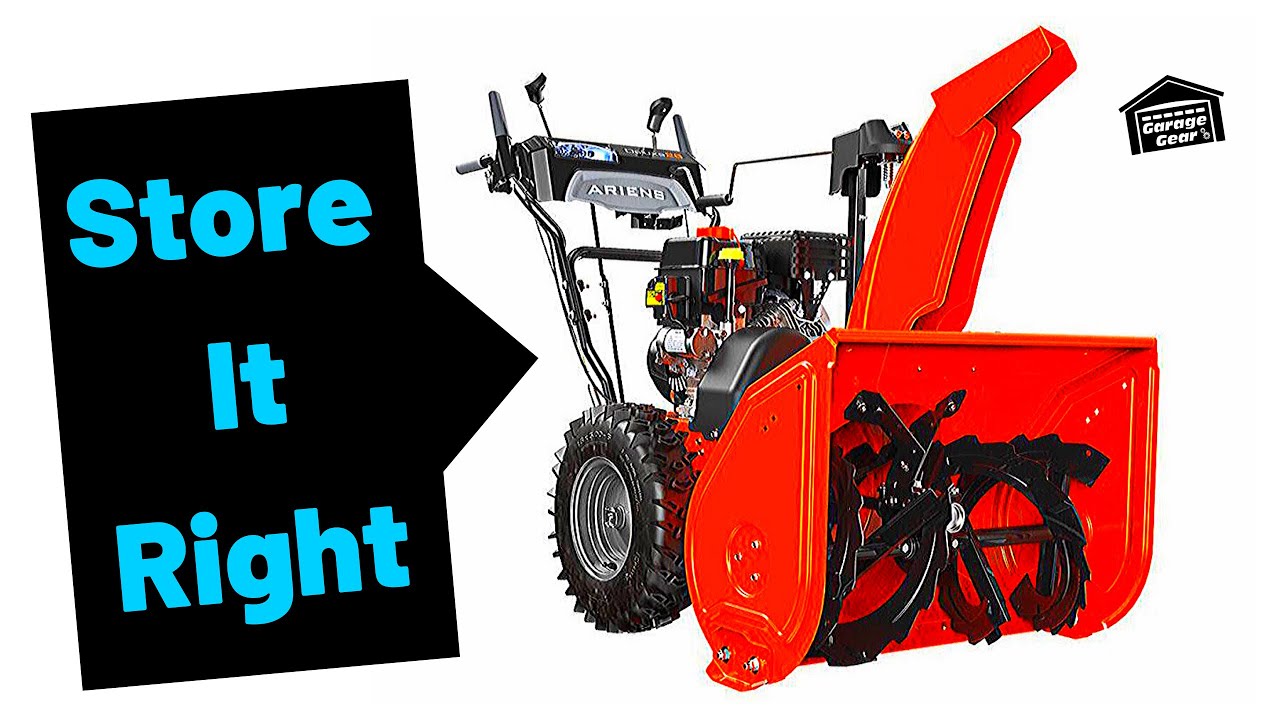
Credit: www.youtube.com
Comparison: Storing Gas Vs. Electric Snow Blowers
To help you decide what matters most for your type of snow blower, here’s a side-by-side look:
| Step | Gas Snow Blower | Electric Snow Blower |
|---|---|---|
| Remove Fuel/Battery | Empty tank or add stabilizer | Remove and store battery |
| Change Oil | Yes (4-stroke) | No |
| Lubricate Parts | Yes | Yes |
| Disconnect Spark Plug | Yes | No |
| Storage Location | Dry, secure area | Dry, secure area (avoid extreme temps) |
How To Store A Snow Blower In A Small Space
Not everyone has a big garage or shed. Here are some ideas:
- Use wall hooks for lightweight, single-stage models.
- Build a small raised platform in a corner to keep the machine off the ground.
- Store under a workbench if height allows.
- For electric models, store the battery separately in a closet or cabinet.
Keep the machine away from windows (UV light can damage plastic) and from chemicals or fertilizers.
What To Do If You Forgot To Prepare For Storage
If you didn’t follow the storage steps and it’s been months:
- Don’t try to start the snow blower right away.
- Check for old fuel—drain and refill with fresh gas.
- Inspect for rust or corrosion.
- Lubricate all moving parts.
- For electric models, check the battery’s charge and condition.
If you find signs of damage, consult your manual or a repair shop before using the machine.
Eco-friendly Storage And Disposal Tips
Caring for your snow blower can also be good for the environment:
- Recycle old oil at a local service station or recycling center.
- Dispose of old fuel safely—never pour it down drains or onto the ground.
- Use biodegradable lubricants if available.
- Store batteries in a cool place and recycle them at the end of their life.
Many cities have special programs for recycling small engine machines. For more details, see the EPA’s advice on EPA Recycle.
Maintenance To Do Before Next Winter
When you take your snow blower out of storage, do a quick check:
- Reconnect the spark plug or battery.
- Add fresh fuel (gas models).
- Check tire pressure and belt tension.
- Test the auger and chute for smooth operation.
- Look for any signs of rust or rodent damage.
A few minutes spent now can prevent breakdowns during the first big snow.
Frequently Asked Questions
How Do I Keep Mice And Animals Out Of My Snow Blower During Storage?
Store your snow blower in a closed, secure area. Place some mothballs or scented dryer sheets near the machine—these help repel rodents. Avoid using food-based baits, as they can attract pests. Check regularly for signs of nests or chewed wires.
Is It Safe To Store A Snow Blower With Gas In The Tank?
Yes, but only if you use a fuel stabilizer and fill the tank to prevent condensation. Without stabilizer, gas can go bad in 1–2 months, causing engine problems. For extra safety, many experts recommend emptying the tank completely.
Can I Store My Snow Blower Outside If I Have No Garage?
You can, but it’s not ideal. Use a waterproof, UV-resistant cover and keep the machine on a raised surface to avoid ground moisture. Place it in a spot shielded from wind and snow drifts. Check often for signs of rust or animal damage.
Do I Need To Remove The Battery From My Electric Snow Blower For Storage?
Yes. Always remove the battery and store it indoors in a cool, dry place. Charge it to about 50–70% capacity—this helps the battery last longer. Never store a lithium-ion battery when fully discharged or fully charged for months.
What Should I Do If My Snow Blower Won’t Start After Storage?
First, check the fuel (old gas is a common problem), inspect the spark plug, and look for loose wires or clogged carburetor. For electric models, check battery charge and connections. If these steps don’t work, consult your manual or a repair service.
Storing your snow blower properly takes just a little extra time, but it saves money, hassle, and frustration when the next snowstorm hits. With these steps, your machine will be ready and reliable for many winters to come.

Credit: www.extraspace.com