
If you own a Ford F350, you already know it’s more than a truck—it’s a workhorse built for heavy loads, tough conditions, and long roads. But to keep your F350 running strong, understanding its oil capacity is critical. Oil is the lifeblood of your engine, and using the correct amount and type ensures smooth performance, fewer repairs, and a long engine life.
Many drivers overlook oil capacity or get confused by varying recommendations, especially since the F350 comes with different engines over the years. Whether you’re new to trucks or a seasoned mechanic, this guide will clear up confusion about Ford F350 oil capacity, help you avoid common mistakes, and give you the confidence to maintain your truck like a pro.
Why Oil Capacity Matters For Your F350
Oil does more than just lubricate engine parts. It cools, cleans, and helps your engine run efficiently. If you put in too little oil, parts rub together, heat up, and wear out faster. Too much oil isn’t good either—it can cause leaks, foaming, or pressure problems.
For the F350, which often hauls heavy loads or tows trailers, the right oil level is even more important. A well-lubricated engine prevents breakdowns and saves you money over time.
Another point: Ford F350s have a wide range of engines—gas and diesel, small block and big block, turbocharged and naturally aspirated. Each engine design has its own oil needs. That’s why you’ll see different oil capacities listed depending on your truck’s year and engine type. Getting this detail right is a simple step that protects your investment.
Ford F350 Engines And Oil Capacities (by Year And Type)
The Ford F350 has been produced for decades, with several engine options. Here’s a breakdown of the most common engines and their typical oil capacities. Always double-check your owner’s manual or the label under your hood, as some years and trims may differ.
Gasoline Engines
5.4l V8 (triton)
This popular engine, found in many F350s from the late 1990s to the early 2010s, is known for reliability. Its standard oil capacity is about 6. 0 quarts (5. 7 liters) with filter.
6.2l V8
Introduced in 2011, the 6. 2L gas V8 is a favorite for heavy towing. It takes about 7. 0 quarts (6. 6 liters) with filter.
7.5l V8 (460)
In classic F350s from the 1980s and 1990s, the big 7. 5L V8 was common. It typically holds 6. 0 quarts (5. 7 liters) with filter.
7.3l V8 (gas, “godzilla”)
In recent models (2020 and up), Ford introduced the powerful 7. 3L gas engine. It needs 8. 0 quarts (7. 6 liters) with filter.
Diesel Engines
6.0l Power Stroke Diesel
This engine, used from 2003 to 2007, has an oil capacity of 15. 0 quarts (14. 2 liters) with filter. Diesel engines generally need more oil because of their size and internal pressure.
6.4l Power Stroke Diesel
From 2008 to 2010, the 6. 4L diesel was used. It requires 15. 0 quarts (14. 2 liters) with filter, similar to the 6. 0L.
6.7l Power Stroke Diesel
Starting in 2011, Ford introduced the 6. 7L turbo diesel. Oil capacity is 13. 0 quarts (12. 3 liters) with filter for most model years.
7.3l Power Stroke Diesel
This legendary diesel (1999–2003) takes 15. 0 quarts (14. 2 liters) with filter, making it one of the largest oil sumps in the lineup.
6.9l Diesel
For earlier models (1983–1987), the 6. 9L diesel holds about 10. 5 quarts (9. 9 liters) with filter.
Quick Reference Chart
Here’s a simple chart for quick lookup. Remember: always check your exact model and engine before adding oil.
| Engine Type | Years | Oil Capacity (with filter) |
|---|---|---|
| 5.4L V8 (Triton) | 1999–2010 | 6.0 quarts (5.7 liters) |
| 6.2L V8 | 2011–present | 7.0 quarts (6.6 liters) |
| 7.5L V8 (460) | 1987–1997 | 6.0 quarts (5.7 liters) |
| 7.3L V8 Gas (Godzilla) | 2020–present | 8.0 quarts (7.6 liters) |
| 6.0L Power Stroke Diesel | 2003–2007 | 15.0 quarts (14.2 liters) |
| 6.4L Power Stroke Diesel | 2008–2010 | 15.0 quarts (14.2 liters) |
| 6.7L Power Stroke Diesel | 2011–present | 13.0 quarts (12.3 liters) |
| 7.3L Power Stroke Diesel | 1999–2003 | 15.0 quarts (14.2 liters) |
| 6.9L Diesel | 1983–1987 | 10.5 quarts (9.9 liters) |

Credit: www.ebay.com
How To Check Oil Level Correctly
Many F350 owners think checking oil is as simple as pulling out the dipstick, but there’s a right way and a wrong way. Doing it correctly ensures you won’t overfill or underfill your engine.
- Engine Off and Cool: Let your truck sit for 5–10 minutes after shutting off the engine. This allows oil to drain back into the pan for an accurate reading.
- Level Surface: Park on flat ground. Slopes can give false readings.
- Clean the Dipstick: Pull it out, wipe clean, reinsert fully, and pull it out again to check the level.
- Check the Marks: The dipstick has two marks or holes—“MIN” and “MAX.” Oil should be between them. If it’s close to “MIN,” add oil. Never overfill past “MAX.”
- Color and Consistency: Oil should be amber and smooth. If it’s very dark, gritty, or smells burnt, it’s time for a change.
Tip: On diesel F350s, oil may darken quickly after a change. That’s normal, but watch for very thick, sludgy, or gritty oil.
What Kind Of Oil Should You Use?
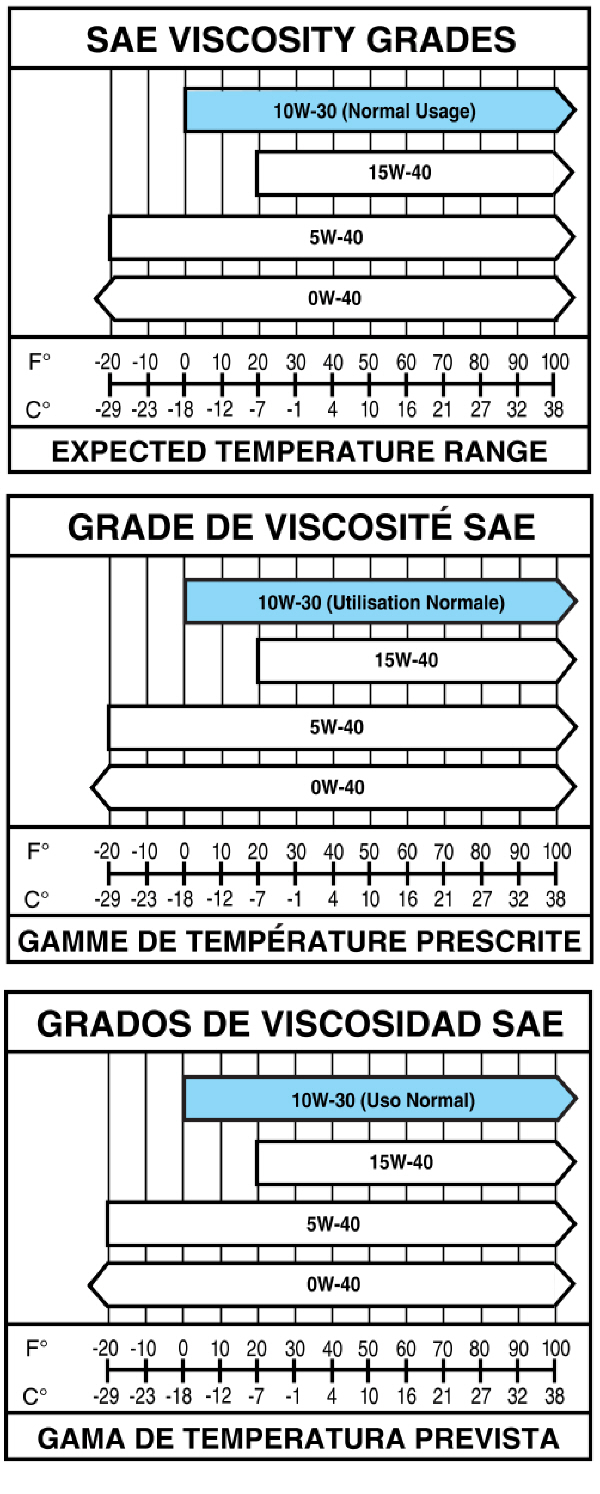
Choosing the right oil is just as important as the amount. The owner’s manual lists recommended oil weights (viscosity) and types. Here’s what you need to know:
Viscosity (weight)
- Gas engines: Usually call for 5W-20, 5W-30, or 10W-30, depending on the year and climate.
- Diesel engines: Often use 15W-40 or 10W-30. Cold climates may need a lighter oil.
Conventional Vs. Synthetic
- Synthetic oil is recommended for most newer F350s and for trucks under heavy use or towing. It handles heat better and lasts longer.
- Conventional oil is cheaper but needs more frequent changes. Older, high-mileage engines may benefit from high-mileage blends.
Diesel Engine Oils
Diesel oils contain extra detergents to handle soot. Never use gas engine oil in a Power Stroke or other diesel F350.
Oil Brands
Stick with well-known brands like Motorcraft (Ford’s own), Shell Rotella, Mobil 1, or Valvoline. Cheap oil can save money short-term but may cause engine deposits or wear.
Additives
Most modern oils already have all the additives needed. Avoid pouring in aftermarket oil treatments unless recommended by Ford.
Non-obvious insight: If you drive in extremely dusty or hot conditions, consider changing oil more often or using a higher-grade synthetic oil. This small upgrade can make a big difference in engine life.
How To Change Oil On A Ford F350 (step-by-step)
Changing oil on an F350 isn’t hard, but it’s messy and the oil pan is large—especially on diesels. Here’s how to do it right:
Tools And Supplies
- Correct amount and type of oil (see above)
- New oil filter (preferably OEM or high-quality brand)
- Oil drain pan (at least 16 quarts for diesel engines)
- Socket wrench or oil filter wrench
- Funnel
- Gloves and rags
- Jack and stands (if needed for clearance)
Steps
- Warm Up the Engine: Let it run for 5 minutes to thin the oil. Turn off and let cool for safety.
- Lift the Truck (if needed): Some F350s have enough clearance, but you may need to jack it up.
- Place Oil Pan Underneath: Make sure it’s big enough—diesels can dump a lot of oil quickly.
- Remove Drain Plug: Use your socket wrench. Oil will flow out fast. Let it drain completely.
- Remove Old Oil Filter: Use an oil filter wrench if it’s tight. Some oil will spill—keep your pan under the filter.
- Install New Filter: Lightly oil the gasket on the new filter. Screw it on by hand until snug, then another 3/4 turn.
- Replace Drain Plug: Tighten securely, but don’t over-tighten (could strip threads).
- Add New Oil: Use a funnel to pour the correct amount into the oil fill cap on top of the engine.
- Start Engine: Let it run for 1–2 minutes. Check for leaks at the filter and drain plug.
- Check Oil Level: After a few minutes, turn off engine and check the dipstick. Add oil if needed to reach “MAX.”
- Dispose of Old Oil Properly: Take it to an auto parts store or recycling center—never pour down a drain.
Non-obvious insight: F350 diesels take a long time to refill. Pour oil slowly to avoid spills or overfilling. Diesel filters are larger and can drip for a while after removal.
Common Oil-related Mistakes F350 Owners Make
Even experienced truck owners can make oil mistakes that hurt their engines. Here are a few to watch out for:
- Guessing Oil Capacity: Always check your manual or a trusted source. Adding the wrong amount is a top cause of engine trouble after oil changes.
- Using Wrong Oil Type: Diesel and gas engines need different oils. Double-check the bottle before pouring.
- Over-Tightening Filter or Plug: This can crush gaskets or strip threads, causing leaks.
- Skipping Oil Filter Change: Always change the filter with every oil change. A dirty filter leaves old contaminants in your engine.
- Not Resetting Oil Life Monitor: Newer F350s have an oil life reminder. After changing oil, reset it so you get proper reminders.
- Ignoring Leaks: If you see oil spots under your truck after a change, fix the issue right away. Small leaks can grow quickly.
Tip: Write down the date and mileage after every oil change. This helps you stay on track and gives proof of maintenance if you ever sell your truck.
Oil Change Intervals For Ford F350
How often should you change your oil? The answer depends on your engine, driving style, and oil type.
- Gas engines: Ford often recommends every 7,500 miles or 6 months for normal use, but heavy towing or dusty conditions may require every 5,000 miles.
- Diesel engines: Usually 5,000–7,500 miles. Many Power Stroke owners play it safe with 5,000-mile intervals, especially when towing.
- Synthetic oil: Can last longer than conventional, but always follow Ford’s guidance. Don’t assume you can double intervals just because you use synthetic.
Real-world example: Many F350 owners who tow trailers or haul heavy loads change oil every 4,000–5,000 miles, even if the manual says longer. This extra care pays off by keeping engine internals cleaner.
Signs Your F350 Needs An Oil Change
Sometimes you need to change oil sooner than planned. Watch for these warning signs:
- Oil level drops quickly between changes
- Oil looks dark, thick, or dirty on the dipstick
- Engine sounds louder, knocks, or runs rough
- Oil change or check engine light appears on dash
- Oil smells burnt
Ignoring these signs can lead to serious engine damage. If in doubt, change it out.
Credit: www.fordservicecontent.com
How Oil Capacity Affects Towing And Heavy Use
One thing many F350 drivers overlook: engine oil capacity is not just about routine driving. If you tow heavy loads, haul construction equipment, or run your truck in hot weather, oil works harder to prevent overheating and wear.
More oil means more heat can be absorbed and carried away. That’s why diesel engines, which often tow large trailers, have bigger oil capacities. If you regularly tow at maximum capacity, consider changing oil more often and checking the level before every long trip.
Expert tip: After a long towing trip, let your engine idle for a few minutes before shutting off. This helps oil cool turbochargers and internal parts, preventing coking and sludge.
Upgrading Your F350’s Oil System
Some F350 owners go a step further to protect their engines, especially if they use their trucks for commercial work. Here are upgrades to consider:
- High-capacity oil pans: Some aftermarket pans hold more oil, which can improve cooling and extend oil life.
- Upgraded oil filters: Larger or higher-quality filters catch more particles and flow better, especially for diesel engines.
- Oil coolers: Extra cooling can help in hot climates or heavy towing, reducing oil breakdown.
Caution: Always check that upgrades are compatible with your engine and don’t void your warranty.
Frequently Asked Questions
Can I use the same oil in my F350 as in my car?
No. Truck engines, especially diesels, need heavier-duty oil with special additives. Always use oil designed for your engine type.
What happens if I overfill the oil?
Too much oil can foam, lose lubrication qualities, and cause leaks or engine damage. Always fill to the dipstick “MAX” line—no more.
Why does my diesel oil turn black right after a change?
Diesel oil cleans up soot and carbon. It’s normal for new oil to turn dark quickly. Only worry if it becomes very thick or sludgy.
Can I change oil less often if I use synthetic?
Synthetic lasts longer but doesn’t make you immune to dirty oil, especially if you tow or drive in tough conditions. Stick to Ford’s recommendations.
Is it safe to switch between synthetic and conventional oil?
Yes. Modern engines handle both, but don’t mix them in the same change. If your F350 has high miles and has always used conventional oil, consult your mechanic before switching.
Resources For F350 Owners
Ford’s official owner support page is the best source for up-to-date information, recalls, and downloadable owner’s manuals. For community advice and DIY tips, forums like Ford Truck Enthusiasts are also excellent.
Final Thoughts
Understanding your Ford F350 oil capacity is more than just a number—it’s a key step in protecting your engine, saving money, and keeping your truck on the road for years. Whether you drive a classic 7. 3L Power Stroke or a modern gas V8, always use the right oil, change it on time, and pay attention to the details.
A little care goes a long way in heavy-duty trucks, and your F350 will reward you with the strength and reliability you expect.
If you’re ever unsure about oil capacity, type, or change intervals, consult your owner’s manual or ask a trusted mechanic. And remember, oil is cheap insurance for a very expensive engine. Treat it right and your F350 will keep working hard—just like you.