
The Ford Focus is known for its combination of affordability, reliability, and driving comfort. One key aspect that keeps a Ford Focus running smoothly is proper engine maintenance, especially oil changes. But many owners often wonder: what is the Ford Focus oil capacity? The answer is not always straightforward. The right oil capacity can depend on your Focus’s year, engine type, and a few other factors. Using the wrong amount of oil can affect your car’s performance, fuel efficiency, and even its lifespan.
This guide will cover everything you need to know about the Ford Focus oil capacity. We’ll look at capacities for different model years and engines, give step-by-step advice for checking and changing oil, and explain why getting it right is so important.
Whether you’re a new owner or have had your Focus for years, this article will help you make confident, informed decisions about oil changes.
Why Oil Capacity Matters For Your Ford Focus
The oil capacity of your Ford Focus is more than just a number. It’s the amount of engine oil needed to properly lubricate the engine, keep it cool, and remove impurities. Too little oil can lead to increased friction and wear, while too much oil can cause leaks, foaming, and even damage to internal components. Manufacturers set the ideal oil capacity for each engine after extensive testing.
Modern engines are built with tight tolerances and advanced materials. They rely on a precise oil level for both protection and efficiency. For the Ford Focus, using the recommended oil capacity helps ensure:
- Consistent engine performance: Proper lubrication at all times.
- Longer engine life: Less internal wear and fewer breakdowns.
- Better fuel efficiency: Reduced drag and optimal combustion.
- Lower emissions: Cleaner engine means fewer pollutants.
Ignoring the right oil capacity may seem minor, but over time, it can lead to expensive repairs or even engine failure.
Ford Focus Oil Capacity By Model Year And Engine
Over the years, the Ford Focus has come in many versions, including different engines and body styles. Oil capacity can vary depending on these factors. Below is a detailed breakdown of oil capacities for major Focus engine types and generations, from 2000 to the latest models.
First Generation Ford Focus (2000–2007)
The first generation of the Ford Focus offered several engine options. Most common were the 2. 0L Zetec, 2. 0L SPI, and 2. 3L Duratec engines.
| Engine | Years | Oil Capacity (with filter) | Recommended Oil Type |
|---|---|---|---|
| 2.0L Zetec | 2000–2004 | 4.5 quarts (4.3 liters) | 5W-20 |
| 2.0L SPI | 2000–2004 | 4.0 quarts (3.8 liters) | 5W-20 |
| 2.3L Duratec | 2003–2007 | 4.5 quarts (4.3 liters) | 5W-20 |
Key insight: Many owners mistakenly assume all early Focus models use the same oil capacity. Check your specific engine code (often found on the engine or in the owner’s manual) before adding oil.
Second Generation Ford Focus (2008–2011)
This generation focused on simplicity, with a primary 2. 0L Duratec engine.
| Engine | Years | Oil Capacity (with filter) | Recommended Oil Type |
|---|---|---|---|
| 2.0L Duratec | 2008–2011 | 4.5 quarts (4.3 liters) | 5W-20 |
Practical tip: Always replace the oil filter with each oil change. The filter holds a small amount of oil, so changing it affects the total oil capacity.
Third Generation Ford Focus (2012–2018)
This era brought more engine options, including turbocharged versions. Oil capacity varies more in these years.
| Engine | Years | Oil Capacity (with filter) | Recommended Oil Type |
|---|---|---|---|
| 2.0L GDI | 2012–2018 | 4.3 quarts (4.1 liters) | 5W-20 |
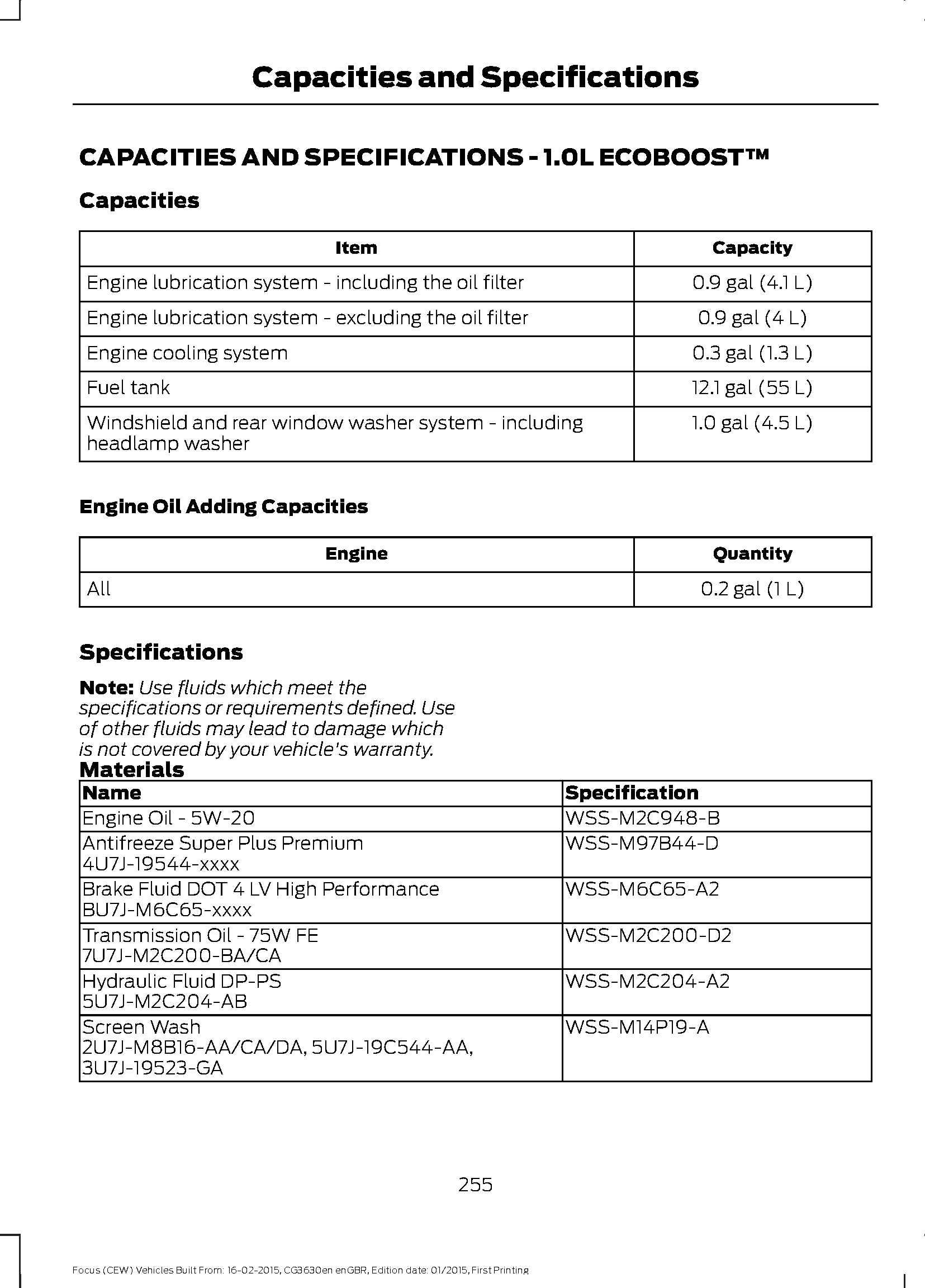
| 1.0L EcoBoost | 2015–2018 | 4.1 quarts (3.9 liters) | 5W-20 |
| 2.0L EcoBoost (ST) | 2013–2018 | 5.7 quarts (5.4 liters) | 5W-30 |
| 2.3L EcoBoost (RS) | 2016–2018 | 5.7 quarts (5.4 liters) | 5W-30 |
Expert advice: The EcoBoost engines have a higher oil capacity. These engines run hotter due to turbocharging, so extra oil helps with cooling and protection.
Fourth Generation Ford Focus (2019–present)
The newest Focus models are not sold in the US, but are popular in Europe, Asia, and other regions. Engines include 1. 0L and 1. 5L EcoBoost, and 2. 0L diesel.
| Engine | Years | Oil Capacity (with filter) | Recommended Oil Type |
|---|---|---|---|
| 1.0L EcoBoost | 2019–present | 4.1 quarts (3.9 liters) | 5W-20 / 5W-30 |
| 1.5L EcoBoost | 2019–present | 4.5 quarts (4.3 liters) | 5W-30 |
| 2.0L TDCi Diesel | 2019–present | 4.5 quarts (4.3 liters) | 0W-30 (diesel) |
Non-obvious insight: If you own a Focus outside North America, always check your regional owner’s manual. Oil capacity and recommended type can change by country, especially for diesel models.
How To Check Your Ford Focus Oil Level
Checking your oil level is a simple but essential task. It lets you know if your engine has enough oil and if it’s time for a change. Here’s how to do it safely and accurately:
- Park on a level surface: Wait at least 10 minutes after turning off the engine to let the oil settle.
- Open the hood: Find the yellow or orange dipstick (it usually has a ring handle).
- Pull out the dipstick: Wipe it clean with a rag or paper towel.
- Reinsert fully: Push the dipstick all the way back in, then pull it out again.
- Read the level: Look for two marks (MIN and MAX) or crosshatch area. Oil should be between these marks.
- Check oil quality: Oil should be amber or brown, not black or gritty.
Common mistake: Many people check oil right after shutting off the engine, which gives an inaccurate reading. Always let the car sit for a few minutes first.
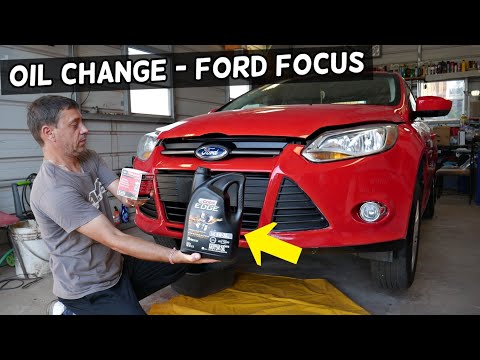
How To Change Oil In A Ford Focus
Changing your own oil can save money and help you understand your car better. Here’s a step-by-step guide for most Ford Focus models:
Tools And Materials You’ll Need
- Correct amount of engine oil (see above tables)
- New oil filter
- Socket wrench and oil filter wrench
- Oil drain pan
- Funnel
- Gloves and rags
- Jack and jack stands (if needed)
Step-by-step Instructions
- Warm up the engine: Run the car for 2–3 minutes to thin the oil.
- Secure the car: Park on a level surface. If needed, raise the front with a jack and secure with jack stands.
- Drain old oil: Place the drain pan under the oil pan. Remove the drain plug and let oil flow out.
- Replace the oil filter: Unscrew the old filter. Lightly oil the gasket on the new filter and screw it on by hand.
- Replace drain plug: Tighten securely but don’t over-tighten.
- Add new oil: Use a funnel to pour in the correct amount of oil.
- Check for leaks: Start the engine and look for leaks under the car.
- Check oil level: After a few minutes, shut off the engine and check the dipstick. Top up if needed.
Disposal Of Old Oil
Never pour used oil down a drain or on the ground. Take it to an auto parts store or recycling center.
Non-obvious tip: When adding new oil, pour slowly and check the dipstick after every quart if you’re unsure. It’s easier to add more oil than remove excess.
How Often Should You Change Oil In A Ford Focus?
The right oil change interval depends on your engine, driving conditions, and oil type. Ford generally recommends:
- Conventional oil: Every 5,000 miles (8,000 km) or 6 months
- Synthetic oil: Every 7,500–10,000 miles (12,000–16,000 km) or 12 months
However, if you drive in harsh conditions (short trips, extreme temperatures, stop-and-go traffic), change oil more often.
Expert advice: Always check your owner’s manual. Some newer Focus models have an oil life monitor. If the oil change light comes on, change the oil soon—even if you haven’t reached the mileage interval.
What Happens If You Overfill Or Underfill Engine Oil?
Getting the oil level wrong can cause real problems:
- Overfilling: Too much oil can cause pressure to build up. This may lead to oil leaks, foaming, or even damage to seals and internal parts. In turbocharged engines, overfilling can damage the turbo.
- Underfilling: Too little oil means less protection. This leads to increased friction, overheating, and faster engine wear.
If you accidentally overfill, drain some oil out as soon as possible. If you’re under, add more until you reach the correct level.
Insider tip: Always check the dipstick after adding oil, not just after draining. Even professionals sometimes misjudge the exact amount needed.
Ford Focus Oil Capacity Compared To Similar Cars
How does the Ford Focus oil capacity stack up against other compact cars? Here’s a comparison with some popular rivals:
| Car Model | Engine | Oil Capacity (with filter) |
|---|---|---|
| Ford Focus 2.0L | 2.0L I4 | 4.3–4.5 quarts |
| Honda Civic 2.0L | 2.0L I4 | 4.4 quarts |
| Toyota Corolla 1.8L | 1.8L I4 | 4.4 quarts |
| Hyundai Elantra 2.0L | 2.0L I4 | 4.2 quarts |
| Volkswagen Golf 1.4L TSI | 1.4L I4 Turbo | 4.2 quarts |
Observation: The Ford Focus has a similar oil capacity to most of its competitors. Turbocharged engines, like the Focus ST/RS, may require more oil than standard models.
Choosing The Right Oil For Your Ford Focus
Oil capacity is just one part of the story—the oil type matters, too. Ford recommends specific grades for each engine. Using the wrong oil can reduce protection and void your warranty.
Oil Grades And Viscosity
The numbers (such as 5W-20, 5W-30) refer to viscosity, or how thick the oil is at different temperatures.
- 5W-20: Flows easily in cold weather, common for most Focus engines.
- 5W-30: Slightly thicker, used in performance or turbocharged engines.
- 0W-30: For diesel engines, especially in colder climates.
Synthetic Vs. Conventional Oil
- Synthetic oil: Offers better protection, lasts longer, and resists breakdown at high temperatures. Most modern Focus models use synthetic.
- Conventional oil: Less expensive, but requires more frequent changes.
Insider tip: If your Focus has a turbocharger, always use full synthetic oil. Turbo engines get much hotter and need the extra protection.
Signs Your Ford Focus Needs An Oil Change
Apart from mileage, watch for these signs:
- Check engine or oil light: Always investigate if these come on.
- Loud engine noise: Knocking or ticking sounds may mean low or dirty oil.
- Exhaust smoke: Blue or black smoke can be a warning sign.
- Dirty or dark oil: Check the dipstick for color and particles.
- Poor fuel economy: A sudden drop can sometimes point to old oil.
If you notice any of these, check your oil level and quality immediately.
Common Oil Change Mistakes Focus Owners Make
Even experienced drivers sometimes make mistakes. Here are some common errors to avoid:
- Using the wrong oil type: Always check your manual or the cap on your engine.
- Not changing the oil filter: Old filters can clog and reduce oil flow.
- Over-tightening the drain plug: This can strip threads and cause leaks.
- Forgetting to reset the oil change light: In newer Focus models, you need to reset the system after each change.
- Ignoring small leaks: Even a few drops can lead to bigger issues over time.
Non-obvious insight: Some Focus models have a plastic oil pan, which can crack if the plug is over-tightened. Always use the correct torque.
How To Reset Oil Change Light On Ford Focus
After changing the oil, it’s important to reset the oil change indicator. This tells the car’s computer that it’s running with fresh oil. Here’s how to do it on most Focus models:
- Turn the ignition to ON (without starting the engine).
- Press both the gas and brake pedals at the same time.
- Hold for about 25 seconds. The oil change light will flash and then reset.
- Release the pedals and turn off the ignition.
Some newer models may use different procedures. Always check your manual for exact instructions.
Ford Focus Oil Capacity: Real-world Examples
To make this more practical, let’s look at a couple of real-world oil changes:
Example 1: 2014 Ford Focus Se 2.0l
- Owner drains old oil, replaces filter, and adds 4 quarts.
- Checks dipstick—still a bit low.
- Adds 0.3 quarts more, level is now perfect.
- Total: 4.3 quarts (matches recommended capacity).
Example 2: 2017 Focus St 2.0l Ecoboost
- Drains old oil and filter.
- Adds 5 quarts, checks dipstick—slightly below maximum.
- Adds remaining 0.7 quarts, level is perfect.
- Total: 5.7 quarts.
Lesson: Go slow, check as you add, and don’t assume every engine takes the same amount.
Maintaining Oil Health: Extra Tips
Keeping your oil in good shape goes beyond regular changes:
- Check oil level monthly: Especially before long trips.
- Use quality oil filters: Cheap filters can fail and cause engine damage.
- Watch for leaks: Look under your car for fresh oil spots.
- Keep service records: Track oil changes for warranty and resale value.
- Listen to your car: Unusual noises or smells can be early warnings.
Where To Find Reliable Information
If you’re unsure about your Ford Focus oil capacity or oil type, check these sources:
- Owner’s manual: The best, most specific information for your car.
- Oil cap: Often lists the recommended oil grade.
- Dealer or mechanic: Especially for rare engines or modified vehicles.
- Official Ford website: Offers maintenance schedules and technical details.
For more details, visit the Official Ford Oil Change Guide.
Frequently Asked Questions
How Do I Know Which Ford Focus Engine I Have?
Check the sticker under your hood or on the driver’s door jamb. The owner’s manual also lists engine types by VIN. If you’re unsure, your local Ford dealer can look it up.
What Happens If I Use The Wrong Oil Capacity?
Using too little oil can cause engine damage from lack of lubrication. Too much oil can create pressure, leaks, and foaming, especially in turbocharged engines. Always use the recommended oil capacity for your specific Focus model.
Can I Switch From Conventional To Synthetic Oil In My Focus?
Yes, most Ford Focus engines can use synthetic oil, even if they started with conventional. Synthetic oil offers better protection and longer change intervals. Just be sure to use the correct viscosity.
Is It Bad To Mix Different Brands Of Oil?
Mixing brands is not harmful as long as the viscosity and rating (like 5W-20) match. However, always avoid mixing different types (like conventional and synthetic) unless necessary.
How Often Should I Check My Ford Focus Engine Oil Level?
It’s smart to check at least once a month, and before long trips. Check more often if your car is older, leaks, or burns oil.
Keeping your Ford Focus engine oil at the right level and using the correct oil type is one of the simplest ways to keep your car healthy for years. With this guide, you can confidently handle oil changes, avoid common mistakes, and enjoy worry-free driving.