
A nail gun is a tool that many people see on building sites, in workshops, or even in home garages. It saves time and energy, making jobs that used to take hours much faster and easier. But if you have ever wondered how a nail gun actually works, you are not alone.
While it looks simple—just point and shoot—the technology inside is quite clever. Understanding how a nail gun works helps you use it safely, pick the right type for your project, and even fix it if something goes wrong. Let’s take a deep look at the world of nail guns, breaking down their types, inner parts, working principles, safety tips, and more.
By the end, you will see just how much goes on each time you hear that “thunk” of a nail being driven home.
What Is A Nail Gun?
A nail gun, sometimes called a nailer, is a power tool that quickly drives nails into wood, metal, concrete, or other materials. Instead of using a hammer, the nail gun uses energy from compressed air, electricity, or even gunpowder to push nails with force and speed.
This tool is popular with construction workers, carpenters, roofers, and anyone who needs to secure material together fast.
The main purpose of a nail gun is to save time and reduce physical effort. In the past, using a hammer for large projects was slow and tiring. With a nail gun, you can drive hundreds or thousands of nails in a day with less strain.
This tool also helps make the work more consistent, since each nail goes in with the same strength.
Main Types Of Nail Guns
Not all nail guns are the same. They come in different styles, each designed for certain jobs and powered in different ways. Here are the most common types you will see:
Framing Nailers
These are the biggest and strongest nail guns. Framing nailers are used for building the structure of houses, sheds, decks, and fences. They can drive large nails (2 to 3.5 inches long) into thick wood quickly. Most framing nailers are powered by air or gas.
Finish Nailers
Finish nailers are for smaller, more delicate work—like installing trim, molding, or cabinets. They use thinner nails that leave small holes, which are easy to hide or fill. Finish nailers can be powered by air, battery, or even corded electricity.
Brad Nailers
A brad nailer is similar to a finish nailer, but it shoots even smaller nails called brads (usually 18-gauge). These are perfect for attaching thin trim or doing craft projects. Brad nailers are very gentle and less likely to split wood.
Roofing Nailers
Roofing nailers are made for putting shingles on roofs. They shoot special nails with wide heads that hold shingles in place. Roofing nailers are usually air-powered and built for speed.
Flooring Nailers
Flooring nailers help install hardwood floors. They are designed to drive nails at an angle, holding each floorboard tightly in place without damaging the surface.
Palm Nailers
These small tools fit in your palm and are used for tight spaces where a big nailer won’t fit. Palm nailers are great for nailing joist hangers or metal connectors.
Siding Nailers
Siding nailers are made for attaching siding to the outside of buildings. They use nails with special heads and shanks to keep siding secure in all weather.
Each type of nail gun is built to handle certain tasks. Using the wrong one can damage your work or even be unsafe.
Credit: www.everwinpneumatic.com
How Does A Nail Gun Work? (core Mechanisms Explained)
The heart of the nail gun is its mechanism—the way it pushes a nail into the material. While the outer shape and size might change, almost all nail guns share some basic working steps:
- Loading: Nails are loaded into a magazine (a long slot or tube) on the tool.
- Positioning: The tip of the gun is placed against the surface to be nailed.
- Triggering: The user pulls the trigger, starting the firing process.
- Driving: The gun uses stored energy (from air, battery, gas, or gunpowder) to drive a piston or hammer, which pushes the nail out at high speed.
- Resetting: The gun resets, loading the next nail for use.
But the details depend on the power source. Let’s look at each main type.
Pneumatic Nail Guns (air-powered)
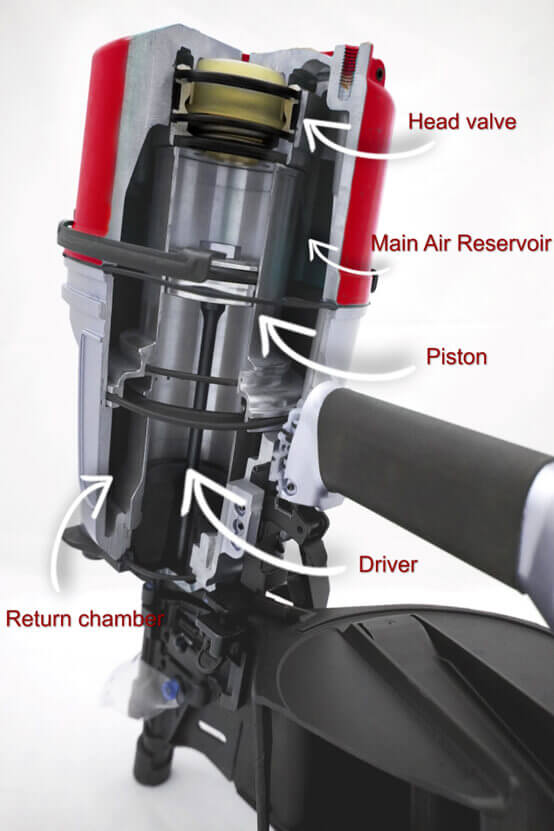
Most common on building sites, pneumatic nail guns use compressed air. An air compressor sends high-pressure air through a hose into the nail gun. Here’s what happens inside:
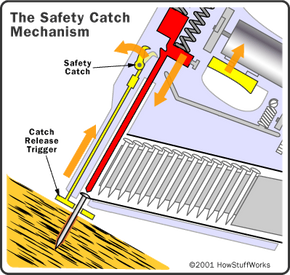
- When you press the tip against the wood, a safety lock is released.
- Pulling the trigger opens a valve, letting air rush into a cylinder.
- The air pushes a piston down.
- The piston hits the nail, driving it into the wood.
- A spring or air pressure then pushes the piston back up, ready for the next shot.
Pneumatic nail guns are fast, powerful, and can fire many nails in a row. They need an air compressor, which can be noisy and heavy.
Electric Nail Guns
Electric nail guns come in two styles: corded (plugged into the wall) and cordless (using a battery).
- Corded electric nailers use a motor and gears to pull back a spring or magnetic hammer.
- When you pull the trigger, the spring is released, slamming the hammer forward and pushing the nail.
Cordless electric nailers use a battery to power the motor. Some advanced models use flywheel technology: the motor spins a heavy wheel, and when you fire, the wheel’s energy drives the nail.
Electric nail guns are lighter and quieter than air-powered ones. They are also portable and good for small jobs, but may not be as strong as pneumatic models.
Gas-powered Nail Guns
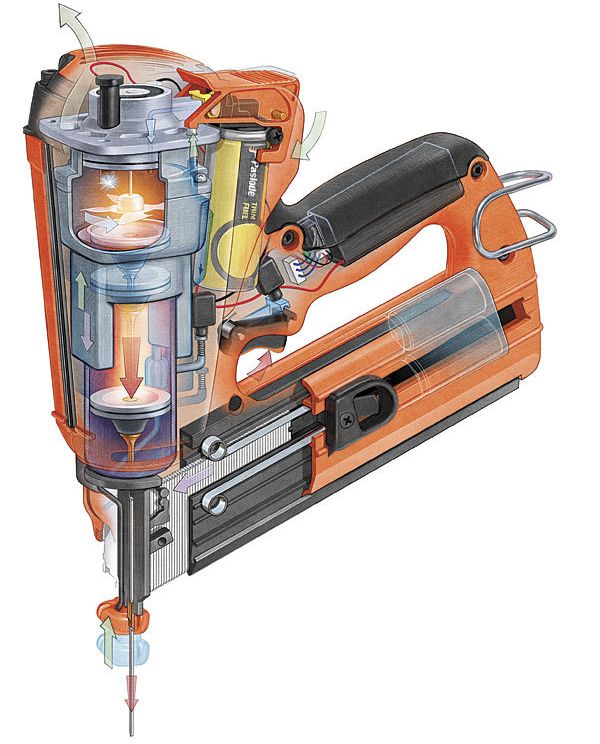
Gas nail guns use a small fuel cell (usually propane or butane) and a battery. Here’s how they work:
- Each time you press the tip and pull the trigger, a small amount of gas is released into a combustion chamber.
- A spark from the battery ignites the gas.
- The mini explosion pushes a piston, driving the nail.
Gas nailers are powerful and don’t need an air hose. They are often used outdoors or for jobs where you move around a lot.
Powder-actuated Nail Guns
These are the most powerful type and are sometimes called “Ramset” or “Hilti” guns. They use a small explosive charge, like a blank gun cartridge.
- When fired, the charge explodes and the gas forces a piston forward.
- The piston drives the nail into hard materials, like concrete or steel.
Powder-actuated tools are mostly used by professionals. They need special training, as they are almost like firearms in their operation.
Key Parts Inside A Nail Gun
To understand how a nail gun works, it helps to know its main parts. Each type has some unique pieces, but most share these:
- Magazine: Holds the strip or coil of nails and feeds them toward the firing area.
- Nose (or Tip): The part that touches the work surface. It often has a safety lock to prevent accidental firing.
- Trigger: Starts the firing process when pulled.
- Piston/Driver Blade: Moves quickly to hit the nail and force it out.
- Return Spring: Pushes the piston back to its starting position after firing.
- Valve (for air guns): Controls the flow of air into the cylinder.
- Combustion Chamber (for gas guns): Where the gas mixes and ignites.
- Battery/Fuel Cell (for cordless or gas guns): Powers the tool.
Each part must work together smoothly for safe and effective nailing.
Credit: www.finehomebuilding.com
Firing Modes: Sequential Vs. Contact Trip
Nail guns can fire in different ways, depending on the trigger and safety system. The two main modes are:
Sequential Firing
- You must press the nose against the surface, then pull the trigger.
- If you release the trigger, you need to repeat the steps.
- This method is safer and prevents accidental double-fires.
Contact Firing (bump Firing)
- You hold the trigger down and tap the nose on the surface to fire a nail.
- Each tap shoots a nail, making it very fast for experienced users.
- However, it’s easier to make mistakes or have misfires.
Some nail guns let you switch between these modes. Beginners should always start with sequential firing for safety.
How Does The Magazine Feed Nails?
The magazine is more than just a storage area. It’s a smart system that moves each nail into place as the tool fires. There are two main magazine styles:
- Stick Magazine: Holds nails in a straight row, often connected by paper, plastic, or wire strips. Used in most framing, finish, and brad nailers.
- Coil Magazine: Holds nails in a long coil, allowing for more nails (up to 300+). Common in roofing and siding nailers.
A small spring or follower pushes the nails forward, so the next one is always ready to fire. Running out of nails can jam the gun or damage the driving blade, so always check the magazine before starting big jobs.
Here’s a quick comparison of magazine types:
| Magazine Type | Capacity | Used In | Pros | Cons |
|---|---|---|---|---|
| Stick | 20–40 nails | Framing, finish, brad | Lightweight, easy to load | Holds fewer nails |
| Coil | 100–350 nails | Roofing, siding | High capacity, fewer reloads | Heavier, can be bulky |
Safety Features: How Nail Guns Prevent Accidents
Nail guns are powerful tools, so modern models have built-in safety systems. Here are the main ones:
- Contact Safety Tip: The gun won’t fire unless the tip is pressed against a surface. This prevents shooting nails into the air.
- Sequential Trigger: Forces a safe order—tip first, then trigger.
- Dry Fire Lockout: Stops the gun from firing when out of nails.
- Exhaust Vents: Direct air, gas, or dust away from your face.
- Non-Marring Nose: A soft tip protects delicate surfaces from scratches.
Even with these features, serious injuries can happen. Always wear safety glasses, keep your hands away from the firing area, and never point a nail gun at anyone.
Nail Gun Vs. Hammer: How Much Faster?
You might wonder just how much time a nail gun saves compared to a hammer. Studies and real-world tests show that a skilled worker can drive about 20–30 nails per minute with a hammer. With a nail gun, that number can jump to 60–100 nails per minute or more.
Over a full day, this means thousands of extra nails, less hand fatigue, and fewer mistakes.
In a typical house framing job, using a nail gun instead of a hammer can cut nailing time by up to 70%. For big construction projects, this adds up to huge savings in labor costs and faster project completion.
What Types Of Nails Do Nail Guns Use?
Nail guns don’t use just any old nail. They need special nails made for their magazines and firing systems. These nails can be:
- Collated: Held together by paper, plastic, or wire so they move smoothly through the magazine.
- Different shapes: Round head, clipped head, or D-head.
- Various sizes: From tiny 1/2-inch brads to big 3.5-inch framing nails.
Each job needs the right nail:
- Framing: Large, strong nails for wood frames
- Finishing: Thin, short nails for trim
- Roofing: Nails with wide heads for shingles
- Siding: Rust-resistant nails for outdoor use
Using the wrong nails can jam the gun or weaken your work. Always check the nail type and size before loading.
Here’s a simple guide to common nail types:
| Nailer Type | Gauge | Nail Length Range | Common Uses |
|---|---|---|---|
| Framing | 8–10 | 2–3.5 in | House framing, decks, fencing |
| Finish | 15–16 | 1–2.5 in | Molding, cabinets, trim |
| Brad | 18 | 1/2–2 in | Small trim, crafts |
| Roofing | 11–12 | 7/8–1.75 in | Shingles, roofing felt |
Advanced Technologies In Modern Nail Guns
The basic design of nail guns has not changed much in decades. But new models have some exciting improvements that make them safer, faster, and easier to use.
- Brushless Motors: In cordless nailers, these motors use less energy and last longer.
- Depth Adjustment: Lets you set how deep each nail goes, avoiding surface damage.
- LED Lights: Brighten your workspace, especially in dark corners.
- Jamming Release: Makes it easy to clear jams without tools.
- Smart Triggers: Some tools use sensors to detect when they are pressed, reducing accidental fires.
Some high-end nail guns even track your usage data or connect to your smartphone. While these upgrades are not needed for every user, they can make professional work more efficient.
Common Problems And How To Fix Them
Even the best nail gun can have issues. Knowing what can go wrong helps you fix problems quickly and avoid downtime.
Nail Jams
A jam happens when a nail gets stuck between the driver blade and the magazine. To fix:
- Disconnect power (unplug, remove battery, or disconnect air hose).
- Open the nose or magazine (many have a quick-release lever).
- Remove the jammed nail with pliers.
- Reload and test.
Misfiring
If the gun fires but no nail comes out, check:
- Magazine for empty or poorly loaded nails.
- Air pressure (for pneumatic guns).
- Battery charge (for cordless models).
- Clogged driver blade.
Weak Firing
If nails don’t go in all the way:
- Increase air pressure or check compressor.
- Use correct nail size.
- Clean the tool; dust or debris can slow the piston.
Leaks (air Or Gas)
If you hear hissing:
- Tighten hose connections.
- Replace old or cracked O-rings and seals.
- Don’t use tape to cover leaks; this is unsafe.
Most problems are easy to fix if you follow the manual. Regular cleaning and oiling can prevent many issues.
Real-world Example: Using A Nail Gun On A Home Project
Imagine you are building a wooden deck. With a hammer, each nail takes a few seconds, and you may miss sometimes, bending nails or hurting your thumb. With a pneumatic framing nailer:
- Load a strip of framing nails into the magazine.
- Attach the air hose.
- Press the nose firmly to the board and pull the trigger.
- The nail sinks in instantly, flush with the wood.
- Move to the next spot and repeat.
For a deck with 500 nails, you might finish in under an hour, instead of several hours with a hammer.
Essential Safety Tips For Nail Gun Users
While nail guns speed up work, they also cause thousands of injuries each year. Here’s how to stay safe:
- Always wear eye protection: Nails can bounce or fly.
- Keep hands away from the firing area: Hold material at least 12 inches from where you are nailing.
- Never point at people: Treat it like a loaded firearm.
- Use the right nails: Wrong nails can jam or misfire.
- Disconnect power before fixing jams: Prevents accidents.
- Set firing mode to sequential for beginners: Bump firing is fast but risky.
- Check your surroundings: Watch for wires, pipes, or other hazards.
- Read the manual: Each model has unique features and needs.
Many injuries happen because users skip basic safety steps. Take a few seconds to check before you start.
Choosing The Right Nail Gun For Your Project
There are many nail guns to pick from, so it’s important to match your tool to the job. Here’s what to consider:
- Material: Are you nailing wood, metal, concrete, or siding?
- Nail Size: Does your project need big framing nails or small brads?
- Power Source: Do you have access to an air compressor, or do you need a cordless tool?
- Weight and Size: Will you use the tool overhead or in tight spaces?
- Frequency of Use: For daily work, invest in a high-quality model. For small projects, a basic tool may be enough.
Avoid the mistake of buying a powerful framing nailer for delicate trim work—it will split the wood or leave visible holes. Likewise, don’t use a brad nailer for building a fence; the nails will not hold.
Credit: home.howstuffworks.com
Environmental And Cost Considerations
Using a nail gun can have both financial and environmental impacts.
- Energy Use: Air compressors and electric nailers use power. Battery-powered models are more efficient but require charging.
- Nail Waste: Collated nails leave behind plastic or wire strips. Clean up to avoid litter.
- Cost: Nail guns range from $30 (basic brad nailers) to $400+ (high-end framing or gas models). Consider your budget and how often you’ll use the tool.
Many tool rental shops offer nail guns for short-term use, which can save money for one-time projects.
Innovations In Nail Gun Safety And Design
Recent years have brought big advances to nail gun safety and user experience. For example, some brands now use anti-dry fire systems that automatically stop firing when the magazine is empty. Others use advanced electronic controls to detect double-fires or jams before they happen.
Smart technology can also help with tool tracking, theft prevention, and maintenance reminders. For professional crews managing many tools, these upgrades can make a big difference in efficiency and safety.
Environmental Impact And Recycling
A less obvious point is what happens to nail guns and nails when you are done with them. Most nail guns can be repaired and last for many years, but eventually, they wear out. Instead of throwing them away, many parts can be recycled.
Steel, aluminum, and batteries should go to proper recycling centers.
Nails themselves are usually left inside wood, but unused collated strips and packaging should be disposed of responsibly. Check local rules for recycling options, especially for batteries and gas canisters.
Nail Gun Myths And Misconceptions
Many beginners have ideas about nail guns that aren’t true. Here are two common myths:
- Myth: Nail guns are only for professionals. In fact, many homeowners and hobbyists use nail guns for small projects. There are affordable, easy-to-use models for beginners.
- Myth: All nail guns are the same. As you have seen, there are big differences in power, size, and purpose. Picking the right tool is important for safety and results.
Understanding how a nail gun works makes you more confident and safe, whether you are hanging a picture frame or building a whole house.
Frequently Asked Questions
How Dangerous Are Nail Guns?
Nail guns can be very dangerous if not used properly. Each year, thousands of people go to the hospital because of nail gun injuries. Most accidents happen when users skip safety steps or use the wrong firing mode. Wearing eye protection and following the manual greatly lowers the risk.
What Kind Of Maintenance Does A Nail Gun Need?
Regular maintenance keeps your nail gun working smoothly. For pneumatic guns, oil the moving parts with special air tool oil before each use. Clean dust and debris from the nose and magazine. Check for worn seals or O-rings. Electric and gas nailers should have their batteries and fuel cells checked and replaced as needed.
Can A Nail Gun Shoot Any Type Of Nail?
No, nail guns only work with certain nails made for their magazines and firing systems. Using the wrong size or type can cause jams, weak firing, or even break the tool. Always read the manual to find the right nails for your model.
Are Cordless Nail Guns As Powerful As Pneumatic Ones?
Cordless nail guns have improved a lot, especially with lithium batteries and brushless motors. For light and medium jobs, they work very well. However, for heavy-duty work like framing large buildings, pneumatic models still offer more power and longer run times.
Where Can I Learn More About Nail Gun Safety And Usage?
A good place to start is the Wikipedia page on nail guns or the safety guides from tool manufacturers. Many offer videos and manuals online that show proper usage and troubleshooting.
A nail gun is more than just a tool—it’s a mix of smart engineering, safety systems, and convenience. By understanding how it works, you can use it better, safer, and get the best results for your projects. Whether you are a pro or a beginner, knowing what’s inside and how to use it wisely is the key to getting the job done right.