
Spot welding is a process many people see but few truly understand. You might notice sparks flying in an auto repair shop or inside a factory, but what’s really happening? Spot welding is simple at first glance—join two pieces of metal together with heat and pressure—but the science and technique behind it are more interesting than most realize.
If you want to know how a spot welder works, whether you’re a student, hobbyist, or someone curious about manufacturing, you’re in the right place. This guide will walk you through the principles, the parts, the process, and the practical tips, all in clear language.
What Is Spot Welding?
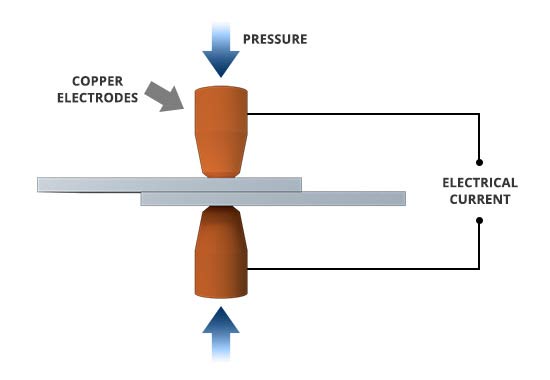
Spot welding is a type of resistance welding. It joins two or more pieces of sheet metal together by applying pressure and passing an electric current through the metal at a small “spot.” This creates a weld nugget, a tiny pool of molten metal that quickly cools and solidifies to form a strong joint.
This method is widely used in automotive, aerospace, and electronics industries. It’s fast, repeatable, and works best with thin metal sheets, usually steel or stainless steel. The main idea is simple: heat is generated where the resistance to electrical current is highest, which is at the contact point between the two sheets.
The Main Components Of A Spot Welder
Every spot welder, big or small, has a few essential parts. Understanding these makes it easier to see how the machine works.
1. Transformer
The transformer is the heart of the spot welder. It takes high-voltage, low-current electricity from the wall and converts it into low-voltage, high-current electricity. This is important because you want a lot of current to flow through the small contact area to generate heat, but you don’t want dangerous high voltages.
2. Electrodes
The electrodes are usually made of copper because copper conducts electricity very well and resists sticking to the melted metal. The electrodes press against the sheets of metal, focusing the current and pressure onto a small spot.
3. Control System
Modern spot welders use a control system—sometimes a simple timer, sometimes a computer—that controls how long the current flows and how much pressure the electrodes apply. This ensures each weld is consistent and strong.
4. Cooling System
Welding generates a lot of heat, not just in the metal but also in the electrodes. Many spot welders have a water cooling system to keep the electrodes from overheating and losing their shape.
5. Frame And Mechanism
The frame holds everything together and ensures the electrodes move precisely. In industrial machines, the frame is heavy and solid. In handheld models, it’s light and portable.
How A Spot Welder Works: Step-by-step
Let’s break down what happens during spot welding, step by step. This process is nearly the same whether you’re working with a hand-held welder or a giant robot on a car assembly line.
- Positioning the Metal: The two (or more) sheets of metal are placed between the electrodes, lined up exactly where you want the weld.
- Applying Pressure: The electrodes close, squeezing the metal sheets together with a specific force. This is important for making a strong weld.
- Passing the Current: The control system sends a huge burst of electric current (often several thousand amps) through the electrodes for a short time, usually less than a second.
- Weld Formation: The resistance at the contact point heats the metal up to its melting point, creating a small, round “weld nugget.”
- Cooling and Holding: The current switches off, but the electrodes stay in place for a moment. This lets the molten metal cool and solidify under pressure, making a strong joint.
- Releasing the Weld: The electrodes open, and the finished weld is ready.
The Science Behind Spot Welding
At its core, spot welding depends on Joule’s Law. This law states that heat produced by an electric current is proportional to the square of the current, the resistance, and the time the current flows. In simple terms:
Heat = Current² x Resistance x Time
By focusing a large current onto a small area where resistance is highest (the contact point), spot welding melts only the area you want to join. The rest of the metal stays solid.
A key detail: the resistance at the metal-to-metal contact is much higher than within the bulk of the metal or electrodes. This is what makes spot welding efficient and precise.

Types Of Spot Welders
Spot welders come in different shapes and sizes, each suited for specific jobs. Knowing the types helps you pick the right tool for your needs.
1. Handheld Spot Welders
These are small, portable machines. They’re used for quick repairs, small projects, or working in tight spaces. The operator manually positions the electrodes.
2. Pedal-operated Spot Welders
These machines have a foot pedal to close the electrodes. They’re common in small workshops and allow for more precise control than handheld models.
3. Pneumatic Spot Welders
Here, compressed air moves the electrodes. This gives strong, consistent pressure and is used in factories for high-volume work.
4. Robotic Spot Welders
These are part of automation systems in car manufacturing and other industries. Robots position the electrodes and control the welding process automatically.
5. Tabletop Spot Welders
These are small bench-mounted machines for delicate work, like making battery packs or electronics.
6. Projection Welders
A special type of spot welder, these use raised projections on one of the metal pieces to focus the current and pressure. This is useful for welding nuts, bolts, or other attachments.
Common Applications Of Spot Welding
Spot welding is everywhere, even if you don’t always see it. Some of the most common uses include:
- Car bodies: Most cars use spot welding to join steel sheets. A single car can have thousands of spot welds.
- Appliances: Washing machines, refrigerators, and microwaves all use spot welds.
- Electronics: Battery packs, especially in electric cars and laptops, are assembled with spot welding.
- Aircraft: Some airplane parts use spot welds for lightweight, strong joints.
- Furniture: Metal chairs, tables, and cabinets often use spot welding for hidden joints.
Materials Used In Spot Welding
Not all metals are ideal for spot welding. Some work much better than others.
Best Choices
- Low-carbon steel: Most common and easiest to weld.
- Stainless steel: Good for strength and corrosion resistance.
- Nickel alloys: Used in batteries and electronics.
More Difficult Materials
- Aluminum: Can be spot welded but needs special settings because it conducts electricity very well (lower resistance).
- Copper: Rarely spot welded because it melts at a high temperature and conducts electricity too efficiently.
Not Suitable
- Very thick metals: Spot welding is not practical for thick plates.
- Non-conductive materials: Plastics, ceramics, and non-metals don’t work.
Key Factors That Affect Spot Welding Quality
Getting a good spot weld is not just about pressing a button. Several details make a big difference.
1. Electrode Force
The pressure from the electrodes must be just right. Too little, and the sheets won’t bond well. Too much, and the metal might be crushed or the weld area will spread too far.
2. Welding Current
The size of the electric current is critical. Higher current means more heat, but too much can burn through the metal.
3. Welding Time
The length of the current pulse matters. Too short, and the weld won’t form. Too long, and the metal may be weakened or distorted.
4. Surface Condition
Clean, unpainted metal is best. Rust, oil, or paint on the surface can block the current and create weak welds.
5. Electrode Shape And Material
Flat, well-shaped copper electrodes give better results. Worn or dirty electrodes reduce weld quality.
6. Cooling
Proper cooling prevents the electrodes from overheating and sticking to the workpiece, which can damage both the tool and your project.
Advantages Of Spot Welding
Spot welding remains popular for several reasons. Here’s why many industries rely on it.
- Speed: Each weld takes less than a second. This is perfect for high-volume production.
- Simplicity: The process is straightforward and easy to automate.
- Cost-effective: No filler materials or special gases are needed.
- Consistency: Machines can produce thousands of identical welds.
- Strong joints: Properly made spot welds are strong and reliable.
Limitations And Challenges Of Spot Welding
No process is perfect. Spot welding has some drawbacks you should know about.
- Limited to thin sheets: Not suitable for thick materials.
- Requires clean metal: Dirty surfaces reduce quality.
- Visible spots: The welds are usually visible as small circles.
- Limited joint design: Works best for overlapping sheets, not for all joint shapes.
- Possible electrode wear: Electrodes need regular maintenance or replacement.
Spot Welding Vs. Other Welding Methods
How does spot welding compare to other common methods? Here’s a look at the main differences.
| Welding Method | Main Use | Materials | Speed | Skill Required |
|---|---|---|---|---|
| Spot Welding | Sheet metal | Steel, stainless, nickel | Very fast | Low to medium |
| MIG Welding | Thicker metal, repairs | Steel, aluminum | Medium | Medium |
| TIG Welding | Precision work | All metals | Slower | High |
| Arc Welding | Construction, heavy work | Steel, iron | Medium | Medium |
Real-world Examples Of Spot Welding
Spot welding is not just for factories. Let’s look at some real uses and what makes each unique.
Automotive Manufacturing
The body of almost every car is held together by thousands of spot welds. Robots move quickly, making weld after weld along seams. This method is chosen because it’s fast, cheap, and produces strong joints that can handle vibrations and impacts.
Battery Pack Assembly
Lithium-ion battery packs, like those in electric cars or laptops, are built using spot welding. The process is precise, and the heat is localized so the delicate cells are not damaged. Special electrodes and settings are used to handle the thin metal strips.
Diy Metalwork
Hobbyists use small spot welders to repair tools, create art, or restore old items. The machines are affordable, and anyone can learn the basics with practice.
How To Use A Spot Welder Safely
Safety is critical with any welding process. Spot welders may seem simple, but they can deliver high current and temperatures.
Key Safety Tips
- Wear safety gear: Always use gloves, eye protection, and closed shoes.
- Work in a clean, dry area: Avoid wet floors and clutter.
- Keep electrodes cool: Overheated electrodes can stick or fail.
- Ventilation: Some metals produce fumes—work in a well-ventilated place.
- Avoid jewelry: Remove rings, watches, and necklaces to prevent electrical burns.
Less Obvious Safety Insights
- Insulate your hands: Use dry gloves, not just for heat but also for electrical insulation.
- Check for hidden wires: Never weld near hidden electrical wiring in metal parts or tables.
Troubleshooting Common Spot Welding Problems
Even with good equipment, problems can happen. Here’s how to spot and fix common issues.
Weak Welds
If the welds break easily, check:
- Current too low: Increase the setting.
- Dirty surfaces: Clean the metal.
- Electrode pressure too light: Adjust the force.
Burn-through
Holes appear in the sheet when:
- Current is too high: Reduce the setting.
- Welding time is too long: Shorten the pulse.
- Metal is too thin: Try thicker sheets or lower power.
Sticking Electrodes
If the electrodes stick to the workpiece:
- Overheating: Improve cooling.
- Dirty electrodes: Clean or replace them.
- Too much time: Shorten the weld pulse.
Inconsistent Weld Size
If weld spots are irregular:
- Uneven pressure: Adjust or repair the mechanism.
- Worn electrode tips: Reshape or replace them.
- Fluctuating power supply: Check electrical connections.

Key Factors When Choosing A Spot Welder
If you’re buying a spot welder, here’s what matters most.
| Factor | Why It Matters | Typical Range |
|---|---|---|
| Current Output | Determines max weld size | 1000–10,000 amps |
| Electrode Size | Affects weld spot and heat | 3–13 mm diameter |
| Cooling System | Prevents overheating | Air, water-cooled |
| Control Type | Manual or programmable | Timer, microprocessor |
| Machine Size | Portability and space | Handheld to floor models |
Two Insights Beginners Often Miss
- Duty cycle: This is how long the welder can operate before needing to cool down. For frequent use, pick a machine with a higher duty cycle.
- Electrode maintenance: New users forget to check and reshape electrode tips. This small task makes a big difference in weld quality.
Maintenance Tips For Spot Welders
Keeping your spot welder in good shape means better welds and longer machine life.
- Clean electrodes regularly: Use a file or sandpaper to keep the tips smooth.
- Check cooling system: Make sure water or air flows properly.
- Inspect cables and connections: Look for loose wires or worn insulation.
- Lubricate moving parts: Prevents sticking and wear.
- Test welds: Make a sample weld before starting important work.
The Future Of Spot Welding
Spot welding is over a century old but continues to evolve. Today, robots and computers allow for faster, more precise welds. New materials, like high-strength steels and aluminum alloys, bring challenges that require better machines and smarter controls. In electric vehicle production, battery spot welding is a critical process, and new electrode designs are being developed to handle thinner, more delicate connections.
Research continues into making spot welding more energy-efficient and adaptable to different materials. If you’re interested in the latest trends, the Wikipedia page on spot welding gives a good overview of current advances.
Frequently Asked Questions
What Metals Can Be Spot Welded?
Spot welding works best with low-carbon steel and stainless steel. It can also weld nickel alloys and, with special settings, aluminum. Metals like copper are difficult due to their high conductivity.
Why Are Copper Electrodes Used In Spot Welding?
Copper conducts electricity very well and resists sticking to molten steel. This allows it to focus heat at the weld without melting or wearing out quickly.
How Thick Can Metal Be For Spot Welding?
Spot welding is best for sheet metal up to about 3 mm thick. Thicker materials are difficult to weld properly and may require a different method.
Can You Spot Weld At Home?
Yes, small spot welders are available for home and hobby use. They are great for repairs, metal art, or battery packs. Always follow safety instructions and practice on scrap metal first.
What Is A “weld Nugget”?
A weld nugget is the small, round pool of molten metal formed during spot welding. It cools to form a strong bond between the sheets. The size and shape of the nugget affect the strength of the weld.
Spot welding is a process that combines simplicity with fascinating science. Whether you’re building cars, making batteries, or fixing a broken tool, understanding how a spot welder works gives you more control and better results. With good technique and the right machine, you can create strong, reliable joints in seconds—a skill that’s valuable in many fields today.