
Changing a jigsaw blade might seem simple, but doing it the right way is essential for safe, accurate, and smooth cutting. Many beginners underestimate this basic task, but a wrongly-installed blade can ruin your project, damage your tool, or even cause accidents.
If you want your jigsaw to work like new and your cuts to be clean, learning how to change a jigsaw blade properly is a must-have skill.
In this guide, you’ll learn every step, detail, and tip you need. Whether you use your jigsaw for DIY crafts, woodworking, metalwork, or home repairs, following the right process will give you better results and keep you safe. You’ll also discover how to choose the right blade, common mistakes to avoid, and how to handle different jigsaw models.
Let’s make blade changes quick, safe, and frustration-free.
Why Knowing How To Change A Jigsaw Blade Matters
The jigsaw is one of the most versatile power tools. It can cut wood, metal, plastic, and even tile, but only if the blade is right for the material and installed correctly. Many users get poor results or damage their jigsaw simply because they don’t pay attention to blade changes.
Here’s why changing the blade the right way is important:
- Safety: A loose or wrong blade can snap, bend, or fly out during use.
- Cut quality: The right blade, installed firmly, makes cleaner, straighter cuts.
- Tool life: Forcing a jigsaw with a dull or bent blade wears out the motor and parts.
- Adaptability: Each project may need a different type of blade for the best results.
Even if you’re a beginner, you’ll see an instant improvement by following the correct steps.
Types Of Jigsaw Blades And Their Differences
Before changing a blade, it helps to know the types available. Not every blade fits every jigsaw, and choosing the right one for your material is key.
The Two Main Blade Shank Types
- T-Shank Blades: These are the most common. They fit most modern jigsaws, especially popular brands like Bosch, Makita, and DeWalt. They’re easy to insert and remove, usually without tools.
- U-Shank Blades: These have a U-shaped notch at the top. They’re found in older models and often need a screwdriver or Allen key to change.
Blade Material And Tooth Design
- High Carbon Steel (HCS): Flexible, ideal for softwood and plastics.
- High-Speed Steel (HSS): Harder, resists heat, good for metal.
- Bi-metal: Combines HCS and HSS for flexibility and durability.
- Carbide Grit: For tile, ceramics, and abrasive materials.
Tooth shape also matters:
- Fine teeth: For metal or clean cuts in wood.
- Coarse teeth: For fast cuts in wood or soft materials.
- Reverse teeth: For cutting laminate or minimizing splintering.
Choosing the right blade ensures a smoother job and longer blade life.
Quick Comparison: Blade Types And Uses
Here’s a simple comparison to help you pick the right blade:
| Blade Type | Best For | Shank Style | Durability |
|---|---|---|---|
| HCS | Wood, plastic | T & U | Medium |
| HSS | Metal | T & U | High |
| Bi-metal | Wood, metal | T | Very High |
| Carbide Grit | Tile, ceramics | T | Extreme |
Tools And Safety Equipment Needed
Before you start, gather the right tools and safety gear. This will make the job easier and keep you protected.
- Replacement blade: Choose the right type for your material and jigsaw.
- Screwdriver or Allen key: Only for some U-shank jigsaws.
- Work gloves: Protect your hands from sharp blades and hot parts.
- Safety glasses: Shield your eyes from dust or broken blades.
- Dust mask: Optional, but helpful when working with wood or metal.
Make sure your jigsaw is unplugged (for corded models) or the battery is removed (for cordless ones) before you touch the blade.
Step-by-step Guide: How To Change A Jigsaw Blade
The steps can vary slightly between models, but the main process is similar. Here’s a complete walkthrough for both T-shank (tool-less) and U-shank (tool-required) jigsaws.
1. Power Off And Unplug The Jigsaw
Always start by cutting the power. Unplug the tool or remove the battery. Even a quick accidental press of the trigger can cause injury.
2. Allow The Blade To Cool
If you’ve just finished cutting, the blade will be hot. Wait a few minutes, or wear gloves, to avoid burns.
3. Locate The Blade Release Mechanism
For T-shank (tool-less) Jigsaws:
Most modern jigsaws have a quick-release lever or button near the blade clamp.
- Find the lever or button. It’s often colored or marked.
- Hold the jigsaw upright with the blade facing away from you.
For U-shank (tool-required) Jigsaws:
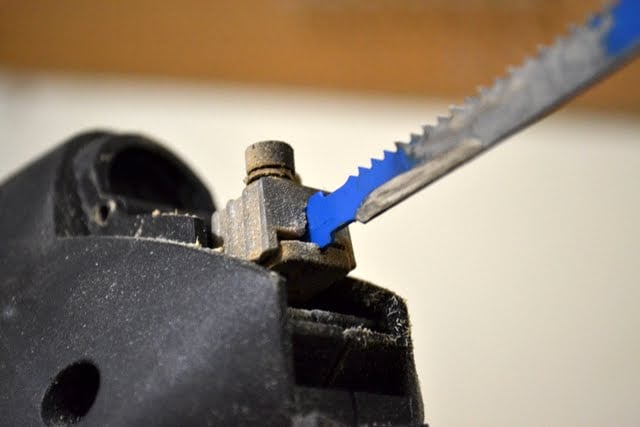
Older models have a screw or bolt holding the blade.
- Find the screw or bolt at the blade clamp.
- Use the correct screwdriver or Allen key.
4. Remove The Old Blade
T-shank:
- Flip or press the release lever/button.
- The blade should pop out or slide out easily. Sometimes you need to gently pull it out.
U-shank:
- Loosen the screw or bolt (counter-clockwise).
- Carefully slide the blade out. Take note of how it sits in the clamp.
5. Inspect The Blade And Clamp
Check for any damage, rust, or debris in the clamp area. Clean out dust or chips with a dry brush or compressed air.
6. Insert The New Blade
T-shank:
- Line up the blade with the clamp, teeth facing forward (away from the jigsaw body).
- Push the blade into the slot until it clicks or locks in place.
U-shank:
- Slide the blade into the clamp, making sure it sits in the correct slot or groove.
- Hold the blade firmly and tighten the screw or bolt.
7. Check Blade Alignment And Tightness
- The blade should be straight and secure.
- Wiggle it gently; it should not move side to side or fall out.
8. Test The Jigsaw
- Reconnect the power or insert the battery.
- Hold the jigsaw away from your body and run it for a few seconds.
- Watch for any wobbling, noise, or movement of the blade.
If all looks good, you’re ready to cut.
How To Choose The Right Jigsaw Blade
Even the best technique won’t help if you use the wrong blade. Here’s how to choose the right one for your project:
Consider The Material
- Wood: Use HCS blades with larger, spaced teeth for fast cuts. For fine, clean cuts, use blades with more teeth per inch (TPI).
- Metal: Choose HSS or bi-metal blades with fine teeth (21–24 TPI).
- Plastic: Use medium TPI HCS blades and avoid overheating.
- Tile or ceramics: Use carbide grit blades with no teeth.
Blade Length And Thickness
- Short blades (under 3 inches): Good for curves and control.
- Long blades (over 4 inches): For thicker materials but less control.
- Thin blades: Easier for tight curves but can bend.
- Thicker blades: More stable for straight cuts.
Tooth Pattern
- Ground teeth: For smooth, clean edges.
- Milled teeth: For fast, rough cuts.
- Reverse teeth: For cutting laminates from the top without splintering.
Quick Reference: Material Vs. Blade Type
This table will help match materials to blade types at a glance.
| Material | Recommended Blade | TPI | Special Features |
|---|---|---|---|
| Softwood | HCS | 6-10 | Wide-set teeth |
| Hardwood | Bi-metal | 10-14 | Thicker blade |
| Metal | HSS | 21-24 | Fine teeth |
| Laminate | Reverse-tooth HCS | 10-12 | Reduces splinter |
| Tile/Ceramic | Carbide grit | No teeth | Coated edge |
Common Mistakes When Changing A Jigsaw Blade
Even experienced users make mistakes that can damage their tools or cause poor cuts. Here are some frequent errors and how to avoid them:
- Not unplugging the jigsaw: This is the most dangerous mistake. Always disconnect power first.
- Touching a hot blade: Wait for it to cool or use gloves.
- Installing the blade backward: The teeth must point away from the tool body.
- Blade not seated properly: A loose blade can jump or break.
- Mixing up T-shank and U-shank blades: They are not interchangeable.
- Over-tightening or under-tightening the clamp: This can strip the screw or cause the blade to slip.
- Ignoring the material: Using a wood blade on metal will dull it instantly.
- Not testing after installation: Always run the jigsaw before starting your real cut.

Credit: www.youtube.com
Special Tips For Different Jigsaw Brands
Major brands have their own unique features. Here are a few key points for some popular models.
Bosch
Bosch jigsaws almost always use T-shank blades. Their tool-less system is very smooth. Make sure to push the blade until you hear a click. Some models have a dust blower—clean the clamp area before changing blades.
Dewalt
Most DeWalt jigsaws are tool-less. The yellow lever releases the blade quickly. If it feels stiff, add a drop of machine oil to the clamp.
Makita
Makita models have a blue lever for blade change. Some older Makita tools use a U-shank, so double-check before buying blades.
Black+decker
Older Black+Decker models often use U-shank blades and require a screwdriver. Newer ones use T-shank and have a red button for quick release.
Festool
Festool jigsaws use a high-precision clamp, and always T-shank blades. Make sure the blade sits perfectly straight before locking.
How Often Should You Change Your Jigsaw Blade?
There’s no exact time. Change your blade when:
- It becomes dull: Takes more effort or burns the wood.
- It bends or chips: Causes crooked cuts.
- You switch materials: Use the right blade for each job.
- It breaks or loses teeth: Never use a damaged blade.
A professional woodworker might change blades daily. DIYers may change only every few projects. Listen to your tool, and don’t force a bad blade.
Cleaning And Maintaining Your Jigsaw Blade
Proper care extends blade life and keeps your cuts sharp.
- Clean after each use: Remove sawdust, resin, or metal filings.
- Use a soft brush: Don’t use water on steel blades; it causes rust.
- Oil lightly: A tiny drop of machine oil prevents rust.
- Store blades dry: Use a blade holder or case.
Never use a rusty or gummed-up blade. It’s less safe and gives poor results.
When To Replace Vs. Sharpen A Blade
Most jigsaw blades are disposable. They’re inexpensive and not designed for sharpening. However, some high-end bi-metal or carbide blades can be lightly sharpened with a diamond file if you have experience. For most users, replace the blade when it’s dull, chipped, or damaged.

Credit: www.youtube.com
Real-world Example: Changing A Blade During A Project
Imagine you’re cutting a curve in plywood for a shelf. Halfway through, the jigsaw slows and burns the wood. The blade is dull. You unplug the tool, let the blade cool, and use the quick-release to remove it. You insert a new, fine-tooth T-shank blade, making sure it clicks into place.
After a quick test run, the jigsaw cuts smoothly again, and your shelf edge looks clean.
Switching blades can turn a frustrating job into a satisfying one—often in less than a minute.
Troubleshooting: What If The Blade Won’t Release?
Sometimes, a blade gets stuck. Here’s what to do:
- Check for debris: Sawdust or resin can jam the clamp. Use a brush or compressed air.
- Apply oil: A drop of oil can free a sticky release lever.
- Gently wiggle: Use pliers (not your fingers) to wiggle a stuck blade.
- Consult the manual: Some models have hidden release steps.
If all else fails, contact the tool’s support service. For more details, visit the Wikipedia page on jigsaws.
Safety Tips Beyond The Basics
Don’t just rely on luck. Follow these extra safety tips:
- Keep fingers away from the blade path at all times.
- Use clamps to secure your workpiece.
- Check the base plate for tightness before cutting.
- Wear hearing protection if your jigsaw is loud.
- Never force the cut: Let the blade do the work.
Jigsaw Blade Change: Quick Reference Checklist
For a fast reminder, here’s a simple checklist:
- Disconnect power/battery.
- Let blade cool.
- Find release lever (T-shank) or screw (U-shank).
- Remove old blade.
- Clean clamp area.
- Insert new blade, teeth forward.
- Secure blade.
- Test run.
Stick this near your workbench for easy reference.
Credit: www.uglyducklinghouse.com
Comparing Jigsaw Blade Change Systems
Some jigsaws make blade changes easier than others. Here’s a comparison of the three main systems:
| System | Tool Needed? | Speed | Common Brands |
|---|---|---|---|
| Tool-less (T-shank) | No | Very Fast | Bosch, DeWalt, Makita, Festool |
| Screw Clamp (U-shank) | Yes | Medium | Older Black+Decker, Makita |
| Quick Release Button | No | Fast | Modern Black+Decker, Ryobi |
If you buy a new jigsaw, consider one with a tool-less blade change system—it saves time and trouble.
Two Non-obvious Insights Beginners Miss
- Blade direction matters: It’s not just about “teeth forward.” For special blades (like reverse tooth), make sure you know which side should face up—some are made for cutting from the top down.
- Jigsaw maintenance affects blade change: A dirty, dusty jigsaw clamp can make even the best blade slip or stick. Regular cleaning, not just changing blades, is key to smooth performance.
Frequently Asked Questions
How Do I Know If My Jigsaw Uses T-shank Or U-shank Blades?
Look at the blade clamp area and your old blade. T-shank blades have a flat, T-shaped end and slide in easily. U-shank blades have a rounded U-shaped notch and usually need a screw to secure them. If you’re not sure, check your jigsaw’s manual or model number online.
Can I Use Any Jigsaw Blade With My Saw?
No, you must use the correct shank type (T or U) for your jigsaw. Also, choose the right blade material and tooth type for your project. Using the wrong blade can damage your tool or give poor results.
What Should I Do If The New Blade Won’t Fit?
First, check that you have the correct shank type. Clean the clamp area of any dust or debris. If the blade still won’t fit, compare it to your old blade—some brands have slight variations. Don’t force a blade that doesn’t fit; you could break the clamp.
Is It Dangerous To Change The Blade While The Jigsaw Is Plugged In?
Yes, it’s very risky. Even a small bump can start the motor and cause injury. Always unplug the jigsaw or remove the battery before changing blades.
How Can I Make My Jigsaw Blades Last Longer?
Use each blade only for the right material, avoid forcing the tool, and keep your blades clean and dry after use. Store them in a case to prevent rust and bending.
Changing a jigsaw blade is a simple skill, but doing it the right way makes all the difference. With the right technique and knowledge, your tool will work better, your projects will look more professional, and you’ll stay safe. Once you get comfortable with the process, you’ll find blade changes take less than a minute—and your jigsaw will always be ready for the next challenge.