
Changing a circular saw blade might seem like a simple job, but doing it the right way makes a big difference. Not only does it keep you safe, but it also helps your saw last longer and perform better. Many people avoid this task, thinking it’s complicated or risky. In fact, with the right approach, you can change a blade quickly and confidently. Let’s walk through everything you need to know to change a circular saw blade, from preparation to final checks, and give you expert tips most beginners overlook.
Why You Need To Change Your Circular Saw Blade
A circular saw is a powerful tool for cutting wood, metal, and other materials. But even the best blade gets dull over time. When your saw starts burning the wood, cuts more slowly, or leaves rough edges, it’s probably time for a new blade. Continuing to use a dull blade can overheat your saw’s motor, damage your workpiece, and even cause accidents. A sharp, clean blade cuts faster, straighter, and more safely.
Many users stick with the same blade for months, not realizing how much it affects their work. In fact, professionals recommend checking your blade’s condition every few weeks if you use your saw regularly.
Safety First: Preparing To Change The Blade
Before you even touch the saw, make safety your top priority. Changing a blade means handling sharp metal and working near moving parts. Here’s how to prepare:
- Unplug the saw or remove the battery. Never work on a tool that has power connected.
- Wear gloves to protect your hands from sharp teeth.
- Clear your workspace. Make sure you have a stable, flat surface with enough light to see what you’re doing.
- Read your manual. Every saw is a little different. Check for any special instructions in your user guide.
Many beginners forget to remove the battery on cordless saws. This is a common mistake that can lead to accidental starts.

Tools And Materials You’ll Need
Having the right tools makes the job easier. Here’s a list of what you’ll usually need:
- Circular saw
- New blade (make sure it matches your saw’s size and arbor hole)
- Wrench or hex key (usually supplied with your saw)
- Work gloves
- Clean rag (to wipe dust from parts)
- Wood block (optional, for extra blade stabilization)
Some saws have a special blade lock button. Others require you to use a wrench to hold the blade steady. Check your manual to see what your saw needs.
Step-by-step Guide: How To Change A Circular Saw Blade
Let’s break down the process into easy-to-follow steps. These work for most sidewinder and worm-drive circular saws.
1. Disconnect The Power
Always start by making sure your saw is completely off. For corded saws, unplug the power cord. For cordless models, remove the battery pack. This may sound obvious, but it’s a crucial step for your safety.
2. Access The Blade
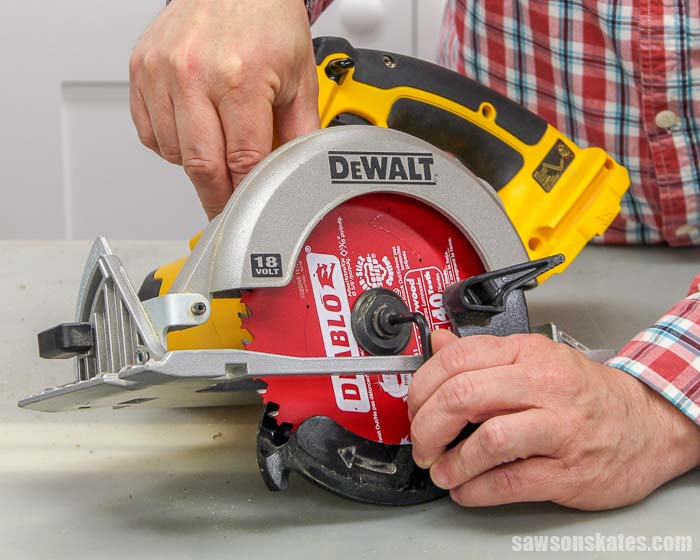
Most saws have a blade guard that covers the blade. Pull the guard back to expose the blade. Some saws have a lever or button you press to hold the guard open.
3. Lock The Blade
You don’t want the blade spinning while you loosen the bolt. Use the blade lock button if your saw has one. If not, press a wood block against the blade to keep it from turning.
4. Loosen The Arbor Bolt
Locate the arbor bolt (the central bolt holding the blade). Use the wrench or hex key provided with your saw. Turn the bolt in the correct direction—most bolts are reverse threaded on sidewinder saws (turn clockwise to loosen), but always check your manual.
Many beginners try to loosen the bolt the wrong way. If it won’t move, double-check the threading direction.
5. Remove The Old Blade
Once the bolt is loose, carefully remove the bolt, washer, and outer flange. Slide the old blade out. Place all removed parts in a safe spot so you don’t lose anything.
6. Clean The Saw
Before installing the new blade, use a clean rag to wipe away any dust or debris. This keeps your saw running smoothly and prevents buildup that can affect blade alignment.
7. Install The New Blade
Slide the new blade onto the arbor. Make sure the teeth face in the correct cutting direction—usually toward the front of the saw. Check the arrow on the blade and match it to the arrow on your saw’s guard.
8. Replace The Flange And Bolt
Put the flange and washer back in place, then thread the arbor bolt back on. Tighten by turning in the correct direction (usually counterclockwise for sidewinder saws).
9. Tighten Securely
Use the wrench to tighten the bolt. Don’t overtighten—just make it snug. A bolt that’s too tight can damage the saw or blade.
10. Release The Blade Lock And Test
Release the blade lock button or remove the wood block. Spin the blade by hand to make sure it moves freely and doesn’t wobble. If it’s not moving smoothly, recheck your assembly.
11. Restore Power And Make A Test Cut
Plug in the saw or insert the battery. Make a test cut on a scrap piece of wood. Listen for strange sounds and check for smooth cutting.
Common Mistakes When Changing A Circular Saw Blade
Even experienced users sometimes make errors. Here are the most common mistakes to avoid:
- Forgetting to unplug the saw – This is the most dangerous mistake.
- Installing the blade backwards – Always check the direction arrows.
- Losing small parts like the flange or washer.
- Using the wrong blade size – Always match the diameter and arbor hole.
- Overtightening or undertightening the bolt – Both can cause problems.
- Not cleaning the saw before installing a new blade.
- Not checking for blade wobble before use.
A pro tip: Keep a small magnetic tray handy to hold bolts and washers. This reduces the chance of losing them.
Types Of Circular Saw Blades And Their Uses
Choosing the right blade is just as important as changing it. There are many types, each designed for a specific material or cut.
| Blade Type | Best For | Teeth Count | Notes |
|---|---|---|---|
| Ripping Blade | Cutting along wood grain | 16-24 | Fast, rough cuts |
| Crosscut Blade | Cutting across wood grain | 40-80 | Smoother finish |
| Combination Blade | General woodwork | 24-50 | Multipurpose |
| Plywood/Panel Blade | Plywood, laminates | 60-100 | Reduces splintering |
| Masonry Blade | Brick, concrete | No teeth (abrasive) | Special use only |
| Metal Cutting Blade | Aluminum, steel | Ferrous/non-ferrous | Use with care |
Using the wrong blade can damage your material, your saw, or even cause injury.
How To Choose The Right Blade For Your Project
When you buy a new blade, focus on these key factors:
- Blade size: Match the diameter (e.g., 7-1/4″, 6-1/2″) to your saw’s specifications.
- Arbor hole size: The center hole must fit your saw’s arbor exactly.
- Number of teeth: More teeth give smoother cuts but slower speed. Fewer teeth cut faster but rougher.
- Material: Some blades are designed for wood, others for metal or masonry.
- Coatings and features: Anti-stick coatings reduce gum-up; expansion slots reduce vibration.
Many beginners choose the cheapest blade, but a quality blade lasts longer and delivers better results. For most DIY users, a combination blade works for general cutting, while specific projects (like fine woodworking or metal cutting) need specialty blades.
When To Replace Your Circular Saw Blade
How do you know when it’s time to change your blade? Here are some clear signs:
- Burn marks on the wood, even with slow feed rate.
- Tearing or chipping along the cut.
- Saw feels sluggish or motor strains more than usual.
- Visible dullness or missing teeth.
- Unusual vibrations or wobble during cutting.
If your blade is damaged or missing teeth, don’t try to keep using it. Replace it immediately to avoid injury.
Special Tips For Worm Drive And Sidewinder Saws
There are two main types of handheld circular saws: sidewinder and worm drive. The steps for changing the blade are similar, but there are some small differences.
| Feature | Sidewinder Saw | Worm Drive Saw |
|---|---|---|
| Motor Position | Next to blade | Behind blade |
| Arbor Bolt Direction | Usually reverse thread | Usually standard thread |
| Blade Change Access | Open, easy | May need extra steps |
| Weight | Lighter | Heavier |
Always check your saw’s manual for the correct bolt direction. For worm drive saws, you may need a longer wrench or a different tool for the deeper-set arbor.
How To Safely Dispose Of An Old Saw Blade
Don’t just throw old blades in the trash. They’re sharp and can injure someone handling garbage. Here’s what to do:
- Wrap the blade in thick cardboard or heavy cloth.
- Mark it as “used blade” with a marker.
- Recycle if possible. Many metal recycling centers accept used blades.
- If you have several, store them in a container until you have enough to recycle.
Some creative DIYers use old blades for art or garden tools, but always handle with care.

Troubleshooting: What To Do If The Blade Won’t Come Off
Sometimes, the arbor bolt is stuck or the blade is jammed. Here’s how to handle it:
- Double-check the threading direction. Many bolts are reverse threaded.
- Use penetrating oil on the bolt if it’s rusty.
- Tap the wrench gently with a rubber mallet to help break loose a stuck bolt.
- Try heat – a hairdryer can help loosen stubborn bolts. Never use open flame.
- Visit a service center if you can’t remove it. Forcing too hard can damage your saw.
Never use pliers or wrenches that don’t fit tightly. This can round off the bolt head and make removal even harder.
Maintaining Your New Blade For Longer Life
A little care goes a long way. To help your blade last as long as possible:
- Clean your blade after heavy use. Resin and sap can build up and reduce cutting efficiency.
- Store blades dry and away from moisture to avoid rust.
- Avoid nails and hidden metal in wood, which can damage teeth.
- Sharpen blades if possible. Many woodworking shops offer this service for quality blades.
- Rotate between blades if you do lots of cutting. This evens out wear.
A blade that’s clean and sharp is safer and gives better results.
Upgrading Your Blade: Is It Worth It?
If you’ve always used the basic blade that came with your saw, you might be surprised at what an upgrade can do. Premium blades have better materials, coatings, and tooth geometry. They:
- Cut cleaner and quieter
- Last longer between changes
- Create less vibration
For example, a professional carbide-tipped blade can outlast a basic steel blade by 10 times or more. If you use your saw often, investing in a quality blade pays off in smoother work and fewer blade changes.
How To Change A Circular Saw Blade On Different Brands
While the basic process is similar, some brands have unique features. Here’s a quick comparison of popular saw brands and their blade change mechanisms:
| Brand | Blade Lock | Tool Required | Special Notes |
|---|---|---|---|
| DeWalt | Yes | Hex key | Easy access lock button |
| Makita | Yes | Wrench | Wrench stored on tool |
| Bosch | Yes | Allen key | Quick-change system on some models |
| Skil | Some models | Wrench | Standard blade change |
| Milwaukee | Yes | Allen key | Easy blade release |
Always use the tool supplied with your saw. If you lose it, replacements are easy to find online or at hardware stores.
Practical Examples: Changing A Blade In Real Situations
Let’s look at a few real-world scenarios:
Example 1: You’re remodeling your kitchen and need to switch from a wood-cutting blade to a fine-tooth plywood blade for cabinets. You follow the steps, making sure to match the blade’s direction, and complete the job with clean, splinter-free cuts.
Example 2: On a construction site, your saw suddenly starts to smoke while cutting framing lumber. You stop, unplug the saw, and notice the blade is missing several teeth. You change to a new carbide blade and the saw runs like new.
Example 3: Your cordless saw’s blade bolt is stuck after months of use outdoors. You spray a little penetrating oil, wait a few minutes, and use the correct wrench to loosen it without damage.
These examples show that knowing how to change a blade can save time, reduce frustration, and keep your projects on track.
Safety Reminders After Blade Change
After installing a new blade, always:
- Double-check blade tightness
- Test the saw without load before cutting material
- Listen for abnormal sounds
- Wear eye and ear protection
Accidents often happen right after maintenance, so stay alert during your first few cuts.
Advanced Tips Most Beginners Miss
Some small details make a big difference:
- Check blade runout: Spin the blade by hand and watch for wobble. Even a tiny misalignment can cause poor cuts.
- Keep the blade clean: Use a dedicated cleaner for pitch or resin buildup if you cut sap-heavy woods.
- Label your blades: Use a marker to note the material or project. This helps you pick the right blade quickly next time.
Many pros keep a small set of blades for different materials, stored in a labeled case.
Where To Learn More
If you want to go deeper, check out the safety standards and best practices from organizations like OSHA. Staying up to date helps protect you and your tools.
Frequently Asked Questions
How Often Should I Change My Circular Saw Blade?
How often depends on how much you use your saw and what you cut. For general DIY use, check your blade every few months. If you notice rough cuts, burning, or slow cutting, it’s time to replace it. Professional users may change blades weekly or even daily for heavy work.
Can I Sharpen My Old Circular Saw Blade Instead Of Replacing It?
Some blades, especially carbide-tipped ones, can be sharpened by a professional. Basic steel blades are usually cheaper to replace. Sharpening is best for high-quality blades that cost more to buy.
What Size Blade Does My Circular Saw Need?
Check your saw’s manual or the old blade for the correct size. Most common sizes are 7-1/4″, 6-1/2″, and 8-1/4″. The new blade must match both the diameter and the arbor hole size.
Is It Safe To Use A Circular Saw Blade For Cutting Metal?
Only if the blade is designed for metal and your saw supports it. Wood blades can break or cause injury if used on metal. Always read the blade label and your saw’s manual before trying.
What Should I Do If I Lose The Wrench For My Saw?
You can usually buy a replacement at hardware stores or online. Check the size in your manual. Never use a tool that doesn’t fit snugly, as this can strip the bolt.
Changing a circular saw blade is a valuable skill for anyone who works with tools. With the right knowledge, you’ll work more safely, get better results, and keep your projects running smoothly. Remember to stay safe, follow the steps, and don’t rush—your hands and your saw will thank you.