
Measuring a chainsaw bar might sound simple, but it’s a task that many people get wrong. Choosing the wrong size can lead to poor performance, extra wear, or even dangerous situations. Whether you’re replacing a worn bar, checking compatibility for a new chain, or comparing different chainsaws, knowing how to measure a chainsaw bar accurately is essential.
This guide covers everything you need to know, from basic definitions to advanced tips, so you can handle your chainsaw safely and efficiently. Even if you’re a beginner, by the end of this article, you’ll be confident in measuring your chainsaw bar the right way.
What Is A Chainsaw Bar?
The chainsaw bar is the metal guide that supports and guides the cutting chain. It’s the long, flat piece you see sticking out from the body of the chainsaw. The bar plays a huge role in the tool’s performance, affecting how deep you can cut, how fast you work, and how safe you are while cutting. Chainsaw bars come in different lengths, thicknesses, and designs, depending on the model and purpose.
There are two main types of chainsaw bars:
- Solid bars, which are strong and used for tough jobs.
- Laminated bars, made from layers of metal for lighter weight and easier handling.
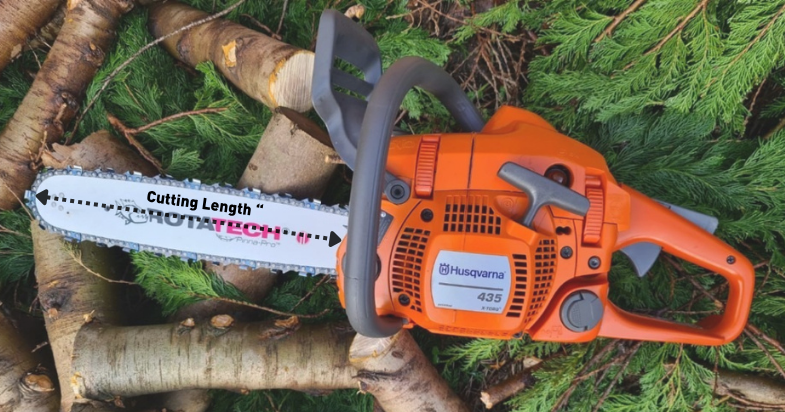
A common mistake is to confuse the bar length with the overall length of the bar. For replacement parts and buying new chains, you need to know the usable cutting length—not the total metal length.
Why Correct Measurement Matters
You might think a small difference in length won’t matter, but using the wrong bar size can cause problems like:
- Chain misfit, leading to chain coming off or not cutting well.
- Increased wear on the motor, sprockets, and chain.
- Reduced safety, increasing the risk of kickbacks or jams.
- Warranty voiding if the bar isn’t suitable for your chainsaw model.
Manufacturers design chainsaws for specific bar sizes. Using the recommended size keeps the tool balanced, efficient, and safe.
Tools And Preparation
Before you begin measuring, gather these items:
- Measuring tape (preferably a flexible one)
- Flat workspace
- Cloth or brush for cleaning
- Safety gloves
Wearing gloves is smart—chainsaw bars and chains can be sharp, even when not running. Cleaning the bar before measuring removes sawdust and oil that can hide important details.
Some people try to measure without removing the chain. While this is possible, removing the chain gives a more accurate reading and lets you inspect for damage at the same time.
Step-by-step: How To Measure A Chainsaw Bar
Let’s break down the process into simple steps so you can follow easily.
1. Unplug Or Remove The Battery
For safety, make sure the chainsaw is off. If it’s electric, unplug it. For battery models, remove the battery. For gas saws, make sure it’s not running and the spark plug is disconnected.
2. Remove The Chain (optional But Helpful)
Loosen the tensioner and take off the chain. This step makes the bar easier to handle and measure. It also helps you check for wear or damage.
3. Clean The Bar
Wipe the bar with a cloth or use a brush to remove sawdust, oil, or debris. Clean measurement points give more accurate results.
4. Identify The Starting Point
Find where the bar emerges from the chainsaw body. This is your starting point for measuring the usable cutting length. Do not measure from the tip of the bar to the very back where it connects inside the saw.
5. Measure The Usable Cutting Length
Use a tape measure to find the distance from the point where the bar leaves the body to the tip of the bar. This is the measurement most manufacturers use when listing bar size.
Example: If the measurement is 18.25 inches, round up to 18 inches. Chainsaw bars are sold in even numbers (16″, 18″, 20″, etc.). If your measurement is between two numbers, always round up to the next inch.
6. Measuring The Full Bar Length (if Needed)
Sometimes, for repairs or special chains, you might need the full bar length. Lay the bar flat and measure from the very tip to the very end, including the part that fits inside the chainsaw. Write down this number for your records.
7. Record Bar Groove Width And Mount Type
For full compatibility, note the bar groove width (the slot where the chain sits) and the mount type (the shape and size of the hole where the bar attaches to the saw). This data is usually stamped on the bar or found in your manual.
8. Double-check Against Manual Or Model Number
Look at the numbers stamped on your bar. Many bars have details like length, groove width, and mount type. Compare with your chainsaw manual to confirm you have the right size.
Chainsaw Bar Measurements Explained
When people talk about chainsaw bar sizes, they often refer to the usable cutting length. But there are three key measurements to know:
- Usable cutting length: From where the bar exits the saw to the tip.
- Total bar length: The entire length, including what’s hidden inside the saw.
- Bar groove width: The width of the slot for the chain.
Here’s a simple comparison:
| Measurement Type | Where to Measure | Why It Matters |
|---|---|---|
| Usable Cutting Length | From saw body to bar tip | Buying chains, replacements |
| Total Bar Length | End to end, including mount | Repairs, special chains |
| Bar Groove Width | Width of chain slot | Chain compatibility |
Knowing each measurement helps you avoid mistakes when ordering parts or choosing chains.
Common Chainsaw Bar Sizes And Their Uses
Chainsaw bars range from 10 inches to over 36 inches. The right size depends on what you cut:
- 10″–14″ bars: Small pruning, limbing, light firewood
- 16″–18″ bars: Homeowners, firewood, medium trees
- 20″–24″ bars: Farm work, larger firewood, moderate logging
- 28″–36″+ bars: Professional use, very large trees
Most casual users choose 16″ or 18″ bars. Professionals may use longer bars for big jobs, but longer bars are heavier and harder to control.
Here’s a quick reference:
| Bar Size (inches) | Typical Uses | Common Chainsaw Power |
|---|---|---|
| 10–14 | Pruning, light work | Under 35cc |
| 16–18 | Firewood, general cutting | 35–50cc |
| 20–24 | Farm, ranch, medium logs | 50–65cc |
| 28+ | Professional logging | 65cc and above |
Understanding Bar Mount Types
Not all chainsaw bars fit all chainsaws. The bar mount refers to the shape, size, and hole pattern where the bar attaches to the saw. Manufacturers use different mounts, and even small differences can make a bar unusable.
Common mount types include:
- Small mount: Used on light-duty saws, narrower slot.
- Medium mount: Some mid-size models.
- Large mount: Heavy-duty, pro-level saws.
Always check your chainsaw’s model and compare with the bar’s mount type before buying a replacement.
Measuring Bar Groove Width (gauge)
The bar groove width (also called gauge) is important for matching the chain. Too wide, and the chain wobbles. Too narrow, and the chain binds or won’t fit.
Most common gauges:
- .043″ (1.1 mm)
- .050″ (1.3 mm)
- .058″ (1.5 mm)
- .063″ (1.6 mm)
You can use a caliper or a special gauge tool to measure the slot. Chainsaw bars usually have the gauge stamped on them (like “. 050”).
If you don’t have a gauge, you can use coins as a quick test:
- .043″: A U.S. dime fits snugly.
- .050″: A U.S. penny fits snugly.
- .058″: A U.S. nickel fits snugly.
This trick isn’t perfect, but it helps if you don’t own a caliper.
Measuring Chain Compatibility
Measuring the bar is only part of the equation. To choose the right chain, you need three numbers:
- Bar length (usable cutting length)
- Pitch (distance between drive links)
- Gauge (bar groove width)
Pitch is measured as the distance between any three consecutive rivets on the chain, divided by two. For example, if three rivets are 0.50 inches apart, the pitch is 0.25 inches (1/4”). Most chains list this on the box or bar.
Here’s a summary:
| Measurement | What It Means | How to Find |
|---|---|---|
| Bar Length | Usable cutting area | Measure from saw body to tip |
| Pitch | Spacing of chain links | Measure 3 rivets, divide by 2 |
| Gauge | Chain thickness | Measure bar groove width |
Matching all three ensures your saw runs smoothly and safely.
Measuring For Replacement Bars
If you need a new bar, don’t just measure your old one and buy the same size. Check:
- Chainsaw model compatibility: Some bars are made for specific saws.
- Mount type: Holes and slot pattern must match.
- Groove width: Chain must fit perfectly.
- Overall length: Slightly longer bars may fit, but can stress the saw.
Contact the manufacturer or check their website for recommended replacement parts.
Practical Examples
Let’s say you have a chainsaw with an old, unreadable bar. Here’s how you’d measure:
- Remove the chain and bar.
- Clean the bar.
- Measure from the mounting point (where the bar exits the body) to the tip: 17.7 inches. Round up to 18 inches.
- Measure the groove width with a caliper: .050”.
- Check the mount pattern. Compare to your user manual or take the bar to the store.
- Write down: “18” bar, .050” gauge, medium mount.”
Now you can confidently order a new bar and chain.
Common Mistakes When Measuring
Many people make errors that lead to wasted money or unsafe tools. Avoid these mistakes:
- Measuring the full bar instead of the usable length.
- Ignoring groove width (gauge).
- Guessing the bar mount type.
- Not rounding up to the nearest even number.
- Buying by visual size instead of checking model compatibility.
If you’re unsure, bring your old bar to a dealer or ask for help. It’s better to double-check than to risk damage or injury.
Advanced Tips For Accurate Measurement
Here are some expert suggestions that go beyond the basics:
- Mark the starting point: If you’re unsure where the bar leaves the saw, use a marker to highlight the spot.
- Use a flexible tape: Rigid rulers can miss the curve of the bar.
- Photograph the bar: Take a clear picture of any numbers or stamps for your records.
- Keep a logbook: Write down bar sizes, chain pitch, and gauge for each saw you own.
- Check wear areas: If the tip is worn down, the measurement may be shorter than the original size.
Also, when buying online, always check reviews and Q&A to ensure others have used the same bar with your saw model.
Signs You Need To Replace Your Chainsaw Bar
Measuring only helps if your bar is in good shape. Replace your bar if you notice:
- Uneven wear or a sloped groove.
- Bar rails are sharp or rolled over.
- Chain wiggles side to side.
- Deep burns or cracks on the bar.
Worn bars can damage chains and motors, and increase kickback risk.
How Measuring Differs Between Gas, Electric, And Battery Chainsaws
Most measuring steps are the same for all types. However:
- Battery and electric chainsaws often use shorter bars (14″–18″) for safety and battery life.
- Gas chainsaws can handle longer bars but may need more frequent maintenance.
Always check the manufacturer’s recommendations for your specific power type.
Non-obvious Insights For Beginners
- Bar length affects balance and fatigue: Longer bars cut bigger logs but make the saw heavier and harder to control. Shorter bars are safer and easier for most people.
- Chainsaw chains stretch over time: If you replace your bar, you may also need a new chain. Old chains can become too long and not fit new bars properly.
- Chain tension and bar wear are linked: If your chain keeps coming loose, check for a worn bar groove before blaming the chain or tensioner.
- Bar tip shape matters: Some bars have a sprocket tip, which reduces friction. Measure from the same spot, but know that replacing with a solid tip bar changes saw feel.

When To Seek Professional Help
If your chainsaw bar is a rare size, lacks markings, or doesn’t fit standard measurements, visit a dealer or professional shop. Some older or specialty saws need custom bars or chains. Don’t force a bar to fit—this can break your saw or cause injury.
How To Care For Your Chainsaw Bar After Measuring
Once you have the right measurement and replacement, keep your bar in good shape by:
- Cleaning after each use
- Checking chain tension regularly
- Rotating the bar (flip it over every so often to even out wear)
- Storing in a dry place
Regular care extends the life of your bar and makes future measurements more reliable.

Where To Find Reliable Bar Measurement Info
Always use your chainsaw’s manual as a first reference. If you’ve lost it, check the manufacturer’s website or trusted sources like Wikipedia for general info. Many manufacturers list bar sizes, mount types, and compatible chains on their support pages.
Frequently Asked Questions
How Do I Know If I Measured My Chainsaw Bar Correctly?
Check that you measured from the point where the bar leaves the body of the chainsaw to the tip—not from the very back of the bar. Make sure to round up to the nearest even number in inches. Double-check with your owner’s manual or compare with markings on the bar if they’re visible.
Can I Put A Longer Bar On My Chainsaw?
Not always. Chainsaws are designed for certain bar lengths. Installing a bar that’s too long can overload the motor, make the saw unbalanced, and reduce safety. Always check your manufacturer’s recommendations before changing bar size.
What Does “gauge” Mean When Measuring A Chainsaw Bar?
Gauge is the thickness of the bar’s groove (the slot where the chain rides). It must match the chain’s drive links. Common gauges are. 043″,. 050″,. 058″, and. 063″. You can find this number stamped on your bar or measure it with a caliper.
How Often Should I Measure My Chainsaw Bar?
Measure your bar any time you need a replacement chain, buy a new bar, or if you notice cutting problems. Also, measure after heavy use to check for wear. Keeping a record saves time and helps with future maintenance.
What Should I Do If My Bar Has No Markings?
If there are no visible numbers, measure the usable length, groove width, and count the number of mounting holes and slots. Take these measurements to a dealer, or compare with manufacturer guides online to find a match.
Measuring your chainsaw bar accurately is more than just using a tape measure—it’s about understanding your tool, staying safe, and getting the best performance. With the right steps and attention to detail, you’ll be ready for any chainsaw job, big or small.