
Hanging a door that swings smoothly and closes firmly often depends on one hidden detail: the way you cut the recesses for the hinges. Many DIYers and even some professionals struggle with this part, but with the right approach, you can get perfect results every time. Using a router to cut door hinge mortises saves time, gives you accuracy, and leads to a better final fit. Whether you’re hanging a new door or replacing an old one, understanding how to router door hinges is a skill that pays off again and again.
If you’ve ever dealt with doors that stick, squeak, or don’t close tightly, poorly cut hinge recesses (called mortises) are often the cause. Many beginners try to chisel out these areas by hand, which can be slow and messy. A router, with the correct bit and guide, creates straight, clean, and precise mortises quickly. But there’s more to the process than simply running a power tool along the edge of the door. Success depends on careful planning, measurement, setup, and technique—plus a few pro tips that aren’t obvious until you’ve made a few mistakes.
This guide will take you through every step of how to router door hinges, from selecting tools to finishing touches. You’ll find practical advice, clear explanations, and solutions for common problems. Let’s make sure your next door hangs perfectly.
Why Use A Router For Door Hinges?
A router is a powerful tool for woodworking, often used to hollow out (rout) an area in wood. When it comes to door hinges, a router offers several key advantages over hand tools.
- Precision: Routers create straight, even-sided mortises, matching the exact depth needed for the hinge leaf.
- Speed: Once set up, you can cut multiple mortises quickly, which is especially useful when hanging several doors.
- Cleaner Cuts: The spinning router bit leaves sharp, neat edges, reducing the risk of splintering or tearing the wood.
- Consistency: Using a router template or jig, you can make identical mortises every time, avoiding the guesswork of hand chiseling.
For anyone who values a professional look, or who wants to avoid the frustration of doors that bind or sag, learning how to router door hinges is a must.
Tools And Materials You’ll Need
Before you begin, gather all the tools and materials required. Using the right equipment makes the job easier and gives better results.
| Tool or Material | Purpose | Tips |
|---|---|---|
| Router (plunge or fixed-base) | Cutting hinge mortises | Plunge routers are safer for beginners |
| Hinge mortising jig or template | Guides the router for consistent cuts | Store-bought or homemade options |
| Router bit (straight, 1/2″ or 1/4″) | Removes wood for the mortise | Sharp bits reduce tear-out |
| Door hinges | Determines mortise size and depth | Bring a hinge to measure accurately |
| Measuring tape or ruler | Marking hinge locations | Steel ruler is most accurate |
| Utility knife or marking knife | Scoring mortise outlines | Clean lines prevent splinters |
| Sharp pencil | Marking positions | Fine tip for accuracy |
| Chisel (1/2″ or 3/4″) | Cleaning up mortise corners | Keep it sharp for best results |
| Hammer or mallet | For chisel work | Wooden mallet is gentler |
| Clamps | Hold door or jig securely | Prevents shifting during routing |
| Safety gear (goggles, ear plugs) | Protects eyes and ears | Always wear when using a router |
Pro Tip: If you’re mortising multiple doors, investing in a good hinge jig saves hours of time and ensures every hinge is identical.

Understanding Door Hinges And Mortises
Before you start cutting, it’s important to know what you’re making and why accuracy matters.
What Is A Hinge Mortise?
A hinge mortise is a shallow, rectangular cut in the edge of a door (and sometimes the door frame) that lets the hinge leaf sit flush with the wood. Without a mortise, the hinge would stick out, causing the door not to close properly or to bind.
Types Of Door Hinges
Most doors use butt hinges, which have two flat leaves joined by a pin. The size and thickness of the hinge decide how deep and wide your mortise must be.
| Hinge Type | Common Size | Typical Mortise Depth | Where Used |
|---|---|---|---|
| Standard Butt Hinge | 3″ x 3″ | 2–3 mm | Interior doors |
| Heavy Duty Butt Hinge | 4″ x 4″ | 3–4 mm | Exterior/heavy doors |
| Ball Bearing Hinge | 3.5″ x 3.5″ | 2.5–3 mm | High-traffic doors |
| Concealed Hinge | Varies | Special cutout | Cabinetry, modern doors |
Non-obvious Insight: The mortise must match both the width and thickness of your hinge leaf. Even small errors in depth can make the door hard to open or close.
Hinge Placement
Standard doors usually have three hinges:
- Top hinge: 7 inches from the top of the door.
- Bottom hinge: 11 inches from the bottom.
- Middle hinge: Exactly halfway between the top and bottom hinges.
Some heavier doors use four hinges for extra support.
Pro Tip: Always measure your door and frame before marking, as some older homes have non-standard positions.
Preparing The Door And Workspace
Good results start before you even plug in your router. Proper setup saves time and prevents mistakes.
Check The Door And Frame
- Inspect for Damage: Make sure the door edge is straight and free of splits.
- Clean the Surface: Remove any old paint, debris, or nails that could damage your router bit.
- Measure the Thickness: Confirm the door is thick enough for your chosen hinge.
Set Up A Stable Work Area
- Lay the Door Flat: Place the door on a pair of sawhorses or a sturdy table.
- Clamp the Door: Use clamps to hold the door steady. If the door shifts while routing, your mortises will be uneven.
- Mark the Hinge Side: Most doors are not symmetrical. Mark the side you plan to hinge, and double-check before cutting.
Mark Hinge Locations
- Measure from the Top and Bottom: Use your tape measure to mark the positions for each hinge.
- Lay the Hinge on the Edge: Align the hinge with your marks and trace around it with a sharp pencil or marking knife.
- Score the Outline: Use a utility knife to score the traced line. This step helps the router bit make a cleaner entry and prevents splintering.
Experience-Based Tip: Scoring with a knife takes only a minute but makes a big difference in the quality of the cut, especially on painted or veneered doors.
Setting Up The Router And Jig
A common mistake is to rush through setup. Taking time here prevents costly errors.
Choosing The Right Router Bit
- Straight Bit: Most mortises are cut with a straight router bit, either 1/4″ or 1/2″ wide.
- Depth: The bit must be set to the exact thickness of your hinge leaf—no more, no less.
Non-obvious Insight: Some router bits have a bottom-cutting edge, which makes starting the cut easier and reduces tear-out.
Adjusting The Depth
- Measure the Hinge Leaf: Use a caliper or ruler to find the thickness.
- Set the Router Depth: Many routers have a depth stop. Set it so the bit cuts only as deep as the hinge leaf. Test on a scrap piece of wood first.
Using A Hinge Jig Or Template
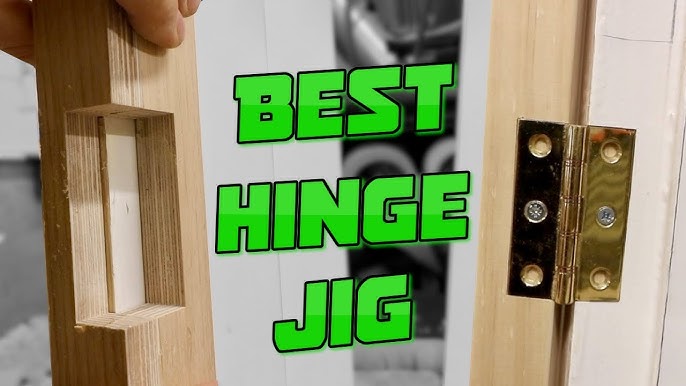
A hinge jig is a guide that clamps to the door and controls the router’s path, making it almost impossible to slip or cut too far.
- Commercial Jigs: These are adjustable for different hinge sizes and make repeat cuts easy.
- DIY Jigs: You can make a simple jig from plywood, sized to your hinges.
How to Use:
- Clamp the jig to the marked position.
- Make sure the jig is tight and flush with the door edge.
- Check that the opening matches your hinge exactly.
Routing The Hinge Mortise
Now comes the main event: cutting the mortise. This step requires attention but is fast once you’re set up.
Step-by-step Process
- Double-Check Everything: Confirm the jig is in place, depth is set, and the hinge outline is visible.
- Start the Router: Turn on the router and let it reach full speed before touching the wood.
- Lower the Bit: If you have a plunge router, lower the bit into the wood at one edge of the mortise. For fixed-base routers, start with the bit outside the area, then move in.
- Move Slowly: Guide the router along the jig, removing the wood inside the marked area. Don’t rush—let the tool do the work.
- Clear Dust Frequently: Stop and brush away chips so you can see your progress.
- Check for Cleanliness: After routing, the mortise should be smooth and flat, with sharp edges.
- Square the Corners: Most router bits leave rounded ends. Use a sharp chisel to square up the corners so the hinge fits snugly.
Common Mistake: Forcing the router too fast can burn the wood or break the bit. Take your time.
Tips For A Perfect Mortise
- Use Light Passes: If your hinge is thick, make two shallow passes instead of a single deep one. This is easier on your router and gives a smoother finish.
- Test Fit the Hinge: After routing, place the hinge in the mortise. It should sit flush with the surface and not rock.
- Chisel Carefully: When squaring corners, cut along the scored lines from earlier. Tap the chisel gently—don’t pry or you’ll chip the wood.
Non-obvious Insight: Always work “downhill” with the grain when possible. Routing against the grain can cause tear-out, especially on softer woods.
Attaching The Hinges
With the mortises cut, you’re ready to attach the hinges. This step is simple but still needs care for best results.
Pre-drill Screw Holes
- Mark Screw Positions: Place the hinge in the mortise and mark each screw hole.
- Use a Center Punch: This helps prevent the drill bit from wandering.
- Drill Pilot Holes: Use a bit slightly smaller than the screws. This prevents splitting and makes driving screws easier.
Install The Hinges
- Insert the Screws: Start each screw by hand to avoid cross-threading.
- Tighten Evenly: Don’t over-tighten, as this can strip the wood or warp the hinge.
- Check for Fit: The hinge should move smoothly and sit tight to the wood.
Pro Tip: Use screws that come with your hinges if possible. If you need replacements, choose ones of the same length and gauge.
Mortising The Door Frame
Most doors require a matching mortise in the door frame (also called the jamb).
- Mark the Frame: With the door held in the open position, transfer the hinge locations to the frame. Use a pencil and measure carefully.
- Repeat the Routing Process: Clamp your jig to the frame and rout the mortises the same way as on the door.
- Test Everything: After attaching hinges to the door and frame, check that the door opens and closes freely.
Common Mistake: Misaligned frame mortises can cause the door to bind or leave uneven gaps. Double-check alignment before routing.
Troubleshooting Common Problems
Even with care, issues can happen. Here’s how to fix the most common ones:
1. Mortise Too Deep
- Fix: Glue a thin shim (piece of wood or cardboard) into the mortise, then trim flush and reattach the hinge.
2. Mortise Too Shallow
- Fix: Rout or chisel out a bit more wood until the hinge sits flush.
3. Mortise Too Wide Or Long
- Fix: Fill the gap with wood filler or a matching wood patch, then sand smooth and repaint or refinish.
4. Rounded Corners
- Fix: Square corners with a sharp chisel. If you prefer, you can slightly round the hinge corners to match the mortise, but squaring the mortise is more common.
5. Door Won’t Close
- Fix: Check that the hinges are set flush and that both door and frame mortises are aligned. Adjust as needed.
6. Splintered Or Ragged Edges
- Fix: Use a sharp chisel to clean up edges. Next time, always score the outline with a knife and use a sharp router bit.
Advanced Tips For Best Results
Once you’ve mastered the basics, these strategies can help you work faster and get even better results.
Use A Router With Dust Collection
Modern routers often have dust collection ports. Attaching a shop vacuum helps keep your workspace clean and improves visibility while routing.
Batch Cut Mortises
If you’re hanging several doors of the same size, set up a production line:
- Mark all hinge positions on each door and frame.
- Cut all top mortises, then all middles, then all bottoms.
- This is much faster and ensures consistency.
Make A Custom Jig
For non-standard hinges or old homes, you may need a custom jig. Use a piece of plywood and cut an opening the exact size of your hinge. Clamp it to the door and use it as a guide for the router.
Check For Binding After Hanging
After hanging the door, open and close it several times. If it binds, check for high spots around the hinges and adjust as needed.
Paint Or Finish Before Hanging
It’s easier to paint or finish the door before you install the hinges. Just remember to keep the mortise areas clean so the hinges sit flush.
Comparing Hand Chiseling Vs. Router Mortising
Many people wonder if it’s worth using a router instead of a chisel. Here’s a quick comparison:
| Method | Speed | Precision | Skill Level | Finish Quality |
|---|---|---|---|---|
| Router with Jig | Very fast | High | Medium | Excellent |
| Hand Chisel | Slow | Medium | High | Good (if skilled) |
| Router Freehand | Fast | Low | Medium | Fair |
For most people, the router-with-jig method is the best balance of speed and quality.
Safety Tips When Using A Router
Routers are powerful tools, so safety must come first.
- Wear Eye Protection: Wood chips fly quickly. Always wear goggles.
- Use Ear Protection: Routers are loud. Earplugs or earmuffs protect your hearing.
- Check for Nails: Hitting a nail with a router bit can cause dangerous kickback.
- Keep Hands Clear: Never put your hand near the spinning bit.
- Unplug Before Adjusting: Always unplug the router when changing bits or adjusting depth.
For more detailed safety advice, see the guidelines at OSHA.
Frequently Asked Questions
How Deep Should I Make The Hinge Mortise?
The mortise depth should match the thickness of the hinge leaf, usually between 2–4 mm. A mortise that’s too deep makes the hinge loose, while one that’s too shallow prevents the door from closing.
Can I Use A Router Without A Jig For Door Hinges?
It’s possible, but not recommended. Without a jig, it’s very hard to keep the mortise straight and the right size. Even a simple homemade jig makes a huge difference in quality.
What If My Door Is Already Painted Or Finished?
You can still router the mortises, but be careful not to chip the finish. Scoring the outline with a knife helps. After cutting, touch up any areas where the finish splintered or chipped.
Should I Mortise The Door Or The Frame First?
Either order is fine, but many professionals mortise the door first. This lets you use the actual door to mark the hinge positions on the frame, ensuring perfect alignment.
What Size Router Bit Do I Need For Door Hinge Mortises?
A straight bit between 1/4″ and 1/2″ wide is best. The bit width should be smaller than the mortise size, so you can easily control the cut and square the corners with a chisel.
When you know how to router door hinges properly, you save time, reduce mistakes, and get a professional result every time. With patience and careful setup, even a first-timer can achieve perfect mortises and a door that hangs straight and true.
Your next door project will swing smoothly—literally!