
Sharpening your mower blades is one of those chores that can transform your lawn care game. Dull blades tear grass instead of slicing it, leaving the lawn looking brown and ragged. Over time, this can hurt your grass, open it to disease, and make mowing much harder than it needs to be.
If you want a healthy, clean-cut yard, learning how to sharpen mower blades with an angle grinder is a skill worth mastering.
Many homeowners believe sharpening mower blades is a job only for professionals or those with expensive equipment. In reality, with a bit of care and the right technique, you can get pro-level results at home—saving both time and money. The angle grinder is a powerful tool for the job: fast, effective, and widely available. But it demands respect. When used correctly, it can restore a razor edge; when used carelessly, it can ruin a blade or even cause injury.
This guide will take you from start to finish, showing you exactly how to sharpen mower blades with an angle grinder. You’ll learn how to remove the blade, what safety steps you must follow, how to grind at the right angle, and how to avoid common mistakes.
Along the way, you’ll find practical tips, clear explanations, and answers to the questions most beginners forget to ask. Whether you’ve never held an angle grinder or you just want to sharpen your skills, you’ll find everything you need here.
Why Sharp Mower Blades Matter
Many people mow with dull blades for years, not realizing the impact. The difference between a dull and a sharp blade is huge—both for your lawn and your mower.
- Cleaner cuts: Sharp blades slice through grass, producing a clean cut. Dull blades tear the grass, leaving jagged edges that turn brown and dry out.
- Healthier lawn: Torn grass blades are more vulnerable to disease and pests. Clean cuts heal faster and stay green.
- Efficient mowing: A sharp blade requires less engine power, so your mower runs smoother and you finish faster.
- Less fuel use: Sharp blades reduce engine strain, using less gas or electricity.
- Longer mower life: Lower stress on the engine and moving parts means fewer repairs and breakdowns.
If your lawn looks ragged or you notice brown tips after mowing, a dull blade is often the cause. Experts recommend sharpening blades after every 20–25 hours of mowing, or at least twice per season for most homeowners.
Tools And Materials You’ll Need
Before getting started, gather everything you need for safety and success.
Essential Tools
- Angle grinder (4.5” or 5” with grinding disc)
- Wrench or socket set (to remove the blade)
- Vise or clamp (to hold the blade steady)
- Work gloves (cut-resistant recommended)
- Safety glasses or face shield
- Hearing protection (earmuffs or plugs)
- Wire brush (for cleaning the blade)
- Blade balancer (to check balance after sharpening)
- Steel file (optional, for finishing)
- Rags and penetrating oil (for cleaning and loosening bolts)
Materials
- Replacement blade (optional, in case the old one is too worn)
- Permanent marker (to mark cutting edge)
- Rust inhibitor or spray lubricant (for storage)
Why Use An Angle Grinder?
An angle grinder is fast and effective for sharpening mower blades. It removes metal quickly, so you don’t need many passes. It’s also versatile—many people already own one for other home tasks. Unlike files or bench grinders, it lets you work on blades of any size or shape.
Preparing To Sharpen: Safety Steps And Blade Removal
Sharpening mower blades is not hard, but safety is critical. The angle grinder spins at high speed and can throw sparks or small metal pieces. Follow these steps to protect yourself and your equipment.
Unplug Or Disconnect Power
- Gas mowers: Remove the spark plug wire so the engine cannot start accidentally.
- Electric mowers: Unplug from the wall or remove the battery.
Tip The Mower Safely
- Set the mower on a flat surface.
- Tip it with the carburetor or air filter facing up to prevent fuel or oil leaks.
- If you’re unsure, check your mower manual for the safest way.
Mark The Blade
Before removing the blade, mark the bottom side with a marker or tape. This prevents reinstalling it upside down—a common beginner mistake.
Remove The Blade
- Use a wrench or socket to loosen the main bolt (usually in the center).
- If the blade won’t budge, spray some penetrating oil and let it sit for 10 minutes.
- Wedge a block of wood between the blade and mower deck to hold the blade steady.
- Turn the bolt counterclockwise to loosen (most, but not all, blades use standard threads).
Clean The Blade
- Use a wire brush to scrub off grass, dirt, and rust.
- If the blade is badly pitted or bent, consider replacing it rather than sharpening.
Inspecting The Blade: When To Sharpen Vs. Replace
Not every mower blade is a good candidate for sharpening. Some are too damaged or worn.
Look For These Signs
- Cracks or deep bends: Unsafe to sharpen—replace the blade.
- Heavily worn edges: If the cutting edge is less than 1/2” wide, the blade is near the end of its life.
- Large chips: Small nicks can often be ground out, but deep chips weaken the blade.
When To Replace
If your blade shows serious damage, it’s safer to replace it. A new blade costs $15–$25 for most push mowers—cheap insurance against breakage or injury.
Setting Up For Sharpening
A solid setup makes the job easier and safer. Here’s how to get ready:
Secure The Blade
- Clamp the blade in a sturdy vise or with heavy-duty clamps.
- Position the blade so the cutting edge faces up and overhangs the edge of your workbench.
- The angle of the blade should be comfortable for you to follow with the grinder.
Choose The Right Grinding Disc
Use a medium-grit (36–60 grit) grinding wheel. Too coarse can remove too much metal; too fine takes longer and may not cut well.
Set Up Your Workspace
- Work outdoors or in a well-ventilated garage.
- Clear flammable materials (paper, sawdust, etc.) From the area.
- Have a fire extinguisher nearby—angle grinders can throw sparks.
How To Sharpen Mower Blades With An Angle Grinder: Step-by-step
Now you’re ready to restore your blade’s edge. Follow this process for best results.
1. Understand The Blade’s Edge
Most mower blades have a bevel of 30–40 degrees. You want to match this angle as you grind. Sharpen only the original edge—don’t create a double bevel.
2. Position Yourself And The Grinder
- Hold the grinder in your dominant hand.
- Rest your other hand on the handle or body for control.
- Stand so you can make smooth passes along the blade.
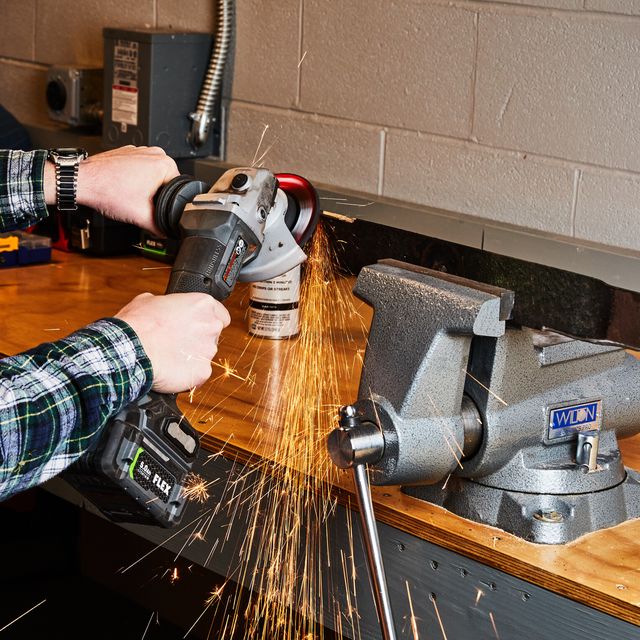
3. Grind Evenly Along The Edge
- Turn on the grinder and let it reach full speed before starting.
- Touch the disc to the cutting edge at the same angle as the original bevel.
- Move the grinder smoothly across the edge, from one end to the other.
- Apply moderate pressure—let the grinder do the work.
- Check your progress every few passes. Remove only enough metal to create a sharp edge.
4. Avoid Overheating
Grinding can heat up the blade quickly, which weakens the steel. If you see the edge turning blue, it’s getting too hot.
- Dip the blade in water every few passes to cool it.
- Take breaks if needed. Don’t rush.
5. Sharpen Both Ends
- Repeat the process on the other end of the blade.
- Try to remove the same amount of metal from each side. This keeps the blade balanced.
6. Finish The Edge
- The edge should be sharp but not razor-thin. A slight flat at the tip (like a butter knife) prevents chipping.
- If you want, use a hand file to smooth the edge and remove burrs.
7. Check For Nicks And Smooth Them Out
- Small nicks can often be ground out. For deep chips, don’t grind away too much material—replace the blade if needed.
Balancing The Blade
A balanced blade is critical. An unbalanced blade causes vibration, wears out mower bearings, and can damage the deck.
How To Check Balance
- Place the blade on a blade balancer (inexpensive, available at hardware stores).
- If you don’t have one, balance the blade on a nail driven into a wall.
- The blade should sit level. If one side dips, it’s heavier—grind a little more from that side.
Why Balance Matters
- Even a small imbalance can cause vibration at high speed.
- Vibrations lead to loose bolts, cracked decks, or even thrown blades.
How Much Is Too Much?
If you had to remove a lot of material to balance the blade, it may be too damaged to use. Compare the thickness to a new blade if unsure.
Reinstalling The Blade
Once sharp and balanced, you’re ready to put the blade back on your mower.
Proper Installation Steps
- Check your mark: Make sure the blade goes back with the correct side facing down (the side you marked earlier).
- Align the holes: Match up the blade holes with the mower’s mounting bolts.
- Tighten the bolt: Use a torque wrench if possible. Check your mower manual for the proper torque (usually 30–60 ft-lbs for push mowers).
- Reconnect power: Plug in the spark plug or battery.
Safety Double-check
- Spin the blade by hand to make sure it moves freely and doesn’t hit the deck.
- If you hear scraping or the blade is hard to turn, remove and check for mistakes.
Testing The Blade: First Mow After Sharpening
Before you mow the whole yard, do a test run:
- Mow a small area and inspect the grass.
- The cut should be clean, with straight edges and no tearing.
- Listen for unusual sounds or vibration—signs of imbalance.
If you notice problems, stop and recheck the blade. Sometimes a small adjustment is needed.
Practical Tips For Beginners
Sharpening mower blades with an angle grinder is not hard, but these insights will help you get better, safer results.
- Work slowly at first: It’s easy to remove too much metal. Take your time and check often.
- Don’t chase a perfect edge: A slightly dull edge is better than one that is too thin (which chips easily).
- Clean the blade first: Dirt and rust can make grinding harder and clog the disc.
- Replace the disc if needed: Worn grinding discs cut slowly and can overheat the blade.
- Don’t ignore balance: Many beginners skip this, but it’s key to mower health.
- Sharpen in good light: It’s hard to see your progress in a dim garage.
- Wear all safety gear: Angle grinders can throw hot sparks and metal fragments.
- Use a marker: Marking the original bevel helps you keep the right angle.
Common Mistakes And How To Avoid Them
Even experienced DIYers can make mistakes. Here’s what to watch out for:
Grinding At The Wrong Angle
- Too steep: Makes the edge weak and likely to chip.
- Too shallow: The blade won’t cut well.
- Tip: Match the factory angle. If in doubt, 35 degrees is a safe bet.
Overheating The Blade
- Grinding continuously causes the steel to lose temper.
- Tip: Dip in water regularly and take your time.
Forgetting To Balance
- Imbalance causes shaking, noise, and damage.
- Tip: Always check balance after sharpening.
Installing Blade Upside Down
- The blade won’t cut at all and can damage your lawn.
- Tip: Mark the bottom before removal.
Not Tightening The Bolt
- A loose blade can fly off at high speed.
- Tip: Use a torque wrench if possible.
How Often Should You Sharpen Mower Blades?
The right frequency depends on how much you mow and your lawn’s condition.
- Residential users: Every 20–25 hours of mowing (usually 2–4 times per season).
- Heavy use/commercial: Every 8–10 hours.
- After hitting rocks or sticks: Sharpen immediately.
If you notice ragged grass tips or have to mow over the same spot repeatedly, it’s time to sharpen.
Comparing Sharpening Methods
Is an angle grinder really the best way to sharpen mower blades at home? Here’s a quick look at the main options:
| Method | Speed | Skill Needed | Cost | Finish Quality |
|---|---|---|---|---|
| Angle Grinder | Fast | Medium | Low (if owned) | Very Good |
| Bench Grinder | Fast | Medium | Medium | Very Good |
| File | Slow | Low | Low | Good |
| Professional Shop | Fast (for you) | None | High ($10–$20) | Excellent |
Understanding Different Mower Blade Types
Not all mower blades are the same. The shape and steel type can affect sharpening.
Standard Blades
- Also called 2-in-1 or “cutting” blades.
- Simple, straight edge. Easy to sharpen with an angle grinder.
Mulching Blades
- Curved or with extra fins.
- Can be sharpened with a grinder, but work slowly around curves.
High-lift Blades
- Have a steeper curve for better grass lifting.
- Sharpen only the original edge—don’t grind the curved fin.
Comparison
| Blade Type | Sharpening Difficulty | Best Tool | Special Tips |
|---|---|---|---|
| Standard | Easy | Angle Grinder | Follow straight edge |
| Mulching | Medium | Angle Grinder | Go slow on curves |
| High-Lift | Medium | Angle Grinder | Don’t grind fins |

How To Extend The Life Of Your Sharpened Blade
Getting a sharp edge is great, but keeping it sharp saves effort later.
- Avoid mowing over rocks or sticks. These dull the blade quickly.
- Clean the deck after each mow. Grass buildup holds moisture and causes rust.
- Spray a light coat of oil on the blade if you store the mower for weeks.
- Check the blade for nicks every few mows.
- Sharpen more often if you mow sandy or rough lawns.
Dealing With Rusty Or Damaged Blades
Sometimes, you find a blade that’s rusty or has deep nicks.
- Light surface rust: Remove with a wire brush before sharpening.
- Heavy rust or pitting: If the blade feels thin or weak, replace it.
- Bent blades: Don’t try to straighten—replace for safety.
Pros And Cons Of Using An Angle Grinder
It’s smart to know both sides before you start.
Advantages
- Fast and powerful: Saves time compared to files.
- Works on all blade types.
- Easy to control with a little practice.
Disadvantages
- Can remove too much metal if you’re not careful.
- Creates sparks—work safely.
- Requires safety gear (glasses, gloves, etc. ).
- Not as precise as hand filing, but good enough for most users.
Troubleshooting: If Your Lawn Still Looks Bad
Sometimes, even after sharpening, your lawn doesn’t improve. Common causes:
- Blade installed upside down.
- Blade not balanced.
- Blade edge still too dull (check angle and finish).
- Mower deck clogged or blade hitting debris.
Review your steps and double-check each point above.
Safety Recap: Angle Grinder Dos And Don’ts
- Do wear gloves, eye, and ear protection.
- Do clamp the blade securely.
- Don’t grind near flammable liquids.
- Don’t use a cracked or worn disc.
- Do unplug the grinder when changing discs.
Environmental And Disposal Advice
- Old blades: Recycle at a metal scrap yard.
- Grinding dust: Sweep up and dispose of metal filings safely.
- Used grinding discs: Dispose according to local regulations.
Where To Learn More
If you want more details on mower maintenance, check out this excellent resource: Wikipedia: Lawn Mower.
Frequently Asked Questions
How Sharp Should Mower Blades Be?
Mower blades should be sharp enough to cut paper, but not razor-sharp. A too-thin edge chips easily. Aim for a clean edge with a slight flat—like a butter knife.
Can I Sharpen A Blade Without Removing It From The Mower?
It’s possible, but not recommended. You can’t check balance or sharpen evenly. Removing the blade is safer and gives better results.
How Do I Know If My Blade Is Balanced?
Use a blade balancer or balance the blade on a nail. The blade should sit level. If one side dips, remove a little more metal from that side.
How Long Does Sharpening With An Angle Grinder Take?
Once the blade is off, sharpening takes about 5–10 minutes. Cleaning, balancing, and reinstalling adds a few more minutes.
Is It Safe To Use An Angle Grinder For Sharpening Blades?
Yes, if you follow safety steps: wear protection, clamp the blade, work in a clear area, and avoid overheating the blade.
A sharp mower blade is one of the simplest ways to improve your lawn and make mowing easier. With an angle grinder, you can do this job quickly and confidently at home. Take your time, follow the steps, and your mower will reward you with a clean, healthy cut every time.