
Soldering wires together is a skill that opens doors to many projects. Whether you want to fix a broken headphone cable, build your own electronics, or repair household gadgets, learning to solder wires is a practical and valuable tool. Many people feel nervous at first, but with the right guidance, anyone can master this task.
You don’t need to be an engineer or have expensive equipment. With patience and practice, you’ll find that soldering is easier than you think.
In this article, you’ll discover clear steps, common mistakes, smart tips, and honest advice from experience. Each section is designed to help you understand not just how to solder wires, but also why each step matters. This guide will cover tools, preparation, technique, safety, troubleshooting, and more.
After reading, you’ll be ready to solder wires confidently, even if you are a complete beginner.
What Is Soldering?
Soldering is a process of joining two metal parts together. You do this by melting a filler metal called solder and letting it flow between the parts. When the solder cools, it creates a strong electrical and mechanical connection. For wires, soldering is often used to make sure electricity flows smoothly and the wires don’t break apart.
The main goal is to get a solid, reliable joint. If you solder correctly, the wires will stay together, and the connection will last for years. If you do it wrong, the wires may break, or the connection may not work. Many electronics use soldered wires because it’s fast, cheap, and dependable.
Essential Tools And Materials
Before you start soldering wires, you need the right tools and materials. Using the correct equipment makes soldering easier and safer. Here’s what you’ll need:
- Soldering iron: Heats up and melts the solder. Choose one with adjustable temperature if possible.
- Solder: Usually made from tin and lead or tin and silver. The most common size for wire soldering is 0.6mm–1mm diameter.
- Wire stripper: Removes the insulation from the ends of the wires.
- Helping hands or clamps: Hold wires steady while you solder.
- Soldering stand: Holds your iron safely when not in use.
- Tip cleaner or wet sponge: Keeps your soldering iron tip clean.
- Heat shrink tubing or electrical tape: Covers the solder joint after you finish.
- Safety glasses: Protects your eyes from hot solder or wire pieces.
- Ventilation fan: Removes fumes from the work area.
Some people skip a few of these, but having them all improves your results. The helping hands tool is especially useful and often overlooked by beginners.
Comparing Solder Types
Different solder types work better for different projects. Here’s a quick comparison:
| Solder Type | Composition | Melting Point | Best For |
|---|---|---|---|
| Lead-based | 60% tin, 40% lead | ~183°C | General electronics |
| Lead-free | 96% tin, 4% silver | ~221°C | Health-safe projects |
| Silver solder | 97% tin, 3% silver | ~217°C | Audio, high-quality joints |
Lead-based solder is easier to use but is less safe for health. Lead-free solder is more eco-friendly but melts at a higher temperature. Silver solder is best for critical connections, like sound equipment.
Preparing The Wires
Preparation is the key to a good solder joint. If you skip this step or do it poorly, your joint may fail. Here’s how to prepare wires for soldering:
- Cut the wires: Trim them to the length you need. Use sharp wire cutters for a clean cut.
- Strip the insulation: Remove about 1cm (⅜ inch) of insulation from the ends. Use a wire stripper, not scissors, to avoid damaging the copper strands.
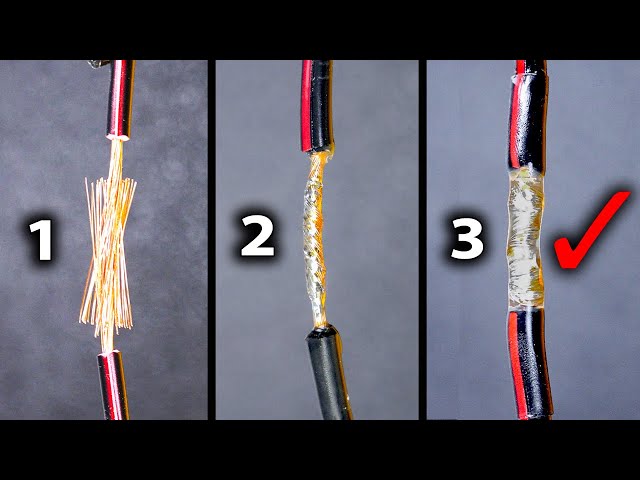
- Twist the strands: For stranded wires, gently twist the exposed copper to keep the strands together.
- Check for damage: Look at the copper. If it’s black or green, it’s corroded. Clean it, or cut off the damaged part.
- Slide on heat shrink tubing: If you plan to use heat shrink tubing for insulation, put it on the wire before soldering. Many beginners forget this and have to redo their work.
Preparing the wires carefully saves time and prevents problems later.
Example: Bad Preparation Vs. Good Preparation
Bad preparation: You strip the insulation with scissors, cutting some copper strands. The wire is frayed, and the joint will be weak.
Good preparation: You use a wire stripper, twist the strands, and check for corrosion. The wire is neat and ready for soldering.
Choosing The Right Soldering Iron
Not all soldering irons are equal. Picking the right one can make soldering much easier. Here are the main points to consider:
- Wattage: For wire soldering, 20–60W is enough. Lower wattage irons may not heat up quickly, while higher wattage can damage sensitive parts.
- Temperature control: Adjustable temperature is helpful, especially with lead-free solder. Beginners often use too high or too low heat, causing problems.
- Tip size: Fine tips are good for small wires, while larger tips work for thick wires.
- Corded vs. cordless: Corded irons heat faster and stay hot longer. Cordless are portable but cool down quickly.
- Brand and quality: Cheap soldering irons may have poor temperature control and unreliable tips.
Many beginners don’t realize how much the soldering iron affects their results. It’s better to invest in a mid-range iron than struggle with a poor one.
Soldering Iron Comparison
| Iron Type | Wattage | Temperature Control | Price Range | Best For |
|---|---|---|---|---|
| Basic fixed-temp | 25–40W | No | $10–$25 | Simple repairs |
| Adjustable temp | 40–60W | Yes | $30–$75 | General electronics |
| Soldering station | 40–80W | Yes | $60–$150 | Frequent use |
If you plan to solder often, a soldering station is a smart investment.

Soldering Process: Step-by-step Guide
Now, let’s get to the main steps. Soldering wires is simple if you follow the correct order. Here’s how to do it:
- Set up your workspace: Choose a clean, flat area with good light. Make sure you have ventilation to remove fumes.
- Plug in the soldering iron: Let it heat up for a few minutes. Most irons have a light to show when they’re ready.
- Clean the tip: Wipe the iron tip on a wet sponge or use a tip cleaner. A clean tip helps the solder flow better.
- Tin the tip: Melt a small amount of solder on the tip. This is called “tinning,” and it helps transfer heat to the wire.
- Position the wires: Hold the wires together with helping hands or clamps. For a strong joint, twist the wires together.
- Heat the wires: Place the iron tip on the twisted wires. Wait 1–2 seconds for them to heat up.
- Apply the solder: Touch the solder to the wires, not the iron. The heat from the wires melts the solder, creating a good bond.
- Remove the iron and let cool: Take away the iron and let the joint cool naturally. Don’t blow on it or move the wires.
- Inspect the joint: A good joint looks shiny and smooth. If it’s dull or cracked, it’s called a “cold joint” and may not work.
- Cover the joint: Slide the heat shrink tubing over the joint, then use a heat gun or lighter to shrink it. Or, wrap the joint with electrical tape.
These steps help you avoid common mistakes and create strong, reliable connections.
Example: Twisting Wires Together
When you twist wires, make sure the copper strands wrap tightly. Loose twisting leads to weak joints. For thick wires, overlap them and twist firmly.
Soldering Different Types Of Wires
Not all wires are the same. You might be soldering stranded wires, solid wires, or wires with different diameters. Here’s what you need to know:
Stranded Wires
Stranded wires have many thin copper strands. They’re flexible and used in cables, speakers, and appliances. Twist the strands before soldering, or they will fray.
Solid Wires
Solid wires have a single copper core. They’re stiff and used in circuit boards or wall wiring. Soldering is easier, but the joint may break if the wire is bent often.
Thick Wires
For thick wires (like power cables), use a larger soldering iron tip and more heat. Thin solder doesn’t flow well on thick wires. You may need to pre-tin the wires before joining.
Dissimilar Wires
Sometimes, you need to solder two wires of different sizes. Twist the thin wire around the thick wire, then solder. Make sure the joint is stable.
Practical Tips For Better Soldering
Here are some practical tips that even many experienced people miss:
- Pre-tin both wires: Melt a little solder onto each wire before joining them. This makes soldering faster and improves joint quality.
- Avoid excess solder: Too much solder can cause blobs, which are weak and can short circuit.
- Don’t overheat: Heating for too long can melt insulation or damage wire. 2–3 seconds is usually enough.
- Use flux: Flux helps clean the wire and solder, making the joint stronger. Many solder wires have flux inside, but extra flux can help.
- Check for movement: If the wires move while cooling, the joint may become “cold.” Hold them steady until the solder hardens.
- Label wires: If you’re soldering multiple wires, use colored tape or tags to avoid confusion later.
These tips save time and help you avoid frustration.
Non-obvious Insight: Pre-tinning Is A Game-changer
Many beginners skip pre-tinning. They try to solder two bare wires together, which takes longer and often leads to poor joints. Pre-tinning each wire makes the solder flow quickly and ensures a solid connection.
Safety When Soldering Wires
Soldering is safe if you follow basic rules, but there are hazards to watch out for. Here’s how to protect yourself:
- Work in a ventilated area: Solder produces fumes that can be harmful. Use a fan or open window.
- Wear safety glasses: Hot solder can splash, and wire bits may fly.
- Keep away from children and pets: Soldering irons are very hot and can cause burns.
- Wash hands after soldering: If you use lead solder, wash hands to avoid lead exposure.
- Don’t touch the iron tip: The tip can reach 400°C (750°F). Always use the handle.
- Unplug when finished: Don’t leave the iron plugged in unattended.
Safety is often ignored by beginners, but one mistake can cause injury or damage.
Common Soldering Mistakes And How To Avoid Them
Many people make mistakes when soldering wires. Knowing these will help you avoid them:
- Cold joints: Happens when the solder doesn’t melt fully. The joint looks dull and may break. Avoid by heating the wire properly.
- Too much solder: Creates a blob that may cause short circuits. Use just enough to cover the joint.
- Insufficient cleaning: A dirty tip or wire prevents good solder flow. Clean both before soldering.
- Moving wires while cooling: Leads to weak joints. Hold wires steady until solder sets.
- Wrong temperature: Too hot melts insulation, too cold creates cold joints. Adjust your iron as needed.
- Forgetting heat shrink: If you forget to slide on tubing before soldering, you have to redo the joint.
A non-obvious mistake is not using flux, especially with old wires. Flux removes oxidation and improves soldering.
Troubleshooting Soldering Problems
Even if you follow every step, you may face issues. Here’s how to fix common problems:
Solder Won’t Stick To Wire
If solder doesn’t flow onto the wire, the wire is probably dirty or oxidized. Clean it with sandpaper or apply extra flux.
Solder Joint Is Dull
A dull joint means a “cold joint. ” Reheat the joint until it turns shiny.
Wires Come Apart Easily
If the wires break, the joint was weak. Try twisting the wires tighter and use more heat.
Solder Keeps Falling Off
If solder falls off, your iron tip may be dirty or not hot enough. Clean the tip and check the temperature.
:max_bytes(150000):strip_icc()/SPR-how-to-solder-wires-4689914-hero-b1636e480c9d4554837432635dc33a53.jpg)
Insulating And Protecting Soldered Joints
After soldering, you need to cover the joint to prevent short circuits and damage. Here are the main options:
Heat Shrink Tubing
This is the best way to insulate soldered wires. Slide the tubing over the joint, then use a heat gun or lighter to shrink it.
Electrical Tape
Electrical tape is easy to use but not as durable as heat shrink tubing. Wrap the tape tightly for best protection.
Liquid Electrical Insulation
This is a brush-on liquid that dries into a rubbery coating. It’s useful for hard-to-reach joints.
Comparison Table: Insulation Methods
| Method | Durability | Ease of Use | Best For |
|---|---|---|---|
| Heat shrink tubing | High | Medium | Permanent repairs |
| Electrical tape | Medium | Easy | Quick fixes |
| Liquid insulation | Medium | Medium | Irregular joints |
Heat shrink tubing is preferred for most jobs, but electrical tape is good for emergencies.
Advanced Techniques: Soldering Multiple Wires
Sometimes you need to solder several wires together. This is more complex but manageable with the right approach.
- Group the wires: Line up all the wire ends and twist them together.
- Pre-tin each wire: Apply solder to each wire before joining.
- Twist tightly: Use pliers for thick wires.
- Solder the bundle: Heat the group with the iron, then apply solder to cover all wires.
- Insulate properly: Use a larger heat shrink tube or wrap with tape.
If you need to keep wires separate, solder each joint individually and label them.
When To Solder Vs. When To Use Connectors
Soldering is strong, but sometimes connectors are better. Here’s how to decide:
- Soldering is best for permanent connections, like inside devices.
- Connectors are good for parts that may need to be disconnected, like car wiring or audio cables.
Using connectors avoids having to cut and re-solder wires each time. However, solder joints are usually more reliable.
Connector Vs. Solder Comparison
| Method | Ease of Use | Strength | Best For |
|---|---|---|---|
| Soldering | Medium | High | Permanent connections |
| Crimp connectors | Easy | Medium | Quick repairs |
| Screw terminals | Easy | Medium | Large wires |
Real-world Examples
Let’s look at some real-world soldering situations:
Fixing Headphone Wires
Headphone cables often break near the plug. You can cut off the damaged part, strip the wires, and solder them to a new plug. Use heat shrink tubing for a neat finish.
Repairing Appliance Cables
A broken vacuum cleaner cord can be fixed by soldering the wires together, covering the joint with heat shrink, and securing with tape.
Building Diy Electronics
Making your own circuits often involves soldering wires to small components. A helping hand tool and fine tip iron are essential.
Soldering Wires In Tight Spaces
Sometimes you need to solder wires in small or hard-to-reach places. Here’s how to manage:
- Use a small iron tip: Fine tips fit better in tight spots.
- Pre-tin wires and pads: Pre-tinning speeds up the process.
- Use helping hands: These tools hold wires in place.
- Plan ahead: Measure and cut wires before you start.
In tight spaces, patience is key. Rushing leads to mistakes.
Maintaining Your Soldering Iron
Taking care of your soldering iron keeps it working well. Here’s how:
- Clean the tip regularly: Wipe it on a wet sponge or use tip cleaner.
- Tin the tip after each use: This prevents oxidation.
- Store properly: Keep the iron in a stand.
- Replace worn tips: Old tips don’t transfer heat well.
A clean, well-maintained iron makes soldering easier and improves your results.
Soldering For Beginners: What To Practice
If you’re new to soldering, practice these skills:
- Soldering two wires together
- Soldering wires to connectors
- Using heat shrink tubing
- Fixing a cold joint
- Cleaning and maintaining your iron
Practicing these basics will prepare you for bigger projects.
Where To Find More Information
If you want to learn more or see videos, visit Instructables. They offer detailed tutorials and community tips for soldering and electronics.
Frequently Asked Questions
What Is The Best Solder For Joining Wires?
The best solder for most wire projects is 60/40 tin/lead solder with built-in flux. If you want a lead-free option, use 96/4 tin/silver solder. The diameter should be 0.6mm–1mm for typical wires.
How Do I Fix A Cold Solder Joint?
To fix a cold joint, reheat the joint with your soldering iron until the solder flows and turns shiny. Add a small amount of fresh solder if needed, and avoid moving the wires while cooling.
Is Soldering Wires Permanent?
Yes, soldering creates a permanent connection. You can cut and re-solder wires, but the joint itself will not come apart unless forced or damaged.
Can I Solder Without Flux?
Flux is important for a strong joint. Most solder for wires has flux inside, but extra flux helps with old or dirty wires. Soldering without flux may result in weak or unreliable joints.
What Are Alternatives To Soldering Wires?
Alternatives include crimp connectors, wire nuts, and screw terminals. These are easier for quick repairs or when you need to disconnect wires. However, soldering is stronger for permanent connections.
Mastering the art of soldering wires together is a skill that will help you in many areas. With the right tools, careful preparation, and safe technique, you’ll create strong, reliable connections. Don’t rush—take your time, follow the steps, and you’ll soon be soldering like a pro.
The most important lesson is to practice. Each joint you make is a step toward confidence and skill. Once you know how to solder wires together, you can fix, build, and create with much more freedom.