
Starting a chainsaw might sound simple, but if you’ve never done it before, it can feel a bit intimidating. Chainsaws are powerful tools used for cutting wood, pruning trees, and even for creative tasks like ice sculpting. However, they can also be dangerous if not handled properly.
Knowing how to start a chainsaw safely and correctly is the first step to becoming confident and skilled with this tool. This guide will walk you through every detail, from understanding your chainsaw’s parts to prepping for your first start, troubleshooting problems, and staying safe every step of the way.
Many beginners miss small but crucial steps, such as checking the chain brake or choosing the right surface to start on. Even experienced users sometimes skip key safety checks. If you master these basics, you’ll save time, reduce risk, and keep your chainsaw running smoothly for years.
By the end of this guide, you’ll feel ready to start any chainsaw, whether it’s gas-powered, electric, or battery-operated.
Understanding Chainsaw Types
Before you touch the start cord or button, it’s important to know which kind of chainsaw you’re working with. Each type has its own starting method and maintenance needs.
Gas Chainsaws
These are the most common for heavy work. They use a two-stroke engine and need a mix of gasoline and oil. Gas chainsaws are powerful and portable, but they’re also heavier and noisier.
Electric Chainsaws
Plug-in electric chainsaws are lighter and quieter. They’re great for small jobs around the yard. You don’t need to worry about fuel, but you do need a power outlet.
Battery-powered Chainsaws
These cordless chainsaws use rechargeable batteries. They’re easy to start, portable, and low-maintenance, but battery life limits how long you can work.
Here’s a quick comparison of the three main types:
| Chainsaw Type | Power Source | Best For | Pros | Cons |
|---|---|---|---|---|
| Gas | Gasoline + oil mix | Heavy-duty, remote work | Powerful, long run time | Loud, heavy, maintenance needed |
| Electric | Plug-in | Home use, light jobs | Quiet, light, low maintenance | Needs power outlet |
| Battery | Rechargeable battery | Medium jobs, portability | Easy start, portable | Limited battery life |
Knowing your chainsaw type helps you follow the right steps and avoid common mistakes.
Safety Precautions Before Starting
Never skip safety. Chainsaws are responsible for thousands of injuries every year. Taking a few minutes to prepare can prevent serious accidents.
Essential Safety Gear
Always wear:
- Chainsaw helmet (with face shield and ear protection)
- Cut-resistant gloves
- Chainsaw chaps or pants
- Sturdy boots with steel toe
- Eye protection
- Hearing protection
Wearing the right safety gear can reduce injury risk by up to 70%, according to safety studies.
Check Your Surroundings
Make sure the area is:
- Clear of obstacles
- Free from pets, children, and bystanders
- Stable and level (never start on uneven ground)
Inspect The Chainsaw
Check:
- Chain tension (should not sag, but move freely)
- Bar and chain oil level
- Fuel level (for gas chainsaws)
- Battery charge (for cordless chainsaws)
- Power cord (for electric models; look for damage)
Engage The Chain Brake
Always activate the chain brake before starting. This stops the chain from spinning and is your first line of defense if something goes wrong.

Step-by-step Guide: How To Start A Gas Chainsaw
Gas chainsaws are the most common and also the trickiest to start. Follow these steps carefully for a safe and smooth start.
1. Move To A Safe, Flat Surface
Place the chainsaw on the ground. Avoid gravel, mud, or grass that might shift under your feet.
2. Activate The Chain Brake
Push the chain brake forward to lock the chain. This is a key safety step that many beginners forget.
3. Check The Controls
Locate:
- Throttle trigger (controls engine speed)
- Choke lever (helps start a cold engine)
- Primer bulb (if your model has one)
- On/Off switch
4. Fill The Fuel And Oil
Use a fresh gasoline and oil mix. The usual ratio is 50:1 (gas to oil), but always check your chainsaw’s manual. Fill the bar and chain oil reservoir too.
5. Set The Choke
If the engine is cold, move the choke to the “full” position. For a warm engine, you may only need “half” choke or none.
6. Prime The Engine
Press the primer bulb 5–6 times. This draws fuel into the carburetor, making starting easier.
7. Turn The On/off Switch To “on”
A simple step, but easy to forget.
8. Place Your Foot In The Rear Handle
This keeps the saw steady. Hold the front handle with your left hand.
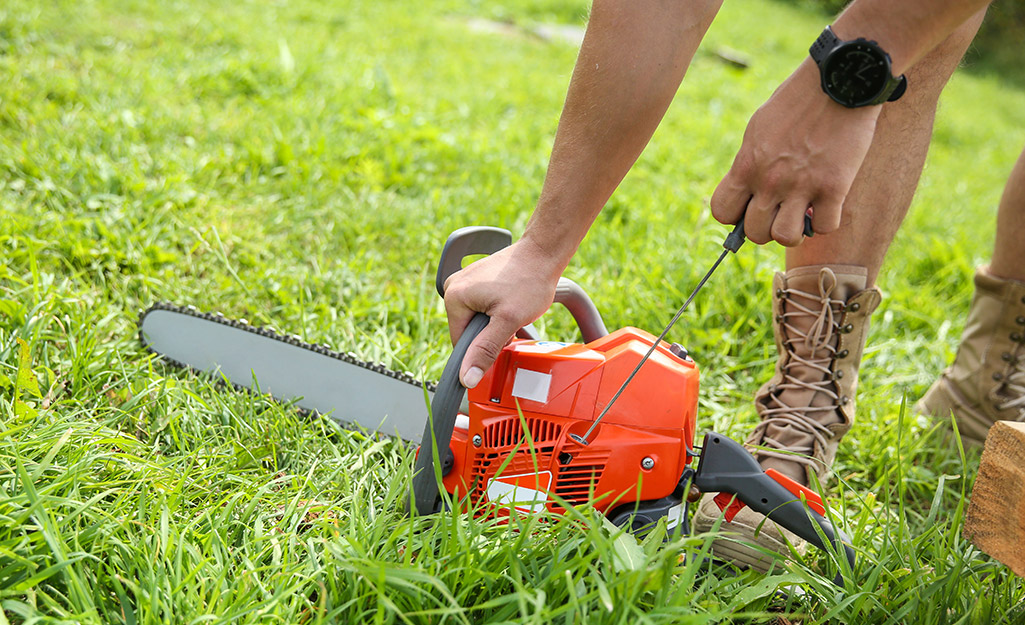
9. Pull The Starter Cord
Grip the starter cord firmly. Pull it quickly and smoothly. You may need several pulls. When the engine coughs or sputters, move the choke to “half. ”
10. Pull Again
Keep pulling until the engine starts. Once it’s running, move the choke to “off. ”
11. Release The Chain Brake
Once the engine is running smoothly, pull the chain brake back to release it. The chain will now move when you press the throttle.
12. Warm Up The Engine
Let the chainsaw idle for 30–60 seconds. This helps the oil circulate and prevents engine damage.
Starting An Electric Chainsaw
Electric chainsaws are simpler and safer to start, but there are still important steps.
1. Plug In And Check Power
Use an outdoor-rated extension cord. Make sure the cord is undamaged and fully plugged in.
2. Check Oil Level
Fill the bar and chain oil. Electric chainsaws need oil for the chain, just like gas models.
3. Engage The Chain Brake
Always start with the chain brake engaged.
4. Turn On Power
Flip the power switch to “on.” Some models have a safety button that you must press before the trigger works.
5. Press The Trigger
With the chain brake engaged, press the trigger. The motor should hum to life.
6. Release The Chain Brake
Pull back the chain brake to allow the chain to move.
Electric chainsaws usually start instantly. If not, check your power source or extension cord.
Starting A Battery-powered Chainsaw
Battery chainsaws are popular for their ease of use and portability.
1. Charge The Battery
Use only the manufacturer’s charger. Batteries can take anywhere from 30 minutes to several hours to fully charge.
2. Insert The Battery
Slide the battery firmly into place until it clicks.
3. Check Oil Level
Fill the bar and chain oil reservoir.
4. Engage The Chain Brake
Always start with the chain brake engaged.
5. Turn On
Press the on/off button or switch, if your model has one.
6. Press The Safety Button
Many battery saws require you to press a safety button while squeezing the trigger.
7. Squeeze The Trigger
The chainsaw should start instantly. If not, check the battery connection.
8. Release The Chain Brake
Once you’re ready to cut, release the chain brake.
Common Mistakes Beginners Make
Even with clear instructions, beginners often make small mistakes that can cause frustration or even danger. Here are some pitfalls to avoid:
- Forgetting the chain brake – Starting without it engaged can lead to injuries.
- Using old fuel – Gas that’s more than 30 days old can make starting difficult.
- Not checking chain tension – A loose chain can slip off; a tight chain can damage the bar.
- Skipping safety gear – Gloves and chaps may seem optional, but they’re not.
- Flooding the engine – Too much choke or repeated pulls can flood a gas engine.
- Wrong oil type – Never use motor oil in place of bar and chain oil.
- Trying to start on an unstable surface – You need firm footing for safety.
Troubleshooting: Chainsaw Won’t Start
Chainsaws sometimes refuse to start, even when you do everything right. Here’s how to diagnose and fix the most common problems.
Gas Chainsaw Troubleshooting
- Engine floods easily: If you smell gasoline or see a wet spark plug, wait 10 minutes, then try again with the choke off.
- Spark plug issues: Remove the spark plug and clean it. Replace if the tip is black or corroded.
- Old fuel: Drain the tank and refill with fresh gas/oil mix.
- Clogged air filter: Clean or replace the air filter if dirty.
- Carburetor problems: If your chainsaw hasn’t been used in months, the carburetor may need cleaning.
Electric And Battery Chainsaw Troubleshooting
- Power source: Check the outlet and extension cord.
- Battery not charged: Make sure it’s fully charged and seated correctly.
- Trigger lock: Some models have a trigger lock that must be pressed first.
- Chain brake engaged: The chain won’t move if the brake is on.
Example: Flooded Engine Fix
If you accidentally flood your gas chainsaw, don’t panic. Remove the spark plug, let the saw sit for 10–15 minutes, then try starting with no choke. This trick solves the problem most of the time.
Maintenance Tips To Make Starting Easier
Routine care keeps your chainsaw reliable and easy to start. Chainsaws that are well-maintained start faster, run smoother, and last longer.
- Clean the air filter every 5–10 hours of use.
- Replace the spark plug once a season, or if you notice hard starts.
- Empty fuel tanks before long storage periods (over one month).
- Sharpen the chain regularly to reduce engine strain.
- Check and top off bar and chain oil before each use.
- Tighten loose screws and bolts to keep vibrations from causing damage.
- Inspect the guide bar for wear and flip it occasionally for even use.
Here’s a comparison of maintenance intervals for different types of chainsaws:
| Task | Gas Chainsaw | Electric Chainsaw | Battery Chainsaw |
|---|---|---|---|
| Air Filter Cleaning | Every 5-10 hrs | Not required | Not required |
| Spark Plug Change | Yearly/if hard start | Not required | Not required |
| Chain Sharpening | Every 2-3 uses | Every 2-3 uses | Every 2-3 uses |
| Bar & Chain Oil | Before each use | Before each use | Before each use |
Proper maintenance is often overlooked by beginners, but it’s the secret to easy starts and longer tool life.
Tips For First-time Chainsaw Users
If you’re starting a chainsaw for the first time, a few extra tips can help you feel more confident and avoid common errors.
- Read the manual: Each chainsaw has unique controls and features.
- Practice with the engine off: Learn where the controls are before starting.
- Start with small branches: Don’t jump into big logs right away.
- Keep both hands on the saw: Always grip the handles when starting and cutting.
- Take breaks: Chainsaw use is physically demanding. Rest often to avoid mistakes from fatigue.
Non-obvious Insight 1: Warm-up Matters
Letting your chainsaw warm up for a minute after starting helps oil reach all moving parts. Cutting too soon can wear out your bar and chain faster.
Non-obvious Insight 2: Chain Brake For More Than Safety
The chain brake not only keeps you safe during starting. When you walk between cuts, always engage the brake—it reduces accidental chain movement if you bump the throttle.
Differences In Starting Techniques Between Brands
Many chainsaw brands add their own features, which can slightly change starting steps. Here are some differences you might encounter:
- Stihl: Many models have a decompression valve. Press it before pulling the starter cord to make pulling easier.
- Husqvarna: Newer models may have an “Auto Return” stop switch, which moves back to “on” automatically.
- Echo: Some models have a “Fast Idle” lever that must be set for cold starts.
- Makita: Battery models often require a two-step trigger (safety button + trigger).
Always check your manual for brand-specific steps.
How To Start A Chainsaw In Cold Weather
Starting a chainsaw in low temperatures is harder, especially for gas models. Here are some expert tips:
- Use fresh, winter-grade fuel: Cold weather thickens oil and gas, making starting harder.
- Store the saw indoors overnight: A warm engine and carburetor start more easily.
- Prime the engine more times: Try 7–8 pumps of the primer bulb.
- Use full choke longer: Allow extra pulls before switching to half choke.
- Let it idle longer to warm up: Give it 2–3 minutes before cutting.
Battery chainsaws lose power in cold weather. Keep batteries warm before use, and have a spare ready.
How To Start A Chainsaw That Hasn’t Been Used In A Long Time
If your chainsaw has been sitting for months, extra steps are needed:
- Empty old fuel and replace with fresh gas/oil mix.
- Inspect the spark plug and replace if corroded.
- Clean the carburetor if the engine sputters.
- Check for oil leaks in the bar and chain reservoir.
- Lubricate the chain before starting.
Old gas is the #1 reason chainsaws don’t start after storage. Always use new fuel for the first start of the season.

Starting A Flooded Chainsaw
Flooding happens if you prime too much or use full choke for too long. Signs include a strong fuel smell and wet spark plug.
To fix:
- Set choke to off
- Engage chain brake
- Hold throttle wide open (if your saw allows)
- Pull starter cord 6–8 times
- If needed, remove and dry the spark plug
This method usually clears the extra fuel and gets your saw running.
Chainsaw Starting Safety Myths
You might hear some bad advice about starting chainsaws. Let’s clear up a few myths:
- “You don’t need the chain brake on”: Always use it—accidents happen fast.
- “Any oil works for the chain”: Only use bar and chain oil. Others can damage your saw.
- “Start between your legs for better grip”: This is dangerous. Always start on the ground or a stable bench.
When To Seek Professional Help
Sometimes, even after all troubleshooting, your chainsaw just won’t start or runs poorly. If you notice:
- Repeated hard starting
- Unusual noises
- Persistent oil leaks
- Smoke from the engine
It’s best to take your chainsaw to a certified repair shop. Attempting major repairs yourself can be risky and may void your warranty.
For more details on chainsaw safety and maintenance, you can visit the Occupational Safety and Health Administration (OSHA).
Frequently Asked Questions
How Often Should I Replace The Spark Plug In My Chainsaw?
It’s best to change the spark plug once per season or after about 100 hours of use. If your saw becomes hard to start or misfires, replace it sooner.
Can I Use Regular Motor Oil Instead Of Bar And Chain Oil?
No, only use bar and chain oil. Motor oil doesn’t stick to the chain and can cause early wear, poor lubrication, and even chain failure.
What Should I Do If My Chainsaw Chain Keeps Coming Off?
A loose chain is the usual cause. Stop immediately and adjust the chain tension. Make sure the chain is not too tight or too loose, and always check before starting.
Why Does My Chainsaw Stall After Starting?
If your chainsaw stalls soon after starting, possible causes include a dirty air filter, old fuel, a clogged carburetor, or incorrect choke setting. Clean or replace filters, use fresh fuel, and check your starting steps.
Is It Safe To Start A Chainsaw Indoors?
Never start a chainsaw indoors. Gas chainsaws give off dangerous fumes, and even electric or battery models can throw debris. Always start and operate chainsaws outdoors in a well-ventilated area.
Starting a chainsaw the right way is not just about pulling a cord or pressing a button. It’s about safety, preparation, and attention to detail. With the steps and tips above, you’ll gain confidence and skill, whether you’re cutting firewood, pruning trees, or tackling a storm cleanup.
Remember, every chainsaw and situation is a bit different, but if you respect the tool and follow best practices, you’ll avoid most problems. Take your time, use the right safety gear, and soon starting a chainsaw will become second nature.