
Starting a pressure washer can feel tricky if you’ve never done it before. Maybe you just bought a new machine. Or perhaps you’re borrowing one from a friend. Either way, understanding how to start a pressure washer safely and correctly is important. This task is not just about pulling a cord or pressing a button. There are steps you must follow to avoid damaging the machine, hurting yourself, or making a mess. Even experienced users sometimes miss important details, which can lead to problems down the road.
In this guide, you’ll learn how to start both gas and electric pressure washers step by step. You’ll discover what to check before starting, how to avoid common mistakes, and why following the right order makes a big difference. There are also tips for different situations, like starting after long storage or in cold weather. By the end, you’ll feel confident and ready to use your pressure washer for cleaning driveways, cars, siding, and more.
What You Need Before Starting
Before you start a pressure washer, you need more than just the machine. Preparation is key to safety and success.
- Pressure washer (gas or electric)
- Garden hose (with proper water supply)
- High-pressure hose
- Spray gun and wand
- Nozzles (various types for different sprays)
- Fuel and oil (for gas models)
- Electrical outlet (for electric models)
- Personal protective equipment (PPE): Safety goggles, gloves, sturdy shoes
Check the user manual for your specific model. Some washers have unique steps or maintenance needs.
Non-obvious Insight 1
Many beginners forget to check the water source. Low water flow can damage the pump. Make sure your hose provides enough water (usually 2–4 gallons per minute) for the machine.
Non-obvious Insight 2
Don’t use hot water unless your pressure washer is designed for it. Most home models take cold water only. Hot water can warp seals and internal parts.
Understanding Your Pressure Washer Type
The steps for starting depend on whether your pressure washer is gas or electric.
Key Differences
Gas models have engines, spark plugs, and require fuel and oil. Electric models use a motor and need a grounded outlet. Each type has its own startup sequence and safety concerns.
Here’s a quick comparison:
| Feature | Gas Pressure Washer | Electric Pressure Washer |
|---|---|---|
| Power Source | Gasoline | Electricity |
| Startup Method | Manual pull-start | On/Off switch |
| Maintenance | Regular (oil, spark plugs) | Low |
| Noise Level | Loud | Quieter |
| Mobility | More portable (no cords) | Limited by cord length |
| Best For | Heavy-duty cleaning | Light to medium tasks |
Choose the right model for your tasks. For example, cleaning a driveway needs more power than washing a bicycle.
Basic Safety Steps
Pressure washers are powerful tools. Used carelessly, they can cause injury or property damage.
- Always wear safety goggles and closed shoes.
- Never point the spray gun at people, pets, or glass.
- Avoid using the washer on ladders; the force can knock you off balance.
- Read the manual and follow the manufacturer’s instructions.
- Keep children and animals away from the work area.
- Check all hoses and connections for leaks or wear before starting.
Tip: Never run a gas pressure washer indoors or in a closed garage. The engine produces carbon monoxide, which is deadly in enclosed spaces.
Step-by-step: Starting A Gas Pressure Washer
Gas models need careful handling. Here’s how to start one safely and reliably.
1. Move The Washer Outside
Operate your pressure washer in an open, well-ventilated area. This prevents carbon monoxide buildup and reduces fire risk.
2. Check The Oil And Fuel Levels
Open the oil cap and check the dipstick. The oil should be clean and at the proper level. Add oil if needed. Use the type recommended in your manual (often SAE 10W-30).
Fill the gas tank with fresh gasoline. Old gas can cause hard starting or damage the engine.
3. Attach The Hoses
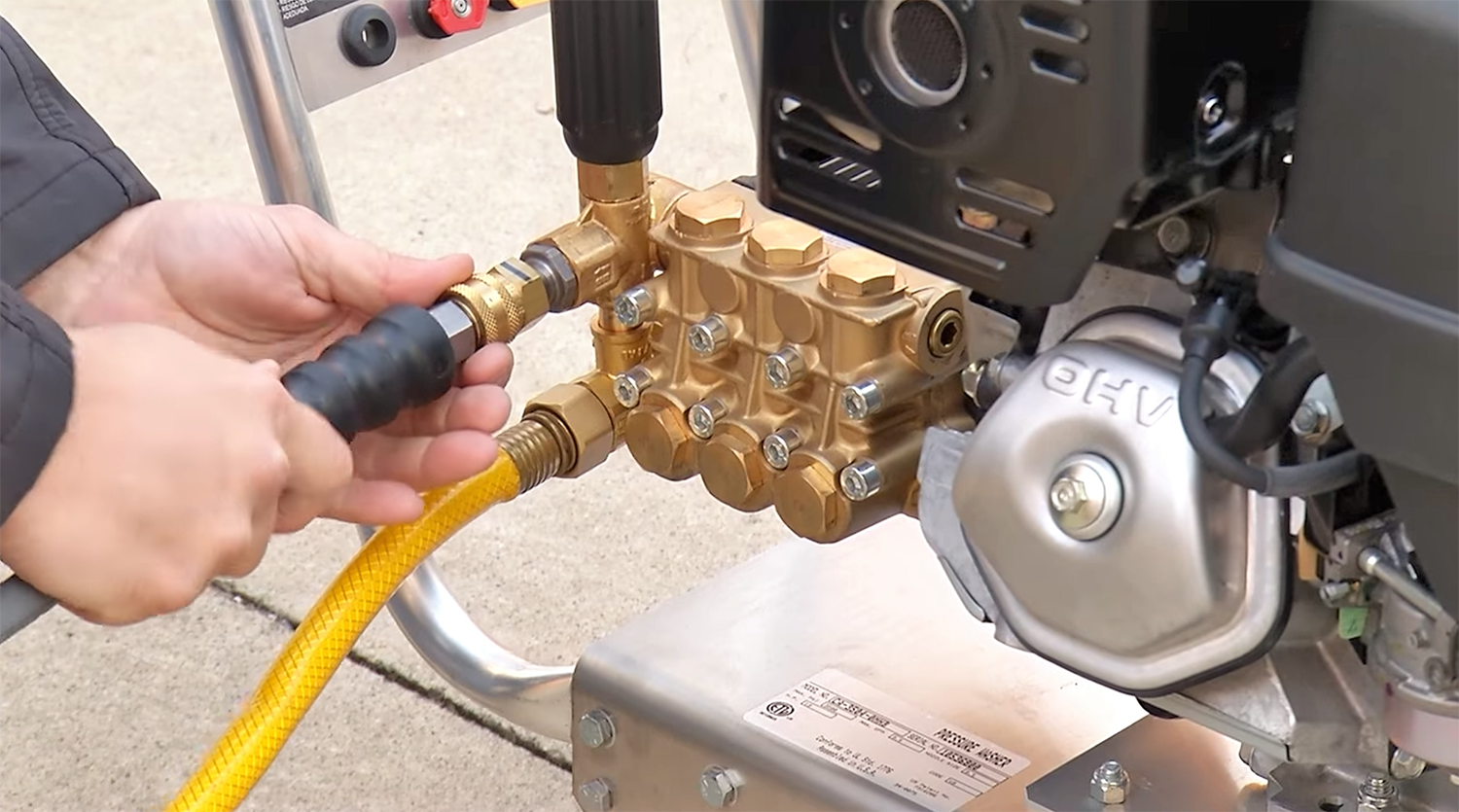
- Connect the garden hose to your water source and the washer’s water inlet.
- Attach the high-pressure hose to the pump outlet and the spray gun.
Tighten all connections by hand. Don’t use pliers, as they can damage the fittings.
4. Choose And Attach The Nozzle
Pick the right nozzle tip for your job. Nozzles control the spray pattern and pressure.
Color codes:
- Red (0°): Very narrow, strong jet (for stubborn stains)
- Yellow (15°): Stripping paint or heavy dirt
- Green (25°): General cleaning (cars, decks)
- White (40°): Light cleaning, rinsing
- Black: Soap application (low pressure)
Push the nozzle into the wand’s quick-connect fitting until it clicks.
5. Turn On The Water Supply
Open the tap fully. Let water run through the machine for a few seconds (without the engine running) to remove air and debris from the lines.
6. Squeeze The Trigger To Release Pressure
Point the gun away from people and gently squeeze the trigger. This removes trapped air and prevents a sudden burst when the engine starts.
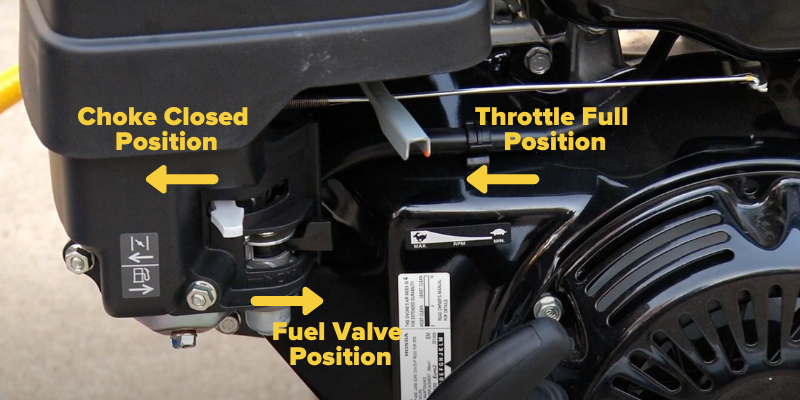
7. Set The Choke And Throttle
- If the engine is cold, set the choke to “full.”
- Move the throttle to “fast” or “run.”
- If your model has a fuel valve, turn it to “on.”
8. Pull The Starter Cord
- Place one foot on the frame to steady the machine.
- Pull the starter cord sharply until you feel resistance, then pull harder to start the engine.
- You may need several pulls, especially if the engine is cold.
Once the engine runs, gradually move the choke to “off” or “run. ”
9. Start Cleaning
Your pressure washer is now ready. Always hold the spray gun firmly with both hands, especially at high pressure.
Practical Example
If you’re starting your pressure washer after winter storage, check for stale fuel. Old gasoline makes starting harder and can clog the carburetor. Drain and refill the tank with fresh gas if needed.
Step-by-step: Starting An Electric Pressure Washer
Electric models are simpler, but require attention to cords and water supply.
1. Place The Washer Near An Outlet
Set the washer close to a grounded power outlet. Never use damaged or frayed cords.
2. Connect The Hoses
- Attach the garden hose to the water inlet.
- Connect the high-pressure hose to the spray gun.
Make sure all connections are tight.
3. Attach The Nozzle
Choose the right nozzle and connect it securely.
4. Turn On The Water
Open the tap fully. Let water flow for 30 seconds to clear the lines.
5. Plug In And Switch On
Plug the washer into the outlet. For safety, use a GFCI (Ground Fault Circuit Interrupter) outlet. Press the reset button if the plug has one.
6. Squeeze The Trigger
With the washer switched off, squeeze the spray gun trigger to release pressure and air.
7. Power On
Turn the washer’s power switch to “on. ” The motor will start, and you’ll hear a hum or click.
8. Begin Cleaning
You’re now ready to use the washer. Release the spray gun trigger to stop the motor between cleaning sessions.
Important Note
Never run an electric pressure washer without water. The pump can overheat and fail within seconds.
Setting Up For Success: Advanced Preparation Steps
Even if you know the basics, a few extra steps will help your pressure washer last longer and work better.
Inspect Hoses And O-rings
Leaks are common with pressure washers. Before each use, check all hose connections and look for cracked or missing O-rings. Replace damaged parts to avoid water spraying everywhere.
Check The Spray Gun
Test the trigger and make sure it moves smoothly. Sticky triggers can be dangerous and reduce control.
Secure The Power Cord (electric Models)
Keep the cord away from water, sharp edges, and the cleaning area. Extension cords should be heavy-duty and rated for outdoor use.
Remove Obstructions
Clear the area of objects that might trip you or block the hose. Pressure washers can damage plants, paint, or siding if you’re not careful.
Use The Right Detergent
If your project needs soap, use a pressure washer-safe detergent. Ordinary dish soap or bleach can harm seals and pumps.
Troubleshooting: What To Do If It Won’t Start
Sometimes, a pressure washer simply won’t start. Here’s how to solve common problems for both types.
Gas Model Won’t Start
- No fuel: Check the gas tank and refill if needed.
- Old fuel: Drain and use fresh gasoline.
- Spark plug: Remove and inspect. Clean or replace if dirty.
- Choke position: Make sure the choke is “on” for a cold engine.
- Engine flooded: Wait a few minutes and try again with the choke off.
- Oil level: Some models won’t start if oil is too low.
Electric Model Won’t Start
- Power source: Check outlet and reset GFCI.
- Extension cord: Use a shorter, heavy-duty cord.
- Trigger not squeezed: Some models need the trigger pulled during startup.
- Water not on: Ensure water is flowing.
Both Types: Low Pressure
If water pressure is weak:
- Nozzle clogged: Remove and clean.
- Water supply too low: Use a larger hose or check the tap.
- Air in the system: Run water through the machine without the engine/motor running for a minute.
Common Mistakes To Avoid
Even experienced users sometimes make these errors:
- Starting without water: Always run water through the machine before starting.
- Using the wrong nozzle: The red nozzle is very strong and can damage surfaces.
- Ignoring leaks: Small leaks can turn into big repairs.
- Skipping maintenance: Old oil, clogged filters, and bad fuel reduce machine life.
- Running the engine indoors: Gas engines emit dangerous fumes.
- Not releasing pressure before disconnecting hoses: This can cause sudden bursts and injury.
- Leaving detergent inside: Rinse the system after using soap to prevent buildup.

Credit: www.youtube.com
Choosing The Right Nozzle For The Job
Nozzles are not all the same. Choosing wisely helps you clean faster and avoid damage.
| Nozzle Color | Spray Angle | Best Use |
|---|---|---|
| Red | 0° | Tough stains, metal, concrete (use with care) |
| Yellow | 15° | Paint removal, mildew, heavy dirt |
| Green | 25° | General cleaning, cars, decks |
| White | 40° | Rinsing, windows, light dirt |
| Black | 65° | Soap application |
Tip: Test the nozzle on an old board or concrete before using it on important surfaces.
Seasonal And Storage Tips
Pressure washers need special care if you use them in cold weather or store them for a long time.
Winterizing Your Washer
- Drain all water from hoses and pump.
- Run the machine for a few seconds (without water) to clear the pump.
- Add pump saver antifreeze if storing below freezing.
After Long Storage
- For gas models, replace old fuel and check for leaks.
- For electric models, check cords for cracks or mouse damage.
Storing Safely
- Store indoors, away from moisture and sunlight.
- Coil hoses loosely to prevent kinks.
Credit: www.mitm.com
Maintenance Checklist For Reliable Starting
A well-maintained pressure washer starts faster and lasts longer.
- Change engine oil (gas models) every 20–50 hours of use.
- Clean or replace air filter regularly.
- Check spark plug and replace yearly.
- Flush detergent system after use.
- Inspect hoses for leaks and replace as needed.
- Lubricate O-rings with silicone grease.
These steps take just minutes but prevent costly repairs.
When To Call A Professional
If your pressure washer still won’t start after basic troubleshooting, it may need expert help.
- Persistent leaks from pump or engine
- Strange noises or vibrations
- Broken pull cord or starter mechanism
- Major electrical issues (for electric models)
Trying to fix these yourself can make things worse, especially if you’re not mechanically skilled.
Credit: www.mitm.com
Environmental Tips For Pressure Washing
Pressure washing can waste water and spread chemicals if you’re not careful.
- Use the lowest effective pressure for your task.
- Sweep debris before washing to avoid clogging drains.
- Collect runoff if using detergents near plants or waterways.
- Choose biodegradable, eco-friendly detergents.
In some places, local laws restrict pressure washing in drought or water shortage conditions. Check your city’s rules before you start.
Upgrades And Accessories To Make Starting Easier
Modern pressure washers have features and add-ons that can make starting and using them simpler.
- Electric start (on some gas models): A button replaces the pull cord.
- Quick-connect fittings: Make hose changes faster and reduce leaks.
- Longer hoses: Reduce the need to move the washer while cleaning.
- Inline water filters: Protect the pump from grit and debris.
These upgrades can reduce frustration and extend the life of your equipment.
Real-world Example: Cleaning A Driveway
Let’s say you want to clean an oil-stained driveway. Here’s how you’d set up and start your pressure washer:
- Move the washer to the driveway, away from plants and windows.
- Check and fill oil and fuel (for gas) or position near an outlet (for electric).
- Connect hoses and select the yellow or green nozzle.
- Wear goggles and gloves.
- Run water through the system for 30 seconds.
- Start the washer following the steps above.
- Apply detergent with the black nozzle (if using).
- Let the detergent sit, then switch to a stronger nozzle for cleaning.
- Rinse with the white nozzle.
This sequence ensures you get the best results without damaging the surface or the machine.
Frequently Asked Questions
How Do I Know If My Pressure Washer Needs Oil?
Most gas pressure washers have a dipstick or sight window near the engine. Check the oil level before every use. If it’s low, add the recommended oil type. Electric pressure washers don’t need engine oil.
Can I Use An Extension Cord With An Electric Pressure Washer?
Yes, but use only heavy-duty, outdoor-rated cords. Shorter cords (under 25 feet) are best. Thin or long cords can cause voltage drops, making the motor run hot or not start at all.
Why Is Water Leaking From The Pump Area?
Leaks often mean a worn O-ring or a loose connection. Turn off the washer, disconnect hoses, and inspect all fittings. Replace damaged O-rings and tighten connections by hand.
What’s The Safest Way To Disconnect Hoses After Use?
First, turn off the washer and the water supply. Squeeze the trigger to release pressure. Then disconnect the hoses. Never disconnect under pressure, as water can burst out and cause injury.
Can I Use My Pressure Washer For Cleaning My Car?
Yes, but use a low-pressure nozzle (white or green) and stand at least 3 feet away. High pressure can strip paint or damage trim. Always check your car manufacturer’s cleaning guidelines.
Pressure washers are powerful tools that make cleaning much easier and faster. By following these steps, you’ll protect your investment, avoid accidents, and get better results every time. For more safety tips and technical details, you can visit the Wikipedia page on pressure washers.
With the right preparation, care, and a little practice, starting your pressure washer will soon feel as simple as watering the lawn. Happy cleaning!