
A clogged sink can disrupt your day and create stress. You might expect to fix it with a plunger, but what if you don’t have one at home? The good news is you can still unclog your sink using everyday items and simple methods.
Many people solve this problem without any expensive tools or calling a plumber. In fact, understanding how to clear a blocked sink with things you likely have in your kitchen or bathroom can save you time and money.
This guide takes you step by step through the best ways to unclog a sink without a plunger. You’ll learn why sinks get blocked, which method works for your situation, and how to avoid common mistakes. These solutions are practical, safe, and suitable for both kitchen and bathroom sinks.
Even if you are not experienced in home repairs, you will find easy instructions and helpful tips here. By the end, you’ll have the confidence to tackle sink clogs yourself – and know when to call a professional.
Why Do Sinks Get Clogged?
Understanding the main causes of a clogged sink helps you pick the right solution and prevent future problems. Kitchen and bathroom sinks usually get blocked for different reasons.
In the kitchen, the most common culprits are:
- Grease and oil: These liquids go down the drain easily but harden inside the pipes as they cool.
- Food scraps: Even small bits of food can build up, especially starchy or fibrous items like rice, pasta, and potato peels.
- Soap: Some soaps leave behind a fatty residue that sticks to pipe walls.
In the bathroom, blockages often come from:
- Hair: Strands catch on rough pipe edges and tangle with soap or toothpaste.
- Soap scum: When soap mixes with minerals in water, it creates a sticky film.
- Toothpaste and cosmetics: These can thicken and stick to the drain over time.
Sometimes, small objects like jewelry or bottle caps accidentally fall into the drain. Hard water (water with high mineral content) also makes clogs more likely by depositing minerals inside pipes.
Assessing The Severity Of Your Clog
Before you start, it’s important to check how serious your clog is. This will help you decide which method to use.
- Slow drain: Water moves slowly but still drains eventually. Most home solutions will work.
- Standing water: Sink is full of water that won’t go down. You may need stronger methods or more patience.
- Complete blockage: No water drains at all. Try several methods, and be ready to repeat steps.
If you notice a bad smell, bubbling, or water backing up into other fixtures, the problem could be deeper in your plumbing. In this case, home methods may help, but if the problem returns quickly, a plumber should check for a bigger issue.
Basic Precautions Before You Begin
Clearing a sink can be messy. Protect yourself and your home with these simple steps:
- Remove all items around the sink to keep them clean and dry.
- Wear rubber gloves to protect your hands from dirty water or cleaning chemicals.
- Place a bucket or bowl under the sink (especially if you plan to open the drain trap).
- Have old towels or rags nearby to wipe up spills.
Never mix different cleaning chemicals (like bleach and ammonia). This can create toxic gases. If you try one method and it doesn’t work, rinse the sink with plenty of water before trying another.
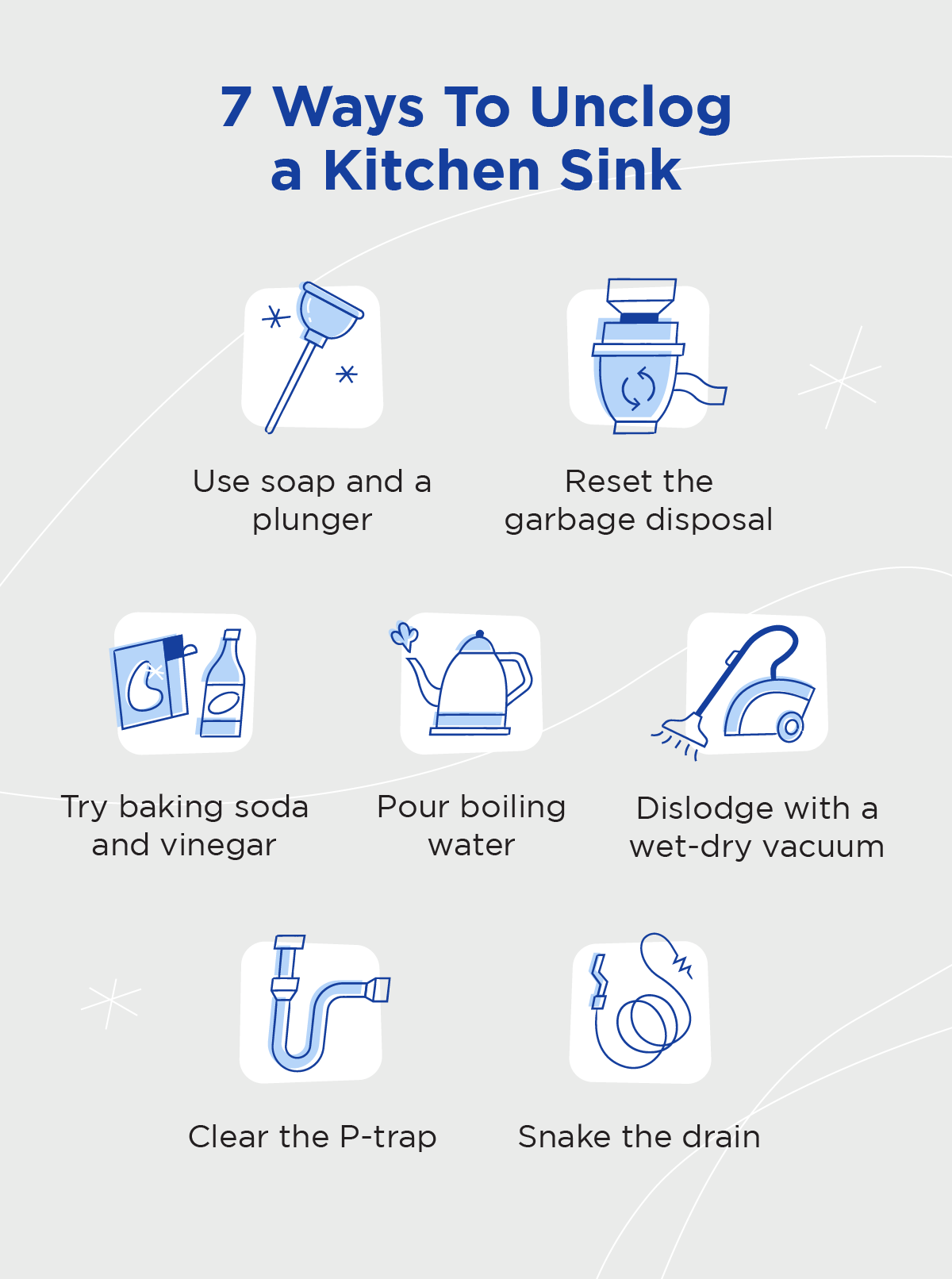
Method 1: Boiling Water Flush
This is the easiest and fastest way to try unclogging your sink. Boiling water melts grease and loosens soap scum.
Steps:
- Boil a kettle or large pot of water.
- If there is standing water, remove as much as possible with a cup or bowl.
- Carefully pour the boiling water directly into the drain in two or three stages. Wait a few seconds between pours.
- Test the drain with warm tap water.
When it works best:
This method is most effective for kitchen sinks clogged with grease or soap. It’s less useful for bathroom clogs caused by hair or solid objects.
Warning:
Do not use boiling water on porcelain sinks or old pipes made of PVC. The heat can crack or melt them. For these, use hot (not boiling) tap water.
Method 2: Baking Soda And Vinegar
This natural combination creates a fizzy reaction that can break up soft clogs. It’s safe for most pipes and the environment.
Steps:
- Remove standing water if present.
- Pour about half a cup of baking soda down the drain. Push it in with a spoon if needed.
- Add one cup of white vinegar slowly.
- You’ll hear fizzing and bubbling. Cover the drain with a plug or cloth to keep the reaction inside.
- Wait 15–30 minutes.
- Flush the drain with hot water.
Why it works:
The fizzing action helps to loosen greasy or soapy blockages. Vinegar also helps dissolve mineral deposits.
Extra Tip:
For stronger effect, repeat the process twice. Don’t rush; let the reaction work before adding hot water.
Method 3: Dish Soap And Hot Water
If grease is the problem, dish soap can help dissolve it.
Steps:
- Pour a few tablespoons of liquid dish soap into the drain.
- Let it sit for 5–10 minutes.
- Flush with a kettle of hot (not boiling) water.
- Repeat if needed.
Why it works:
Dish soap cuts through grease and makes it slippery, helping it slide down the pipes.
Practical advice:
Use a soap designed for cutting grease. Don’t use powdered soap—it can clump and worsen the clog.
Method 4: Baking Soda And Salt
Salt acts as a gentle abrasive, helping to scrub away buildup.
Steps:
- Mix half a cup of baking soda with half a cup of salt.
- Pour the mixture down the drain.
- Leave it for at least 30 minutes (overnight for tough clogs).
- Rinse with hot water.
When to use:
Try this if you want a chemical-free option or if you don’t have vinegar.
Method 5: Use A Drain Snake Or Wire
If you don’t have a plunger, a drain snake (also called a plumbing auger) is a great tool. But you can make a simple version from a wire coat hanger.
Steps:
- Straighten a wire hanger, leaving a small hook at one end.
- Carefully insert the hook into the drain.
- Twist and push gently to catch hair or debris.
- Pull out the wire, then clean off any gunk.
- Flush the drain with water.
Tips:
- Be gentle. Forcing the wire can damage pipes or scratch the sink.
- Use a flashlight to see inside the drain if possible.
Non-obvious insight:
Many people push blockages further down by mistake. The goal is to hook and pull out debris, not just push it.
Credit: www.youtube.com
Method 6: Remove And Clean The Drain Trap (p-trap)
The P-trap is the curved pipe under the sink. It’s a common place for clogs, especially in kitchens.
Steps:
- Place a bucket under the trap to catch water.
- Unscrew the slip nuts holding the trap in place (use pliers if tight).
- Remove the trap and clean out any debris.
- Reattach the trap and test for leaks.
Why this works:
Solid objects like food, hair, or small items often get stuck here.
Hidden tip:
Many people forget to check the trap. It’s easy to clean and solves many clogs quickly.
Method 7: Use A Wet/dry Vacuum
If you have a wet/dry vacuum (shop vac), you can use it to suck out the clog.
Steps:
- Set the vacuum to “liquid” mode.
- Cover the vent to prevent a mess.
- Create a tight seal around the drain with a wet rag.
- Turn on the vacuum for a few seconds.
- Check if the clog is gone.
Safety tip:
Do not use a regular household vacuum. Only wet/dry models are safe for water.
Pro insight:
This works best for clogs near the surface. Deep blockages may need another method.
Method 8: Plumber’s Tape Or Zip Tie
If you have a long zip tie or plumber’s tape, you can use it like a flexible snake.
Steps:
- Insert the zip tie or tape into the drain.
- Move it up and down or twist gently.
- Pull out hair or debris.
- Rinse with hot water.
Practical tip:
Cut small notches in the zip tie to help catch hair. This trick works especially well in bathroom sinks.
Method 9: Wet Cloth Pressure Flush
You can create pressure without a plunger using a wet cloth.
Steps:
- Fill the sink with a few inches of hot water.
- Take a thick, wet cloth and stuff it tightly into the drain opening.
- Press down firmly and quickly.
- The force pushes water down, which can dislodge minor blockages.
When to try:
For light clogs or if you have no tools at all.
Bonus:
This method is surprisingly effective for shallow soap or food clogs.
Method 10: Commercial Drain Cleaners (with Caution)
Chemical drain cleaners can dissolve hair and grease, but they are strong and can damage pipes if overused.
Steps:
- Read and follow the instructions on the product.
- Pour the cleaner into the drain.
- Wait the recommended time.
- Flush with plenty of water.
Important:
Use only as a last resort. Never mix with other chemicals. Wear gloves and ventilate the area.
Data insight:
According to the U.S. Environmental Protection Agency, overuse of harsh cleaners can cause pipe corrosion and harm the environment.
Comparing Home Remedies For Sink Clogs
To help you choose, here’s a summary comparing the main non-plunger methods:
| Method | Best For | Time Needed | Pipe Safety | Skill Level |
|---|---|---|---|---|
| Boiling Water | Grease, Soap | 5 min | Safe for metal | Easy |
| Baking Soda & Vinegar | Grease, Minor Hair | 30 min | Very safe | Easy |
| Drain Snake/Wire | Hair, Solid Objects | 15 min | Safe if gentle | Moderate |
| Wet/Dry Vacuum | Surface Clogs | 10 min | Very safe | Easy |
| Chemical Cleaner | Stubborn Blockage | 30-60 min | Possible risk | Easy |
Common Mistakes When Unclogging A Sink
Many people make errors when trying to clear a clog, which can make things worse or even damage plumbing.
- Using too much force: Pushing too hard with a wire or snake can break pipes or scratch the sink.
- Pouring grease down the drain: Even small amounts add up over time and cause future clogs.
- Using boiling water on plastic pipes: This can warp or melt PVC piping.
- Mixing chemicals: Combining cleaners (like bleach and ammonia) can create dangerous fumes.
- Ignoring the problem: Waiting too long can let a small clog become a big one.
Pro tip:
Always rinse the drain with hot water after clearing a clog. This helps flush out any remaining debris.
When To Call A Professional
While most minor clogs can be fixed with home methods, sometimes you need expert help.
Signs you need a plumber:
- Multiple drains in your home are blocked at the same time.
- You hear strange noises (like gurgling) from other drains when using the sink.
- The clog keeps returning, even after you clear it.
- There’s a strong sewage smell.
- Water backs up into other fixtures (like the tub or toilet).
Why call for help?
These signs may point to a deeper problem, like a blocked main sewer line or a broken pipe. Plumbers have special tools and cameras to diagnose and fix complex issues.
Preventing Future Sink Clogs
Prevention is easier than dealing with a blocked sink. Simple habits make a big difference.
- Use drain covers: Mesh screens catch hair and food before they go down the drain.
- Dispose of grease properly: Pour cooled grease into a can, not the sink.
- Flush with hot water: Once a week, pour hot water down the drain to melt buildup.
- Avoid flushing large food particles: Scrape plates into the trash first.
- Clean the P-trap regularly: Every few months, remove and rinse it.
- Limit soap and cosmetic buildup: Use less, or switch to liquid soap.
Hidden insight:
Even “disposable” wipes and paper towels can block sinks. These do not break down like toilet paper.
Real-life Example: Unclogging A Kitchen Sink
Meet Sara, a busy mother who noticed her kitchen sink draining slowly. She saw greasy residue in the basin. Instead of calling a plumber, she tried these steps:
- Removed as much standing water as possible.
- Poured half a cup of baking soda, followed by a cup of vinegar, down the drain.
- Waited 30 minutes for the fizzing to finish.
- Flushed the drain with hot water.
- Still slow, so she repeated the process.
- Finally, she poured boiling water down the drain.
The result? The clog was gone, and the sink drained perfectly. Sara now pours hot water down her sink every Sunday to prevent new clogs.
Comparing Diy Vs Professional Solutions
Is it worth unclogging a sink yourself, or should you always call a plumber? Here’s a comparison to help you decide:
| Factor | DIY Methods | Professional Help |
|---|---|---|
| Cost | Usually free or low cost (under $10) | $75–$200 per visit |
| Time | Immediate or within an hour | May wait hours or days |
| Success Rate | High for minor clogs | High for all clogs |
| Risk of Damage | Low if careful | Very low |
| Tools Needed | Common household items | Specialized equipment |
Environmental Impact Of Drain Cleaning Methods
Some solutions are more eco-friendly than others. For example, baking soda, vinegar, and hot water are safe for the environment. Chemical cleaners can pollute water and harm wildlife.
Did you know?
According to the EPA, the average American household uses about 20 gallons of drain cleaner every year. Most of this can be avoided with regular cleaning and home remedies.
Tip:
Try natural methods first. Reserve chemical cleaners for only the toughest clogs.
Extra Tips For Stubborn Clogs
- Alternate between baking soda/vinegar and boiling water a few times for better results.
- For hair clogs, use a special tool called a hair snake (cheap at hardware stores).
- If you smell rotten eggs, act fast—this can be a sign of bacteria or a deep clog.
- After unclogging, pour a cup of baking soda followed by hot water once a month to keep pipes clear.
- If your home has old metal pipes, avoid strong acid-based cleaners.
Safety Reminders
- Keep children and pets away when using cleaning products or tools.
- Never use excessive force; slow and steady wins the race.
- Always check under the sink for leaks after reassembling pipes.
Frequently Asked Questions
How Can I Tell If My Sink Clog Is Caused By Grease Or Hair?
Grease clogs are common in the kitchen and usually cause a slow drain with a slippery, shiny residue. Hair clogs are more common in bathroom sinks or showers. They often cause slow drainage and may trap soap scum. If you pull out a clump of hair with a wire or snake, you’ll know that was the cause.
Credit: www.mrrooter.com
Is It Safe To Use Vinegar And Baking Soda Regularly In My Drains?
Yes, using vinegar and baking soda once a month is safe for most pipes. It helps keep pipes clear of grease and mild buildup. Avoid overuse if you have very old metal pipes, as they may be more sensitive, but in most cases, this method is gentle and safe.
What Should I Do If None Of These Home Methods Work?
If you’ve tried all the above methods and your sink is still clogged, it’s time to call a professional plumber. There may be a deep blockage, a broken pipe, or a problem in your main sewer line that only specialized tools can fix.
:max_bytes(150000):strip_icc()/how-to-unclog-a-kitchen-sink-2718799_sketch_FINAL-6d86f43bcb464f8ca5b61f240c2d8bf9.png)
Credit: www.thespruce.com
Are Chemical Drain Cleaners Bad For My Pipes?
Chemical drain cleaners can clear tough clogs but may damage pipes if used too often. They also harm the environment. Use them as a last resort and always follow the instructions carefully. For more information, see the EPA’s advice on drain cleaners.
How Can I Prevent Clogs In The Future?
Use drain covers to catch hair and food, pour hot water down your drains regularly, and avoid putting grease, coffee grounds, or large food scraps in the sink. Clean the P-trap every few months and use natural cleaners like baking soda and vinegar for routine maintenance.
Unclogging a sink without a plunger is easier than you think. With a bit of patience and the right technique, you can solve most blockages yourself. Regular care and smart habits keep your pipes clear and your home running smoothly.