
Using a torque wrench can seem confusing at first, especially if you are not used to working with tools. But once you understand the basics, it becomes a simple and essential part of many mechanical tasks. A torque wrench helps you tighten bolts and nuts to a specific level of tightness, called torque. This is very important in jobs like fixing cars, assembling bikes, or putting together machinery. If bolts are too loose, they can fall out. If they are too tight, they can break. Learning to use a torque wrench correctly helps you avoid these problems and keeps your work safe and reliable.
Many beginners make mistakes when using a torque wrench. For example, they might not set the correct value or might use the wrong technique. Sometimes, people forget to reset the wrench after use, which can damage the tool. With the right guidance, you can avoid these mistakes and become confident with your torque wrench, even if English is not your first language.
This guide will explain, step by step, how to use a torque wrench, what types are available, and how to care for your tool. You will also learn some tips that most beginners miss. Let’s get started on your journey to using a torque wrench like a pro.
What Is A Torque Wrench And Why Is It Important?
A torque wrench is a special tool that lets you apply a precise amount of force to a bolt or nut. Torque is the twisting force that makes an object rotate. In mechanical work, the right torque is very important. If you use too much force, you can stretch or break parts. Too little, and things may come loose over time.
Key Reasons To Use A Torque Wrench
- Safety: Proper torque keeps parts from coming loose or breaking. This is very important in cars, bikes, and machines.
- Accuracy: A torque wrench helps you follow the manufacturer’s instructions for each job.
- Quality: Using the right torque prevents damage to threads and parts.
- Reliability: Properly tightened bolts last longer and work better.
For example, when changing a car tire, you must tighten the lug nuts to a certain value (often between 80-100 Nm). If not, the wheel can fall off or be damaged.
Types Of Torque Wrenches
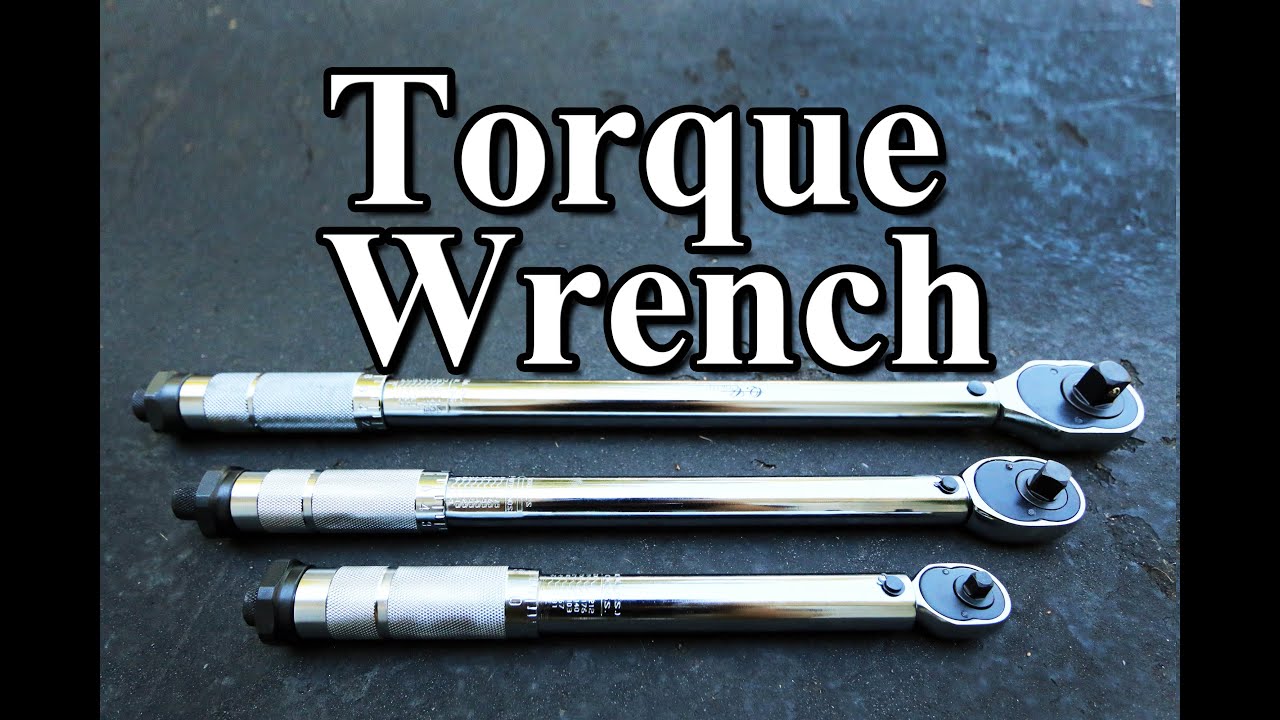
There are different kinds of torque wrenches. Each has its own features and uses. Here are the main types you are likely to see:
| Type | Main Feature | Best Use |
|---|---|---|
| Click-type | Clicks when set torque is reached | General automotive, bikes, machinery |
| Beam-type | Pointer moves on a scale | Simple jobs, quick checks |
| Dial-type | Dial shows torque level | Precision tasks, labs |
| Electronic (digital) | Digital display; may beep or light up | High accuracy, data recording |
Click-type
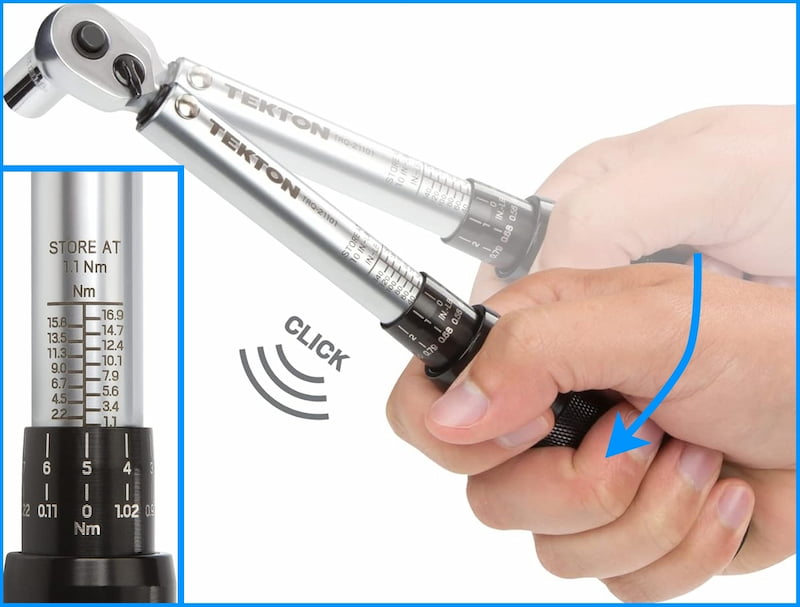
This is the most common for home and car use. You set the desired torque, and the wrench makes a clicking sound when you reach the value.
Beam-type
It has a long handle and a pointer. As you twist, the pointer moves on a scale, showing the torque. It’s simple and does not need batteries.
Dial-type
A round dial shows the torque as you turn. These are very accurate and used in professional settings.
Electronic (digital)
These wrenches display the torque digitally and often have extra features like memory, lights, or sounds. They are usually more expensive but very precise.

How To Choose The Right Torque Wrench
Picking the right tool depends on your job. Here are important things to think about:
- Torque Range: Check the minimum and maximum torque values. For car work, a range of 20–200 Nm is common.
- Drive Size: Common sizes are 1/4″, 3/8″, and 1/2″. Bigger sizes handle more torque.
- Accuracy: Most wrenches have an accuracy of ±4%. For very sensitive work, look for better precision.
- Length: Longer wrenches make it easier to reach higher torque but may be harder to use in small spaces.
- Type: Click, beam, dial, or electronic—choose what fits your skills and needs.
For example, if you work on bicycles, a 1/4″ or 3/8″ drive size with a low torque range is best. For car wheels, a 1/2″ drive is better.
Parts Of A Torque Wrench
Knowing each part helps you use and care for your wrench correctly.
- Handle: Where you hold the tool. Some have a grip for comfort.
- Shaft/Body: The long part connecting the handle to the head.
- Head: The end that holds the socket. Some have a ratcheting mechanism.
- Scale: Shows the torque setting. Can be a window, dial, or digital display.
- Locking Mechanism: Prevents the setting from changing during use.
- Release/Click Mechanism: Found in click-type wrenches; signals when torque is reached.
Step-by-step: How To Use A Torque Wrench
Using a torque wrench correctly means more than just turning a bolt. Follow these steps for best results:
1. Read The Manual
Always start by reading the instructions that come with your torque wrench. Each tool is a little different.
2. Check The Required Torque
Look up the manufacturer’s torque specifications for your job. For example, car manuals often list the torque for wheel nuts.
3. Select The Right Socket
Choose a socket that fits the bolt or nut perfectly. Using the wrong size can damage both the bolt and the tool.
4. Set The Torque Value
- For click-type: Unlock the handle, turn to the desired torque value on the scale, then lock it.
- For beam-type: No setting is needed; just watch the pointer as you work.
- For digital: Use the buttons to select the torque.
5. Attach The Wrench
Put the socket over the bolt or nut. Make sure it sits flat and tight.
6. Tighten The Bolt
- Hold the wrench handle at the center.
- Turn slowly and steadily.
- For click-type: Stop as soon as you hear or feel the click.
- For beam or dial: Watch the scale and stop at the right value.
- For digital: Stop when the display or sound tells you.
7. Double-check
If you are new, it’s smart to check your work. Try loosening and re-tightening to the same torque to see if the wrench clicks at the same spot.
8. Reset The Wrench
For click-type, always turn the setting back to the lowest value before storing. This keeps the spring inside healthy.
9. Clean And Store
Wipe the tool clean. Store it in a dry place, away from dust and moisture.
Common Mistakes And How To Avoid Them
Many beginners make simple errors. Here are some to watch out for:
- Not Setting the Torque Correctly: Always double-check the value.
- Using the Wrong Socket: This can round off bolts or damage the tool.
- Pulling Too Fast: Go slowly to avoid overshooting the torque.
- Using the Wrench to Loosen Bolts: Most torque wrenches are for tightening only.
- Not Resetting After Use: Leaving the tool set at high torque can ruin its accuracy.
- Ignoring Calibration: All wrenches lose accuracy over time. Get yours checked every year or after heavy use.
- Applying Force in the Wrong Spot: Always use the handle. Do not add extensions or pull at an angle.
Torque Wrench Calibration: Why And How
Calibration means checking and adjusting the tool so it gives the correct torque. Over time, the wrench may become less accurate. Professional workshops calibrate their tools every 5,000 cycles or once a year.
Signs Your Torque Wrench Needs Calibration
- You notice bolts are too tight or too loose, even when using the wrench.
- The click or digital signal does not match the real torque applied.
- The tool has been dropped or damaged.
Where To Calibrate
Most people cannot calibrate a torque wrench at home. You can send it to a tool shop or a calibration lab. Some specialized wrenches come with a calibration certificate.
Practical Tips For Best Results
- Warm Up the Tool: If you have not used your wrench in a long time, make a few practice pulls at a low setting before real use.
- Use Steady Pressure: Avoid jerky or sudden movements.
- Do Not Use Extensions: Adding pipes or adaptors can change the torque.
- Record Your Work: For important jobs, write down the torque values and the date.
- Store in a Case: Protects from dust, moisture, and bumps.
Real-world Examples
Using a torque wrench is important in many jobs. Here are some examples:
Automotive
- Changing Spark Plugs: These need a specific torque (often 18–25 Nm). Too tight can break the plug; too loose can cause engine problems.
- Tightening Wheel Nuts: Most cars use 80–100 Nm. Uneven torque can lead to vibration or lost wheels.
- Engine Assembly: Each bolt in an engine has a set torque.
Bicycles
- Stem and Handlebars: Over-tightening can crack carbon fiber parts. Correct torque (4–6 Nm) is critical.
- Seatpost: Needs the right tightness to avoid slipping or damage.
Industrial And Construction
- Pipe Flanges: Incorrect torque can cause leaks.
- Machine Assembly: Reliable assembly depends on correct torque.
Understanding Torque Settings And Units
Torque is measured in Newton-meters (Nm) or foot-pounds (ft-lb). Some wrenches show both. 1 Nm is about 0.74 ft-lb.
How To Convert
To Convert Nm To Ft-lb: Multiply By 0.74
To Convert Ft-lb To Nm: Divide By 0.74
For Example: 100 Nm × 0.74 = 74 Ft-lb
Always check your manual for the correct unit.
Comparing Torque Wrenches: What To Look For
Here is a comparison of key features in popular torque wrench types:
| Feature | Click-Type | Beam-Type | Digital |
|---|---|---|---|
| Accuracy | ±4% | ±5% | ±2% |
| Ease of Use | Easy | Moderate | Very easy |
| Price | $$ | $ | $$$ |
| Battery Needed | No | No | Yes |
| Durability | High | Very high | Medium |
As you can see, each type has its strengths. Choose one based on your needs and budget.
Advanced Torque Wrench Techniques
If you want to go beyond basic use, consider these advanced tips:
Pre-torque And Final Torque
For critical jobs, use two steps: first, tighten all bolts lightly (pre-torque), then finish to the final value. This helps spread the load evenly.
Cross-pattern Tightening
For wheels or flanges, tighten bolts in a cross pattern, not in a circle. This keeps pressure balanced.
Using A Torque Angle Gauge
Some jobs need both a set torque and a certain angle of turn. Use a torque angle gauge after reaching the target torque.
Documenting Torque
For legal or safety reasons, keep a log of each bolt’s torque, who did the work, and when.
Storing And Maintaining Your Torque Wrench
Proper care keeps your tool accurate and lasting longer.
- Clean After Use: Wipe off grease and dirt. Do not soak in water.
- Store at Lowest Setting: For click-type, always reset to the lowest value.
- Keep in a Case: Protects from drops and dust.
- Avoid Overloading: Never use the wrench beyond its maximum torque.
- Check Calibration: Once a year or after a hard fall.
Troubleshooting Common Problems
If your torque wrench is not working right, try these fixes:
- No Click or Signal: Check if you have set the torque correctly. If not, the tool may need repair.
- Hard to Turn: Clean and oil the moving parts, but do not use too much oil.
- Loose Handle: Tighten the locking mechanism.
- Inaccurate Readings: Time for calibration.
- Visible Damage: Stop using and get it checked by a professional.
Safety Tips
Using a torque wrench safely is as important as using it correctly.
- Wear Gloves: Protects your hands from slipping.
- Use Eye Protection: Small parts can fly off if they break.
- Work in a Clear Space: Avoid distractions and clutter.
- Never Use as a Hammer or Pry Bar: This damages the tool.
Two Insights Many Beginners Miss
- Temperature Can Affect Accuracy: If you use your torque wrench in very hot or cold conditions, the readings can change slightly. Try to use the tool at normal room temperature for best accuracy.
- Lubrication Changes Torque: If you oil the bolt threads, the torque needed will be different than for dry threads. Always check if the specification is for “dry” or “lubricated” bolts.
When Not To Use A Torque Wrench
A torque wrench is not for every job. Do not use it to break loose rusted bolts. The high force needed can damage the tool. Use a normal wrench first, then switch to your torque wrench for final tightening.
The History And Future Of Torque Wrenches
The first torque wrenches were invented in the 1920s for aircraft work. Since then, they have become key tools in all mechanical fields. Today, digital wrenches can even store data and connect to computers. As technology improves, we may see smart wrenches that adjust themselves or warn you of mistakes.
If you want to learn more about the science behind torque and its uses, the Wikipedia page on torque wrenches is a good place to start.
Frequently Asked Questions
How Often Should I Calibrate My Torque Wrench?
Most experts suggest calibrating your torque wrench once a year or every 5,000 uses. If you drop the tool or notice it is not accurate, calibrate it sooner.
Can I Use A Torque Wrench To Loosen Bolts?
No, most torque wrenches are designed for tightening only. Using them to loosen bolts can damage the tool and affect its accuracy.
What Is The Difference Between Nm And Ft-lb?
Nm (Newton-meters) and ft-lb (foot-pounds) are both units for measuring torque. 1 Nm is about 0. 74 ft-lb. Always use the unit recommended for your job.
Why Is It Important To Reset The Torque Wrench After Use?
Resetting (turning to the lowest value) releases tension from the internal spring. This keeps the tool accurate and extends its life.
Is It Okay To Use An Extension Bar With A Torque Wrench?
No, using an extension bar can change the amount of torque applied and lead to inaccurate results. Only use the tool as designed.
Learning how to use a torque wrench is a valuable skill for anyone who works with machines, cars, or bikes. With the right technique and a bit of practice, you can do professional-quality work and avoid costly mistakes. Always respect your tool, follow safety guidelines, and keep learning.
With these tips, you are now ready to use a torque wrench with skill and confidence.