
A heat gun is a powerful and flexible tool. At first, it looks similar to a hair dryer, but it can do so much more. A heat gun blows hot air at high temperatures, usually between 100°C and 600°C (212°F–1,112°F). With the right knowledge and safety, you can use a heat gun for many jobs around the home or workshop. From stripping paint and shrinking plastic, to thawing pipes or crafting, a heat gun can save you time and effort. But it must be used with care. In this guide, you’ll learn everything you need to use a heat gun safely and effectively—even if you’ve never touched one before.
What Is A Heat Gun?
A heat gun is an electric tool that blows hot air in a focused stream. It looks like a thick pistol or a large hair dryer. The air is heated by an electric element as it passes through the gun, then pushed out by a fan. Most heat guns let you control the temperature and airflow. This makes them useful for different tasks.
Main Types Of Heat Guns
There are several types of heat guns. Each has strengths and weaknesses. Here are the main types you’ll find in stores:
- Electric heat guns: The most common type. Plug them into a wall socket. Good for most home and professional jobs.
- Cordless heat guns: Run on rechargeable batteries. Handy for places where power sockets are not available.
- Gas-powered heat guns: Use butane or propane. Hotter than electric types, often used outdoors.
- Industrial heat guns: Larger, more powerful, and sometimes fixed in place. Used in factories or for heavy-duty work.
Key Parts Of A Heat Gun
- Nozzle: The front tip where hot air comes out. Different shapes for different tasks.
- Heating element: The part that heats the air.
- Fan: Pushes air through the gun.
- Handle and trigger: For holding and controlling the tool.
- Power cord or battery: Supplies electricity.
Understanding these basics helps you choose the right tool for your job.
When Should You Use A Heat Gun?
A heat gun can be used for many tasks. Some jobs become much easier with this tool. Here are the most common uses:
- Paint removal: Softens old paint for easy scraping.
- Shrink wrapping: Shrinks plastic film for packaging or electrical insulation.
- Thawing frozen pipes: Safely melts ice in metal pipes (never use on plastic).
- Bending plastic pipes: Makes PVC soft and flexible for shaping.
- Drying: Speeds up drying for paint, glue, or damp surfaces.
- Loosening rusty bolts: Expands metal, breaking the rust bond.
- Crafting: Embossing powders, resin art, and more.
- Removing stickers or adhesives: Softens glue for easy removal.
- Welding plastics: Joins plastic pieces by melting.
- Window tinting: Helps film stick smoothly to glass.
Some people use heat guns for unique projects—like making wood grain patterns or caramelizing food. But always check if your use is safe.
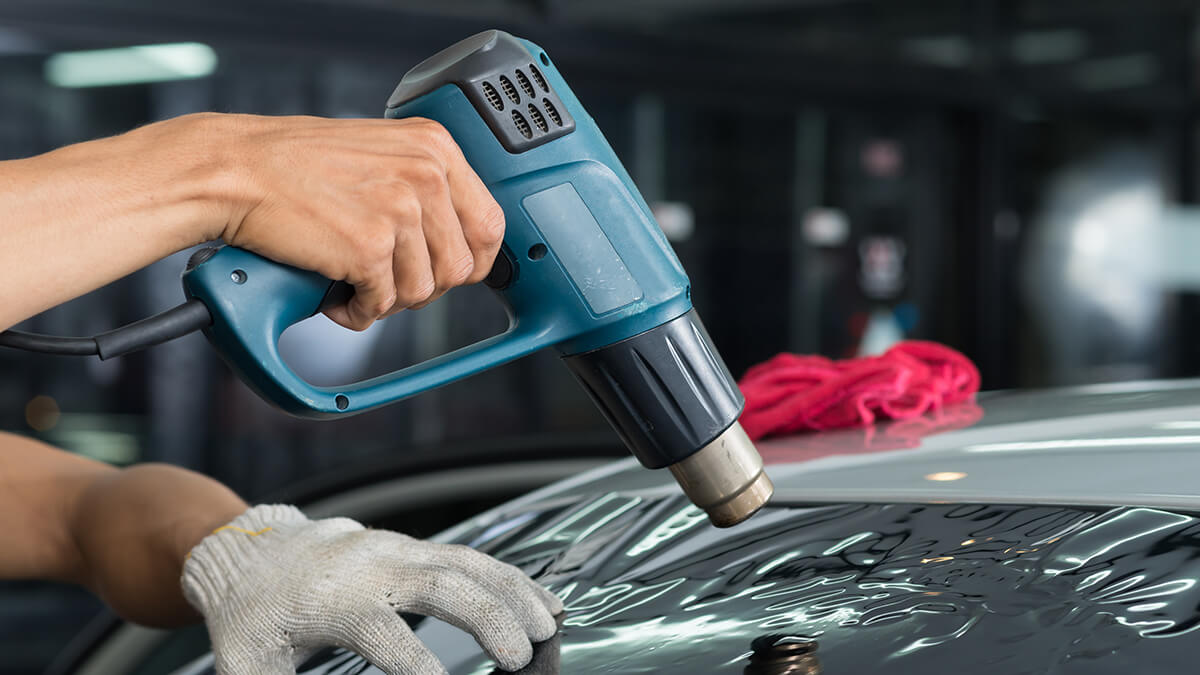
Safety Precautions Before Using A Heat Gun
Safety should be your first concern. Heat guns get very hot and can cause burns, fires, or damage materials. Here’s how to protect yourself:
- Wear protection: Use heat-resistant gloves and safety glasses.
- Work in a ventilated area: Heated paint or plastics can release fumes.
- Clear your workspace: Remove flammable objects (paper, cloth, solvents).
- Check your tool: Inspect the cord, nozzle, and body for damage.
- Use a heat-resistant mat: Protect your table or floor from hot air or falling tools.
- Keep children and pets away: Never let them near when working.
- Read the manual: Each model is different. Know your tool’s controls and safety features.
- Never block the nozzle: This can cause overheating.
- Point away from your body: Always direct the nozzle away from skin and face.
- Let it cool: Place the hot gun on its stand or a safe spot after use. The nozzle stays hot for minutes.
Many beginners forget how hot the nozzle gets even after turning off the gun. Burns from the tip are a common accident—so be extra careful.
Choosing The Right Heat Gun For Your Job
Not all heat guns are created equal. Picking the right one depends on your tasks, experience, and budget.
Key Factors To Consider
- Temperature range: For light jobs (like crafts), a lower max temperature is fine. For stripping paint or thawing pipes, you need higher heat.
- Airflow settings: Adjustable speeds help control the effect.
- Nozzle types: Some kits include flat, concentrator, reflector, or glass protection nozzles for specific jobs.
- Ergonomics: A comfortable grip matters for long use.
- Weight and size: Lighter tools are easier for overhead work.
- Power source: Choose corded for continuous use, cordless for mobility.
Here’s a comparison of typical heat gun types to help you decide:
| Type | Power Source | Max Temp (°C) | Best For |
|---|---|---|---|
| Electric | Wall socket | 500-600 | Home, DIY, crafts |
| Cordless | Battery | 450-550 | Mobile repairs, outdoors |
| Gas-powered | Butane/Propane | 600+ | Heavy-duty, outdoors |
| Industrial | Wall/Fixed | 700+ | Factories, large-scale jobs |
If you only need a heat gun for crafts or home repairs, a standard electric model is enough. For field work, cordless may be worth the extra cost.
How To Set Up Your Heat Gun
Before you start any project, set up your heat gun properly. This reduces mistakes and increases safety.
- Read the instructions: Every brand is different. Some require assembly.
- Attach the right nozzle: Pick the nozzle for your job. For example, a flat nozzle for paint removal, or a reflector for pipes.
- Check the cord or battery: Plug in safely, or ensure batteries are charged.
- Test the heat: Turn on at the lowest setting. Hold away from your face, and feel the air with your hand from a safe distance.
- Adjust settings: Set temperature and airflow as needed.
- Secure your workpiece: Clamp or hold the item so it won’t move.
- Keep a fire extinguisher nearby: Especially for paint or glue work.
Many users forget step 4—always test the heat before aiming at your project. This avoids sudden overheating or burning delicate materials.
Step-by-step Guide: Using A Heat Gun For Common Tasks
Now, let’s cover how to use a heat gun for several popular jobs. Each task needs a slightly different approach.
Stripping Paint
Removing old paint is a classic heat gun job. Here’s how to do it safely and effectively:
- Choose a flat or wide nozzle for even heating.
- Set temperature to 400–600°C for most paints.
- Hold gun 5–8 cm (2–3 inches) from surface.
- Move slowly in a straight line. Don’t stay too long in one spot—paint will bubble and scorch.
- Scrape softened paint with a putty knife immediately.
- Repeat if needed for thick layers.
- Clean area after work; paint dust can be toxic.
Tips:
- Wear a mask if working with old paint (may contain lead).
- If wood starts to smoke, move the gun faster or reduce heat.
Shrink Wrapping
Heat guns are often used to shrink plastic film around objects, for packaging or insulation.
- Fit a concentrator nozzle for focused heat.
- Set temperature to 200–300°C (lower for thin film).
- Hold film tight over the object.
- Move gun smoothly across the surface, never stopping in one place.
- Watch for shrinking—film will tighten and become clear.
Tips:
- Keep moving to avoid melting holes.
- Practice on scrap material first for best results.
Thawing Frozen Pipes
A heat gun can thaw metal pipes safely, but never use it on plastic pipes (they may melt).
- Use a reflector nozzle to wrap heat around the pipe.
- Set low to medium heat (200–400°C).
- Start at the end nearest the tap. This lets melting water escape.
- Move slowly along the pipe until ice melts.
- Check for leaks when done.
Tips:
- Never leave the gun unattended.
- Don’t use on pipes near flammable materials.
Bending Plastic Pipes
For DIY plumbing or crafts, you can bend PVC or similar plastics with a heat gun.
- Fit a reflector or wide nozzle.
- Set heat to 200–300°C.
- Heat the area to be bent, turning the pipe for even softening.
- Bend gently when plastic becomes flexible.
- Cool quickly in water to set the shape.
Tips:
- Overheating can burn or deform the pipe.
- Use a bending spring inside the pipe for smoother curves.
Removing Stickers And Adhesives
Old stickers or glue can be tough. A heat gun softens the adhesive.
- No nozzle needed for small surfaces.
- Set low heat (100–200°C).
- Aim at the sticker for 30–60 seconds.
- Peel slowly with a scraper or fingernail.
Tips:
- Test on a hidden spot first—some plastics may warp.
- Wipe residue with alcohol after removal.
Drying Paint Or Glue
Speed up drying by directing warm air over the surface.
- Use low heat and low airflow.
- Hold gun at least 10 cm (4 inches) away.
- Move constantly to avoid bubbles or cracks.
Tips:
- Don’t use too much heat—this can cause paint to blister.
- Heat guns dry only the surface; thick layers may still be wet inside.
Crafting And Embossing
For crafters, a heat gun is a favorite tool for embossing powders or resin art.
- Hold gun above the artwork, not too close.
- Use low heat to start. Increase if needed.
- Move in circles for even heating.
- Watch for melting or bubbling—stop immediately if you see it.
Tips:
- Try different nozzles for varied effects.
- Always test settings on scrap before working on your main piece.

Heat Gun Nozzles And Their Uses
Nozzles help focus or spread the heat for specific jobs. Using the right nozzle can make your work safer and cleaner.
Here’s a quick guide to common nozzle types:
| Nozzle Type | Shape | Best Use |
|---|---|---|
| Flat Nozzle | Wide, thin opening | Stripping paint, drying large areas |
| Concentrator Nozzle | Narrow tip | Shrink wrapping, spot heating |
| Reflector Nozzle | Curved, half-circle | Thawing pipes, bending tubes |
| Glass Protection Nozzle | Shielded, forked | Removing paint near glass |
Not all heat guns include every nozzle. You can often buy extra nozzles for special tasks.
Advanced Tips For Professional Results
Once you understand the basics, you can use these advanced tips to get better results and avoid common mistakes.
Control Your Distance And Movement
The closer you hold the heat gun to the surface, the hotter it will get. Start farther away and move closer as needed. Always keep the gun moving—staying still can burn or warp materials.
Preheat And Cool Down
For some projects, preheating the surface or gun (for 15–30 seconds) gives a more even result. After work, let the gun cool on a heatproof surface before storage. Never wrap the cord around a hot nozzle.
Use With Other Tools
A heat gun often works best with other tools:
- Scrapers: For removing paint or glue.
- Rollers: To smooth shrink wrap or vinyl.
- Bending springs: Inside pipes for perfect curves.
- Thermometers: For precise temperature control.
Practice On Scrap Material
Before using the heat gun on your main project, test on a similar scrap piece. This helps you learn how fast the material reacts to heat.
Watch For Hidden Dangers
Some materials (old paint, plastics) can release toxic fumes when heated. Always work in a well-ventilated area, and wear a mask if needed.
Don’t Overload The Circuit
Heat guns use a lot of power. If you plug in other heavy tools on the same outlet, you may trip a breaker or damage your tools.

Cleaning And Maintaining Your Heat Gun
A well-maintained heat gun lasts longer and works better. Here’s how to care for your tool:
- Unplug and cool: Always unplug and let cool before cleaning.
- Wipe the nozzle: Use a damp cloth to remove dust, paint, or glue. Never use water on a hot gun.
- Check the cord: Look for cuts or frays.
- Clear the air vents: Dust can block airflow and cause overheating.
- Store safely: Keep in a dry, clean place, away from children.
- Service as needed: If the gun stops working or smells burnt, have it checked by a professional.
Many users forget to clear dust from vents. Blocked vents make the gun overheat and can even cause fires.
Common Mistakes And How To Avoid Them
Even experienced users make mistakes. Here are some pitfalls—and how to avoid them:
- Holding too close: Can burn or scorch surfaces. Start farther away.
- Staying in one spot: Causes bubbling, melting, or fire. Keep moving.
- Using wrong nozzle: Makes the job harder or damages material.
- Ignoring safety gear: Skipping gloves or glasses can lead to burns or eye injury.
- Forgetting about fumes: Some plastics and paints release toxic gases.
- Touching the hot nozzle: Always let cool before handling or storage.
A non-obvious mistake is using a heat gun near glass. Glass can crack if heated too quickly. Use a glass protection nozzle and heat slowly.
Comparing Heat Guns With Other Tools
Many people wonder how a heat gun is different from similar tools, like hair dryers or torches. Here’s a quick comparison:
| Tool | Max Temp (°C) | Main Use | Safety Risk |
|---|---|---|---|
| Heat Gun | 600+ | Paint removal, shrinking, bending | High (burns, fire) |
| Hair Dryer | 60–100 | Drying hair, gentle tasks | Low |
| Blow Torch | 1,400+ | Soldering, welding metal | Very high (fire, explosion) |
Never substitute a hair dryer for a heat gun if you need high heat—it won’t be hot enough. And never use a blow torch for jobs meant for a heat gun; it’s too dangerous.
When Not To Use A Heat Gun
A heat gun is not always the best solution. Avoid using a heat gun:
- On plastics that can’t handle high heat (may melt or release toxins).
- On surfaces with hidden wires or gas lines (risk of fire or explosion).
- Near open flames or flammable liquids.
- For drying pets or hair (use a hair dryer instead).
- On thin glass or delicate electronics.
If you’re not sure if a material is safe to heat, check the manufacturer’s guidelines or test a small, hidden area first.
Real-world Examples And Unique Uses
People have found creative uses for heat guns. Here are some real-world examples:
- Automotive repairs: Removing decals, softening plastic trim, or fixing dents in bumpers.
- Home repairs: Loosening old caulk, thawing locks, or bending metal flashing.
- Woodworking: Creating aged or “burnt” finishes on wood.
- Gardening: Sterilizing soil in small amounts (with care).
- Food preparation: Some chefs use heat guns to crisp up dishes—but this is only for models designed for food use.
One non-obvious tip: a heat gun can help remove candle wax from carpets. Heat the wax until it softens, then blot with paper towels.
Heat Gun Troubleshooting: Fixing Common Issues
Sometimes, your heat gun may not work as expected. Here are common problems and solutions:
- No heat or airflow: Check the power, cord, and fuse. Try a different outlet.
- Weak heat: Dust in the vents or a faulty heating element. Clean vents, or replace if needed.
- Strange smell or smoke: May be burning dust or a failing part. Unplug immediately and inspect.
- Nozzle clogged: Remove any melted plastic or debris after cooling.
If you can’t fix the issue, contact the manufacturer or a repair specialist. Don’t try to open or fix internal parts yourself unless you are trained.
Heat Gun Myths And Misunderstandings
There are several myths about heat guns:
- “All heat guns are the same.” Not true—temperature, airflow, and safety features differ.
- “I can use it like a hair dryer.” Dangerous! Heat guns are much hotter and can cause serious burns.
- “Higher heat is always better.” Wrong for many tasks. Too much heat can ruin your project.
- “You don’t need safety gear.” Even experts get burned or injured by skipping gloves or glasses.
Knowing the real facts helps you avoid mistakes and work confidently.
Frequently Asked Questions
What Materials Should I Never Use A Heat Gun On?
Avoid using a heat gun on thin plastics, foam, or materials that melt or release toxic fumes. Never use it on surfaces with hidden wires, gas lines, or near flammable liquids. Always check if your material is heat-safe before starting.
Can I Use A Heat Gun Indoors?
Yes, but always work in a well-ventilated area. Heat guns can release fumes from paint, glue, or plastics. Open windows or use a fan. If you notice strong smells or smoke, stop and check your setup.
How Do I Know Which Nozzle To Use?
Choose the nozzle shape that matches your task. For wide areas, use a flat nozzle. For pipes, a reflector nozzle is best. For focused spots, use a concentrator. If working near glass, use a glass protection nozzle.
Is A Heat Gun Safe For Removing Lead Paint?
You can use a heat gun for lead paint removal, but it’s risky. Always wear a respirator mask and work in a well-ventilated area. Never let paint burn—it can create toxic dust and fumes. Consider hiring a professional for large jobs.
Where Can I Learn More About Heat Gun Safety And Use?
A trusted resource is the Wikipedia Heat Gun article. You can also check your heat gun’s manual and safety guides from tool manufacturers.
Using a heat gun opens up many possibilities for DIY, repairs, and crafts. With the right knowledge and care, this tool becomes both safe and powerful. Take your time to learn, practice, and always put safety first—your work (and your hands!) Will thank you.