
Choosing between a scroll saw and a jigsaw can be confusing for anyone new to woodworking or DIY crafts. Both tools cut wood, metal, and other materials, but their uses, strengths, and results are very different. The right choice depends on your project, skill level, and expectations.
If you want to cut detailed designs, make smooth curves, or create unique shapes, knowing which tool fits your needs will save time, money, and frustration. In this guide, you’ll learn how scroll saws and jigsaws work, their main differences, and which tool is better for different tasks.
By the end, you’ll feel confident choosing the right saw for your workshop.
What Is A Scroll Saw?
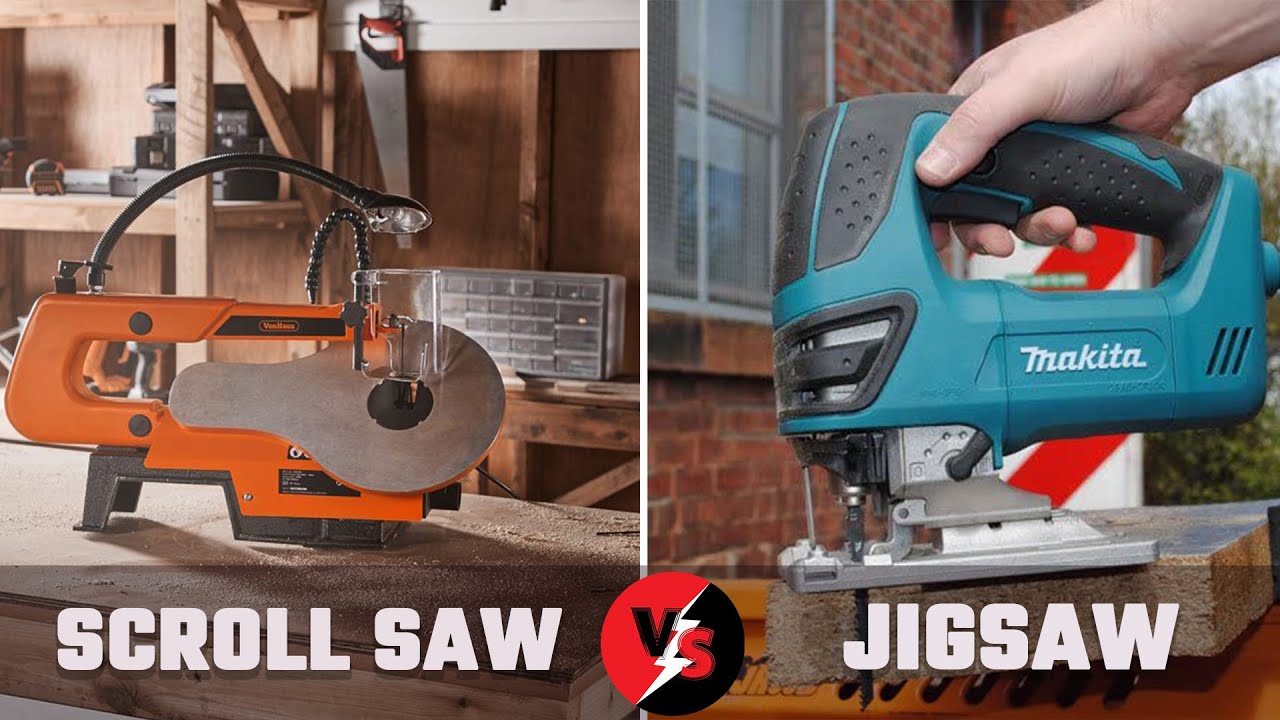
A scroll saw is a stationary power tool with a thin, short blade that moves up and down quickly. You use both hands to guide your material on a flat table, moving it around the blade to make cuts. Scroll saws are famous for their ability to create very precise, intricate shapes—think of detailed wood art, puzzles, or delicate ornaments.
The scroll saw’s blade is held tight at both ends, which helps keep cuts accurate. Most scroll saws let you adjust the speed and tilt the table for angled cuts. Unlike many other saws, scroll saws can make inside cuts—you drill a hole in your material, thread the blade through, and start cutting from inside the shape.
Scroll saws are often used by hobbyists, artists, and anyone who wants smooth, detailed work. They are not usually used for cutting large boards or making long, straight cuts.
What Is A Jigsaw?
A jigsaw is a hand-held power tool with a straight, narrow blade that moves up and down. You guide the jigsaw over the material, following your marked line. Jigsaws are known for their versatility—they cut curves, circles, straight lines, and even rough shapes in wood, plastic, or metal.
Jigsaws are lightweight and portable. They are ideal for cutting larger materials that might not fit on a scroll saw’s table. Jigsaws can handle thicker wood and make longer cuts. They are a favorite tool for construction, home repairs, and DIY projects where speed and flexibility matter more than perfect precision.
While jigsaws can cut curves, they are not as accurate or smooth as scroll saws. The jigsaw’s blade is held at one end only, so it can flex or wander if pushed too fast.
Key Differences Between Scroll Saw And Jigsaw
Understanding the main differences between these two saws is the first step to choosing the right one for your project.
| Feature | Scroll Saw | Jigsaw |
|---|---|---|
| Type | Stationary (tabletop) | Hand-held (portable) |
| Blade | Thin, short, held at both ends | Thin, long, held at one end |
| Cutting Precision | Very high, intricate shapes | Good, but less precise |
| Best For | Detailed curves, fretwork, art | Rough curves, straight lines, big pieces |
| Material Thickness | Up to 2 inches (5 cm) | Up to 4 inches (10 cm) or more |
| Inside Cuts | Easy (thread blade through hole) | Not possible |
| Speed | Slow, careful | Fast, rougher |
The key takeaway: scroll saws are for fine, artistic work; jigsaws are for general, versatile cutting.
When To Use A Scroll Saw
Scroll saws are best for projects that need precision and detail. Some common uses include:
- Making puzzles – The thin blade creates smooth, tight curves and tiny connecting pieces.
- Cutting intricate patterns – Ideal for wood inlays, wall art, or name plaques.
- Fretwork – Making delicate, lace-like designs in wood or metal.
- Jewelry and ornaments – Small, complex shapes that need clean edges.
- Inside cuts – Perfect for shapes inside a piece, like a letter “O” or “Q”.
Scroll saws are loved by crafters and woodworkers who value accuracy over speed. If your project needs smooth edges and tight turns, a scroll saw is the right tool.
When To Use A Jigsaw
Jigsaws shine in versatile, larger projects where speed and portability matter. You should use a jigsaw for:
- Cutting curves in large pieces – Sheet goods, plywood, or countertops.
- Making rough shapes – Quick, rough outlines for larger projects.
- Straight or beveled cuts – With a guide, you can make straight lines or angled edges.
- Cutting holes in walls or floors – Great for plumbing, electrical work, or remodeling.
- Working with thick materials – Jigsaws handle thicker wood, plastic, and metal than scroll saws.
Jigsaws are useful for construction, furniture making, and DIY repairs. If you want one tool for many jobs, the jigsaw is a strong choice.
Strengths And Weaknesses Of Each Tool
Let’s look deeper at what each saw does well—and where it struggles.
Scroll Saw Strengths
- Precision: Makes tight, smooth curves and delicate details.
- Smooth finish: Minimal sanding needed after cutting.
- Quiet and safe: Less noise and kickback than other saws.
- Inside cuts: Easily cuts shapes inside material.
- Creative freedom: Allows for artistic, freehand designs.
Scroll Saw Weaknesses
- Limited size: Can’t cut large or thick boards.
- Slower: Cutting is careful and takes time.
- Not portable: Heavy and needs a table or bench.
- Limited blade types: Less choice for cutting different materials.
Jigsaw Strengths
- Versatile: Cuts straight, curved, or angled lines in many materials.
- Portable: Easy to carry and use on any surface.
- Handles thick material: Cuts up to 4 inches or more.
- Many blade choices: For wood, metal, plastic, or tile.
- Affordable: Good models are available at low prices.
Jigsaw Weaknesses
- Less precise: Edges can be rough, especially on curves.
- Blade wander: Blade can bend, making cuts less accurate.
- More vibration: Harder to control for tiny details.
- No inside cuts: Can’t start a cut inside a shape.

Blade Types And Their Impact
The blade is the heart of both saws. Choosing the right blade improves your results, safety, and tool life.
Scroll Saw Blades
- Size: Thinner blades for tight curves, thicker blades for straight lines.
- Teeth per inch (TPI): More TPI gives smoother cuts; fewer TPI cuts faster but rougher.
- Material: High-carbon steel for wood, bi-metal for metal.
- Specialty blades: Spiral blades cut in any direction, but leave rougher edges.
Scroll saw blades are short and cheap. They break easily, but are quick to change. Always match the blade to your material and design.
Jigsaw Blades
- Length: Longer blades cut thicker material.
- Width: Narrow blades for curves, wide blades for straight cuts.
- TPI: High TPI for metal and smooth wood; low TPI for fast, rough cuts.
- Material: High-speed steel for wood, carbide-tipped for metal or tile.
- Shank type: T-shank (most common) or U-shank.
Jigsaw blades are easy to swap. Buying a variety pack lets you cut many materials and shapes.
Comparing Cutting Styles
The way each saw cuts has a big effect on your project.
How Scroll Saws Cut
The scroll saw’s blade moves up and down in a gentle, controlled motion. You move the material, not the saw. This lets you guide the wood with both hands, making very small turns and detailed lines. The blade stays steady, so the cut is clean and smooth.
Scroll saws excel at tight radii—think of a sharp turn or a tiny corner. You can even stop, turn the wood, and backtrack if needed. Since the blade is thin, it removes little material (called the kerf).
How Jigsaws Cut
A jigsaw’s blade also moves up and down, but you move the saw itself. This means you control the cut with one hand, while the other holds the material steady (or not at all, for large pieces). Because the saw is hand-held, it’s harder to make very sharp or tiny turns.
Jigsaws are best for large, sweeping curves or straight lines. The blade can flex, so pushing too fast leads to crooked cuts. For clean results, use slow speed and let the blade do the work.
Safety Considerations
Both tools are safer than table saws or circular saws, but you should still follow basic precautions.
- Wear safety glasses to protect your eyes from dust and chips.
- Use hearing protection if you work for long periods.
- Clamp your material: For jigsaws, always secure your work to avoid slips.
- Watch your fingers: Keep hands clear of the blade, especially with scroll saws.
- Unplug before changing blades: Both tools can start by accident.
- Ventilation: Scroll saws make fine dust; use a mask or dust collector.
A hidden risk with scroll saws: because cuts are so precise, you may forget the blade is moving. Always stay alert.
Project Examples: Scroll Saw Vs Jigsaw
To see the real-world difference, let’s look at some example projects and which saw is better for each.
Scroll Saw Projects
- Wooden name signs: Cut letters with smooth, rounded edges.
- Jigsaw puzzles: Make pieces that fit tightly together.
- Ornaments: Snowflakes, animals, or holiday shapes with tiny details.
- Fretwork panels: Decorative screens with lace-like patterns.
- Model ships or planes: Small parts that need careful shaping.
Jigsaw Projects
- Cutting kitchen countertops: Make room for a sink or stovetop.
- Building shelves: Cut shelves to fit awkward spaces.
- Installing flooring: Trim boards around corners or pipes.
- Outdoor signs: Make rough shapes from plywood.
- Garden art: Large, bold shapes in wood or plastic.
Some projects can be done with either tool, but the results will look different. For example, you can cut a circle with both saws, but the scroll saw will be smoother, while the jigsaw will be faster.
Price And Cost Comparison
Buying a scroll saw or jigsaw is an investment. Here’s what you can expect:
| Tool Type | Average Price (USD) | Blade Cost | Maintenance |
|---|---|---|---|
| Scroll Saw | $100 – $600 (for hobby models) | $5 – $15 per pack | Low, mostly blade replacements |
| Jigsaw | $30 – $200 (for most models) | $10 – $20 per set | Low, more frequent blade changes |
Scroll saws cost more up front, but they last many years. Jigsaws are cheaper, but you may need to buy more blades, especially if cutting different materials.
Portability And Space Needs
A scroll saw is a stationary tool. It takes up space on a bench or table and is heavy to move. You need a dedicated area in your workshop.
A jigsaw is hand-held and light. You can use it anywhere—on a workbench, outside, or at a job site. It’s easy to store in a drawer or toolbox.
If you work in a small space or move between locations, the jigsaw is more practical.
Skill Level Needed
Scroll saws are beginner-friendly for careful, patient users. You do not need much strength, but you must guide the material with steady hands. The learning curve is about controlling the wood and following lines.
Jigsaws are easy to start using, but take practice for clean results. Controlling the saw, avoiding blade wander, and following curves smoothly takes time. Jigsaws can feel rough for small details, but are forgiving for big, rough cuts.
Noise And Cleanliness
Scroll saws are quiet compared to most power tools. They make a gentle hum, which is ideal for indoor use.
Jigsaws are louder and create more vibration. They also throw more dust and chips, especially when cutting fast.
For shared spaces or apartments, a scroll saw is less disruptive.
Maintenance And Longevity
Both tools need only basic maintenance:
- Keep clean: Blow off dust after use.
- Check blade tension: For scroll saws, keep the blade tight.
- Lubricate moving parts: As needed, according to the manual.
- Replace blades: When dull or broken.
Scroll saws have more moving parts, but last many years if treated well. Jigsaws are tough, but rough use (like forcing the blade) can wear them out faster.
Common Mistakes Beginners Make
Even experienced users sometimes make these mistakes:
With Scroll Saws
- Using the wrong blade: Thin blades break on thick wood; thick blades can’t cut tight curves.
- Rushing the cut: Forcing the wood causes rough edges and breaks blades.
- Poor lighting: Missing your line leads to mistakes. Use a lamp or built-in light.
- Ignoring blade tension: Loose blades wander and break.
With Jigsaws
- Pushing too fast: Causes blade to bend and cuts to wander.
- Choosing the wrong blade: Wood blades for metal, or fine blades for thick wood, give bad results.
- Not clamping material: The workpiece moves, ruining the cut.
- Skipping pilot holes: For inside curves or holes, always drill a starting point.
Fixing these habits early makes a big difference in your projects.
Which Tool Should You Buy First?
If you’re building your first workshop, this is a common question. Here’s some advice:
- If you love crafts, puzzles, or art: Start with a scroll saw.
- If you want to build furniture, do repairs, or remodel your home: Start with a jigsaw.
- If you need one tool for many materials: Jigsaw wins for versatility.
- If you need perfect detail in thin wood: Scroll saw is unbeatable.
Many hobbyists eventually own both. If you start with a jigsaw, you can do most jobs. If you get serious about fine work, a scroll saw is a smart upgrade.
Expert Tips For Better Results
A few pro tips make a big difference:
- Always use sharp blades. Dull blades burn wood, wander, and break more easily.
- Practice on scrap pieces. Before starting your real project, test your cuts.
- Mark your lines clearly. Use a pencil or fine marker.
- Let the blade do the work. Never force the tool; slow and steady gives better results.
- Support your work. For large boards, use sawhorses or helpers.
- Invest in dust control. Both tools make dust; a small vacuum or collector keeps your area clean.
A non-obvious insight: Many beginners ignore the speed settings. Both scroll saws and jigsaws often have variable speed. Slow down for tight curves and hard materials, speed up for straight cuts and soft wood.
Another hidden tip: With scroll saws, using clear packing tape on top of your pattern can help prevent wood splintering and make lines easier to see.
Environmental Impact
Most scroll saws and jigsaws are electric and use little power. However, scroll saws make less waste because they cut more precisely, removing less material.
If you care about sustainability, choose high-quality blades that last longer and recycle your used blades if possible.
What Professionals Say
Carpenters and artists agree: the right tool saves hours of work.
- Scroll saws are praised for their clean finish and artistic control.
- Jigsaws are valued for their speed and flexibility on big projects.
A famous woodworker once said, “If you want to sign your name in wood, use a scroll saw. If you want to build a house, use a jigsaw. ”
Additional Resources
For more in-depth information, check out this excellent overview by Wikipedia.
Frequently Asked Questions
What Is The Main Difference Between A Scroll Saw And A Jigsaw?
The biggest difference is how you use them. A scroll saw is stationary—you move the wood for fine, detailed cuts. A jigsaw is hand-held—you move the tool, making it better for large or rough cuts. Scroll saws make smoother, more precise shapes, while jigsaws are more versatile but less accurate.
Can A Jigsaw Replace A Scroll Saw?
Not really. While a jigsaw can cut curves, it can’t match the precision or detail of a scroll saw. If you only need to cut rough shapes or large curves, a jigsaw works. But for puzzles, inlays, or art, a scroll saw is essential.
Which Saw Is Safer For Beginners?
Both are safe with care, but scroll saws are generally safer. The blade moves slowly, is small, and your hands are less likely to slip into danger. Jigsaws are safe too, but the moving saw can jump or kick back if not controlled.
What Materials Can I Cut With Each Tool?
Scroll saws are best for thin wood, plastic, and soft metals (like brass or aluminum). Jigsaws can cut wood, metal, plastic, laminate, and even tile, depending on the blade. For thick materials, always choose a jigsaw.
How Do I Choose The Right Blade For My Project?
For both tools, match the blade type to your material and shape. Use thin, fine-tooth blades for tight curves and details, thicker blades for straight lines or fast cuts. Check the packaging for recommended materials and always start with a new, sharp blade for best results.
Choosing between a scroll saw and a jigsaw is all about your project needs. Take your time, try both if you can, and let your creativity lead the way. With the right tool, you’ll get better results, more enjoyment, and build skills that last a lifetime.