
A plasma cutter might sound like something from a science fiction movie, but in reality, it’s a powerful tool used every day in workshops, factories, and even art studios. If you have ever wondered how thick sheets of metal are cut so quickly and cleanly, or how detailed metal artwork is created, the answer often involves plasma cutting.
This article will take you deep into the world of plasma cutters, explaining what they are, how they work, where they are used, and what you should know if you want to use or buy one. Whether you are a beginner or just curious, you’ll find everything you need to truly understand plasma cutters.
What Is A Plasma Cutter?
A plasma cutter is a machine that uses a stream of superheated, electrically charged gas (plasma) to slice through electrically conductive materials. The process is fast, precise, and can cut through thick metals in seconds. Plasma cutters are found in industries like construction, manufacturing, automotive repair, and metal art. They are valued because they can make straight, curved, or intricate cuts without the need for heavy machinery or complex setups.
The main advantage of plasma cutting is its ability to cut metals faster and with less effort than traditional tools like saws or torches. Plasma cutters are especially useful for cutting steel, stainless steel, aluminum, copper, and brass. They can cut thin sheets or thick plates, depending on the power of the machine.
How Does A Plasma Cutter Work?
To understand a plasma cutter, you first need to know what plasma is. Plasma is often called the fourth state of matter, after solid, liquid, and gas. When a gas is heated to very high temperatures, its atoms break apart, and the gas becomes electrically conductive. This hot, charged gas is plasma.
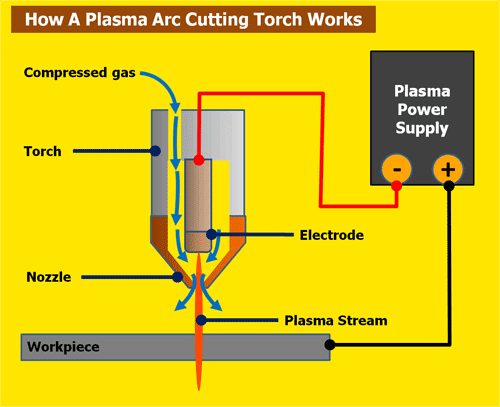
A plasma cutter works by sending a high-velocity jet of compressed air (or another gas) through a small nozzle. At the same time, an electric arc is created between an electrode inside the torch and the metal being cut. The arc heats the gas until it turns into plasma, reaching temperatures of up to 20,000°C (36,000°F) or more. This plasma jet melts the metal instantly, while the force of the gas blows the molten metal away, creating a clean cut.
Main Components Of A Plasma Cutter
- Power supply: Provides the electrical energy needed to create the plasma arc.
- Arc starting circuit: Helps start and maintain the electric arc.
- Plasma torch: The handheld or machine-held device that delivers the gas and electric arc to the metal.
- Compressed gas supply: Usually air, but sometimes nitrogen, oxygen, or argon, depending on the material.
A Simple Step-by-step Process
- The plasma cutter’s power supply is turned on.
- Compressed air or another gas flows through the torch.
- The arc starting circuit creates a spark that forms an electric arc.
- The gas passing through the arc becomes plasma.
- The plasma jet is directed at the workpiece, melting the metal.
- The force of the gas blows away the molten metal, making a cut.
History And Development Of Plasma Cutters
Plasma cutting technology began to develop in the 1950s, as industries searched for faster and more precise ways to cut metals. Early plasma cutters were large, expensive, and mainly used in factories. Over the decades, improvements in electronics, torches, and gas handling made plasma cutters smaller, more efficient, and affordable for smaller workshops and even hobbyists.
One key development was the inverter-based power supply, which allowed for lighter and more portable machines. Another was the use of CNC (computer numerical control), which enabled fully automated, highly detailed cuts. Today, plasma cutters can be found in everything from car body shops to schools.
Types Of Plasma Cutters
Plasma cutters are not all the same. They can vary in size, power, and how they are controlled. Understanding the main types will help you choose the right one for your needs.
By Power Source
- Manual plasma cutters: These are handheld machines, perfect for workshops, repair jobs, and artistic work. They are portable and easy to use.
- Automated plasma cutters: These are connected to CNC systems. The machine moves the torch according to a programmed design, creating complex shapes with perfect accuracy.
By Cutting Capacity
- Light-duty plasma cutters: Designed for thin metal sheets up to about 6 mm (1/4 inch). Ideal for light fabrication or home use.
- Medium-duty plasma cutters: Can handle metals up to about 25 mm (1 inch) thick. Used in small workshops and repair shops.
- Heavy-duty plasma cutters: Industrial machines that cut steel up to 50 mm (2 inches) or more. Common in shipbuilding, construction, and large factories.
By Gas Type
- Air plasma cutters: Use ordinary compressed air. Suitable for most metals and general use.
- Nitrogen plasma cutters: Used for cutting stainless steel and aluminum, where a cleaner cut is needed.
- Oxygen plasma cutters: Provide faster cutting speeds, mainly on carbon steel.
By Arc Starting Method
- Contact start: The torch tip touches the metal to start the arc. Simple and reliable.
- High-frequency start: Uses a high-voltage spark to start the arc without touching the metal. Reduces wear on the torch.
Main Uses Of Plasma Cutters
Plasma cutters are found in many industries and for many purposes. Here are some of the most common uses:
- Metal fabrication: Plasma cutters are used to build everything from car frames to machinery parts.
- Automotive repair: Mechanics use plasma cutters to remove or replace damaged sections of vehicles.
- Construction: Cutting steel beams, pipes, and plates for buildings and bridges.
- Art and sculpture: Artists use plasma cutters to create metal artwork, signs, and decorative pieces.
- Shipbuilding: Cutting thick steel plates for ship hulls and decks.
- Salvage and demolition: Quickly cutting through scrap metal and old structures.
- DIY and home projects: Hobbyists use plasma cutters for custom furniture, gates, and repairs.
Advantages Of Plasma Cutting
Plasma cutting has many benefits compared to traditional cutting methods like oxy-fuel torches, saws, or shears.
- Speed: Plasma cutters are much faster, often cutting through metal in seconds.
- Precision: The narrow plasma jet allows for tight curves and detailed shapes.
- Versatility: Can cut a wide range of metals and thicknesses.
- Clean cuts: Leaves a smoother edge, reducing the need for grinding or finishing.
- Safety: No open flame, so it’s safer in many environments.
- Lower heat-affected zone: Less warping or damage to the metal near the cut.
Plasma Cutting Vs. Oxy-fuel Cutting
Let’s see a simple comparison between plasma and oxy-fuel cutting:
| Factor | Plasma Cutting | Oxy-Fuel Cutting |
|---|---|---|
| Materials | All conductive metals | Mainly steel, iron |
| Cutting Speed | Very fast | Slower |
| Thickness Limit | Up to 2 inches (heavy-duty) | Can cut thicker steel |
| Edge Quality | Clean, minimal slag | More cleanup needed |
| Setup | Simple, portable | Gas cylinders, heavier |
| Safety | No open flame | Open flame risk |
Limitations And Challenges
While plasma cutting is a powerful technology, it does have some downsides:
- Not for non-conductive materials: Cannot cut materials like wood, glass, or plastic.
- Limited thickness: For very thick steel (over 2 inches), oxy-fuel or waterjet cutting may be better.
- Noise and light: Plasma cutters are loud and produce bright arcs, so eye and ear protection are necessary.
- Consumable costs: The torch parts wear out over time and must be replaced.
- Requires clean, dry air: Moisture or dirt in the air supply can damage the torch.
Non-obvious insight: Many beginners don’t realize that the quality of the air used in plasma cutting directly affects the lifespan of the torch and the smoothness of the cut. Using a good air filter can save money in the long run.
Key Features To Consider When Choosing A Plasma Cutter
If you want to buy a plasma cutter, there are several important features to consider. Picking the right machine depends on your needs, budget, and the types of projects you plan to handle.
1. Cutting Thickness
Check the maximum cutting thickness for the metals you want to cut. Manufacturers usually list both “clean cut” (smooth, fast) and “severance cut” (slower, rougher).
2. Power Requirements
Plasma cutters use either 110V or 220V power. Smaller machines can run on household outlets, while larger ones need more power.
3. Duty Cycle
The duty cycle is the percentage of time the cutter can operate in a 10-minute period without overheating. For example, a 60% duty cycle at 40 amps means you can cut for 6 minutes, then let it cool for 4 minutes.
4. Portability
If you need to move the cutter around, look for a lightweight, compact model with a handle.
5. Arc Starting Technology
Machines with non-touch start (like high-frequency) have longer torch life and are easier to use.
6. Cnc Compatibility
If you plan to automate your cutting, check if the machine can be connected to a CNC table.
7. Built-in Air Compressor
Some small plasma cutters have a built-in compressor, making them easier to use anywhere.
8. Consumable Life
Longer-lasting consumables (torch tips, electrodes) reduce operating costs.
9. Price And Warranty
Balance your budget with the features you need. Look for a good warranty and customer support.
Common Buyer Mistakes
- Buying a machine too small for their needs.
- Ignoring the duty cycle, leading to overheating.
- Forgetting about the cost of consumables and maintenance.
- Using a low-quality air supply and damaging the torch.
How To Use A Plasma Cutter Safely
Plasma cutters are safe if used correctly, but there are real risks, especially for beginners. Here’s what you need to know:
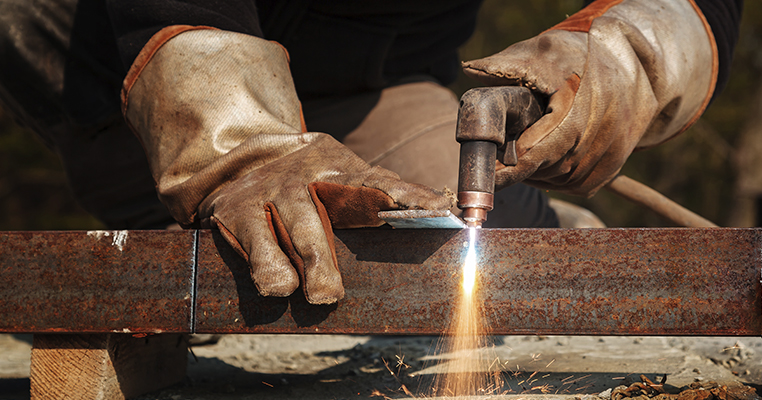
- Wear the right gear: Use safety glasses or a face shield with the correct shade for plasma cutting. Wear gloves, long sleeves, and ear protection.
- Work in a well-ventilated area: Plasma cutting creates fumes and dust, especially from coated metals. Use an exhaust fan if possible.
- Keep away from flammable materials: The hot plasma jet and sparks can ignite nearby objects.
- Check your equipment: Inspect the torch, cables, and air supply before each use.
- Ground your workpiece: Proper grounding prevents electrical shock.
- Handle consumables carefully: Replace worn tips and electrodes in time to avoid poor cuts or torch damage.
- Use two hands for control: Especially when making straight or long cuts.
Non-obvious insight: Many new users forget that the air hose can whip around when the machine is turned on or off, creating a hazard. Always secure hoses and cables before starting your cut.
Step-by-step Guide: Making Your First Plasma Cut
If you are new to plasma cutting, follow these steps for a safe and successful first cut.
1. Prepare Your Workspace
Clear your area of clutter and flammable materials. Place your metal on a stable, grounded work surface.
2. Set Up The Machine
Connect the plasma cutter to power and air. Attach the ground clamp to the workpiece.
3. Adjust The Settings
Set the correct amperage for the thickness of the metal. Thicker metals need higher amps.
4. Put On Protective Gear
Wear eye protection, gloves, and long sleeves.
5. Start The Cut
Hold the torch about 1/8 inch (3 mm) above the metal, or let the torch tip rest on the metal if your model allows contact start.
Press the trigger to start the arc, then move smoothly along your cut line. Go at a steady speed; too fast, and you may not cut through, too slow, and the cut will be rough.
6. Finish And Inspect
Release the trigger at the end of the cut. Wait for the metal to cool, then check the cut quality. If needed, adjust your speed or amperage for a better result.
Maintenance And Care For Plasma Cutters
Proper care keeps your plasma cutter working well and extends its life.
- Clean the torch regularly: Remove dust and metal particles.
- Check consumables: Replace tips and electrodes when worn.
- Drain the air compressor: Moisture can damage the torch.
- Store cables properly: Avoid sharp bends or pinching.
- Inspect connections: Loose or damaged cables can be dangerous.
- Test the air filter: Replace filters to keep air dry and clean.
Pro tip: Some users keep a logbook to track consumable changes and machine settings for different materials. This helps find the best settings and avoid mistakes.
Plasma Cutting Quality: What Affects The Results?
Several factors influence the quality of a plasma cut:
- Amperage setting: Too high causes wide cuts and rough edges; too low may not cut through.
- Torch speed: Moving too slowly creates a wider, rougher cut; too fast and the cut may be incomplete.
- Distance from metal: Keeping the right gap ensures a clean, precise cut.
- Air quality and pressure: Clean, dry, properly-pressurized air makes smoother cuts.
- Condition of consumables: Worn tips or electrodes cause poor arc and rough edges.
For beginners, it’s common to make mistakes with speed and torch angle. Practicing on scrap metal before starting a project will help you improve your results.
Real-world Examples: Plasma Cutting In Action
Automotive repair shops often use plasma cutters to remove rusted bolts, cut frames, or modify panels. A typical repair might involve slicing through a 3 mm (1/8 inch) steel plate in less than two seconds, saving valuable time.
Metal artists use plasma cutters to create detailed signs, sculptures, or decorative panels. With the precision of CNC plasma tables, artists can produce intricate designs that would be impossible by hand.
Construction workers rely on plasma cutters to quickly cut beams and brackets on-site, helping projects stay on schedule.
Plasma Cutter Technology: What’s New?
Recent advances have made plasma cutters more accessible and easier to use:
- Inverter technology: Modern plasma cutters are lighter and more energy-efficient.
- Pilot arc systems: Allow cutting through painted or rusty metal without direct contact.
- CNC integration: Automated tables enable mass production and complex designs.
- Built-in compressors: Portable units don’t need a separate air supply.
Some high-end machines even come with LCD screens and automatic gas controls, making them as easy to use as a home appliance.
Cost Of Plasma Cutting: What To Expect
The price of plasma cutters can vary widely. Here’s a general comparison of costs for different user types:
| User Type | Typical Price Range (USD) | Features |
|---|---|---|
| Hobbyist/DIY | $250–$800 | Light-duty, portable, built-in compressor |
| Workshop/Professional | $800–$2,500 | Medium-duty, higher amps, CNC ready |
| Industrial | $2,500–$10,000+ | Heavy-duty, automation, advanced features |
Consumables (tips, electrodes) can add $50–$200 per year, depending on usage.
Environmental And Safety Considerations
Plasma cutting is safer than oxy-fuel in many ways, but there are important environmental and health issues to consider:
- Fume extraction: Cutting certain metals (like galvanized steel) can release harmful fumes. Always use good ventilation or a fume extractor.
- Noise: Plasma cutters can reach over 100 dB. Use ear protection.
- Waste disposal: Metal dust and slag should be collected and disposed of properly.
- Energy use: Inverter-based models are more energy-efficient.
For more on workplace safety and best practices, see the OSHA Welding, Cutting, and Brazing Safety guide.

Plasma Cutting Vs. Other Metal Cutting Methods
How does plasma cutting compare to other popular methods like laser and waterjet cutting?
| Method | Materials | Max Thickness | Speed | Precision | Cost |
|---|---|---|---|---|---|
| Plasma Cutting | All conductive metals | Up to 2 inches | Very fast | High | Low to medium |
| Laser Cutting | Metals, some non-metals | Up to 1 inch | Fast | Very high | High |
| Waterjet Cutting | Almost any material | Over 6 inches | Medium | Very high | Very high |
Straight-to-the-point insight: For most metalwork outside of extreme precision or very thick materials, plasma cutting offers the best mix of speed, quality, and affordability.
Frequently Asked Questions
What Metals Can A Plasma Cutter Cut?
A plasma cutter can cut any electrically conductive metal. This includes steel, stainless steel, aluminum, brass, copper, and titanium. It does not work on non-conductive materials like plastic or wood.
How Thick Can A Plasma Cutter Cut?
The maximum cutting thickness depends on the machine. Light-duty models cut up to 6 mm (1/4 inch), while heavy-duty industrial machines can cut steel up to 50 mm (2 inches) or more. Always check the specifications of your machine.
Do Plasma Cutters Need Special Gas?
Most plasma cutters use compressed air, which is cheap and easy to supply. For cleaner or faster cuts, especially on stainless steel or aluminum, gases like nitrogen or oxygen might be used. The choice depends on the material and the desired cut quality.
Are Plasma Cutters Expensive To Use?
Plasma cutters have low operating costs compared to some other cutting methods. The main ongoing expenses are electricity, compressed air, and consumable parts (like torch tips and electrodes). Careful maintenance and good air quality can reduce these costs.
Can Beginners Use A Plasma Cutter?
Yes, plasma cutters are beginner-friendly, especially modern models with easy controls. With basic safety training and practice on scrap metal, most people can start making clean cuts in a short time. Always read the manual and follow safety guidelines.
Plasma cutters bring the power of advanced science to your fingertips, letting you cut metal with speed, accuracy, and creativity. Whether you’re building, repairing, or creating art, knowing how plasma cutters work—and how to use them safely—opens up a world of possibilities.
With the right knowledge and a bit of practice, almost anyone can master this powerful tool.