
When you own a Ford Bronco, keeping your engine healthy is one of the most important things you can do. One of the simplest but most crucial parts of this is making sure you use the right amount of oil.
Too little, and you risk damaging your engine. Too much, and you can create new problems. But what is the right oil capacity for a Ford Bronco? The answer can be a bit tricky, since it depends on your Bronco’s year, engine, and even the conditions you drive in.
This guide will cover everything you need to know about Ford Bronco oil capacity—from classic models to the latest versions, plus tips for checking, changing, and picking the right oil. Whether you’re a new Bronco owner or a long-time enthusiast, you’ll find clear answers here.
Why Oil Capacity Matters For Your Bronco
Before diving into the numbers, it’s important to understand why oil capacity is critical. Your Bronco’s engine is made of many moving parts. Oil acts as a lubricant, reducing friction and heat. If the oil level is too low, parts can grind together, causing wear or even engine failure. Too much oil, on the other hand, can cause pressure issues, leaks, or foaming, which also harms the engine. Using the correct oil capacity helps your Bronco run smoothly, last longer, and avoid expensive repairs.
How Ford Bronco Oil Capacity Has Changed Over The Years
The Ford Bronco has a long history, starting in the 1960s. Its oil capacity has changed as engines and technology improved. Early Broncos were simple, rugged vehicles with straightforward engines. Modern Broncos are more complex, with turbocharged engines and advanced systems.
Let’s look at how oil capacity differs by generation and engine:
Classic Broncos (1966–1977)
These first-generation Broncos came with a few engine options, mostly inline-6 and V8.
- 170/200 Inline-6: About 5 quarts (with filter)
- 289/302 V8: 5 quarts (with filter)
- 351 Windsor V8 (later years): 5 quarts (with filter)
These engines were basic and easy to maintain. You could easily check and fill oil yourself.
1980s To 1996 Broncos
The second to fifth generations used bigger, more powerful V8s and even some inline-6 engines.
- 300 Inline-6: 6 quarts (with filter)
- 302 V8 (5.0L): 5 quarts (with filter)
- 351 Windsor V8 (5.8L): 5 quarts (with filter)
- 351M/400 V8: 5 quarts (with filter)
Most Broncos from this era use between 5 and 6 quarts. Always include the oil filter in your measurement.
Modern Broncos (2021–present)
Ford revived the Bronco in 2021 with all-new engines and designs. These newer models use advanced turbocharged engines.
- 2.3L EcoBoost I4: 6 quarts (with filter)
- 2.7L EcoBoost V6: 6 quarts (with filter)
- 3.0L EcoBoost V6 (Raptor): 7 quarts (with filter)
Modern engines often need more oil due to higher temperatures and more complex systems. Always check your owner’s manual for your exact model.

Bronco Sport Oil Capacity
Don’t confuse the Ford Bronco Sport with the main Bronco. The Bronco Sport is a smaller, crossover SUV, with different engines.
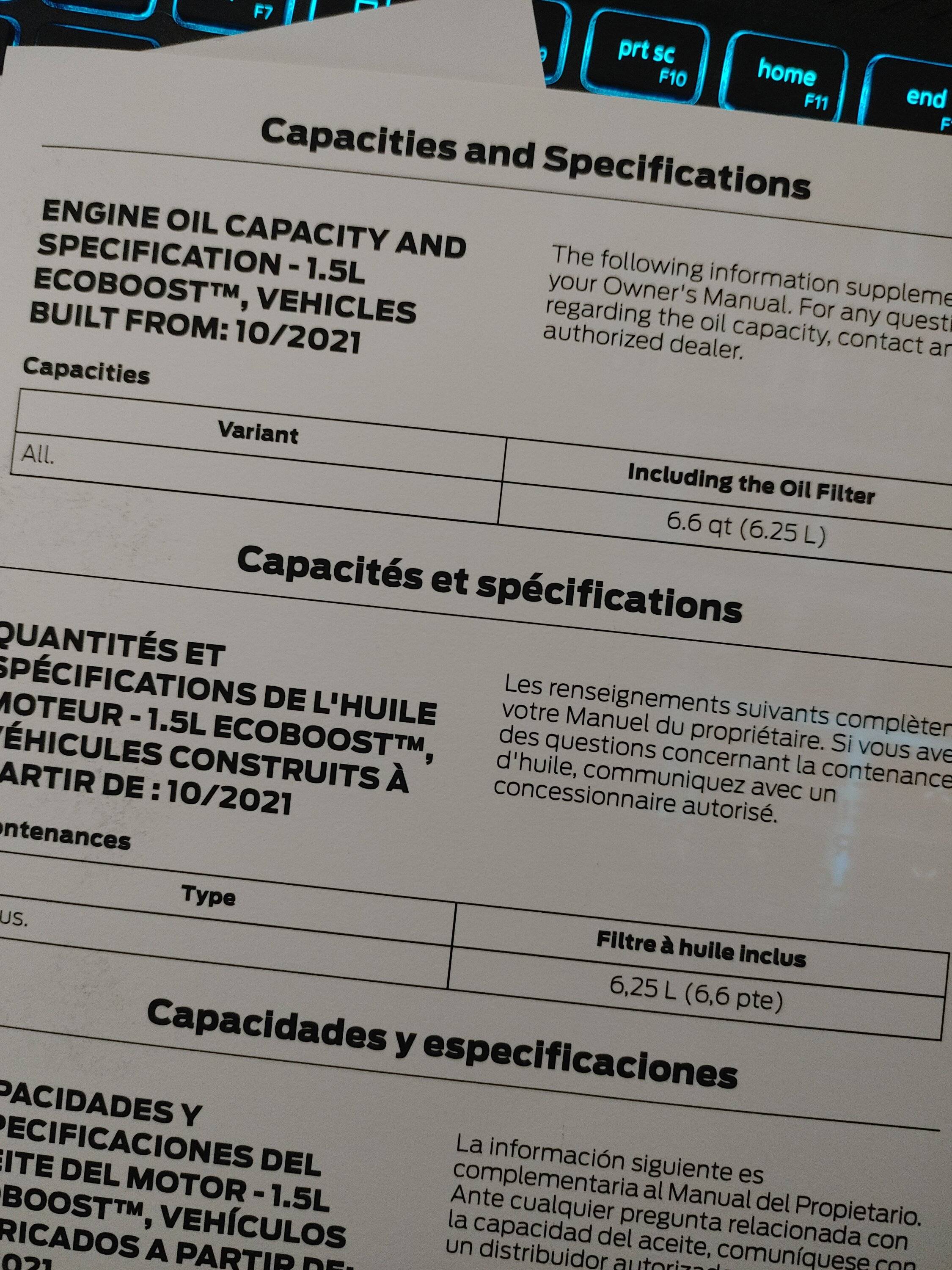
- 1.5L EcoBoost I3: 4.5 quarts (with filter)
- 2.0L EcoBoost I4: 5.7 quarts (with filter)
These engines are smaller and require less oil.
Quick Reference: Bronco Oil Capacities By Engine
To help you quickly find the right oil capacity for your Bronco, here’s a summary in a simple table:
| Model Year/Engine | Oil Capacity (Quarts, with filter) |
|---|---|
| 1966–1977 Inline-6 & V8 | 5 |
| 1980–1996 300 I6 | 6 |
| 1980–1996 302/351 V8 | 5 |
| 2021+ 2.3L EcoBoost I4 | 6 |
| 2021+ 2.7L EcoBoost V6 | 6 |
| 2022+ 3.0L EcoBoost V6 (Raptor) | 7 |
| Bronco Sport 1.5L I3 | 4.5 |
| Bronco Sport 2.0L I4 | 5.7 |
Always confirm with your specific owner’s manual, especially for special editions or changes in later years.
What Affects Ford Bronco Oil Capacity?
While the numbers above are standard, a few factors can change the exact oil capacity your Bronco needs.
- Oil Filter Type: If you use a larger or aftermarket oil filter, you may need a bit more oil. Most oil capacities are listed “with filter,” but double-check if you change filter types.
- Oil Cooler or Aftermarket Parts: Some Broncos, especially those used for towing or off-roading, have extra oil coolers or bigger sumps. These can raise the required capacity.
- Engine Modifications: If you swapped engines or added performance parts, oil requirements can change. Always check what your engine builder recommends.
- Draining Method: If you don’t fully drain the engine or change the filter, you might not need the full listed amount. Always check the dipstick after filling.
- Climate and Driving Style: In very hot climates or for heavy-duty use, some owners add a little extra oil for safety—but don’t go past the dipstick’s max line.
How To Check Your Ford Bronco’s Oil Level
Even if you know the exact oil capacity, you should always check the oil level after filling. Here’s how to do it right:
- Park your Bronco on a level surface and turn off the engine.
- Wait at least 5–10 minutes for the oil to settle.
- Open the hood and find the oil dipstick (usually yellow or orange).
- Pull out the dipstick, wipe it clean, reinsert fully, then pull out again.
- Check the oil level between the “MIN” and “MAX” marks.
- If it’s low, add oil in small amounts, checking often.
Never overfill. If you see foam, bubbles, or oil above the “MAX” line, drain some out.
How To Change The Oil In Your Ford Bronco
Changing your own oil is a good way to save money and protect your engine. Here’s a step-by-step guide:
What You’ll Need
- Correct amount and type of oil (see earlier sections)
- New oil filter
- Wrench set
- Oil catch pan
- Funnel
- Gloves and rags
Steps
- Warm up the engine for 2–3 minutes, then turn it off.
- Lift the front end safely (if needed) using ramps or a jack.
- Place the oil catch pan under the oil drain plug.
- Remove the drain plug carefully; let oil drain completely.
- Remove the old oil filter (use an oil filter wrench if needed).
- Install the new filter. Lightly oil the gasket first.
- Replace and tighten the drain plug (not too tight).
- Add new oil using the funnel.
- Start the engine, let it run 30 seconds, check for leaks.
- Turn off, wait, and check the dipstick. Top up if needed.
Dispose of old oil at a recycling center—never pour it down the drain.
Common Mistakes
- Forgetting to replace the oil drain plug or filter
- Over-tightening the drain plug (can strip threads)
- Using the wrong oil weight or type
- Overfilling with oil
Choosing The Right Oil For Your Ford Bronco
Picking the right motor oil is just as important as filling the right amount. Here’s what you need to know:
Oil Viscosity
Most modern Broncos use 5W-30 or 5W-20 full synthetic oil, but classic models may need 10W-30 or 10W-40 depending on climate and engine wear.
- 5W-30: Good balance for most climates, protects in cold and hot.
- 5W-20: Slightly thinner, used in newer, fuel-efficient engines.
- 10W-40: Thicker, better for older engines or hot climates.
Always check your owner’s manual.
Conventional Vs. Synthetic Oil
- Synthetic oil offers better protection, lasts longer, and handles heat better. Recommended for most modern Broncos.
- Conventional oil is cheaper but breaks down faster and may not protect as well under stress.
For off-roading, towing, or harsh conditions, synthetic is a smarter choice.
Oil Brands
Some trusted brands for Broncos include Motorcraft (Ford’s own), Mobil 1, Castrol, and Valvoline. Don’t use unknown brands to save money—it’s not worth the risk.
How Often Should You Change Bronco Engine Oil?
Oil change intervals depend on your Bronco’s age, engine, and how you drive.
- Classic Broncos (pre-1996): Every 3,000 miles or 3 months
- Modern Broncos (2021+): Every 5,000–7,500 miles, or as shown on the dashboard monitor
- Heavy use (off-roading, towing, hot climates): Change oil more often, sometimes every 3,000 miles
Short trips and stop-and-go driving can dirty oil faster. If the oil looks dark, gritty, or smells burnt, change it sooner.
Oil Capacity Vs. Oil Level: What’s The Difference?
Many Bronco owners confuse oil capacity with oil level. Oil capacity is the total amount your engine holds, while oil level is how much is in the engine at a given moment.
- Always fill to the oil capacity listed in your manual.
- Use the dipstick to make sure you’re not under or over.
Remember, small changes in oil level (from leaks or burning oil) can add up over time.
Signs Your Bronco Is Low On Oil
You should never wait for a warning light before checking your oil. Here are signs your Bronco may be low on oil:
- Oil pressure warning light on dashboard
- Engine makes ticking or knocking noises
- Oil level below “MIN” on dipstick
- Exhaust smoke is blue or gray
- Engine runs hotter than normal
If you see any of these, check your oil immediately.
What Happens If You Overfill Or Underfill Oil?
Adding too much or too little oil can both cause damage.
Overfilling
- Oil can foam, losing its ability to lubricate
- Seals and gaskets may leak
- Engine may misfire or stall
Underfilling
- Parts rub and overheat
- Engine can seize or fail completely
Always fill carefully and check the dipstick after every oil change.
Real-world Example: 2021 Bronco 2.3l Oil Change
Let’s walk through a real-world oil change for a 2021 Ford Bronco 2.3L EcoBoost.
- Ford lists the capacity as 6 quarts with the filter.
- Use 5W-30 full synthetic oil.
- After draining old oil and swapping the filter, pour in 5.5 quarts first.
- Start the engine, run for 1 minute, turn off, and check the dipstick.
- Add the last half quart as needed to reach the “MAX” line.
This step-by-step approach prevents overfilling, which is a common mistake.
Classic Vs. Modern Bronco Oil Capacities: A Comparison
Here’s a side-by-side look at classic and modern Bronco oil capacities:
| Model | Typical Oil Capacity | Oil Type |
|---|---|---|
| 1975 Bronco 302 V8 | 5 quarts | 10W-30 |
| 1995 Bronco 5.8L V8 | 5 quarts | 10W-40 |
| 2022 Bronco 2.7L V6 | 6 quarts | 5W-30 synthetic |
| 2023 Bronco Raptor 3.0L | 7 quarts | 5W-30 synthetic |
Notice how newer engines usually require more oil and always specify synthetic.
Two Insights Bronco Owners Often Miss
- Check Oil Level After First Fill: Many owners pour in the full listed oil capacity at once. But small differences in drainage or filter size can mean your engine needs a bit less. Always fill, run the engine briefly, then check and top up. This small step prevents overfilling.
- Don’t Trust “Life Remaining” Monitors Blindly: Modern Broncos have oil life monitors, but they estimate based on driving patterns, not actual oil condition. If you drive in dust, heat, or tow, change your oil more often—even if the monitor says it’s not needed yet.
Off-roading And Extreme Use: Does Oil Capacity Change?
If you use your Bronco for serious off-roading, towing, or racing, you might need to adjust oil capacity or change type. Here’s what to consider:
- Extra Oil Coolers: Aftermarket coolers can add 0.5–1 quart to your system.
- Frequent Oil Changes: Extreme use means oil breaks down faster. Change oil every 2,000–3,000 miles in heavy use.
- Oil Temperature Gauges: For off-roaders, installing a gauge helps you know when oil is overheating.
However, never add oil beyond the dipstick’s maximum mark. If you need more capacity, use an upgraded oil pan or cooler designed for your engine.
How To Find Your Bronco’s Exact Oil Capacity
If you’re unsure about your Bronco’s oil capacity, here are the best sources:
- Owner’s Manual: The most reliable place. Look in the maintenance section.
- Oil Cap/Sticker: Some Broncos have the oil type and capacity printed on the oil cap or under the hood.
- Official Ford Website: You can find service guides and specs for your VIN.
- Dealership or Mechanic: Ask for your exact year, engine, and any modifications.
Never guess—using the wrong amount can cost you much more in repairs.
Troubleshooting: Common Oil-related Problems In Broncos
Here are a few oil-related issues specific to Ford Broncos and what to do:
Oil Leaks
- Classic Broncos often leak from old gaskets, oil pans, or rear main seals.
- Modern Broncos may leak if the drain plug or filter is not installed correctly.
- Check under your vehicle for oil spots, and always fix leaks quickly.
Burning Oil
- Older Broncos may burn oil due to worn piston rings or valve seals.
- White or blue smoke from the exhaust is a warning sign.
- Adding oil often is a short-term fix; plan for repairs.
Oil Pressure Warnings
- If the oil pressure light comes on, stop driving as soon as possible.
- Check the oil level and add oil if low.
- If the level is fine, there may be a sensor, pump, or engine problem—get professional help.
Environmental Tips For Changing Bronco Oil
Used oil is hazardous waste. Here’s how to handle it safely:
- Drain oil into a sealed container (never mix with other fluids).
- Take used oil to an auto parts store or recycling center.
- Never dump oil in the trash, ground, or drains—it’s illegal and pollutes water.
Recycling oil helps protect the environment and keeps your Bronco community strong.
How Oil Capacity Impacts Engine Life
Using the correct oil capacity is one of the easiest ways to extend your Bronco’s engine life. Engines with the right amount of clean oil:
- Run cooler and smoother
- Last longer between rebuilds
- Use less fuel and produce fewer emissions
A well-maintained Bronco can reach 200,000 miles or more. Skipping oil changes or using the wrong amount can cut that life in half.
Modern Bronco Oil Life Monitoring Systems
The newest Broncos include oil life monitoring systems that estimate when you need an oil change. Here’s how they work:
- Sensors track your driving habits (speed, temperature, starts/stops).
- The system calculates oil “life remaining” as a percentage.
- When it hits 5–10%, you’ll see a warning to change oil soon.
These systems are helpful, but always check your oil manually—especially if you drive in tough conditions.
Bronco Oil Capacity In The Owner Community
Many Bronco owners join forums and clubs to share maintenance tips. A common debate is about adding a little extra oil “just in case.” Most experts agree: stick to the factory recommendations and check your dipstick. Adding extra oil rarely helps and can hurt your engine.
Some online communities offer spreadsheets with capacities for every year and engine. Always double-check these with official sources, as small errors can happen.
For more detailed historical specs, see this Wikipedia Ford Bronco page.
Frequently Asked Questions
What Is The Oil Capacity For A 2021 Ford Bronco 2.3l?
The 2021 Ford Bronco with the 2.3L EcoBoost engine holds 6 quarts of oil with the filter. Always use 5W-30 full synthetic oil unless your manual says otherwise.
How Much Oil Does A Classic 1970s Ford Bronco Need?
Most 1970s Broncos with inline-6 or V8 engines use 5 quarts of oil with the filter. Check for engine swaps or modifications that might change this amount.
Can I Use Synthetic Oil In My Old Bronco?
Yes, you can use synthetic oil in classic Broncos. It offers better protection, especially for engines that see tough use. Some older engines with worn seals might leak more with synthetic, so watch for drips after switching.
What Happens If I Overfill My Bronco’s Oil?
Overfilling oil can cause foaming, leaks, and engine damage. Always fill slowly, check the dipstick, and drain any excess if you go past the “MAX” line.
Does The Bronco Sport Have The Same Oil Capacity As The Main Bronco?
No, the Bronco Sport is a different vehicle with smaller engines. It uses 4.5 quarts (1.5L engine) or 5.7 quarts (2.0L engine). Always check your manual for the exact amount.
Every Bronco owner, new or experienced, should know the correct oil capacity and how to check and change oil. With the right knowledge, you’ll keep your Bronco’s engine strong for years to come. Remember, the best maintenance is always regular, careful, and based on your specific Bronco’s needs.