
The Hyundai Sonata 2.4 is a favorite among car owners who value reliable performance and smooth driving. One thing every Sonata owner must know is how to take care of the engine, and that starts with understanding the oil capacity. Using the right amount of oil is not just a technical detail—it protects your engine, improves fuel efficiency, and extends your car’s life. Yet, many drivers either don’t know the exact oil capacity, or they ignore its importance until problems happen.
In this article, you’ll find everything you need to know about the Hyundai Sonata 2. 4 oil capacity. We’ll break down the numbers, show how to check your oil, explain why the right capacity matters, and compare the Sonata 2.
4 with other engine options. Whether you change your own oil or visit a mechanic, this guide will make sure you avoid the mistakes that many new car owners make.
Let’s make oil changes simple, clear, and stress-free.
Hyundai Sonata 2.4 Oil Capacity Overview
Every engine has a specific oil capacity, and the Hyundai Sonata 2.4 is no exception. The oil capacity means the total volume of oil needed for the engine to run safely and efficiently, including the oil that fills the filter. For the Sonata 2.4, this number is especially important because too little or too much oil can cause serious engine problems.
Most Hyundai Sonata models with the 2.4-liter engine have an oil capacity of 4.8 quarts (4.5 liters) when you include the filter. This number is based on the manufacturer’s guidelines and applies to most years between 2011 and 2019 (the most common generation for this engine).
However, there are small differences depending on the exact model year or if you use a new filter. Always check your owner’s manual before adding oil, as some years might list 4. 6 or 5. 1 quarts. If you lose the manual, you can find accurate data on the manufacturer’s official site or trusted car maintenance resources.
| Model Year | Engine | Oil Capacity (with filter) | Oil Type |
|---|---|---|---|
| 2011-2014 | 2.4L GDI | 4.8 quarts (4.5L) | 5W-20 or 5W-30 |
| 2015-2019 | 2.4L GDI | 4.8 quarts (4.5L) | 5W-20 or 5W-30 |
Non-obvious insight: The oil filter plays a small but important role. If you change the oil but not the filter, the total oil needed drops by about 0.2 quarts. Always plan for the filter change unless your mechanic says otherwise.
Why Oil Capacity Matters For The Hyundai Sonata 2.4
Putting the right amount of oil in your Sonata 2. 4 is not just about following instructions. The correct oil level is critical for engine health and safety. Too much or too little oil can lead to engine damage, poor performance, and even a complete breakdown.
What Happens If You Overfill Oil?
Adding too much oil can sound harmless, but it’s risky. If the oil level is too high, the crankshaft will churn the oil into foam. This foamy oil cannot lubricate engine parts well. The result is higher engine temperature and more wear and tear.
In serious cases, it can lead to oil leaks or even engine failure.
What If You Underfill Oil?
Too little oil means some engine parts will not get enough lubrication. This causes metal parts to rub against each other, creating friction, heat, and fast damage. The engine may make ticking noises or even seize up completely.
Practical tip: Always let the engine cool for at least 5 minutes before checking or adding oil. Hot oil expands, which can trick you into thinking there’s enough oil when it’s actually low.
How Oil Capacity Affects Performance
The right oil capacity helps in:
- Smoother running: Less noise, better acceleration, and stable idling.
- Lower wear: Proper oil levels keep all moving parts separated and prevent grinding.
- Better fuel economy: When the engine is well-lubricated, it uses less fuel.
- Longer life: Correct oil reduces risk of overheating and corrosion.
Non-obvious insight: Even a small mistake (like being 0.5 quarts off) can cause the oil pressure warning light to turn on, confusing drivers and leading to unnecessary repairs.
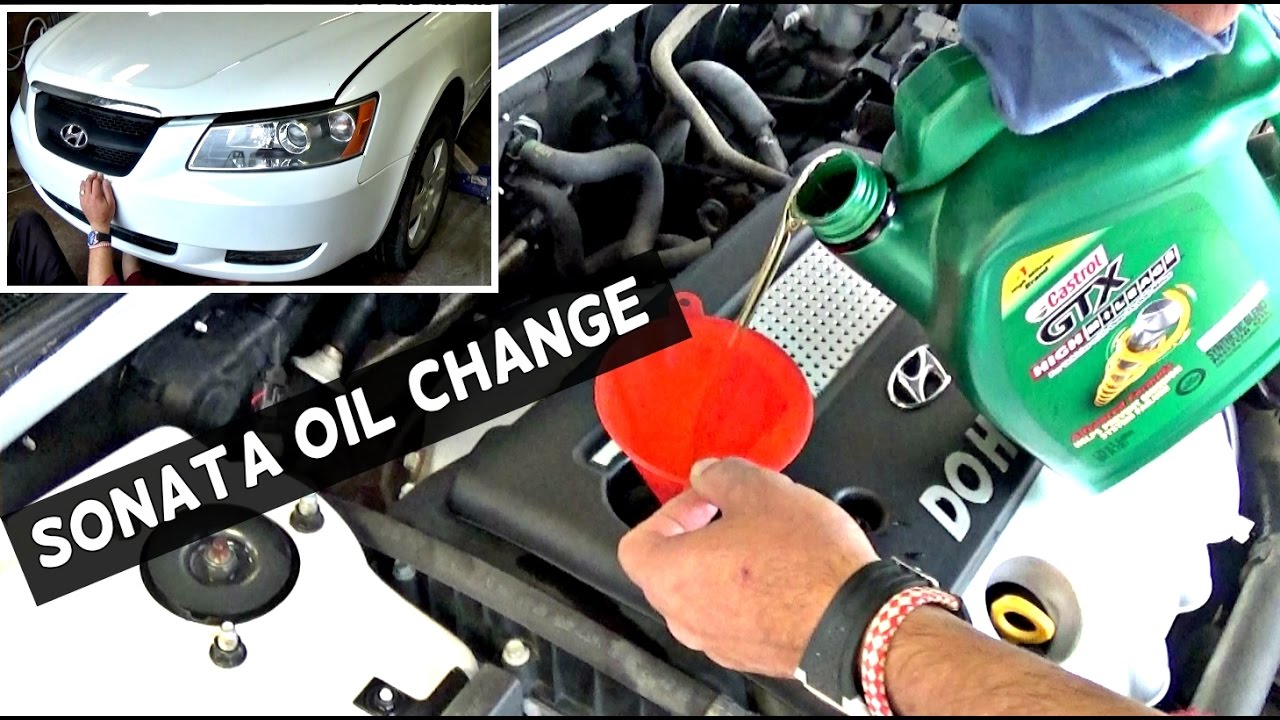
Credit: www.youtube.com
How To Check And Change The Oil Correctly
Knowing the oil capacity is important, but so is knowing how to check and change the oil in your Hyundai Sonata 2. 4. Many owners make simple mistakes that can be avoided with the right steps.
Checking The Oil Level
- Park on Level Ground: Make sure the car is on a flat surface.
- Turn Off the Engine: Wait at least five minutes for oil to settle.
- Pull Out the Dipstick: Wipe it clean, then reinsert fully.
- Check the Level: Pull it out again and look at the markings. The oil should be between the “Min” and “Max” lines.
Pro tip: If the oil looks dirty or smells burnt, it’s time for an oil change—even if you’re below the mileage limit.
Changing The Oil In A Sonata 2.4
Changing your own oil is not hard, but you need to be careful. Here’s how to do it:
- Gather Supplies: 5 quarts of 5W-20 or 5W-30 oil, new oil filter, wrench, oil pan, funnel, gloves, and towels.
- Warm Up the Engine: Run the engine for 2-3 minutes to thin the oil (makes it drain faster).
- Lift the Car: Use ramps or a jack. Secure with wheel chocks.
- Remove the Drain Plug: Let old oil drain into a pan.
- Replace Oil Filter: Remove the old one (it can be tight, use a filter wrench if needed). Apply a bit of new oil to the rubber gasket of the new filter before installing.
- Install Drain Plug: Tighten securely, but don’t overdo it.
- Add New Oil: Pour in 4.8 quarts through the funnel. Check the dipstick after a minute.
- Run the Engine: Let it run for 1-2 minutes, then check for leaks.
- Final Check: Turn off the car, wait 5 minutes, and check the dipstick again. Top up if needed.
Common mistake: Many people forget to replace the oil drain plug washer. A worn washer can cause slow leaks. Always check and replace it if needed.
How Often Should You Change The Oil?
For most Sonata 2.4 models, change the oil every 5,000 to 7,500 miles (8,000 to 12,000 km) if you use synthetic oil. If you drive in severe conditions (stop-and-go, hot climates), change it more often—around 5,000 miles.
Types Of Engine Oil For Hyundai Sonata 2.4
You can’t just use any oil. The Sonata 2. 4 engine is designed for specific grades. Using the wrong oil can void your warranty and cause engine problems.
Recommended Oil Types
Hyundai recommends:
- 5W-20: For better cold starts and fuel economy. Best for cold to moderate climates.
- 5W-30: Slightly thicker, better for higher temperatures and heavy use.
Both types are widely available as conventional, semi-synthetic, and full synthetic. Full synthetic is best for engine health and longer oil change intervals.
Oil Brand Choices
While the brand is less important than the grade, some popular choices for the Sonata 2.4 include:
- Mobil 1
- Castrol EDGE
- Valvoline Advanced
- Pennzoil Platinum
Make sure the oil meets API SN or newer standards.
Synthetic Vs Conventional Oil
Synthetic oil is more expensive, but it offers:
- Better protection at high and low temperatures
- Slower breakdown, so longer intervals between changes
- Reduced sludge and deposits
Conventional oil is cheaper but needs more frequent changes. For modern engines like the Sonata 2. 4, synthetic is a smart investment.
Comparing The Hyundai Sonata 2.4 Oil Capacity With Other Engines
The Sonata has used different engines over the years. Each one has its own oil capacity. Here’s how the 2.4 compares to other popular Sonata engines:
| Engine | Oil Capacity (with filter) | Recommended Oil |
|---|---|---|
| 2.4L GDI | 4.8 quarts (4.5L) | 5W-20 or 5W-30 |
| 2.0L Turbo | 4.8 quarts (4.5L) | 5W-30 |
| 1.6L Turbo | 4.8 quarts (4.5L) | 5W-30 |
| 2.5L GDI | 5.1 quarts (4.8L) | 5W-30 |
Note: The 2.4 and 2.0 Turbo have the same oil capacity, but the 2.5L (from newer Sonatas) requires more oil. Always use the oil grade and amount specified for your engine.
Four Key Factors About Hyundai Sonata 2.4 Oil Capacity
The topic mentions four items. These are the four key things you must know about the Hyundai Sonata 2.4 oil capacity:
1. Exact Oil Capacity (with And Without Filter)
The exact oil capacity for most Sonata 2.4 engines (2011–2019) is 4.8 quarts (4.5 liters) with a new oil filter installed. If you do not change the filter, you’ll need about 0.2 quarts less. This small difference matters because too much oil can cause problems, as explained above.
Why does the filter matter? The oil filter holds a small amount of oil. When you replace it, the new filter is empty and needs to be filled during engine startup. Skipping the filter change means your engine will be slightly overfilled if you use the full 4.
8 quarts.
Practical tip: Always change the oil filter with every oil change. Modern filters are affordable and protect your engine from dirt and metal particles.
2. The Role Of Oil Type And Viscosity
Using the correct oil type and viscosity is as important as the amount. Viscosity means how thick or thin the oil is. Sonata 2.4 engines are designed for 5W-20 or 5W-30, both of which flow easily at cold temperatures but protect well at high temperatures.
What happens if you use the wrong oil? If you use thicker oil (like 10W-40), the engine may struggle to start in cold weather, and you could lose fuel efficiency. If you use thinner oil (like 0W-16), it might not protect engine parts at high temperatures.
Non-obvious insight: Oil brands sometimes market “high mileage” or “engine protection” blends. These can be helpful if your Sonata 2.4 has over 100,000 miles, but always match the viscosity.
3. How Driving Conditions Affect Oil Needs
Driving conditions change how often you should check and change your oil—and sometimes even the amount you need to top up.
- Short trips (less than 5 miles): The engine doesn’t warm up fully, so oil gets dirty faster.
- Stop-and-go traffic: More heat and wear, oil breaks down sooner.
- Hot or cold climates: Oil evaporates faster in heat, thickens in cold.
If you mostly drive in tough conditions, check your oil every 1,000 miles and change it at the shorter end of the recommended range (around 5,000 miles).
Pro tip: If your oil level drops between changes, it’s normal to add up to 0.5 quarts every 1,000 miles—especially in older engines. Larger drops may signal a leak or burning oil.
4. Common Mistakes And How To Avoid Them
Many Sonata 2.4 owners make avoidable mistakes with oil capacity:
- Not checking the dipstick after filling: Always verify the oil level after adding oil. Don’t just pour in the listed amount and walk away.
- Forgetting the oil filter: Skipping the filter or using the wrong type can cause leaks or poor oil flow.
- Ignoring the oil warning light: This light means something is wrong—low oil, or low pressure. Don’t keep driving until you check.
- Over-tightening drain plug or filter: Tightening too much can strip threads or crush the filter gasket, causing leaks.
Practical tip: If you spill oil on the engine, clean it off right away. Oil on a hot engine can cause smoke, odors, and even damage rubber parts.

Signs Your Sonata 2.4 Needs An Oil Change
Not sure when it’s time? Watch for these signs:
- Oil change light: Some models have a reminder system.
- Dark, dirty oil: Fresh oil is amber. Dirty oil is black or brown.
- Engine noise: Louder ticking or knocking means oil is breaking down.
- Burning smell: Oil leaking onto engine parts can smell bad.
- Drop in fuel economy: Poor lubrication makes your engine work harder.
If you notice any of these, check your oil right away—even if you haven’t reached the mileage limit.
Environmental Tips: Dispose Of Used Oil Properly
Used engine oil is hazardous. Never pour it down the drain, on the ground, or in the trash. Most auto parts stores will recycle your oil for free. Use a sealed container and don’t mix oil with other fluids (like coolant or brake fluid).
Non-obvious insight: Some city recycling centers will also accept old oil filters. Check your local rules to avoid fines and protect the environment.
Troubleshooting: What If The Oil Level Changes Quickly?
If your Sonata 2.4 needs a top-up more than once every 1,000–2,000 miles, or if the oil warning light comes on often, check for these issues:
- Leaks: Look under the car for wet spots. Oil leaks often appear near the drain plug, oil pan, or filter.
- Burning oil: Blue smoke from the exhaust usually means oil is burning in the engine—often a sign of worn piston rings or valve seals.
- Dilution: If the oil smells like gasoline, fuel might be leaking into the oil, which can ruin engine parts.
In these cases, see a mechanic right away. Small problems can become big ones if ignored.
Hyundai Sonata 2.4 Oil Capacity In Real-world Use
Here’s how actual Sonata 2.4 owners manage oil changes and capacity:
- Owners who do their own oil changes say that 4.8 quarts fills the engine to the max line on the dipstick, with no overfill.
- Some mechanics recommend pouring in 4.5 quarts, running the engine, then topping off slowly to avoid overfilling.
- Drivers in hot climates (like Texas or Arizona) check oil more often, as some is lost to evaporation.
- A few high-mileage owners use “high-mileage” synthetic oil, but always stick to 5W-20 or 5W-30 viscosity.
Hyundai forums and groups agree: following the manual’s guidelines leads to smooth, reliable driving.
Maintenance Schedules: When To Check And Change Oil
Every car owner should have a routine. For the Sonata 2.4:
- Check oil level: Every 1,000 miles (1,600 km) or before long trips.
- Change oil and filter: Every 5,000–7,500 miles (8,000–12,000 km) with synthetic oil. More often in harsh conditions.
If you use conventional oil, change it every 3,000–5,000 miles for best results. Always reset your oil change reminder after service.
Pro tip: Write the date and mileage of each oil change on a sticker or in your maintenance log. This prevents missed changes and helps if you sell the car later.
How Hyundai Sonata 2.4 Oil Capacity Compares To Other Cars
To see how the Sonata 2.4 stacks up, here’s a quick comparison with other midsize sedans:
| Car Model | Engine | Oil Capacity |
|---|---|---|
| Hyundai Sonata 2.4 | 2.4L GDI | 4.8 quarts |
| Honda Accord | 2.4L I4 | 4.4 quarts |
| Toyota Camry | 2.5L I4 | 4.8 quarts |
| Nissan Altima | 2.5L I4 | 4.8 quarts |
| Ford Fusion | 2.5L I4 | 5.7 quarts |
Insight: The Sonata 2.4’s oil capacity is right in line with competitors—making oil changes simple and affordable.

Cost Of Oil Changes For Hyundai Sonata 2.4
Changing the oil yourself is usually cheaper. Here’s a rough breakdown:
- DIY oil change: $30–$60 (oil + filter)
- Mechanic/oil shop: $40–$90 (labor + materials)
If you use full synthetic oil, the price is higher, but you save money in the long run with fewer oil changes and lower engine wear.
Tip: Many shops have coupons or specials. Always ask before you pay.
Where To Find Reliable Information
Your Hyundai owner’s manual is the best source. If you lose it, check the Hyundai official website or trusted resources like Edmunds. Never guess oil capacity—wrong information from forums or old posts can lead to expensive mistakes.
Frequently Asked Questions
What Is The Exact Oil Capacity For The Hyundai Sonata 2.4 Engine?
The oil capacity is 4.8 quarts (4.5 liters) with a new oil filter installed. If you don’t change the filter, use about 4.6 quarts. Always check the dipstick after refilling.
Can I Use 5w-30 Oil Instead Of 5w-20 In My Sonata 2.4?
Yes, both 5W-20 and 5W-30 are approved by Hyundai for the 2.4 engine. 5W-20 is better for cold starts and fuel economy. 5W-30 offers a bit more protection in hot weather.
How Often Should I Change The Oil In My Sonata 2.4?
Change the oil every 5,000 to 7,500 miles with synthetic oil. If you drive in tough conditions (traffic, heat, short trips), change it every 5,000 miles. Always replace the oil filter too.
What Happens If I Overfill The Oil In My Sonata 2.4?
Overfilling can cause the oil to foam, reducing its ability to lubricate. This can lead to engine wear, leaks, or even severe damage. Always check the dipstick after adding oil and remove extra oil if needed.
Why Does My Oil Level Drop Between Changes?
A small drop (up to 0. 5 quarts every 1,000 miles) is normal, especially in older engines. Larger drops may mean a leak or burning oil. Check for oil spots under your car and watch for blue exhaust smoke.
The Hyundai Sonata 2. 4 is built for reliability, but only if you give it the right care. Understanding and following the correct oil capacity guidelines protects your engine, saves money, and keeps your car running smoothly for years. With this guide, you have everything you need to manage oil changes with confidence—no more guesswork, no more costly mistakes.