
The Kawasaki KLR 650 is a motorcycle loved by adventure riders around the world. Its reputation for reliability, simple engineering, and ability to handle tough conditions makes it a favorite for both new and experienced riders. One of the most important parts of KLR 650 ownership is proper oil maintenance.
Understanding the right oil capacity, how to change the oil, and what to avoid can keep your bike running smoothly for years. In this guide, you’ll find everything you need to know about KLR 650 oil capacity, with practical advice and clear explanations for every step.
What Is The Oil Capacity Of The Kawasaki Klr 650?
Every engine needs oil to stay lubricated and run smoothly. For the Kawasaki KLR 650, the oil capacity is a key specification. The right oil level helps the engine last longer and perform better, especially in challenging riding conditions.
Standard Oil Capacity
For most KLR 650 models, the oil capacity is:
- Without filter change: 2.0 liters (about 2.1 US quarts)
- With filter change: 2.3 liters (about 2.4 US quarts)
The difference is simple: when you change the oil filter, you need to add a little more oil because the new filter also needs to be filled.
Why Oil Capacity Matters
Using too little oil can lead to engine wear, overheating, and even engine failure. Too much oil can also cause problems, including leaks, excess engine pressure, or foaming. Always aim for the correct amount.
Non-obvious Insight:
Many new owners believe adding “just a little extra” oil is safe. This is not true for the KLR 650. Slightly overfilling can cause the crankshaft to churn the oil, which may reduce lubrication and damage engine parts.
Generation Differences
The KLR 650 has been in production since 1987, with several updates. There are two main generations and a major 2022+ update:
- First generation (1987–2007): Oil capacity is roughly the same as later models, but always check your owner’s manual. Early models sometimes have small differences.
- Second generation (2008–2018): The oil capacity is unchanged.
- Third generation (2022–present): Oil capacity is still similar, but new emissions equipment and engine tweaks may affect oil consumption over time.
For all generations, the numbers above (2. 0 L without filter, 2. 3 L with filter) are accurate. But always double-check for your specific year, especially if you have an imported or modified bike.
How To Check And Change Klr 650 Oil
Changing your oil is one of the most important motorcycle maintenance tasks. It’s simple but requires attention to detail. Here’s a step-by-step guide for KLR 650 owners.
Tools And Supplies You’ll Need
- New engine oil (see oil type below)
- New oil filter (if changing the filter)
- Oil drain pan
- Funnel
- 17mm wrench or socket
- Clean rags or shop towels
- Crush washer (recommended, for drain bolt)
- Torque wrench (optional, for precise tightening)
- Gloves (keeps hands clean)
Choosing The Right Oil
Kawasaki recommends 10W-40 motorcycle-specific oil, API service SE, SF, SG, SH, SJ, or SL. Synthetic or semi-synthetic oil is fine, but do not use car oil with “energy conserving” labels, as some additives can harm the wet clutch.
Common mistake: Many riders use car oil to save money. However, additives for fuel economy in car oil can cause the clutch to slip over time. Always use oil labeled “JASO MA” for motorcycles.
Oil Change Steps
1. Warm Up The Engine
Start your KLR 650 and let it run for about 3–5 minutes. Warm oil drains faster and carries more contaminants out. Do not let the engine get too hot; just warm is enough.
2. Position The Motorcycle
Place the bike on level ground, using the center stand if you have one. If you only have a side stand, you’ll need to keep the bike as upright as safely possible when checking the oil level later.
3. Remove The Drain Plug
Locate the drain bolt under the engine. Place the drain pan below it. Use a 17mm wrench to loosen and remove the bolt. Be careful—hot oil will flow out quickly.
Tip: Replace the crush washer on the drain bolt if it looks damaged. This helps prevent leaks.
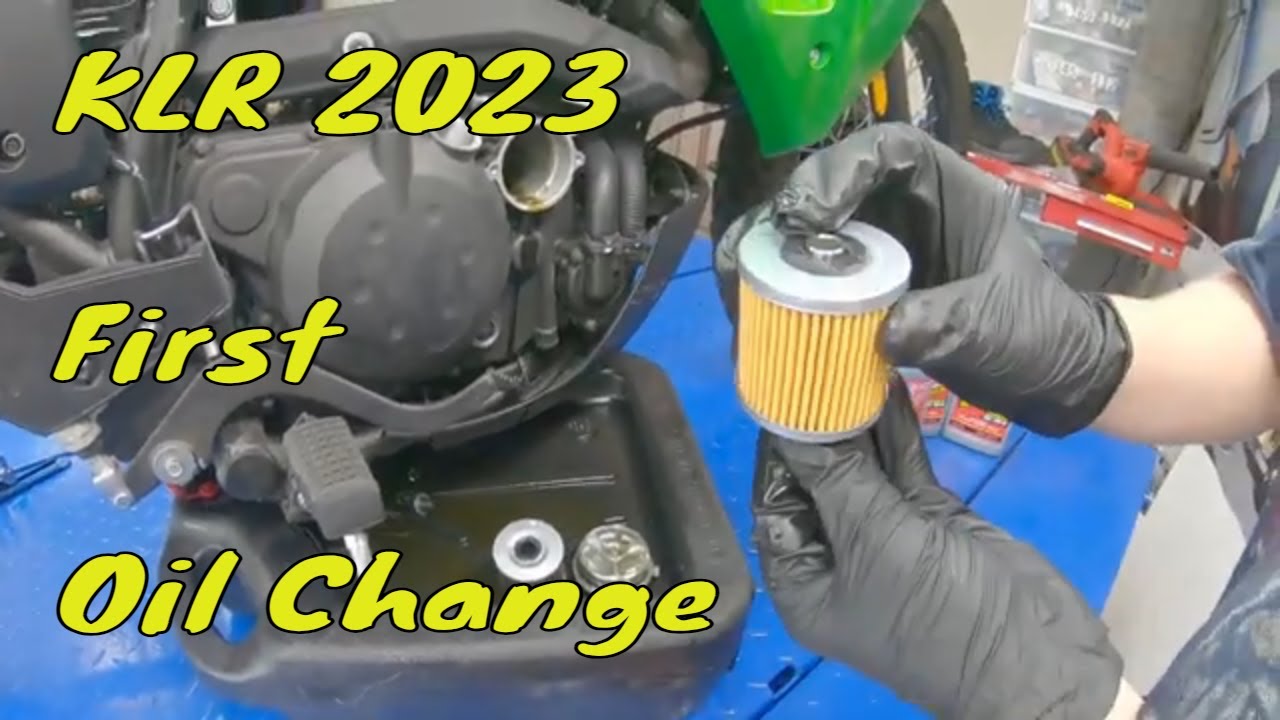
4. Remove And Replace The Oil Filter (if Changing)
The oil filter is on the right side of the engine. Use an oil filter wrench if needed. Some oil will spill when you remove the filter, so keep the pan ready.
Before installing the new filter, apply a little fresh oil to the rubber gasket. This makes it easier to remove next time and ensures a good seal.
5. Install The Drain Plug
After the oil stops dripping, wipe the area clean. Reinstall the drain bolt with the washer. Do not over-tighten—snug is enough, or torque to 21 Nm (15 ft-lb).
6. Add New Oil
Remove the oil filler cap on the right side of the engine. Use a funnel to add oil:
- If you changed the filter: Pour in about 2.3 liters (2.4 US quarts).
- If you did not change the filter: Add about 2.0 liters (2.1 US quarts).
Add slowly to avoid overfilling.
7. Check Oil Level
Start the engine and let it run for 1–2 minutes. Shut it off and wait about 2 minutes for the oil to settle. Check the oil level through the sight glass (right side of engine, low near the footpeg).
The oil should be between the two marks in the window, not above or below. Adjust as needed. Add oil slowly if you need more—never “guess” by pouring in a lot at once.
8. Clean Up
Dispose of the old oil and filter at a recycling center. Do not pour oil down the drain or into the ground.
How Often Should You Change The Oil?
Kawasaki recommends oil and filter changes every 6,000 km (3,750 miles) for normal use. If you ride in dusty, hot, or very cold conditions, change oil more often—every 3,000 km (1,800 miles) is a good rule.
Non-obvious insight: After a long trip with many short rides (engine not fully warming up), change oil sooner. Short trips cause more water and fuel to mix with the oil, which can harm the engine.

Klr 650 Oil Capacity Across Generations
Understanding how KLR 650 oil capacity might differ through the years is helpful, especially if you buy a used bike or travel internationally.
First Generation (1987–2007)
Early KLRs are very similar to later models, but some minor updates exist. For example, some pre-1996 models have slightly different engine cases or oil filters, but the capacity is still about 2. 3 liters with a filter change.
Practical tip: Many first-generation bikes are now 20–35 years old. Gaskets and seals might leak. Always check oil level often, even if you just changed it.
Second Generation (2008–2018)
Kawasaki updated the bodywork, brakes, and suspension, but the oil capacity stayed the same. These bikes use the same filters and drain plug.
Common mistake: Some second-generation KLRs use aftermarket engine guards that block access to the drain plug. Always check that you can reach the bolt before starting the oil change.
Third Generation (2022–present)
The 2022 update brought fuel injection and new electronics. However, the basic engine design and oil capacity remain the same. If you buy a 2022+ KLR 650, you’ll still use 2. 0 liters (without filter) or 2. 3 liters (with filter).
Non-obvious insight: Some new KLR 650s may consume oil during break-in (the first 1,000–2,000 miles). Check your oil level more frequently during this time.
Oil Consumption And Monitoring
KLR 650 engines are known for being tough, but some use more oil than others, especially as they age. Here’s what you need to know.
Normal Consumption
It’s normal for KLR 650s to use a little oil between changes, especially on long highway rides. Burning a few hundred milliliters over 3,000–4,000 km is not uncommon.
Excessive Oil Use
If you notice you’re adding oil often, check for leaks around the drain plug, filter, valve cover, or head gasket. Blue smoke from the exhaust means oil is burning—this can mean worn piston rings or valve seals.
Practical tip: Carry a small bottle of oil on long trips, especially in hot weather or when riding at high speeds for hours.
How To Track Oil Level
Check oil every 500–1,000 km (300–600 miles). Let the engine sit for 2–3 minutes after riding, then inspect the sight glass. If the level is near the lower mark, add oil.
Beginner mistake: Checking oil right after shutting off the engine can give a false low reading. Always wait a few minutes.
Choosing The Right Oil Filter
Changing the filter helps remove old contaminants. KLR 650s use a simple cartridge filter. You can choose between OEM (Kawasaki brand) or high-quality aftermarket filters (like HiFlo or K&N).
What Matters
- The filter must fit the KLR engine exactly.
- The filter’s rubber seals must be in good condition.
- Some aftermarket filters come with a replacement O-ring; use it if your old one is cracked.
Practical tip: Avoid very cheap, “no name” filters. Poorly made filters can collapse or leak, risking engine damage.
Synthetic Vs Conventional Oil
Owners often ask if synthetic oil is better. Here’s the answer:
- Synthetic oil is more resistant to heat and breakdown. It’s good for very hot climates, long highway rides, or if you ride aggressively.
- Conventional oil works fine for most everyday riding.
You can switch between synthetic and conventional oil without harm, as long as you use the correct viscosity and API/JASO rating.
Non-obvious insight: If your KLR burns oil, synthetic oil won’t stop this. In fact, some synthetics may burn faster in older engines.
Common Oil-related Mistakes Klr 650 Owners Make
Knowing what not to do can save you time, money, and frustration. Here are mistakes to avoid:
- Overfilling the oil: Too much oil can cause leaks or foaming, which reduces lubrication.
- Using the wrong oil type: Car oil with “energy saving” additives can cause clutch slipping.
- Forgetting the crush washer: Reusing an old, damaged washer on the drain bolt can cause slow leaks.
- Not changing the filter: The filter traps dirt; skipping it means contaminants stay in your engine.
- Not checking oil level often: KLRs can burn oil, especially at high speed. Low oil kills engines fast.
- Tightening the drain plug too much: Stripping the threads in the soft aluminum engine case is an expensive mistake.
- Using a dirty funnel: Even small amounts of dirt can cause engine wear. Use a clean funnel and keep the oil bottle capped.
Advanced Tips For Klr 650 Oil Maintenance
If you want your KLR to run for 50,000 miles or more, these extra steps help:
- Install a magnetic drain plug: This collects tiny metal particles, making it easier to spot problems early.
- Cut open the old oil filter: After you change the oil, use a filter cutter (or a hacksaw) to look inside. Metal flakes in the filter mean engine wear.
- Keep a maintenance log: Write down date, mileage, and type of oil used. This helps when selling the bike or diagnosing engine issues.
- Use a torque wrench: For the drain plug and filter, this avoids over-tightening and stripped threads.
Frequently Asked Questions About Klr 650 Oil Capacity
What Happens If I Overfill My Klr 650’s Oil?
Too much oil can cause foaming, leaks, and even engine damage. The crankshaft can whip oil into a froth, which is bad for lubrication. Always aim for the middle of the sight glass, not the top.
Can I Use 20w-50 Oil Instead Of 10w-40?
In very hot climates, 20W-50 is sometimes used by experienced riders. However, for most conditions, 10W-40 is best. Thicker oil can make cold starts harder and may not flow as well in winter.
How Do I Know If My Oil Is Low?
Check the sight glass with the bike level, engine off, and after waiting a few minutes. If the oil is below the lower mark, add oil until it’s between the marks. Never run the engine with no oil showing.
Is It Normal For My Klr 650 To Burn Oil?
Yes, especially on long highway rides or with older bikes. Some KLRs use more oil than others. Track your usage, and top up as needed.
How Much Oil Should I Bring On A Long Trip?
A half-liter (about 16 oz) is enough for most trips. Store it upright in a plastic bottle and seal tightly.
What Oil Filter Brands Are Safe?
OEM Kawasaki, HiFloFiltro, K&N, and Emgo are all popular choices. Avoid unknown brands from discount websites.
Can I Change Oil Myself, Or Do I Need A Mechanic?
You can do it yourself with basic tools. It’s a great way to learn about your bike and save money.
Final Thoughts
Keeping your KLR 650’s oil at the correct level and using the right oil helps your engine last longer and run better. The oil capacity is simple: 2.0 liters without a filter change, 2.3 liters with a filter change. But real-world riding brings extra details—like checking oil often, watching for leaks, and using the correct oil type.
Whether you ride across town or across continents, good oil habits are your KLR’s best protection. If you want more technical detail, the KLR 650 section at ADVRider is a great resource for owners, with real-world advice from experienced travelers.
Take care of your KLR 650’s oil needs, and it will take care of you for many adventures to come.