
Choosing the right nail gun can be confusing, especially if you are new to carpentry or home improvement. With so many types, features, and technical details, it’s easy to feel lost. But using the wrong nail gun can lead to mistakes, wasted time, or even accidents.
The good news is, with some clear advice and understanding, you can pick a nail gun that fits your needs and helps you work faster, safer, and smarter.
This guide will walk you through everything you need to know to choose a nail gun. We’ll look at the main types, what each is used for, power options, key features, safety concerns, and more. You’ll also learn about common beginner mistakes and how to avoid them.
By the end, you’ll feel confident to choose the best nail gun for your project, whether you are a DIYer, a hobbyist, or a professional.
Understanding Nail Guns: What They Do
A nail gun, sometimes called a nailer, is a power tool that drives nails into wood or other materials quickly and with little effort. Instead of hitting a hammer again and again, you just pull a trigger. This saves your hands from pain and speeds up your work. Nail guns are used in many jobs, like building walls, installing floors, making furniture, or even fixing fences.
But not all nail guns are the same. There are several types, each made for a different task. Picking the wrong type can make your work harder or ruin your material. So, first, let’s look at the main kinds of nail guns and their uses.
Main Types Of Nail Guns
Each nail gun type is designed for a special job. Here are the most common ones and what they do best:
1. Framing Nailers
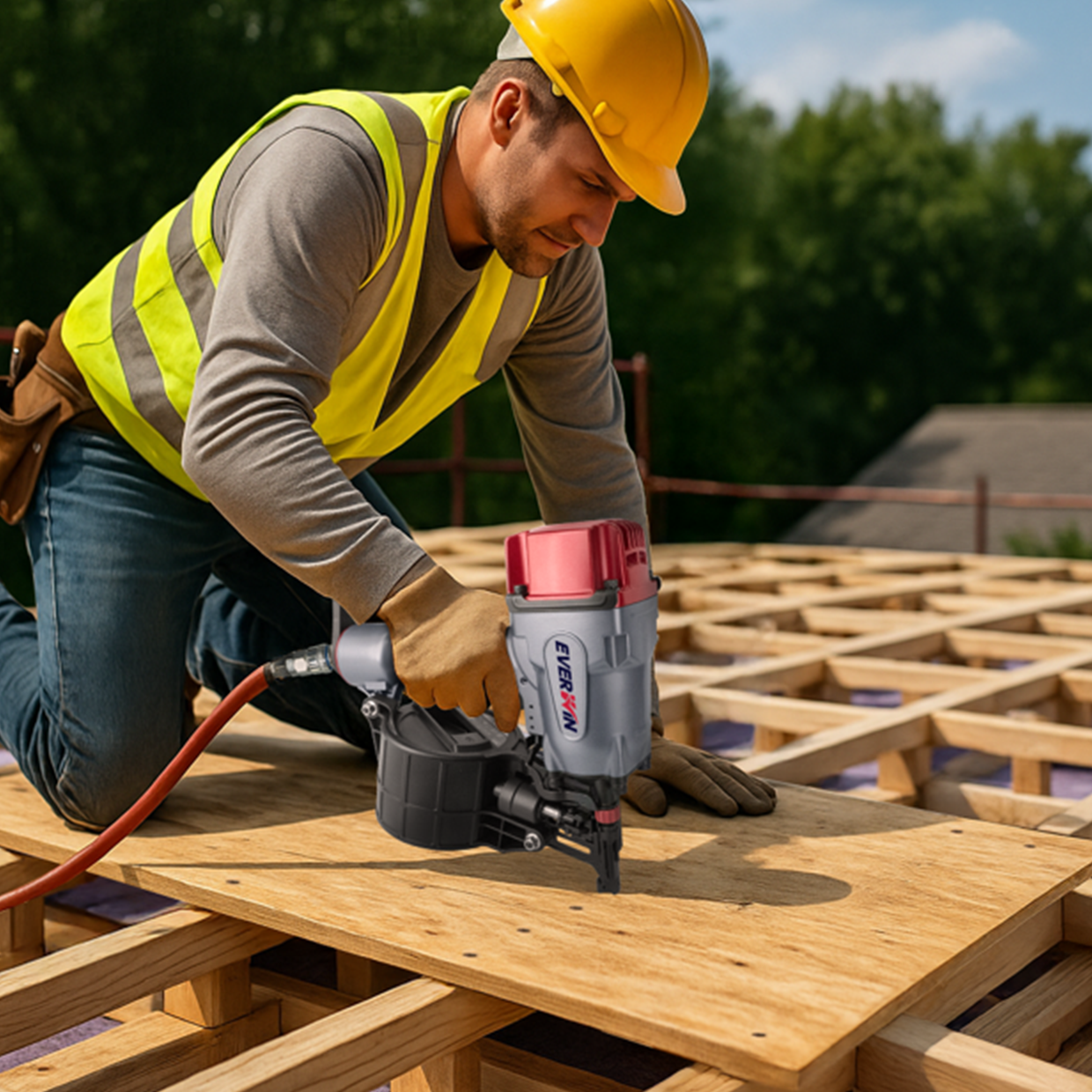
These are the heavy-duty nail guns. They are used for big jobs, like building house frames, decks, or fences. Framing nailers shoot large nails (usually 2 to 3. 5 inches) that hold strong wood pieces together.
2. Finish Nailers
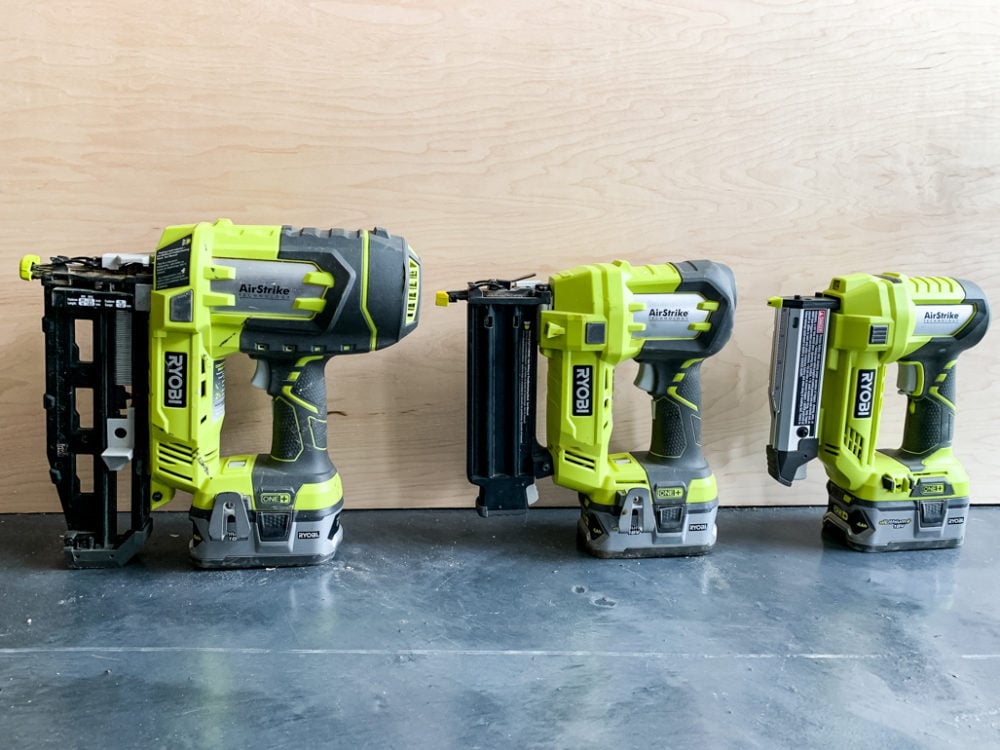
Finish nailers use smaller nails (usually 15-16 gauge) for jobs where appearance matters, like installing trim, crown molding, or cabinets. The holes they leave are small and easy to cover.
3. Brad Nailers
Brad nailers are even lighter than finish nailers. They use very thin nails (18 gauge) and are perfect for delicate work, such as attaching thin trims, small moldings, or decorative pieces. They leave tiny holes.
4. Pin Nailers
Pin nailers use ultra-thin nails (23 gauge). These are so small you almost can’t see the holes. Pin nailers are best for tiny, fragile pieces or for holding things in place while glue dries.
5. Roofing Nailers
Roofing nailers are made for attaching shingles to roofs. They use special nails with wide heads to hold the material down in wind and rain.
6. Siding Nailers
Siding nailers are for attaching wood or vinyl siding to the side of a building. They shoot nails designed not to crack the siding.
7. Flooring Nailers
Flooring nailers are unique tools for installing hardwood floors. They can drive nails at an angle so the floorboards fit tightly together.
8. Staple Guns
While not exactly nail guns, staple guns are often used in similar jobs, like attaching fabric, insulation, or thin materials. Some projects need both staples and nails.
Non-obvious insight: Many beginners confuse brad nailers and finish nailers. The main difference is the nail size—brad nailers are for lightweight, delicate jobs, while finish nailers handle medium-heavy work where appearance matters.
How Nail Guns Are Powered
Nail guns need a power source to drive nails with force. There are three main types:
Pneumatic (air-powered)
These nail guns use compressed air from an air compressor. They are powerful, reliable, and often used by professionals. But you need to connect them to an air hose, which limits your movement.
Cordless (battery-powered)
Cordless nail guns use rechargeable batteries. They are easy to carry and move around, with no hose or cord. Modern lithium-ion batteries last longer and charge faster than old ones.
Electric (corded)
These plug into an electric socket. They are less common but can be useful if you have power nearby and don’t want to manage batteries or compressors.
Gas-powered
Gas nailers use small gas canisters and batteries. They are portable like cordless models, but the gas canisters add cost and need to be replaced.
Example: If you are building a garden fence far from your house, a cordless or gas-powered nail gun is more convenient than a pneumatic one.
Coil Vs. Stick Nailers
Nail guns hold nails in magazines. There are two main magazine types:
- Stick magazine: Holds nails in a long, straight row. Easier to load and lighter, but holds fewer nails.
- Coil magazine: Holds nails in a round coil. Heavier, but holds more nails—good for big jobs where you don’t want to reload often.
Choosing between them depends on your project size and how often you want to reload.
Key Features To Look For
When comparing nail guns, certain features can make your work easier and safer. Here are the most important:
1. Depth Adjustment
This lets you control how deep the nail goes into the material. It’s important for not damaging your work surface.
2. Jam Clearing Mechanism
Nail guns can jam. A quick-release or tool-free jam clearing system saves a lot of frustration and keeps you working.
3. Sequential Vs. Contact Firing
- Sequential firing: You must press the tip against the material before pulling the trigger. Safer, good for beginners.
- Contact (bump) firing: Nails fire when you “bump” the tool against the surface while holding the trigger. Faster, but riskier if you’re not careful.
4. Nail Size And Type Compatibility
Check what lengths and gauges of nails your tool uses. Not all nail guns can use every nail size.
5. Exhaust Direction Control
Lets you aim the air blast away from your face or your work.
6. Ergonomics And Weight
A comfortable grip, balanced weight, and low vibration make long jobs easier on your hands.
7. No-mar Tip
A soft tip prevents marks or dents on finished wood.
8. Dry Fire Lockout
Prevents the gun from firing when it’s out of nails. This avoids damaging the tool or your work.
9. Led Light
Some cordless nail guns have lights for working in dark spaces.
Non-obvious insight: Many people ignore ergonomics, but comfort matters a lot if you’ll use the nail gun for hours. Try holding the tool before buying if you can.
How To Match A Nail Gun To Your Project
Not every nail gun works for every job. Here’s how to pick the right one for common tasks:
| Project | Best Nail Gun Type | Recommended Nail Size |
|---|---|---|
| Framing walls or decks | Framing Nailer | 2″–3.5″ |
| Installing baseboards/crown molding | Finish Nailer | 1″–2.5″ |
| Cabinet or furniture assembly | Brad Nailer | 5/8″–2″ |
| Attaching roof shingles | Roofing Nailer | 1″–1.75″ |
| Hardwood floor installation | Flooring Nailer | 1.5″–2″ |
| Lightweight trim or crafts | Pin Nailer | 5/8″–1.5″ |
If you plan to do many types of projects, sometimes it’s better to own two nail guns: one for heavy work, one for detail jobs.
Comparing Power Sources: Which One Should You Choose?
Let’s look at the pros and cons of each power type in more detail.
| Power Source | Advantages | Disadvantages | Best For |
|---|---|---|---|
| Pneumatic | Strong, reliable, lightweight tool | Needs air compressor & hose | Workshops, long projects |
| Cordless | Portable, no cords/hoses | Heavier, battery needs charging | Outdoor jobs, repairs |
| Electric (Corded) | No battery to charge, simple | Needs power outlet, less powerful | Light indoor work |
| Gas | Portable, good power | Extra cost for gas, maintenance | Remote locations, professionals |
Practical tip: If you already own an air compressor, a pneumatic nail gun is usually cheaper and lighter. If not, factor the compressor cost into your budget.
Nail Gauge And Length: Why They Matter
Nail gauge means the thickness of the nail. The smaller the number, the thicker the nail (for example, 15-gauge is thicker than 18-gauge). Thicker nails hold heavy materials, while thinner nails are for trim or detail work.
Nail length affects how deep the nail goes. Too short, and it won’t hold. Too long, and it might split the wood or poke out the other side.
Beginner mistake: Using nails that are too thick or too long can damage your material. Always match the nail size to your project.
Safety First: What You Need To Know
Nail guns are powerful tools and can be dangerous if not used correctly. Here’s how to stay safe:
- Always wear safety glasses. Nails can bounce or fly out.
- Keep your hands away from where the nail comes out.
- Start with sequential firing if you’re a beginner.
- Never point the nail gun at anyone.
- Disconnect the power (unplug, remove battery, or air hose) before clearing jams or making adjustments.
- Keep work area clean to avoid tripping.
According to the CDC, about 37,000 people go to the emergency room each year in the US because of nail gun injuries. Most are from not following basic safety rules.
Non-obvious insight: Many injuries happen when people try to clear a jam with the gun still powered. Always disconnect first.
Price, Quality, And Brands
Nail guns range from budget to premium. Here are things to consider:
- Cheap nail guns can work for small, rare jobs, but often jam more and break faster.
- Mid-range brands offer good reliability and features for most DIYers.
- Professional brands cost more but last longer and work faster.
Popular brands include DeWalt, Bostitch, Hitachi (now Metabo HPT), Paslode, Makita, and Ryobi.
Tip: For occasional home use, a mid-range nail gun often gives the best value. For daily use, invest in a professional model.
:max_bytes(150000):strip_icc()/SPR-types-of-nail-guns-6543801-hero-f8e6104110bd416e9731fa2a6fbb9723.jpg)
Accessories And Extras
Some accessories can make your nail gun safer or more useful:
- Nail sets: For pushing nails below the wood surface by hand.
- Carrying case: Protects your tool and keeps things organized.
- Extra batteries or gas canisters: For cordless or gas-powered models.
- Lubricating oil: For some pneumatic models, keeps the tool running smoothly.
Check what comes in the box before buying. Some kits include nails, cases, or even safety glasses.
Where To Buy And What To Ask
You can find nail guns at hardware stores, tool shops, and online. If possible, go to a store and hold the tool in your hand. Ask questions like:
- Is this nail gun good for my main project?
- What nail sizes does it use?
- Are spare parts or nails easy to find?
- Is there a warranty?
Read reviews and check return policies. Sometimes people buy the wrong type and need to exchange it.
Common Mistakes When Choosing A Nail Gun
- Buying too powerful a nail gun for small jobs. This can damage your work or be unsafe.
- Choosing the wrong gauge. For example, using a framing nailer for trim will split the wood.
- Ignoring power source needs. Buying a pneumatic nail gun but not owning an air compressor.
- Overlooking comfort and weight. Heavy tools are hard to use for long periods.
- Not checking nail compatibility. Some nail guns only work with certain brands or types.
- Skipping safety features. Features like dry fire lockout or sequential firing mode are important, especially for beginners.
How To Test A Nail Gun Before Buying
If you can, try these steps in the store:
- Hold the nail gun as if you’re working. Is it too heavy? Is the grip comfortable?
- Ask to see how the depth adjustment works.
- Check how easy it is to load nails.
- See if there’s a jam clearing feature.
- Ask for a demo if allowed.
If buying online, watch video reviews for a closer look at these features.
Maintenance And Longevity
Taking care of your nail gun helps it last longer and work better. Here’s how:
- Clean after each use. Wipe away dust and wood chips.
- Oil if needed. Some pneumatic nailers need a drop of oil before each use.
- Store in a dry place. Moisture can cause rust.
- Check for loose parts. Tighten screws and inspect for wear.
- Use the right nails. Don’t use cheap or incorrect nails—they can jam the tool.
With good maintenance, a quality nail gun can last for years.
Environmental And Noise Concerns
Nail guns can be loud—some reach over 100 decibels, which can damage hearing. Always wear hearing protection if you’ll use one for a long time.
Battery and gas-powered nail guns have batteries or canisters to dispose of. Be sure to recycle or follow local rules for safe disposal.
Nail Gun Regulations And Local Codes
Some countries or areas have rules about what type of nail guns can be used, especially on construction sites. Check your local laws if you’re using the tool for commercial work.
If you’re interested in more detailed rules and safety research, the OSHA Nail Gun Safety page is a trusted authority.
Summary Table: Quick Nail Gun Selection Guide
Here’s a quick summary to help you remember what type of nail gun to choose:
| Type | Main Use | Typical Nail Size | Power Options |
|---|---|---|---|
| Framing Nailer | Framing, decks, fencing | 2″–3.5″ | Pneumatic, cordless, gas |
| Finish Nailer | Trim, molding, doors | 1″–2.5″ | Pneumatic, cordless |
| Brad Nailer | Cabinets, light woodwork | 5/8″–2″ | Pneumatic, cordless |
| Pin Nailer | Crafts, delicate trim | 5/8″–1.5″ | Pneumatic |
| Roofing Nailer | Shingles, roofing | 1″–1.75″ | Pneumatic, cordless |
| Siding Nailer | Siding installation | 1.25″–2.5″ | Pneumatic, cordless |
| Flooring Nailer | Hardwood floors | 1.5″–2″ | Pneumatic |
Frequently Asked Questions
What Size Nail Gun Do I Need For Home Projects?
For most home repairs and small projects, a brad nailer (18-gauge) is ideal. It handles light trim, crafts, and small woodwork without splitting the material. For larger jobs like framing or installing thick baseboards, a finish nailer or framing nailer is better.
Can I Use One Nail Gun For All Tasks?
No, not all nail guns are universal. A framing nailer is too powerful for trim, and a brad nailer is too weak for framing. If you do many types of work, you may need two nail guns: one for heavy jobs and one for detail work.
How Do I Know What Nails To Buy For My Nail Gun?
Check your nail gun’s manual or the markings on the tool. It will list the gauge and length of nails it accepts. Using the wrong nails can cause jams or damage.
Are Cordless Nail Guns As Powerful As Pneumatic Ones?
Cordless (battery-powered) nail guns are strong enough for most home and light professional work. However, pneumatic nail guns are still the top choice for the most demanding, all-day tasks because they are lighter and don’t lose power as the battery drains.
What Is The Safest Type Of Nail Gun For Beginners?
A nail gun with sequential firing mode is safest for new users. This mode requires you to press the tip against the work before pulling the trigger, reducing the chance of accidental firing.
Making the right choice for your nail gun is about matching the tool’s features to your real needs, not just buying the biggest or cheapest model. With the knowledge from this guide, you can choose wisely and work with confidence, speed, and safety.
Whether you’re building, repairing, or creating, the right nail gun will make every project smoother and more satisfying.