
Boating brings a unique kind of joy—the wind, the water, and the power under the hood. For owners of boats with the Mercruiser 5.7 engine, knowing the right oil type and capacity is not just a technical detail; it’s the foundation of keeping your engine smooth, strong, and reliable. Choosing the wrong oil or ignoring the right quantity can lead to reduced performance, higher wear, or even engine failure. Whether you’re a new Mercruiser owner, a seasoned boater, or someone helping a friend with engine maintenance, this guide will give you everything you need to know about the Mercruiser 5.7 oil type and capacity.
In the world of marine engines, small mistakes can become costly. That’s why understanding oil selection and capacity is a must for every boat owner. This article covers the essentials—recommended oil types, exact oil capacity, viscosity grades, synthetic vs. conventional oil, and more. We’ll also clarify common myths, share overlooked tips, and make sure you can confidently complete your next oil change. Let’s dive into the details that keep your Mercruiser 5.7 healthy and your adventures worry-free.
Understanding The Mercruiser 5.7 Engine
The Mercruiser 5.7 is a V8 marine engine, popular for its power and reliability. This engine is used in many pleasure boats, fishing vessels, and workboats around the world. Its displacement is 5.7 liters, or 350 cubic inches, which delivers a good mix of torque and speed—ideal for water sports or cruising.
What makes the Mercruiser 5. 7 different from a car engine? It’s designed to run at higher RPMs for longer periods and to handle the unique stresses of marine environments. Saltwater, humidity, and constant load changes all affect engine oil performance.
That’s why oil selection and maintenance are more critical in marine engines than in cars.
Key features of the Mercruiser 5.7:
- V8 configuration for smooth power delivery
- Water-cooled to handle high loads
- High RPM operation compared to automotive engines
- Built to resist corrosion and moisture in marine settings
Understanding these differences helps explain why the right oil is essential.
Why Oil Selection Matters For Marine Engines
Engine oil does more than just lubricate. It protects against corrosion, reduces friction, helps cool the engine, and keeps internal parts clean. In a marine engine like the Mercruiser 5.7, oil must also handle:
- Moisture and condensation (from cold water/air differences)
- Constant high loads
- Saltwater exposure (if used in the ocean)
Automotive oils aren’t always suitable. Marine oils contain special additives for rust prevention and better handling of water contamination. Using the wrong oil can lead to sludge buildup, rust, and even engine seizure.

Credit: www.youtube.com
The 7 Essential Aspects Of Mercruiser 5.7 Oil Type And Capacity
To make sure your Mercruiser 5.7 stays in top shape, focus on these seven key areas:
- Recommended Oil Types
- Oil Capacity (With and Without Filter)
- Viscosity Grades for Different Climates
- Synthetic vs. Conventional Oil
- Oil Change Intervals and Maintenance
- Common Mistakes and How to Avoid Them
- Tips for Proper Oil Change Procedure
Let’s break down each one for complete clarity.
1. Recommended Oil Types
Mercruiser’s official guidance is clear: use marine-grade engine oil that meets specific standards. The company recommends oils that comply with NMMA FC-W (National Marine Manufacturers Association Four-Stroke Cycle Water-Cooled) certification. This label means the oil is formulated to protect marine engines from corrosion and water intrusion.
For most Mercruiser 5.7 engines built after the early 1990s, Mercury recommends:
- Mercury/Quicksilver 25W-40 Marine Engine Oil
- Oils meeting API SJ, SL, SM, or higher (if marine oil is not available, but only for emergencies)
- NMMA FC-W certified oils from other marine brands
Why not just use car oil? Marine oils contain extra anti-corrosion additives and are tested for water resistance. While car oils can work for a short period, regular use can shorten engine life.
Example Oils
- Mercury 25W-40 Synthetic Blend
- Quicksilver 25W-40 Marine Oil
- Valvoline 10W-40 Marine Oil (NMMA FC-W)
- Mobil 1 15W-50 (only if NMMA marine oil is unavailable and for short-term use)
Non-obvious insight: Some boaters mistakenly use diesel engine oil or automotive high-mileage oil, thinking it offers better protection. In reality, these oils can lack the right marine additives, increasing the risk of corrosion.
2. Oil Capacity (with And Without Filter)
Getting the oil capacity right is as important as choosing the right oil type. Too little oil causes overheating and wear; too much can lead to foaming, leaks, and poor lubrication.
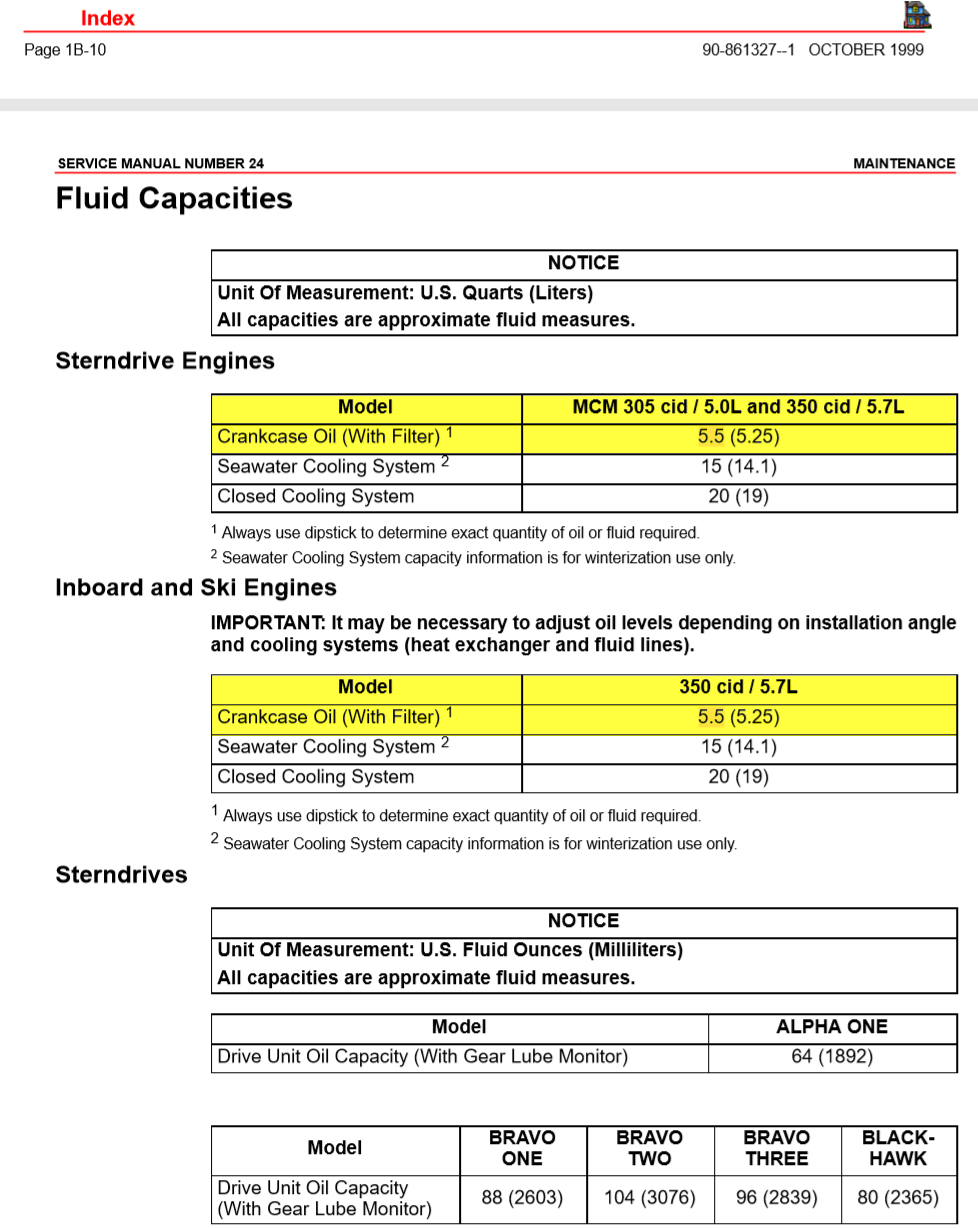
Standard Oil Capacity For Mercruiser 5.7
- With filter change: 5 US quarts (4.7 liters)
- Without filter change: 4.5 US quarts (4.3 liters)
Some variations exist depending on the year and specific engine version (carbureted, EFI, etc. ), but these numbers cover almost all Mercruiser 5. 7 engines.
| Change Type | Oil Capacity (US quarts) | Oil Capacity (liters) |
|---|---|---|
| With Filter | 5 | 4.7 |
| Without Filter | 4.5 | 4.3 |
Non-obvious insight: Some boat owners measure oil by sight on the dipstick alone. Due to engine tilt or leftover old oil, this method can be inaccurate. Always measure oil quantity by pouring the recommended volume, then check the dipstick after running the engine for a few minutes.
3. Viscosity Grades For Different Climates
Viscosity refers to how thick or thin the oil is at different temperatures. The right viscosity helps your Mercruiser 5. 7 start easily in the cold and protect well when hot.
Recommended viscosity:
- 25W-40 for most climates and seasons
- 20W-40 or 15W-40 for cooler climates (below 40°F/4°C)
- 10W-30 in extreme cold (rare for most boating conditions)
Why such a range? Marine engines run hotter and longer than cars. The multi-viscosity rating (e. g. , 25W-40) means the oil flows well in cold and stays thick enough when hot. Using oil that’s too thin can cause wear at high temps; oil that’s too thick can slow cranking and reduce lubrication at startup.
| Temperature Range | Suggested Oil Viscosity | Notes |
|---|---|---|
| Above 40°F (4°C) | 25W-40 | Standard marine oil |
| 10°F to 40°F (-12°C to 4°C) | 20W-40 or 15W-40 | Better cold flow |
| Below 10°F (-12°C) | 10W-30 | For rare, cold starts |
Common mistake: Using a single-grade oil (like SAE 30) is not recommended unless specified by Mercruiser for your exact model and climate. Modern multi-viscosity oils offer better protection and flexibility.
4. Synthetic Vs. Conventional Oil
This is one of the most debated topics among boat owners. Should you use synthetic or conventional oil in your Mercruiser 5.7?
Synthetic Oil Benefits
- Better resistance to breakdown at high temperatures
- Improved cold-weather flow
- Stronger protection against sludge and deposits
- Longer oil life (but always follow Mercruiser’s change intervals)
Conventional Oil Benefits
- Lower cost
- Good protection if changed frequently
- Trusted by many older engines
Mercury and Quicksilver’s 25W-40 Synthetic Blend Marine Engine Oil is now often recommended as the best option. Full synthetic is fine, especially if your engine is newer or you boat in extreme conditions (hot summers, heavy use). For older engines with high mileage or small leaks, some owners prefer conventional oil to reduce seepage.
Non-obvious insight: Switching from conventional to synthetic oil will not harm your engine, but it may reveal tiny leaks because synthetic oil flows more freely. This is normal and not a sign of damage.
5. Oil Change Intervals And Maintenance
Changing oil on time is as critical as the type and amount. Mercruiser recommends:
- Every 100 engine hours or at least once per season (whichever comes first)
If you use your boat in saltwater, in hot climates, or push your engine hard (water sports, towing), change the oil more often. Even if you don’t reach 100 hours, old oil collects moisture, acids, and contaminants that can damage your engine.
Steps for regular maintenance:
- Check oil level before every trip.
- Inspect the oil for color and smell—milky oil means water contamination.
- Change oil and filter at the end of each boating season to prevent internal rust during storage.
- Use a new drain plug gasket if your model uses one.
Data point: Neglecting oil changes is the number one cause of Mercruiser 5.7 engine failure after cooling system problems.
6. Common Mistakes And How To Avoid Them
Even experienced boaters make errors with Mercruiser 5.7 oil type and capacity. Here are the most frequent mistakes and how to avoid them:
Overfilling Oil
Adding too much oil leads to foaming, which reduces lubrication and can cause engine damage. Always fill to the recommended capacity, run the engine, then recheck the level.
Using Non-marine Oil
Automotive oils lack marine anti-corrosion additives. Only use them if marine oil is not available, and switch back as soon as possible.
Skipping The Oil Filter
Changing oil without replacing the filter means old contaminants stay in the system. Always change both at the same time.
Not Warming The Engine Before Oil Change
Cold oil traps more contaminants. Run the engine for 5–10 minutes to warm it up before draining.
Waiting Too Long To Change Oil
Moisture and acids build up, especially in boats used only occasionally. Change oil at the end of every season, even if hours are low.
Non-obvious insight: Some owners try to “top off” oil instead of changing it, thinking it saves money. This only dilutes the old, contaminated oil and does not protect your engine.
7. Tips For Proper Oil Change Procedure
A proper oil change keeps your Mercruiser 5.7 running strong. Here’s a step-by-step guide:
- Warm up the engine to thin the oil for better draining.
- Remove the drain plug or use an oil extractor pump (many boats have limited access).
- Drain oil completely. Tilt the boat if possible to help oil flow to the drain.
- Replace the oil filter. Lubricate the new filter’s gasket with fresh oil before installing.
- Add new oil—start with 4 quarts, then check the dipstick after running for a minute.
- Check for leaks at the drain plug and filter.
- Top up oil as needed—final level should be at the “full” line but never above.
Common mistake: Not resetting the hour meter (if your boat has one) after the oil change, making it harder to track next service.
Extra tip: Use oil-absorbent pads under the engine to catch drips and keep your bilge clean.

Credit: marineenginedepot.com
How Oil Capacity And Type Affect Engine Performance
The Mercruiser 5. 7 is designed for optimal performance with the specified oil type and amount. Using too little oil increases friction and heat, while overfilling reduces power and causes leaks. The right oil grade ensures smooth starts, efficient fuel use, and maximum engine life.
Example scenario: If you use 10W-30 instead of 25W-40 on a hot summer day, the oil may become too thin, risking engine wear. Conversely, using 25W-40 in a very cold climate may slow oil flow at startup, but this is rare in most boating regions.
Special Considerations For Saltwater Vs. Freshwater Use
If you use your Mercruiser 5.7 in saltwater, oil selection and change intervals become even more important. Saltwater increases the risk of corrosion. Always use NMMA FC-W certified marine oil, and consider changing oil more often than in freshwater environments.
For freshwater use, standard maintenance intervals are usually enough, but always inspect oil for water contamination, especially after heavy rain or if the boat sits unused for a while.
What To Do If You Accidentally Use The Wrong Oil
Mistakes happen. If you use the wrong oil grade or type once, don’t panic. Change to the correct oil as soon as possible. Running the engine for a short period with automotive oil or the wrong viscosity is unlikely to cause immediate damage, but long-term use increases risk.
If you notice milky oil (sign of water), change it immediately and check for leaks. If you used the wrong capacity, drain to the correct level. Never mix synthetic and conventional oils unless the manufacturer says it’s safe.
Environmental Impact And Oil Disposal
Used oil is hazardous to the environment. Never dump old oil into the water, onto the ground, or down drains. Always collect old oil in a sealed container and take it to a recycling center or auto parts store that accepts used oil.
This keeps waterways clean and avoids legal trouble.
Many marinas offer oil recycling services. Ask before you start your oil change.
Cost Comparison: Diy Vs. Marina Oil Change
Changing your own oil saves money, but takes time and care. Here’s a simple cost comparison:
| Service Option | Average Cost (USD) | Includes |
|---|---|---|
| DIY Oil Change | $40–$60 | Oil, filter, tools |
| Marina/Shop Oil Change | $120–$200 | Parts, labor, disposal |
DIY is more affordable but requires proper disposal and some experience. Professional service guarantees correct procedures but at a higher cost.
Troubleshooting Common Oil-related Problems
If you notice any of these issues, act quickly:
- Milky or foamy oil: Water contamination—check for leaks or blown gaskets.
- Low oil pressure: Possible leaks, clogged filter, or worn engine.
- Burnt oil smell: Overheating or oil breakdown—change oil and check cooling system.
- Frequent top-ups needed: Possible leaks or worn piston rings.
Solving small oil issues early can prevent expensive repairs.
Credit: www.thehulltruth.com
Comparing Mercruiser 5.7 With Other Marine Engines
The Mercruiser 5. 7’s oil requirements are similar to other V8 marine engines, but always check your owner’s manual for exact specs.
- Mercruiser 4.3 V6: Uses 4 quarts of oil, often 25W-40
- Volvo Penta 5.7: Typically uses 5 quarts, prefers synthetic blends
- Indmar 5.7: Also uses 5 quarts, but sometimes requires a different filter
While the oil type is similar, filter size and change intervals may differ.
The Role Of Oil Filters In Engine Longevity
Never underestimate the importance of a quality oil filter. The filter traps debris, metal shavings, and contaminants. Always use a marine-grade filter—these have anti-corrosion coatings and are built for marine vibration and moisture.
Popular choices include:
- Mercury/Quicksilver oil filters
- Sierra marine filters
- Wix or Fram marine filters
Never use a car filter unless it matches the marine rating and fit.
Storing Your Mercruiser 5.7: Off-season Oil Tips
Before storing your boat for winter or a long break, always change the oil. Old oil contains acids and moisture, which can corrode engine parts during storage. Fill the engine with fresh oil, run for a few minutes, and check for leaks.
Some owners add a fogging oil spray to the cylinders for extra protection. This is especially important in humid climates.
Pro tip: After storage, always check oil for water or color changes before starting the engine.
Frequently Asked Questions
What Is The Best Oil For A Mercruiser 5.7 Engine?
The best oil is Mercury/Quicksilver 25W-40 Synthetic Blend Marine Engine Oil or any NMMA FC-W certified 25W-40 marine oil. These oils are specifically designed for marine engines and provide optimal protection against rust, wear, and water contamination.
How Often Should I Change The Oil In My Mercruiser 5.7?
Change the oil and filter every 100 engine hours or at least once per season, whichever comes first. If you operate in saltwater, hot climates, or run your engine hard, change oil more often to ensure engine health.
Can I Use Automotive Oil In My Mercruiser 5.7?
Automotive oil can be used only in emergencies and for a short period. It lacks marine-specific additives for corrosion protection. Switch back to marine-grade oil as soon as possible for long-term reliability.
How Much Oil Does A Mercruiser 5.7 Hold With A Filter Change?
The Mercruiser 5.7 holds 5 US quarts (4.7 liters) of oil with a filter change. Without changing the filter, the capacity is about 4.5 US quarts (4.3 liters).
What Happens If I Overfill The Oil In My Mercruiser 5.7?
Overfilling oil can cause foaming, leaks, and poor lubrication. This may lead to engine damage. Always fill only to the recommended capacity, check the dipstick after running the engine, and drain excess oil if needed.
Caring for your Mercruiser 5.7 means more than just turning a key—it’s about respecting the details. Understanding the right oil type, capacity, and maintenance schedule keeps your engine strong and your adventures on the water hassle-free. For more details and official recommendations, visit the Mercury Marine official site.
Boating should be fun, not stressful. With the right oil knowledge, your Mercruiser 5. 7 will reward you with years of reliable performance.